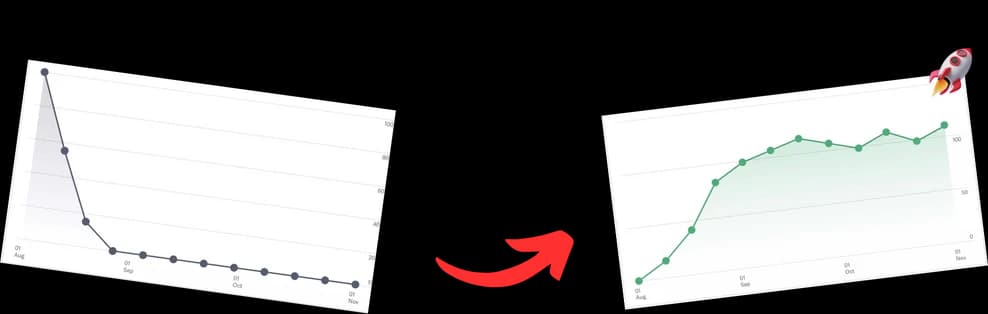
You publish a video, share it once, maybe twice, and watch the graph flatten. The first burst comes from subscribers, a social post, or an email send. After that, the video sits there doing almost nothing.
That usually isn't a content problem. It's a distribution problem.
Most creators still treat distribution as the last step. Upload. Post the link. Cut a clip if there's time. That approach leaves too much to chance, and it makes every video feel like it has a 48-hour shelf life. A strong video distribution strategy works differently. It starts before recording, assigns each asset a role, and keeps the video discoverable long after launch day.
The Foundation Aligning Goals Audience and Content
A workable distribution engine starts with three decisions made in order: goal, audience, and content pillar. Skip that order and every later choice gets fuzzy. You'll pick channels because they seem popular, not because they serve a job.

Start with one business outcome
One video can support a brand, but it shouldn't try to carry every possible goal. If you're making an educational tutorial, decide whether its main job is search discovery, lead capture, product education, or trust-building. That single decision shapes the title, hook, CTA, landing page, and where the video should live first.
A lot of creators say their goal is “growth.” That's too vague to guide distribution. “Get search traffic for a recurring question,” “drive viewers to a webinar replay,” and “give prospects a better product walkthrough” are usable goals because they tell you how the video should travel.
Practical rule: If you can't say what action a successful viewer should take next, the distribution plan isn't ready.
Define the viewer before you define the channel
Audience work matters because platforms don't just differ by size. They differ by mindset. Someone on YouTube may tolerate a deeper explainer. Someone on LinkedIn may want the strongest insight fast, with a clean caption that tells them why it matters professionally.
Write a lean audience profile with details you can use:
- Problem they want solved: Name the recurring question or friction point.
- Context of consumption: Are they watching at work, commuting, researching, or comparing options?
- Preferred depth: Do they need a quick takeaway, or will they stay for a full walkthrough?
- Natural habitats: Which channels already fit their attention patterns?
If you need a good companion framework for this planning stage, Rebus's guide to video marketing is useful because it ties content decisions back to business context rather than treating video as a standalone creative exercise.
Build content pillars that can be distributed repeatedly
Content pillars stop you from reinventing the wheel every week. Instead of planning isolated videos, define a few repeatable themes. For a software creator, that might be tutorials, feature use cases, customer objections, and industry commentary. For a consultant, it could be teardown videos, short lessons, workshop clips, and FAQs.
Those pillars help you create a repeatable system:
| Pillar | Main purpose | Likely home |
|---|---|---|
| Tutorial | Search and education | YouTube or website |
| Commentary | Reach and conversation | LinkedIn or short-form social |
| Demo | Consideration and trust | Landing page, email, YouTube |
| FAQ | Conversion support | Website, support hub, YouTube |
A documented strategy keeps this from drifting. If you don't already have that foundation, this video content strategy guide is a practical place to tighten the connection between your topics, audience needs, and publishing rhythm.
Choosing Your Core Distribution Channels
A video goes live on Tuesday. You post the full cut to YouTube, drop the link on LinkedIn, clip 20 seconds for Instagram, and call distribution done. By Thursday, the spike is over. The problem usually is not effort. It is channel design.
Analysts at Wyzowl found that businesses spread video across several networks in its video marketing statistics roundup. The useful takeaway is simpler than "be everywhere." Distribution works better when each channel has a defined job, format, and handoff.

Split channels into primary and support roles
Choose one or two places where the full asset lives and keeps working after launch. For many creators, that is YouTube plus a website or resource hub. Those are your compounding channels. They hold the long-form version, rank over time, collect watch data, and support conversion paths you control.
Everything else should support those destinations with a specific purpose. LinkedIn can start a conversation around one argument from the video. Email can bring past viewers back to a timely episode. Short-form platforms can test hooks, angles, and audience language before you invest in another full production cycle.
That structure keeps distribution from turning into busywork.
A simple channel test helps:
- Does the audience use this platform in the context you need, learning, evaluating, or just scrolling?
- Does your format fit the platform without heavy re-editing every time?
- Can your team publish native assets there fast enough to keep quality high?
If the answer to the third question is no, keep the channel off your core stack for now. A neglected channel trains the algorithm and the audience to ignore you.
Build a channel stack around repeatable jobs
The strongest setup is usually small. One search library. One owned destination. Two or three support channels you can feed every week without rushing captions, thumbnails, copy, and comments.
A practical stack often looks like this:
- Primary library: YouTube for long shelf life, recommendations, and a searchable archive.
- Owned destination: Website pages, product pages, or a learning hub for embeds, lead capture, and clearer calls to action.
- Relationship channel: Email for direct distribution to people who already know your work.
- Conversation channel: LinkedIn if your buyers think in public there, or another niche community where replies can lead to qualified traffic.
- Short-form testing layer: Reels, TikTok, or Shorts for hook testing, recall, and top-of-funnel reach.
The trade-off is real. Every added platform creates editing work, publishing work, and follow-up work. A three-channel system executed every week will usually outperform a seven-channel plan that breaks after two months.
If you want social posts to feed your owned channels instead of stealing attention from them, this guide to social media integration across owned and social channels is a useful framework for setting up those handoffs.
Match the channel to the asset before production starts
Distribution decisions should shape the video before you hit record. A YouTube tutorial can carry longer context, chapter-worthy sections, and stronger search intent. A LinkedIn version of the same idea needs a tighter opening, on-screen text, and a point of view worth reacting to. A website embed may need a cleaner demo flow and a CTA that fits the page, not the social post.
This matters for creative choices that seem small at first. Music is one example. If you publish regularly on YouTube, copyright-safe audio is part of distribution, not just editing polish. Teams working on creating YouTube content with AI music are usually solving a workflow problem as much as a production one. They need assets that can publish repeatedly without rights headaches or monetization risk.
The right channel plan feels constrained because it is built to last. That is a good sign. It means each video has a home, each support channel has a job, and your reach does not expire after the first 48 hours.
Optimizing for Primary Platform Discovery
Once the video hits its main platform, distribution shifts from launch to retrieval. At this stage, videos either keep attracting the right viewer or disappear under newer uploads.
For most creators, the main platform is YouTube. The obvious tasks still matter. A clear title, a relevant thumbnail, a useful description, and a strong opening all improve the odds that viewers click and stay. But long-term discovery often breaks down because the metadata is shallow. One title and one description can't represent every useful subtopic inside a long video.
A better workflow starts with structure.

Treat metadata like part of the asset
Before publishing, prepare these pieces as a package:
- Working keyword theme: One primary phrase and a few close variants.
- Title options: Write several, then choose the one that matches search intent without sounding robotic.
- Description blocks: A short summary up top, then supporting context, resource links, and chapter text.
- Thumbnail concept: One visual idea, one promise, one focal point.
Post-publication discovery increasingly depends on standardized metadata and chaptering, not just the first social push. Firework notes in its discussion of video distribution strategy that strategy articles often over-focus on reposting while overlooking metadata practices like chapters that improve long-tail visibility across YouTube and Google.
Chapters do more than help navigation
Creators often add timestamps as a courtesy. That's useful, but incomplete. Chapters also help map the internal logic of the video. They make it easier for viewers to jump to the exact answer they need, and they give search systems more context about what the video covers.
Good chapters aren't generic. “Intro,” “Main topic,” and “Conclusion” waste the opportunity. Better chapter labels reflect the actual questions and concepts inside the video.
In practice, it looks like this:
| Weak chapter | Strong chapter |
|---|---|
| Intro | Why most videos die after launch |
| Tip 1 | Choosing a primary platform |
| Strategy | Writing chapter titles for search intent |
| Final thoughts | When to prune a distribution channel |
That work can be done manually in a notes app, spreadsheet, or transcript editor. Some creators use transcript tools to pull likely segments, then rewrite them into chapter labels. Creating YouTube content with AI music is also a good reminder that production choices affect distribution later. If your sound, pacing, and edit rhythm don't hold attention, even good metadata won't rescue the video.
Later in the workflow, a tool like TimeSkip can generate SEO-oriented YouTube chapters directly from the video so creators don't have to build every timestamp by hand.
Here's a quick example of how chaptering fits into a real workflow:
Focus on the browse path after search
Search gets attention, but browse behavior keeps distribution alive. If someone lands on a chaptered video, finds one useful segment, and keeps watching, you've created a better path into the rest of the channel. That's why chaptering, end screens, pinned comments, and tightly related follow-up videos work together.
A video shouldn't only answer the initial query. It should lead naturally to the next question.
That mindset changes how you edit. You stop treating the upload as a finished file and start treating it as a searchable, navigable content hub.
The Art of Repurposing and Syndication
A strong pillar video contains more than one asset. Most creators just don't extract them systematically.
Take a single 20-minute video essay on “why most channel growth stalls after the first publish window.” That original upload becomes the source file for every other distribution move. Not by chopping it randomly, but by identifying the distinct moments inside it.

Turn one long-form video into native assets
Start with the transcript and mark moments by function, not just timecode. One segment may contain a sharp opinion. Another may explain a process. Another may include a strong one-line takeaway that works as static creative.
That 20-minute essay can become:
- Short vertical clip one: A tight opinion-led cut with a hook in the first sentence for Shorts or Reels.
- Short vertical clip two: A tactical moment, such as “three mistakes in channel selection,” cut for mobile viewing with burned-in captions.
- LinkedIn post with embedded clip: A 4 to 6 minute slice where the insight can stand on its own for a professional audience.
- Instagram quote graphic: One sentence from the video turned into a simple branded visual.
- Email teaser: A paragraph and thumbnail that push subscribers to the full video or landing page.
Length discipline is essential. In a survey of IT marketers, 72% said a 4–6 minute video is ideal, according to ActualTech Media's video marketing data points. That makes the mid-length cut especially useful for expert commentary, demos, and educational clips that need more than a soundbite but less than a full episode.
Adapt the content to the room
The same insight needs a different wrapper depending on where it lands.
On LinkedIn, a repurposed clip works best when the caption does some of the heavy lifting. Lead with the problem, add one sharp takeaway, then let the video expand on it. On Instagram, the visual has to stop the scroll before the nuance matters. On email, the subject line and preview text matter as much as the clip itself because they decide whether the asset gets opened at all.
Here's one practical adaptation map:
| Asset | Best use | Required adjustment |
|---|---|---|
| Vertical short | Discovery | Faster hook, captions, tight crop |
| Mid-length expert clip | Authority | Contextual caption, cleaner intro |
| Quote graphic | Recall | One idea only, strong typography |
| Email teaser | Return traffic | Clear CTA and thumbnail |
If you want a fuller operating system for this process, these content repurposing strategies are helpful because they focus on multiplying output from one source asset instead of treating every post like a new production task.
Repurposing works when the audience on each platform feels like the content was made for them, even when it came from the same original recording.
The creators who do this well don't just “cut clips.” They assign each derivative asset a job. One reaches new viewers. One deepens trust. One nudges return traffic. One gives the algorithm another chance to understand the topic cluster around the main video.
Building a Sustainable Distribution Workflow
Monday morning. The video is live, but distribution is still sitting in your head as a vague plan. By Wednesday, the short clips are half-cut, the email never went out, chapters are missing, and the upload gets one spike of attention before it disappears. That drop usually is not a content problem. It is a workflow problem.
Sustainable distribution starts before publish day. The goal is to build an engine that carries each video through the same set of steps every time, with as few decisions as possible after the main edit is done. That matters because the first 48 hours are only one window. Search discovery, suggested video traffic, newsletter clicks, community reposts, and topic-based resurfacing all depend on assets you prepare and ship consistently.
Build the workflow around roles, not just channels
A workable system assigns every task a purpose inside the distribution engine.
The long-form video is the source asset. Chapters, metadata, links, and the pinned comment help discovery and conversion on the main platform. Short clips create additional entry points. Email and owned audiences bring back people who already trust you. A simple review step turns one release into notes for the next one.
That structure keeps distribution from turning into random promotion.
A weekly operating rhythm
For a solo creator or lean team, this cadence holds up:
-
Publish the master asset with discovery elements ready
Upload the main video with the title, thumbnail, description, chapters, CTA links, end screens, and pinned comment already prepared. If those items get postponed, they often do not get done. -
Batch the derivative assets on the same day
Cut shorts, export platform-specific versions, clean captions, and write the supporting copy while the material is still fresh. This is also the right moment to pull strong quotes and note timestamps that can become future posts. -
Schedule owned and secondary distribution
Load social posts into Buffer or the native schedulers. Put the email send, community post, site embed, and any partner or team amplification into the calendar. Scheduled distribution beats relying on memory. -
Track every asset in one system
Use Notion, Airtable, Trello, or a spreadsheet. Log the asset name, platform, format, owner, status, publish date, and follow-up action. If the system cannot tell you what has shipped and what is late, it will break as volume grows. -
Review performance on a fixed day Check which assets extended reach, which ones sent qualified traffic, and which channels keep eating time without doing their job. Then trim the weak parts of the process.
The minimum stack that keeps this running
A sustainable workflow usually needs five categories of tools, not a complicated stack:
- Project tracking: Notion, Airtable, Trello, or Google Sheets
- Editing and clipping: Premiere Pro, Final Cut Pro, Descript, or CapCut
- Captions and transcript cleanup: Descript or native subtitle tools
- Scheduling: Buffer, Hootsuite, or platform-native schedulers
- Asset storage: Google Drive or Dropbox with a strict folder structure
File naming matters more than creators expect. Clear names save time during clipping, approvals, and rescheduling. “2026-02-video-distribution-strategy-youtube-short-02” is boring, and that is exactly why it works.
Use a checklist that removes decisions
The teams that keep videos alive after launch usually are not more creative. They are more consistent.
A simple checklist is enough:
- Before publish: title, thumbnail, description, chapters, tags or metadata, CTA links
- At publish: pinned comment, end screens, playlist placement, first community touchpoint
- Within 24 hours: email, social scheduling, site embed, short clips exported
- Within 7 days: comment review, retention notes, spin-off topic ideas, underperforming asset review
One more practical rule helps here. Keep pre-production notes connected to distribution. If a segment is likely to become a short, mark the timestamp during scripting or editing. If a teaching section needs chapters for search and usability, outline those before the upload. Distribution works better when it is built into production, not bolted on after the fact.
That is how video stops dying after the first burst of traffic. Each upload enters a system designed to extend its life, create multiple discovery paths, and feed the next release with better inputs than the last one.
Measuring What Matters to Refine Your Strategy
Views are useful, but they don't tell you enough to improve a video distribution strategy. A video can rack up passive impressions and still fail at the job it was meant to do.
Measurement starts by returning to the original goal. If the video was built for awareness, watch the indicators that show reach and attention quality. If it was built for lead generation, focus on the traffic and actions that happen after the play. If it was built for education, study whether viewers make it to the sections where the teaching happens.
Siege Media notes that video content accounted for 82% of all internet traffic in 2025 in its roundup of video marketing statistics. In a market that crowded, measurement isn't optional. It's how you stop wasting distribution effort on channels and formats that feel busy but don't move the goal.
Match metrics to the job
This simple lens helps:
| Goal | Useful metric types | Less useful on their own |
|---|---|---|
| Awareness | Reach, impressions, watch time | Raw views without retention context |
| Engagement | Comments, shares, returning viewers | Likes by themselves |
| Lead generation | Click-throughs, landing-page actions | Platform reach with no next step |
| Education | Retention by segment, completions | Total impressions |
That last row matters more than most creators realize. A tutorial that holds attention through the problem-solving segment may be worth more than a broader video with a weaker retention curve.
Use platform analytics to make editorial decisions
Look at traffic source data, retention graphs, and audience behavior together. If one type of clip consistently sends more engaged viewers to the full video, produce more of that format. If one channel produces lots of views but weak watch time, it may be attracting the wrong audience or setting the wrong expectation.
A few high-value questions to ask every month:
- Which channel introduces viewers who stay?
- Which video topics earn search traffic over time instead of peaking fast?
- Where do viewers drop off, and does that pattern repeat across videos?
- Which repurposed asset format creates the best handoff to the main video or landing page?
The point of analytics isn't to prove you published. It's to decide what gets repeated, what gets revised, and what gets cut.
When creators get stuck, it's often because they treat all distribution wins as equal. They aren't. A clip that reaches the wrong audience teaches the wrong lesson. A smaller channel that sends better-fit viewers may deserve more attention than the flashier one.
Use a quarterly review to prune channels, retire weak formats, and double down on topics that keep getting found after launch. That's how distribution becomes compounding instead of reactive.
If chapters and long-tail discovery are the part of your workflow that keeps getting skipped, TimeSkip is built for that specific bottleneck. It helps generate YouTube chapters quickly, which makes it easier to turn long-form videos into searchable, navigable assets instead of uploads that fade after the first push.