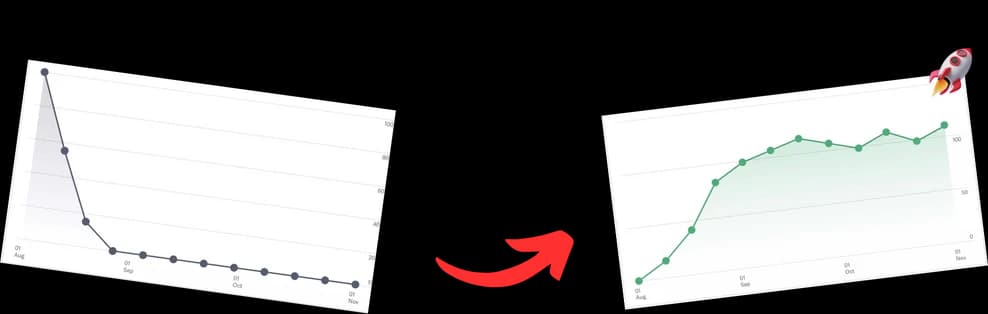
You publish a YouTube video or a podcast episode, feel good for about five minutes, then the actual work starts. You need a post for X, a Reel teaser, a LinkedIn angle, maybe a Facebook update, maybe an email, and every version needs to fit the platform without sounding copied and pasted.
That scramble is where most creators lose momentum.
Not because the content is weak. Because the system around the content is weak. Social media integration fixes that. It turns your social channels from separate chores into connected distribution points that support the same piece of long-form content.
Connecting Your Content in a Crowded World
A lot of creators still run their promotion like this: upload first, improvise second.
They publish a video, copy the link, post it to one platform, rewrite the caption for another, forget to update the thumbnail on a third, and promise themselves they'll make clips later. A week passes. The content that took hours to record and edit gets one burst of attention, then disappears into the backlog.

That isn't a content problem. It's a coordination problem.
Social media integration is the layer that connects your publishing, promotion, tracking, and reuse workflow so one episode can travel cleanly across platforms. Instead of treating YouTube, your podcast feed, Instagram, LinkedIn, and X as separate jobs, you treat them like parts of one system.
What the mess looks like in practice
The pain usually shows up in a few familiar ways:
- Manual repetition: You rewrite the same announcement five times.
- Broken consistency: Your title, hook, and call to action change from platform to platform for no good reason.
- Late promotion: By the time you make clips or posts, the launch window has passed.
- Lost insight: You know something worked, but you can't tell which platform drove the audience.
The frustrating part is that creators often accept this as normal. It isn't. It's just the default when no workflow exists.
Practical rule: If promoting one episode feels like starting from zero every time, you don't have a distribution system yet.
What a connected setup changes
A better setup feels less like posting everywhere and more like routing traffic. Your long-form content stays at the center. Social posts become entry points, not isolated updates.
For example, one podcast episode can become:
- a short clip for TikTok,
- a quote card for LinkedIn,
- a thread on X built from key talking points,
- a Facebook post aimed at your broadest audience,
- and a pinned comment or follow-up discussion prompt.
The point isn't to be everywhere. The point is to connect what you already make so each platform helps people discover the main piece of content.
That is social media integration in creator terms. Less chaos, more carry-through.
Understanding Social Media Integration for Creators
Creators don't need another vague definition that sounds like it came from enterprise software copy. In practice, social media integration means connecting your platforms so content, audience attention, and performance data move together instead of staying trapped in separate places.
Think of your content stack as a group of islands. Your YouTube channel is one island. Your podcast feed is another. Your newsletter, LinkedIn profile, TikTok account, and website are more islands. If you don't build bridges, people land on one island and never see the rest.
The bridge model
A useful integration setup does three jobs.
First, it creates brand continuity. Your audience should recognize the same creator voice whether they find you in a short clip, a community post, or a full episode.
Second, it creates audience flow. A social post shouldn't just announce content. It should move people from a quick interaction to a deeper one.
Third, it creates workflow continuity. You shouldn't need to reinvent titles, hooks, clips, and captions every time you publish.
A significant shift has occurred in discovery behavior. As of 2025, 58% of consumers report discovering new businesses via social media, outperforming traditional search engines and television advertising in driving brand awareness, according to Sprinklr's social media marketing statistics. For creators, the implication is simple. Social isn't just where you maintain presence. It's where new people first meet your work.
What integration is not
A lot of creators think integration means one-click cross-posting everywhere. That's only one small piece of it, and sometimes it's the worst piece.
Here's what doesn't count as a strong integration strategy:
- Auto-posting the same exact caption everywhere: Fast, but usually lazy-looking.
- Treating every platform like a link dump: Audiences don't reward that.
- Building around tools instead of audience behavior: A clever automation that publishes bad native content still produces bad results.
Social media integration works when each platform plays a role. It fails when every platform gets the same output.
The creator-first definition
For independent creators, a better definition is this:
Social media integration is the process of turning one core piece of content into a connected audience experience across platforms.
That means:
- YouTube might hold the full breakdown.
- TikTok or Reels might carry the most compelling moment.
- LinkedIn might frame the lesson or opinion.
- X might unpack the argument in a thread.
- Your podcast feed might serve listeners who prefer audio.
Each piece supports the others. None has to do the whole job alone.
Why Integration Drives Audience Growth
Growth gets harder when every platform starts from scratch. Integration changes that by letting one strong idea produce multiple discovery points.
For video and podcast creators, that's the difference between publishing content and building distribution.
More touchpoints without more chaos
Users don't discover a creator by watching a full hour-long interview on first contact. They find a sharp clip, a useful quote, a contrarian post, or a thread that makes them curious enough to click through.
That's why smart integration helps long-form content punch above its weight. For YouTube creators and podcasters, effective integration means leveraging platforms with high organic engagement like TikTok, which reaches 7.5% engagement for small creators, to promote content. Combined with SEO-enhanced chapters, this can contribute to boosting video visibility by up to 220% in searches, as noted earlier in the verified data. The tactic matters because it gives your best moments more places to work.
Why creators feel the payoff fast
The first benefit isn't abstract. It's time.
When your promotion workflow is connected, you stop doing these low-value tasks over and over:
- pulling timestamps manually,
- rewriting titles from scratch,
- hunting for clips after publishing,
- and trying to remember what you already posted where.
The second benefit is discoverability. Long-form content often has depth but weak packaging. Social posts can package that depth into smaller, searchable, clickable pieces.
Better context creates better clicks
A cold link rarely performs well. A framed idea does.
Compare these two approaches:
| Approach | What the audience sees | Likely result |
|---|---|---|
| Basic share | “New episode is live. Link in bio.” | Easy to ignore |
| Integrated share | A sharp takeaway, clip, quote, or timestamped moment tied to audience pain | Higher intent clicks |
That difference is where growth usually happens. Not in posting more. In giving people a reason to care before they leave the feed.
Field note: The post that sends the most traffic usually isn't the most polished one. It's the one that makes the promise of the full episode clearest.
Why this matters more for long-form creators
Short-form creators can survive on platform-native momentum alone. Long-form creators usually can't. A podcast episode or deep YouTube tutorial needs support around it. It needs multiple entry ramps.
Strong social media integration gives you those ramps. One platform sparks attention. Another builds credibility. Another captures search intent. Another deepens retention.
When that system clicks, your social channels stop competing with your main content. They start feeding it.
Choosing Your Integration Strategy
You don't need to jump straight to custom code. Most creators should build their social media integration in layers. Start with the lightest system that solves your current bottleneck. Upgrade only when the bottleneck changes.

Four ways to connect your workflow
Some methods are simple but slow. Others are powerful but require setup.
| Method | Effort | Cost | Flexibility | Best For |
|---|---|---|---|---|
| Manual Posting | High | Low | High | Creators testing messaging by hand |
| Native Platform Sharing | Low | Low | Low | Fast basic distribution |
| Third-Party Automation Tools | Medium | Medium | Medium to high | Solo creators and small teams |
| Direct API Integration | High | Varies | Very high | Advanced workflows and custom systems |
Manual posting
Manual posting is the baseline. It gives you maximum control over wording, timing, and creative choices. It's also the easiest place to get stuck.
Manual works when you're early and still learning what each platform responds to. It fails when you publish frequently or repurpose heavily. At that point, the friction starts stealing consistency.
Native sharing tools
Platform-native tools are the easiest next step. YouTube, Spotify clips, Instagram scheduling, and LinkedIn post scheduling can remove some repetitive work.
The trade-off is rigidity. Native tools rarely coordinate well across platforms. They help you publish, but they don't really build a connected system.
Third-party automation tools
Many creators should first invest time in integrating their social media platforms. Tools like Zapier, Buffer, Later, or Make can connect events across platforms and reduce repeated work.
A practical example:
- a new YouTube upload triggers a row in Airtable or Google Sheets,
- that row stores the title, link, thumbnail, and notes,
- then separate automations create draft posts for X, LinkedIn, and Facebook.
If you're refining a repeatable publishing rhythm, this is usually the sweet spot. If you want a planning framework before wiring tools together, you can boost content with this strategy and map your platform roles first.
A strong companion read on workflow planning is this guide to content distribution strategies for creators.
Direct API integration
API integration is the most capable option. It's also the easiest to overbuild.
Social media API integration enables real-time data synchronization across platforms, reducing data latency from hours to milliseconds. Benchmarks show integrations with tools like Boomi or MuleSoft can cut content distribution times by 70%, allowing podcasters to sync SEO chapters to multiple video platforms and see a 15-20% uplift in viewer retention, according to The Technology Experts on social media integration.
That matters when you're syncing metadata, chapters, analytics, or content states across tools. For example, a creator can set up a workflow where approved chapter points from a video automatically become a draft timestamp thread for X, a set of clip markers for an editor, and a structured post outline for LinkedIn.
Build the workflow that removes repeated decisions first. Automating a bad process just helps you publish bad content faster.
How to choose without overcomplicating it
Use this filter:
- Choose manual if you're still discovering your voice.
- Choose native tools if your publishing is simple and infrequent.
- Choose automation tools if you publish consistently and hate repetitive setup.
- Choose API integration if your workflow depends on speed, metadata sync, or custom logic.
The wrong move isn't starting small. The wrong move is staying manual after the volume has clearly outgrown you.
Smart Tactics for Each Social Platform
A connected workflow only helps if the content fits the platform. Many creators, however, often falter at this stage. They automate the distribution, then publish the same message everywhere and call it strategy.
That isn't integration. That's duplication.

In 2025, 80% of consumers report that a social media post has inspired a purchase. For creators, that translates to audience acquisition, with engagement leaders like LinkedIn at 6.50% and TikTok at 4.86%, amplified by AI-powered recommendation engines that serve over 80% of content, according to Originality.ai's social media statistics. Different platforms reward different packaging, so your job is to keep the core idea consistent while changing the wrapper.
X and Threads for tension and takeaways
X works well when you break a long episode into a sequence of sharp ideas. Don't start with the link. Start with the tension.
A useful pattern:
- Open with the strongest claim or surprising moment.
- Follow with two to five supporting points from the episode.
- Add one timestamped hook if relevant.
- Put the link at the end, not the beginning.
If you run an interview podcast, don't summarize the whole episode. Pull one argument that can stand on its own.
Example structure:
- “Most creators don't have a content problem. They have a packaging problem.”
- “In this episode, we broke down why good videos die after upload.”
- “One fix was turning chapter points into social hooks instead of generic promo copy.”
- “Full episode here.”
TikTok and Reels for curiosity
Short-form video isn't a trailer. It's a standalone asset with one job: make the next click feel earned.
For TikTok or Reels:
- Lead with the strongest moment: Start in motion, mid-thought, or with a bold line.
- Cut brutally: Remove intros, greetings, and setup language.
- Use native text: Add captions and one clear headline on screen.
- End with a reason to continue: Point to the full episode, deeper tutorial, or longer breakdown.
What doesn't work is posting a low-energy excerpt and hoping the algorithm will be kind.
If the clip needs the full episode to make sense, it probably isn't the right clip.
LinkedIn for interpretation
LinkedIn rewards perspective. A clip can work there, but the framing matters more than on entertainment-heavy platforms.
Write the post like a lesson, not an announcement. Pull out one professional insight from the episode and explain why it matters.
This is also where creator-educators have a big edge. A podcast discussion can become:
- a short post on a mistake people keep making,
- a lesson learned from a client call,
- or a breakdown of a process you changed.
If you're trying to turn attention into a more loyal audience, this guide to community management strategy for creators complements that effort well.
A quick walkthrough can help if you're building your cross-platform process visually.
Facebook for reach across mixed audiences
Facebook still works best when the post is easy to consume without extra context. That usually means a strong thumbnail, a concise caption, and a clear reason to click.
Useful Facebook formats include:
- a quote card from the episode,
- a short native clip with subtitles,
- a text-led post that introduces the topic before linking out,
- or a conversation prompt based on the episode theme.
Facebook tends to punish laziness faster than people expect. Plain links with no context often disappear unnoticed.
One episode, four native versions
Here's the practical standard to aim for:
- X: Make it a thread of ideas.
- TikTok or Reels: Make it a compelling moment.
- LinkedIn: Make it a professional takeaway.
- Facebook: Make it easy to understand at a glance.
Same episode. Different entry points. That's what effective social media integration looks like when the content respects the platform.
How to Measure Your Integration Success
If your workflow is connected but your measurement isn't, you're still guessing.
Creators often track the most visible metrics because they're easy to find. Likes, views, and comments matter, but they don't tell the whole story. A stronger measurement setup shows whether social media integration is moving people into your deeper content.

Watch the metrics that prove movement
The most useful questions are simple:
- Which platform sends the best viewers? Not just the most clicks.
- Which post format creates longer watch time or stronger listen-through?
- Which hooks convert into subscribers, not just curiosity clicks?
That means checking referral traffic in YouTube Analytics or your podcast analytics, then comparing it against the social post that sent the traffic.
Use trackable links and consistent naming
UTM parameters help separate vague attribution from real attribution. If you post the same episode link on LinkedIn, X, and Facebook, give each version its own tagged URL. Then you can compare platform, campaign, and even creative angle.
A basic naming logic works fine:
- platform
- post type
- episode title or theme
This isn't glamorous, but it's what lets you tell whether a quote-post outperformed a clip-post, or whether a thread beat a single update.
Measurement habit: If a post sends low traffic but high retention, keep testing it. Cheap clicks and good clicks are not the same thing.
Why integrated dashboards matter
Once your publishing volume grows, manual exports get messy fast. Centralized KPI tracking via social media API integrations can improve data accuracy by 90% over manual exports. Integrated dashboards reveal cross-platform patterns for 30% better strategy optimization, connecting efforts like sharing chapters to measurable outcomes like a 25% increase in discovery or a 15% boost in viewer retention, according to BLND's guidance on social media performance skills.
That kind of visibility matters because social performance is rarely isolated. A strong LinkedIn post might lift direct YouTube traffic later. A clip on TikTok might increase branded searches. A thread might not drive the most clicks, but it might improve the quality of viewers who do arrive.
The review loop that actually helps
At the end of each publishing cycle, review three things:
- Best referral source
- Best-performing post format
- Best audience quality signal such as retention, subscriber conversion, or episode completion
Then adjust one variable at a time. Change the hook, the clip selection, the posting order, or the call to action.
Don't rebuild the whole machine every week. Tune it.
Building Your Integrated Content Ecosystem
The strongest creator setups don't treat social as an add-on. They treat it as part of the publishing system.
That shift matters. Once your long-form content sits at the center and each platform has a defined job, promotion gets lighter, not heavier. X can surface ideas. LinkedIn can frame expertise. TikTok and Reels can spark discovery. Facebook can broaden reach. Your main video or episode becomes the destination those channels support.
Start smaller than you want to
Most creators overcomplicate this early. They try to automate everything, post everywhere, and track every metric at once. That usually collapses under its own weight.
A better move is simpler:
- choose one primary long-form format,
- choose one social platform that naturally fits it,
- create one repeatable repurposing workflow,
- then measure whether it drives useful traffic.
If you want more ways to extend one strong piece of content without creating from scratch every time, these content repurposing strategies for creators are a strong next step.
Social media integration isn't a one-time setup. It's an operating mindset. You keep the center strong, connect the right channels, remove repeated work, and make it easier for people to find more of what you already create.
That is what scales for independent creators. Not posting harder. Connecting smarter.
If you're ready to make long-form content easier to distribute, TimeSkip helps turn YouTube videos into SEO-optimized chapters in seconds. That gives creators a faster way to structure videos, surface key moments, and create cleaner inputs for cross-platform promotion without adding more manual work.