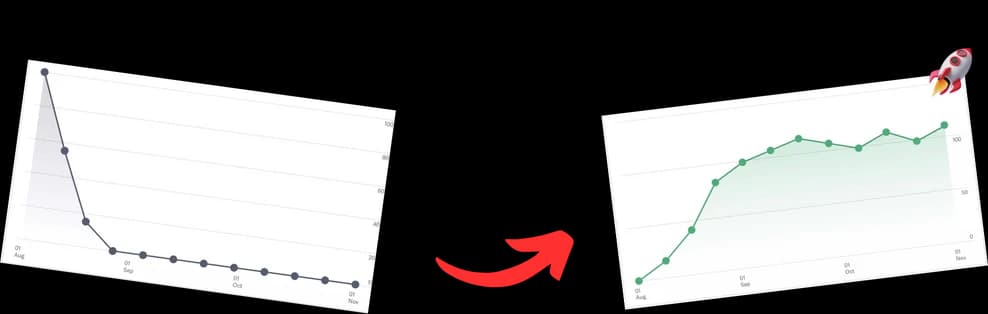
Your phone keeps lighting up. New YouTube comments. A Discord thread going sideways. An Instagram DM asking the same question you answered yesterday. A podcast listener wants the link you mentioned at minute 38. Another viewer says they loved the episode but couldn't find the exact section they wanted to share.
That's usually the moment creators realize they don't have a community. They have activity.
A solid community management strategy turns that activity into something useful. It gives people a reason to return, a place to help each other, and a clear sense of what kind of participation matters. For video creators and podcasters, that matters even more because your audience often engages across multiple surfaces at once: comments, live chat, DMs, Discord, newsletters, community tabs, and private groups.
Generic advice usually stops at “post consistently” and “reply to comments.” That's not enough. You need structure, boundaries, recurring formats, and a way to connect discussion back to the actual content you publish.
More Than Likes Why a Real Community Strategy Matters
A lot of creators confuse audience response with community health. If a video gets comments, it feels like things are working. If a Discord server has new messages, it feels active. But scattered reactions don't automatically create loyalty.
Real community management starts when you treat those interactions as part of a system, not a pile of notifications.

What changes when you get strategic
A deliberate community management strategy gives your audience a few things they can't get from passive viewing alone:
- A reliable place to gather: People know where discussion happens and what kind of posts belong there.
- A reason to return: Recurring prompts, follow-ups, and creator presence turn one-time viewers into regular participants.
- A path to contribute: Members don't just consume. They ask better questions, help newcomers, and surface ideas you can use in future content.
- A stronger feedback loop: Instead of guessing what resonated, you see where discussion deepens, stalls, or spins into confusion.
That's why this work isn't optional anymore. 86% of businesses report that community management is essential for their success, and brands with proactive engagement see a 70% increase in customer retention according to CreatorLabz's community management statistics and trends. For creators, that maps directly to audience loyalty, repeat viewing, and stronger word of mouth.
Practical rule: If your audience only hears from you when you publish, you're building a content schedule, not a community.
Likes are weak signals
A like is frictionless. A comment is stronger. A useful reply between members is stronger still. The strongest signal is when your audience starts helping shape the culture of the space without needing you to force every interaction.
That usually doesn't happen by accident. It happens when you design prompts that invite real participation and then show people what good participation looks like. If you want ideas for that front-line work, this guide on strategies for turning comments into growth is worth reading because it focuses on moving beyond reactive replies.
For creators trying to get more intentional with that process, TimeSkip also has a useful piece on audience engagement strategies that connects interaction patterns to stronger content follow-through.
Define Your Community's Purpose and People
Most weak communities fail before they launch. Not because the platform is wrong, but because the purpose is fuzzy.
If you can't answer “why does this space exist?” in one sentence, your members won't know what to do once they join.
Write a mission people can feel
A useful mission statement isn't branding copy. It's an operating filter.
Bad version: “A place for creators to connect and grow.”
Better version: “A space where long-form video creators trade tactics, get feedback on episodes, and discuss what's working on YouTube this week.”
That second version gives you something concrete to manage against. It tells you what belongs, what doesn't, and what kinds of conversations you should encourage.
Use this simple test:
- Does it name the audience clearly?
- Does it define the value of joining?
- Does it make moderation easier?
If your mission doesn't help you reject off-topic content, it's too broad.
A community with no purpose usually fills up with self-promotion, vague chatter, and unanswered questions.
Build around member jobs, not demographics
Age and location rarely tell you enough about how to manage a creator community. Behavior does.
A YouTube educator, a solo podcaster, and a marketing lead might all be the same age. They still need very different things from the space. One wants feedback on teaching clarity. Another wants distribution ideas. The third wants content that supports a business pipeline.
Start by mapping members by what they're trying to accomplish.
Four useful creator segments
-
The Quiet Observer
Reads everything, rarely posts, often saves links. This member needs low-pressure prompts such as polls, reaction buttons, and “reply with one sentence” threads. -
The Practical Contributor
Shares tools, workflows, and lessons from publishing. This person often becomes the backbone of a healthy group because they answer questions before you do. -
The Superfan Contributor
Shows up early, comments often, attends live sessions, and brings energy. This person can help welcome others, but they also need guardrails so the space doesn't become their personal stage. -
The Transactional Joiner
Shows up with one problem, such as “how do I title this episode?” or “what mic setup are you using?” They can become long-term members if onboarding points them toward useful recurring formats.
Ask better planning questions
Before launch, answer these in plain language:
| Question | What you're trying to learn |
|---|---|
| Why would someone join today? | Immediate value |
| Why would they come back next week? | Habit and relevance |
| What kind of member do we want more of? | Culture design |
| What behavior damages the space fastest? | Moderation priorities |
A lot of creators skip this step because it feels less urgent than posting. That's a mistake. Once a community develops the wrong culture, fixing it is harder than starting with sharper intent.
Develop Your Content and Engagement Playbook
The easiest way to burn out as a community manager is to improvise every day.
You log in, see silence, and start asking random questions. You post because the calendar says “be active,” not because the post belongs to a system. Members feel that inconsistency fast. They don't always complain. They just stop checking in.
A playbook fixes that. It gives your community a rhythm and gives you repeatable formats you can run without reinventing everything each week.

What a useful playbook looks like
The strongest playbooks are simple. They tell you what gets posted, where it lives, who owns it, and what kind of response counts as success.
That structure matters. Communities led by a manager using evidence-informed strategies achieve 70 to 80 percent higher sustainability than ad-hoc efforts, as noted in this PMC analysis on thriving online communities.
For creators, that usually means building around recurring formats tied directly to your publishing schedule.
Example weekly rhythm for a video creator
-
Monday review thread
Post one insight, mistake, or audience question from the latest upload. -
Midweek chapter discussion
Pull out one specific segment from the video and ask a narrow question about it. -
Friday feedback thread
Invite members to share a thumbnail, title, hook, or episode angle for review. -
Weekend spotlight
Feature a useful member contribution, a strong audience question, or a helpful resource.
This works because people learn what to expect. You aren't chasing novelty. You're building habits.
Five engagement moves that actually work
Here are the formats I've seen perform best for creator communities because they lower friction and create better conversation quality.
-
Chapter-based Q&A
Don't ask, “Thoughts on the episode?” Ask, “At the section about guest outreach, what part do you disagree with?” Specific prompts get specific replies. -
Creator teardown threads
Review a hook, intro, title, or segment structure. People learn faster from concrete artifacts than abstract advice. -
Member wins with context
Ask members to share what changed, why they tried it, and what happened next. That produces better discussion than generic celebration posts. -
Behind-the-scenes polls
Let members influence your next tutorial, guest topic, or publishing choice. Small decisions create investment. -
Office-hours posts
Set a time window and answer questions live inside one thread. That contains chaos and teaches members where to ask.
“If a format works once, document it. If it works three times, schedule it.”
If you want a broader template for operational consistency, this post on Halo AI's autonomous support and success tools is useful because it shows how teams turn repeated interactions into a working playbook instead of relying on memory.
For YouTube-specific execution, TimeSkip's guide to the community tab on YouTube is a smart companion because it helps turn those recurring prompts into native platform touchpoints.
Establish Clear Guidelines for a Safe and Positive Space
A community without boundaries doesn't feel open. It feels risky.
The loudest members dominate, newer people hold back, and useful contributors start wondering why they should bother. Safety isn't a “nice to have” layer you add later. It's part of the value you offer.
Keep the rules short and visible
Most creators overcomplicate guidelines. They write legal copy nobody reads. What works better is a short public standard written in normal language.
A strong first draft usually covers:
- Respect for people: No harassment, hate speech, dogpiling, or personal attacks.
- Respect for attention: No spam, repetitive posting, or hijacking threads.
- Respect for the mission: Keep posts relevant to the group's purpose.
- Respect for trust: Don't impersonate, scrape member content, or share private messages without permission.
- Respect for contribution quality: Self-promotion only in approved threads or with clear context.
Post those rules where new members can't miss them. Pin them. Link them in onboarding. Reference them when moderating so enforcement feels grounded rather than personal.
Use an enforcement ladder
You need consistency more than toughness. Most problems don't require a dramatic ban on first contact. They require a visible process.
A simple ladder works well:
- Friendly redirect for accidental mistakes.
- Clear warning when behavior continues.
- Temporary removal or mute if the person ignores guidance.
- Permanent ban when someone repeatedly harms the space or breaks major trust.
The point of moderation isn't to win arguments. It's to protect the conditions that let good members participate.
Popular members can still damage a community. In fact, they often do more damage because others copy them. If someone drives engagement but makes the space harder to use, they're not an asset. They're a cost.
Don't let AI make you sound cold
A lot of solo creators now use AI to draft reminders, warnings, and onboarding messages. That's fine. Just edit the tone before posting. Moderation language should sound human, calm, and specific.
If you draft with AI and the result feels stiff, tools that humanize chatgpt text can help you soften the wording before sending it to a real person. The point isn't to hide AI use. It's to avoid sounding robotic when trust is already fragile.
Select Your Tools and Measure What Truly Matters
A creator community doesn't need a giant software stack. It does need tools that match the way members already interact.
That usually means choosing one primary space for conversation, one publishing rhythm, one moderation workflow, and one reporting habit. Problems start when creators bolt on too many tools and then wonder why nobody knows where to show up.
Choose tools by job, not by trend
Discord is good for fast-moving conversation and peer interaction. Circle is cleaner for structured threads and member journeys. YouTube's comments and community features work well when you want discussion close to the content itself. Slack can work for paid or high-intent groups, but it often feels like work to casual members.
Use this filter before adding anything new:
| Tool type | Best use | Common mistake |
|---|---|---|
| Discussion platform | Ongoing conversation | Launching it before seeding prompts |
| Scheduling tool | Publishing consistency | Automating without active follow-up |
| Moderation tool | Managing risk and spam | Relying on it instead of human judgment |
| Analytics dashboard | Tracking health | Stuffing it with vanity metrics |
| AI workflow tool | Summaries, tagging, prompts | Using it to replace real interaction |
For video creators and podcasters, AI is most useful when it creates better discussion inputs. A clean example is using generated video chapters to identify exact moments worth discussing. Instead of posting “Any thoughts on the episode?” you can post “What did you think about the argument in the section on sponsor reads?” That moves the community from vague reaction to focused exchange.
Stop reporting numbers that don't change decisions
Many creators track the easiest metrics because platforms surface them first. Total members. Total reactions. Raw comment count. Those aren't useless, but they don't tell you much about whether the community is healthy.
What matters more is whether people return, participate, refer others, and help each other.
Effective community management requires tracking the right metrics. Vital KPIs include active members, engagement rates, referral traffic from the community, and for video creators, chapter-specific engagement that can support retention and discovery, based on Vantaca's breakdown of community management metrics.
Field note: If a metric looks good but doesn't help you decide what to do next week, it probably belongs in a secondary report, not your main dashboard.
Creator Community KPI Dashboard
| Metric | What It Measures | Good Target (Monthly) |
|---|---|---|
| Active members | How many people post, comment, vote, or attend | Define a stable internal baseline and improve it gradually |
| Engagement rate | Whether members interact with prompts and each other | Look for consistent participation, not one spike |
| Referral traffic from community | Whether community activity sends people back to videos, episodes, or offers | Track trend direction by channel |
| Returning contributors | Whether the same members come back to participate again | Aim for repeat behavior from your best-fit members |
| Chapter-specific engagement | Which parts of long-form content trigger discussion | Focus on threads that produce useful replies, not just reactions |
| Support deflection or peer answers | Whether members help one another before you step in | Increase the share of questions answered by the community |
| Sentiment notes | Tone of discussion across recurring topics | Watch for drift toward confusion, hostility, or fatigue |
The “good target” column stays qualitative on purpose. Your right benchmark depends on size, format, and maturity. A small private creator group can be healthy with fewer but deeper conversations. A larger public audience might need more visible activity to feel alive.
If you want a better framework for connecting those metrics to actual content decisions, TimeSkip's guide on how to measure content performance is a useful reference.
Keep the dashboard small
If you're managing this solo, track fewer things. A short dashboard reviewed every month beats a bloated one you abandon after two weeks.
My recommendation is simple:
- One health metric such as active members
- One habit metric such as returning contributors
- One business-adjacent metric such as referral traffic
- One content-quality metric such as chapter-specific discussion depth
- One risk metric such as sentiment or moderation incidents
That set gives you enough signal to improve the community without drowning in reporting.
Your 90-Day Launch Plan and Common Pitfalls to Avoid
A creator launches a Discord or private group the same week a new video series or podcast drops. Day one looks promising. A few loyal fans join, react, and say they're excited. By week three, the creator is behind on replies, the prompts feel generic, and new members walk into a room with no clear rhythm.
That pattern is common because community launches fail on operations, not enthusiasm.

Days 1 to 30
Set up the minimum system you can run consistently. For a video creator or podcaster, that usually means one primary platform, a short welcome message, clear rules, and two or three recurring post formats tied to the content you already publish.
Start with a small invited group of existing viewers, listeners, or clients who already comment, reply to newsletters, or show up in live chats. They are more likely to model the behavior you want. Seed the space before opening it wider. Post a discussion thread for a recent episode, ask for timestamp-specific reactions, and add one practical prompt members can answer fast, such as “Which section lost you?” or “What would you cut from this intro?”
AI can help here if you use it carefully. Use it to pull key themes, timestamps, quote cards, or episode questions from long-form content. Do not use it to mass-produce bland prompts that sound like a worksheet. Members can tell the difference.
Days 31 to 60
Now test the routine under real conditions.
Welcome people manually if the group is still small. Reply quickly enough that early members feel the room is active. Highlight strong member contributions, especially posts that add context, examples, or useful disagreement instead of simple praise.
This is the stage where weak formats become obvious. A broad networking thread often dies. A prompt tied to a specific clip, chapter, segment, guest quote, or production choice usually performs better because people have something concrete to respond to.
Watch workload closely. If you publish weekly videos or podcast episodes, your community cadence should match that production reality. One strong discussion thread per release is often better than trying to force daily activity. Solo creators get into trouble when they build a posting schedule that only works during their lightest week.
Days 61 to 90
Use the first two months of behavior to tighten the model.
Look at which episode threads led to real back-and-forth, which prompts brought returning contributors back, and which members started helping others without being asked. For creators, useful signals often include comments per discussion thread, returning contributors, member posts that reference a specific video or episode segment, and whether community discussion sends people back to watch or finish content.
This is also a good time to review AI-assisted workflows. Keep the parts that save time, such as summarizing episode topics or drafting moderation notes. Cut anything that makes the space feel automated or generic.
By day 90, the goal is not scale. The goal is a repeatable rhythm that still works when you are busy, traveling, or in the middle of production.
Common pitfalls that wreck early momentum
Running the community like an extra content channel. A community needs interaction, not just distribution. If every post is another announcement, members learn that their role is to consume, not participate.
Trying to answer every message yourself. That works for a week, then it turns into a support queue. Ask questions that invite members to compare workflows, share gear setups, critique hooks, or trade editing advice. Peer conversation makes the group more durable.
Using prompts that are too vague. “Any thoughts?” is weak. “Which chapter should have been shorter?” gives people a clear starting point. Specificity matters even more for video and podcast communities because members often respond best to a clip, timestamp, title test, or guest moment.
Promising more access than you can maintain. If you suggest constant founder presence, members will notice every gap. Set expectations early. For example, say you review threads after each episode release and host one live Q&A per month. Reliability beats intensity.
Judging success by visible activity alone. A thread with fifty low-effort reactions can matter less than five detailed replies that shape your next episode, improve retention, or spark member-to-member help. Early on, I would rather see a smaller group discussing a specific segment in depth than a busy feed full of empty agreement.
Healthy communities grow from repeatable habits, clear expectations, and prompts tied to real content people already care about.
Frequently Asked Questions About Community Management
How do I handle one disruptive but popular member
Address behavior, not status. If someone drives replies but regularly derails threads, apply the same rules you'd apply to anyone else. Start with a direct message that names the issue, the expected change, and the consequence if it continues. If you make exceptions for high-visibility members, everyone notices.
What's a realistic time commitment for a solo creator
Start smaller than you want to. A few recurring posts, clear office hours, and consistent moderation will beat daily improvisation. The right commitment is the one you can maintain without resenting your own community.
How do I restart a quiet community
Don't ask the whole group for generic feedback. Restart with a narrow prompt tied to a real artifact: a clip, a title, a chapter, a poll, or a member question. If you use surveys, remember that response rates can be low. A 5% response rate means you'd need to contact 6,000 members to get 300 responses, as explained in FeverBee's guide to community metrics. In practice, direct observation of behavior is often more useful than waiting on a survey.
If you run a YouTube channel or podcast and want a simpler way to turn long-form content into clearer discussion prompts, better navigation, and stronger search visibility, TimeSkip is built for that workflow. It generates SEO-friendly YouTube chapters fast, which makes your videos easier to explore, easier to discuss, and easier for viewers to revisit.