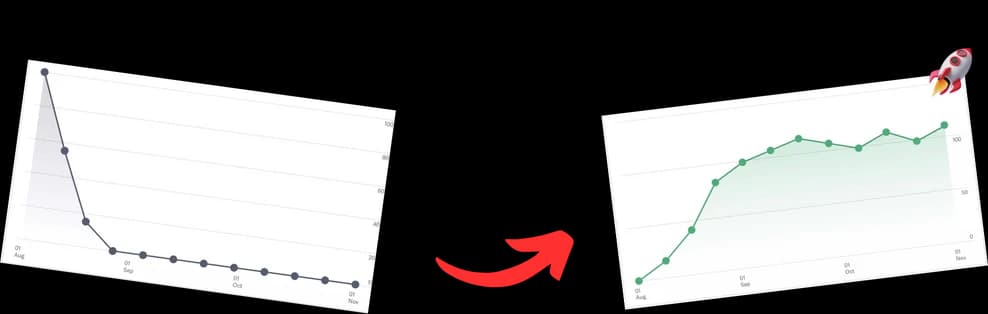
You're probably at the point where the videos are better than they were six months ago, the editing is tighter, the hooks are sharper, and the upload cadence is finally stable. But the channel isn't moving the way it should. A few videos pop, most stall, and every upload feels like a coin flip.
That's usually when creators start looking at a youtube seo agency.
Sometimes that's the right move. Sometimes it's expensive overkill. The smart decision isn't “agency or nothing.” It's figuring out whether you need a strategist, an operator, or just a faster way to handle a few high-value SEO tasks without handing over your whole channel.
When Your YouTube Growth Hits a Wall
A growth wall on YouTube rarely means your content is hopeless. More often, it means your videos are no longer getting enough clean discovery signals. The topic might be right, but the packaging is off. The title might be close, but not close enough. The video might be useful, but the metadata and structure aren't helping YouTube understand who should see it first.
That problem matters because the upside is massive. YouTube has 2.6 billion monthly users, and only about 4.4% of those users have channels, according to Hootsuite's YouTube statistics summary. That means most of the platform is audience, not publisher. Discoverability is the game.
When creators hit this plateau, they usually blame the algorithm. I'd frame it differently. The algorithm is mostly a distribution system. If your video sends mixed signals, distribution gets weak. If it sends clear signals and viewers respond, YouTube keeps testing it.
Common signs you've hit the wall:
- Strong content, weak launch: Your audience likes the video, but new viewers don't find it.
- Flat browse and search performance: Videos get some loyal-viewer activity, then fade.
- No compounding library effect: Older videos aren't continuing to pull in meaningful search traffic.
- Inconsistent winners: One video takes off, but you can't explain why, and you can't repeat it.
Practical rule: If you're publishing consistently and still can't tell whether your bottleneck is topic selection, packaging, retention, or metadata, you don't have a content problem alone. You have a diagnosis problem.
That's the opening for a youtube seo agency. A good one doesn't “hack” YouTube. It identifies where discoverability is breaking, then fixes the parts that influence search and recommendation performance.
What Exactly Is a YouTube SEO Agency
A youtube seo agency is a specialist team that helps videos get found, clicked, watched, and connected to business outcomes. Think of it as a search-and-distribution partner for YouTube, not a magic button.

What agencies actually work on
Years ago, YouTube SEO was treated like a metadata game. Add a keyword to the title, stuff the tags, write a long description, and hope the video ranked. That's outdated.
Today, ranking signals include watch time, click-through rate, audience retention, and user engagement, as noted by SEO Sherpa's overview of YouTube SEO. Agencies exist because optimizing for that mix is more operational than most creators expect.
A capable agency usually helps with:
- Search intent mapping: matching topics to the phrases people use
- Packaging strategy: titles, thumbnails, and opening hooks that align with viewer intent
- Metadata cleanup: making descriptions, tags, and playlists reinforce the main topic
- Retention diagnosis: reviewing drop-off points and identifying why viewers leave
- Channel structure: playlist logic, content clusters, and internal traffic flow
- Reporting: tying performance back to goals such as leads, sales, sponsorship value, or subscriber growth
What they do not do
A real agency won't control the algorithm, guarantee rankings, or rescue weak content with SEO alone. If the video misses the audience need, no amount of title polishing fixes that.
They also can't replace channel taste. They can help shape a better editorial process, but they shouldn't become the voice of the channel unless you specifically want that.
The best agency work feels boring in the right way. Cleaner targeting, clearer packaging, fewer wasted uploads, and better feedback loops.
Why this role became more valuable
The complexity went up. YouTube isn't just deciding whether a keyword matches a title. It's evaluating whether the viewer who clicked was satisfied enough to keep watching, engage, and continue a session.
That's why a youtube seo agency is often part strategist, part analyst, and part production-side advisor. They're not just tuning metadata. They're trying to reduce friction between a search query, a thumbnail click, and the actual viewing experience.
If you expect a shortcut, you'll be disappointed. If you want a partner who can make distribution more predictable, the category makes sense.
Core Services and What Success Looks Like
When creators hire an agency, they often buy a vague promise: “We'll grow your channel.” That's too fuzzy to manage. You need to know what work is being done and what result should follow from each part of that work.

Metadata work that actually matters
One of the most impactful agency tasks is simple and often overlooked: metadata precision. Best practice guidance recommends putting the primary keyword in the first 25 words of the description and using the first tag as the main target keyword, as outlined in 3Play Media's YouTube SEO tips.
That doesn't mean loading every field with variations. It means building a clean primary topic signal.
A solid agency should be able to explain:
- why one keyword is primary and others are secondary
- how the title aligns with search intent
- whether the description reinforces the same topic
- whether tags are clarifying the video or muddying it
If you want a practical baseline for reviewing your own uploads, this YouTube SEO checklist is a useful starting point.
Service by service and the KPI that matches it
Here's what I'd expect from core agency work, and how I'd judge it.
| Service | What the agency should improve | KPI to watch |
|---|---|---|
| Topic and keyword research | Better alignment between videos and searchable demand | Search impressions, search-driven views, relevant queries |
| Title and thumbnail packaging | More qualified clicks from the right audience | Click-through rate, impression-to-view efficiency |
| Description, tags, playlist optimization | Clearer topical relevance and better indexing | Search visibility, suggested relevance, consistency across uploads |
| Retention analysis | Fewer early drop-offs and better viewer satisfaction | Audience retention, average view duration, key drop-off points |
| Content planning | More videos with repeatable discovery potential | Hit rate across uploads, library contribution over time |
| Reporting and attribution | Better link between channel work and business results | Site visits, lead quality, product interest, assisted conversions |
A strong agency should talk about these metrics in context. For example, a higher click-through rate with worse retention can mean packaging improved but audience fit got worse. More views with weak downstream action can mean discovery rose but buyer intent didn't.
This walkthrough is worth watching if you want a broader sense of how YouTube optimization fits together in practice:
What success looks like in the real world
Success isn't “more everything.” That's not how healthy channels grow.
Look for signs like these:
- Search traffic becomes less random. You can explain why certain videos pull discovery.
- Upload reviews get sharper. The agency can point to title mismatch, weak hooks, or messy metadata instead of saying “the algorithm didn't pick it up.”
- Older videos keep working. The library starts behaving like an asset, not a graveyard.
- Reporting matches your model. A creator channel may care most about recurring views and subscriber conversion. A business channel may care more about site traffic and qualified demand.
If an agency report is full of views, impressions, and subscriber counts but says nothing about what changed operationally, you're reading a scoreboard, not a strategy document.
Demystifying YouTube SEO Agency Pricing
Agency pricing feels opaque because many firms bundle strategy, execution, creative guidance, and reporting into one monthly number. The better way to evaluate price is by asking what level of involvement you need.
Some creators need a one-time diagnosis. Others need recurring hands-on support. A few want outside ownership of the entire SEO layer.
Here's the cleanest way to think about common pricing structures.
| Pricing Model | Typical Cost | Best For | Key Consideration |
|---|---|---|---|
| Monthly retainer | Ongoing monthly fee | Creators or brands that want recurring strategy and execution | Best when you need continued testing, reporting, and iteration |
| Project-based | One-time fixed fee | Channels that need an audit, metadata overhaul, or launch support | Useful when the problem is specific and clearly scoped |
| Performance-based | Compensation tied to agreed results | Select partnerships where tracking and incentives are tightly defined | Hard to structure well because attribution on YouTube can get messy |
Retainers are the default for a reason
A retainer works when the agency is actively involved in publishing cycles. They review topics, shape packaging, monitor retention, refine metadata, and report back consistently.
That's the model I'd choose if your channel is already a business asset and uploads are frequent enough to justify continuous optimization. Without enough volume, a retainer can become expensive maintenance.
Projects make sense for narrow problems
Project pricing is a better fit when you know what's wrong, or at least where to look.
Examples include:
- A channel audit: finding structural SEO issues and workflow gaps
- A content packaging sprint: rewriting titles, descriptions, and playlists
- A launch package: supporting a product push, series launch, or rebrand
This model is often better for smaller creators because it gives clarity. You buy a deliverable, not a vague ongoing relationship.
Performance deals sound good, but need caution
In theory, performance-based pricing aligns incentives. In practice, YouTube performance is influenced by content quality, publishing consistency, audience fit, and conversion setup, not just SEO work.
That makes these contracts tricky. If you consider one, define the success metric carefully. “More views” is weak. “Higher search visibility on a defined content set” is better. “Qualified traffic to a product page” is even better if the channel supports that path.
The wrong pricing model doesn't just waste money. It usually creates the wrong incentives.
Your Vetting Checklist for Hiring an Agency
The biggest mistake creators make is hiring on presentation quality. A slick deck doesn't tell you whether the agency can diagnose why your channel is underperforming.

Ask for operating detail, not marketing language
You want to hear how they think. Ask what they would review in the first month. Ask how they prioritize a title problem versus a retention problem. Ask how they decide whether a video missed on topic selection or packaging.
Good answers sound specific. Weak answers sound like recycled SEO jargon.
Use this checklist:
- Show me your diagnostic process. What data do you review before recommending changes?
- Show me a reporting example. I want to see how you explain wins, misses, and next actions.
- Show me how you handle weak retention. If a video gets clicks but loses viewers early, what do you change next?
- Show me niche understanding. Have you worked with channels where the viewer intent is similar to mine?
- Show me contract terms. How long is the commitment, and what happens if the fit is poor?
If you're comparing service providers more broadly, this guide to YouTube marketing services helps clarify where SEO support fits versus broader channel growth work.
ROI questions matter more than ranking talk
Many creators hire agencies because they want proof that YouTube is contributing to something meaningful. That's the right instinct. According to Floating Chip's YouTube SEO guidance, 70% of YouTube users report buying from a brand after seeing it on YouTube. That's why ROI conversations should go beyond rankings and views.
Ask questions like:
- What KPIs would you use for a creator channel versus a B2B or product-led channel?
- How do you connect organic video discovery to website visits or lead generation?
- What counts as a successful quarter beyond subscriber growth?
- How do you separate vanity metrics from commercial metrics?
Reality check: If an agency can only talk about rankings, it may understand visibility but not value.
Red flags that should slow you down
Some warning signs are immediate.
- Guaranteed rankings: no serious agency can promise this.
- Heavy focus on tags alone: that's outdated thinking.
- No process for attribution: especially a problem if your channel supports products or services.
- Generic case-study talk: if they can't describe the problem they solved, the result doesn't mean much.
- Poor communication before the contract: it won't improve after you sign.
One more thing. Ask who does the work. A senior strategist selling the account and a junior team executing it isn't automatically bad. But you should know the difference.
The Big Decision Hire an Agency or DIY with Tools
This is the decision that matters most. Not whether agencies work. They can. The actual question is whether full-service help is the best use of your current money and attention.

When an agency is worth it
Hire an agency when the bottleneck is strategic and ongoing.
That usually looks like this:
- you have enough upload volume to justify recurring optimization
- your channel supports a business model where better discovery has clear value
- your team lacks internal bandwidth to review metadata, packaging, retention, and reporting every week
- you need accountability and an outside point of view
If those conditions aren't true, a retainer can feel heavier than the problem you're solving.
When tools are the smarter buy
A lot of creators don't need an agency. They need help with a few repetitive tasks that affect discoverability and viewer experience.
That matters more now because the search surface is changing. Google and YouTube are increasingly surfacing specific video segments and chapters, shifting the game from ranking the whole video to owning the best answer slice, as described in OutlierKit's YouTube keyword research guide.
That means tools can solve real SEO work, especially for long-form creators.
Examples:
- TubeBuddy for workflow support and metadata assistance
- vidIQ for research and competitive observation
- Canva for thumbnail production
- TimeSkip for generating SEO-focused chapters and timestamps inside the YouTube workflow
- this roundup of best YouTube SEO tools if you want to compare categories before paying for an agency
Don't outsource a workflow problem to an agency if a tool can remove it faster and cheaper.
A practical decision rule
Use an agency if you need diagnosis, strategy, and recurring operational help.
Use tools if:
- the channel strategy is already clear
- your main pain points are execution speed
- you can review performance yourself
- the missing pieces are chapters, descriptions, title ideas, or packaging workflow
Most creators should start narrower than they think. Fix the obvious process gaps first. If growth is still stalled after that, then agency help becomes easier to justify and easier to evaluate.
Frequently Asked Questions About YouTube SEO Agencies
| Question | Answer |
|---|---|
| How long does a youtube seo agency take to show results? | It depends on the channel, upload frequency, topic fit, and how severe the packaging or retention issues are. SEO work on YouTube usually compounds over time rather than changing everything after one upload. |
| Is a youtube seo agency worth it for a small channel? | Sometimes. If your problem is lack of strategy or repeated execution mistakes, outside help can save time. If your issue is simply inconsistent publishing or weak content-market fit, an agency won't fix that alone. |
| Can an agency guarantee first-page rankings on YouTube? | No. Serious agencies should talk about process, testing, and probability, not guarantees. |
| What's the difference between a YouTube SEO agency and a general marketing agency? | A specialist youtube seo agency focuses on search intent, metadata, packaging, retention, and discovery inside YouTube. A broader marketing agency may help with promotion, paid media, brand strategy, and campaign work beyond the channel itself. |
| Should I hire an agency or buy tools first? | Buy tools first if your pain points are narrow and operational. Hire an agency when you need strategic diagnosis, recurring execution, or stronger reporting tied to business outcomes. |
| What should I ask for in monthly reporting? | Ask for changes made, why they were made, what happened after the changes, and what the next actions are. Raw metrics alone aren't enough. |
| Do agencies help with thumbnails and hooks too? | The stronger ones do, because search performance and retention are tied to how the video is packaged and how it starts. If an agency only touches tags and descriptions, the scope is probably too shallow. |
If your main YouTube SEO bottleneck is chapter creation and search-friendly video structure, TimeSkip is a practical place to start. It helps generate chapters and timestamps quickly, which is useful when you want better segmentation and cleaner optimization without committing to a full agency retainer.