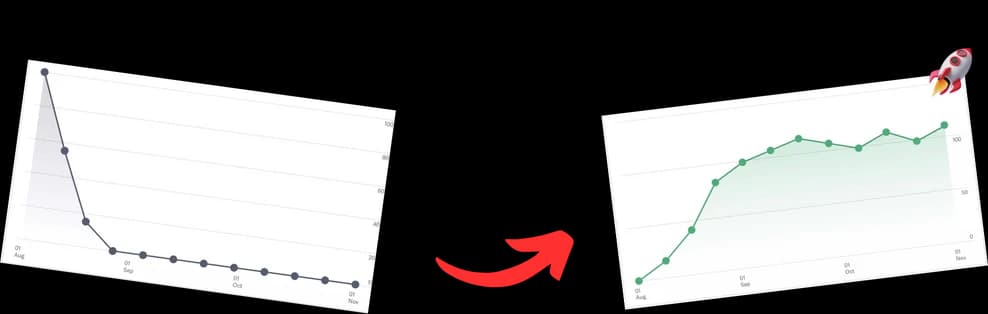
More than 500 hours of video are uploaded to YouTube every minute. Competition is intense, but the pattern I see across audits is consistent. Many channels are still held back by execution problems they can fix: weak packaging, vague structure, poor topic targeting, and almost no post-publish review process.
YouTube growth usually comes from repeatable operating habits, not isolated wins. Strong channels treat each upload like a test. They set a clear topic, package it for clicks, structure it for retention, and review the metrics that explain viewer behavior, not just the view count. YouTube's creator guidance consistently points creators toward signals like click-through rate, average view duration, traffic sources, and returning versus new viewers because those metrics show where the system is working and where it is leaking.
That is the angle behind this list.
These YouTube creator tips are organized as a workflow you can run. Each section ties a tactic to implementation, a measurement point, and an iteration step for the next upload. That includes production choices like chaptering and long-form structure, publishing choices like titles and descriptions, and review loops built around retention curves and audience response. For creators publishing tutorials, podcasts, interviews, education content, or brand-led series, that process is what turns advice into output.
A tool like TimeSkip's guide to YouTube chapters fits into that system because it solves a practical production problem. Better segmentation helps viewers find the part they want faster, and it gives you another layer to evaluate after publish. If viewers repeatedly jump to one chapter and leave after another, that is an editorial signal you can use on the next video.
Small improvements stack fast on a platform this large. Better topic selection can raise click-through rate. Better structure can hold viewers longer. Better review habits can show you which formats bring in new viewers and which ones only serve the audience you already have. The goal is not to chase random growth tactics. It is to build a publishing process that gets sharper with every upload.
1. Master YouTube Chapter Optimization for Better Video Segmentation
Chapters are one of the most underused growth levers in long-form YouTube. Most creators treat them as cleanup work at the end of editing. That's a mistake.
For podcasts, interviews, tutorials, and educational videos, chapters help viewers jump to the part they care about without abandoning the video. They also make the content easier for YouTube to interpret. If your video covers multiple subtopics, chapters give that structure a visible shape.

YouTube guidance and mainstream creator advice often mention timestamps, but chapters are still under-explained as a practical growth workflow. That gap is especially relevant for long, information-dense formats, where viewers often want selective access before they commit to the full watch. If you want a solid implementation primer, this guide on YouTube chapters is a useful starting point.
How to write chapters that help
Weak chapters look like this: “Part 1,” “Part 2,” “More Tips,” “Final Thoughts.”
Useful chapters look like this: “Choosing a YouTube Niche,” “Fixing Low Audience Retention,” “Thumbnail Mistakes That Kill CTR.”
The difference is clarity. A podcast channel can label a segment “How founders raise seed capital” instead of “Fundraising talk.” A tutorial creator can use “Set up color grading nodes in DaVinci Resolve” instead of “Editing section.” The better version helps both viewers and search systems understand the segment.
Practical rule: Write chapter titles the way a viewer would search or scan, not the way an editor labels a timeline.
A simple workflow works well:
- Draft chapters during outlining: Add tentative segment names before you record so the structure is built into the video.
- Rename after edit review: Tighten each chapter title once you know what the section delivers.
- Check retention against chapter transitions: If viewers leave at a chapter break, the segment title may overpromise or the transition may feel abrupt.
2. Leverage Long-Form Content Strategy to Maximize Watch Time
Long-form still works exceptionally well when the topic justifies the runtime. That includes podcasts, explainers, product breakdowns, interviews, lectures, walkthroughs, and tutorials.
Creators often ask whether they should go short or long. The better question is whether the format matches the promise in the title and thumbnail. A 30-minute tutorial can work if viewers came for depth. A 30-minute opinion piece usually struggles if the insight could have been delivered in eight minutes.
YouTube's own strategy guidance emphasizes analytics over posting frequency alone. It recommends using analytics to understand audience habits, CPM and RPM, and what content drives monetization and growth, while independent analytics guidance highlights watch time, audience retention, impressions click-through rate, traffic sources, new versus returning viewers, and top YouTube search terms as practical decision inputs in a YouTube content strategy workflow.
Make long videos feel easy to consume
A good long-form video doesn't feel long. It feels segmented, paced, and intentional.
That usually means:
- Front-load orientation: Tell viewers what they'll get in the first stretch of the video.
- Use visible structure: Chapters, lower thirds, or verbal signposts reduce fatigue.
- Change texture: Switch camera angle, add screen recordings, B-roll, examples, or graphics when the energy starts to flatten.
A podcast creator might break a 90-minute interview into topic blocks like origin story, operating lessons, mistakes, and tactical takeaways. An educator might split a lesson into concept, demo, troubleshooting, and recap. The point isn't to stretch runtime. It's to earn it.
When long-form fails, the problem usually isn't length. It's drift.
3. Implement Strategic Keyword Research for Video Titles and Descriptions
Keyword research on YouTube isn't about stuffing phrases into metadata. It's about matching your topic to the language viewers already use.
Broad keywords are tempting because they feel high value. They're also usually crowded and vague. “YouTube SEO” may be too broad for a small creator to win consistently. “How to write YouTube chapters for podcast episodes” is narrower, but it often matches stronger intent.
YouTube research workflows are getting more query-led. Creator-focused guidance points to the Research tab for what viewers are searching for, the Reach tab on successful videos for the search terms that brought viewers in, and competitor comment sections for recurring unanswered questions. That makes topic planning much more concrete than generic “know your audience” advice, as explained in this YouTube search research walkthrough.
A practical keyword workflow
I'd structure keyword research around three layers:
- Core term: The main topic, like “email marketing tutorial.”
- Intent modifier: The problem or audience, like “for beginners” or “for ecommerce.”
- Format clue: The delivery style, like “step by step,” “checklist,” or “case breakdown.”
That gives you title directions such as “Email Marketing Tutorial for Beginners” or “How to Set Up an Ecommerce Welcome Flow.”
If you want help sourcing and organizing terms, this roundup of YouTube keyword research tools is useful. The main thing is to keep titles, descriptions, spoken language, and chapter labels aligned around the same search intent.
What works and what doesn't
What works is specificity. Tutorial creators, educators, and consultants often get better traction by answering one precise problem per video.
What doesn't work is chasing a huge keyword with a fuzzy video. If your title says one thing and the first five minutes wander elsewhere, you may get the click but lose the session.
4. Optimize Video Thumbnails and Titles for Higher Click-Through Rates
Thumbnails and titles are your packaging layer. If the packaging is weak, the video often never gets a fair test.
YouTube's own creator guidance calls out click-through rate as one of four core metrics to watch because it shows how often viewers click after seeing a thumbnail and title impression. The same guidance also points creators to traffic sources and the videos that bring in new viewers over the last 90 days, which helps you identify whether packaging is attracting the right people to your channel's front door in YouTube analytics guidance for creators.
Start with the visual side.

A strong thumbnail usually does one of three things well. It shows a result, it shows a problem, or it creates contrast. Educational channels often win with a clear before-and-after idea. Podcast channels often do better when the guest's face is paired with a sharp idea hook, not just a logo and episode number.
Packaging trade-offs that matter
Creators regularly overcomplicate thumbnails. They add too much text, too many objects, or a background that competes with the focal point.
A better workflow:
- Pick one idea per thumbnail: If the viewer can't tell the point at a glance, simplify.
- Make the title finish the thought: Thumbnail and title should work together, not repeat the same line.
- Review by traffic source: A search-driven video needs clarity. A suggested-video play may benefit more from intrigue and adjacency.
If you want design references, these YouTube thumbnail best practices are worth reviewing. Teams that don't have a designer can also create stunning visuals with AI and then adapt them into cleaner YouTube-specific layouts.
This breakdown is worth watching if you're reworking your packaging process:
The title has one job. Make the right viewer curious enough to click, without misleading them about what the video delivers.
5. Create Detailed, SEO-Optimized Video Descriptions and Links
Descriptions still matter, especially for search clarity, resource linking, and viewer orientation. They aren't magic, but they are useful metadata real estate.
The biggest mistake is treating the description like a dumping ground. A wall of affiliate links, social handles, hashtags, and boilerplate channel text tells neither viewers nor YouTube much about the video. The second-biggest mistake is writing almost nothing.
Build descriptions in layers
The first lines matter most because they show before the viewer expands the description. Put the core topic there in plain English.
A practical structure:
- Opening summary: One or two lines that say exactly what the video covers.
- Navigation and resources: Timestamps, linked resources, related playlists, guest links, or tools.
- Context and support: A fuller explanation of the topic, who the video is for, and any next-step offers.
For example, a Python tutorial might open with what the lesson teaches, then list chapter timestamps, then include code resources and a related playlist. A podcast description might start with the guest's main expertise, then add timestamps, guest links, and a sentence on what viewers will learn.
Good descriptions reduce friction. They help the right viewer commit before they even press play.
Descriptions also become more valuable when they reinforce the same language used in the title, spoken intro, and chapter names. That consistency helps search clarity and makes the video feel more professionally packaged.
6. Analyze Watch Time Analytics and Retention Curves to Identify Content Gaps
Most channels don't have a content problem first. They have a diagnosis problem. They keep publishing without learning why viewers stay, leave, or return.
Retention data is where the useful answers usually live. If viewers drop during long intros, you don't need more motivation. You need a shorter intro. If they rewatch one section, you may have found a subtopic worth expanding into a standalone video.
Read the curve, then change the workflow
I like to review retention in clusters, not as isolated uploads. One video can mislead you. Ten videos usually show a pattern.
Look for recurring moments such as:
- Early drop-offs: Often caused by slow openings, vague framing, or mismatch between packaging and content.
- Mid-video dips: Often tied to repetition, a weak tangent, or a visual flat spot.
- Spikes or rewatches: Often signal a high-value explanation, a memorable quote, or a practical demonstration.
Creators with search-heavy traffic should pay especially close attention to whether the video answers the promised query fast enough. Suggested-video channels should watch whether transitions and pacing keep people moving through related content.
For long-form creators, chapter markers become useful here too. If retention repeatedly dips before the same type of segment, rename that segment, shorten it, or move it later. If a tutorial's demo sections consistently outperform theory sections, restructure future videos to get hands-on faster.
Keep the review simple
Review the first few days of data, note the obvious friction points, and feed those notes into your next script outline. That loop matters more than any single dashboard screenshot.
7. Develop a Consistent Upload Schedule and Series Structure
Irregular publishing breaks momentum in two places. Viewers stop checking for the next video, and the production team loses a repeatable workflow.
The fix is a schedule tied to capacity, not ambition. A solo creator with a day job usually performs better on one strong weekly upload than on three rushed videos that slip, underperform, and burn out the channel owner. Consistency is a planning decision before it becomes a content decision.
Series structure makes that schedule easier to keep because each upload starts from a known format. That reduces topic drift, shortens pre-production, and gives returning viewers a clear expectation.
A simple setup works well:
- Educational channels: beginner, intermediate, advanced paths on one topic
- Podcast channels: weekly interviews, monthly roundtables, recurring Q&A episodes
- Tutorial channels: setup, workflow, troubleshooting, optimization
I usually map this in a four-week cycle. Week one introduces the topic. Week two shows the process. Week three handles common problems. Week four updates the tactic or answers audience questions. That cadence gives the creator a repeatable scripting template and gives the audience a reason to keep watching across videos, not just within one upload.
Measurement matters here. Track three things for each series: publishing reliability, returning viewer patterns, and playlist progression. If a series gets steady click-through but weak return traffic, the topic may be useful without being habit-forming. If viewers watch episode one but not episode two, the packaging or sequence is off. Fix the handoff, not just the upload date.
Playlists support this system when they mirror the series logic. A finance channel can separate “Budgeting Basics” from “Investing for Beginners.” A software channel can keep naming conventions consistent across episodes so viewers can scan the archive and continue where they left off.
The goal is a schedule you can maintain for six months, with a format you can measure and improve. That is what turns consistency into channel growth instead of calendar pressure.
8. Leverage Community Engagement and Call-to-Action Strategies
Many creators handle calls to action badly. They either beg too early or avoid asking altogether.
A good CTA feels like part of the conversation. It fits the moment. If you've just explained a tactic, asking viewers what they've tried can drive stronger comments than saying “like and subscribe” on autopilot.
Use engagement prompts that produce useful signals
Specific questions outperform generic prompts because they lower the effort needed to respond.
Good examples:
- “Which chapter was most useful?”
- “What part of this workflow still feels confusing?”
- “Do you want the beginner or advanced version next?”
Weak examples:
- “Thoughts?”
- “Smash like.”
- “Comment below.”
The point isn't just more comments. It's better feedback. Community responses often reveal future topics, confusing sections, objections, and language patterns you can reuse in future titles.
Treat comments as research
If several viewers ask the same follow-up question, you may have found your next video. If viewers consistently mention one section as the most valuable, that segment may deserve its own thumbnail, title, or Short.
This is one reason YouTube keeps steering creators back to analytics and audience understanding rather than raw output. Community signals, paired with retention and traffic data, give you a much more practical editorial map than intuition alone.
9. Collaborate with Other Creators and Cross-Promote Content
Channels usually gain more from a well-matched collaboration than from a cold audience grab. The reason is simple. You are not renting reach. You are testing whether another creator's viewers will then continue into your library.
The best collabs start with audience fit, content fit, and a clear handoff path. If any of those pieces is weak, the spike looks good for a day and disappears from the metrics that matter. I usually look for adjacent creators with similar viewer intent, not just similar topics. A thumbnail design channel and a YouTube strategy channel can work well together because the audience is trying to solve connected problems. A broad lifestyle creator with a larger subscriber base often sends less qualified traffic.
Build the collaboration around a workflow
Good formats give each creator a native video, not a forced cameo.
Useful options include:
- Guest swaps: Each creator appears on the other's channel with a topic that already fits the host format.
- Split tutorials: One video covers strategy, the other shows execution.
- Expert add-ons: A specialist joins for one narrow section where their credibility is strongest.
- Two-part conversations: Part one frames the problem. Part two shows the process or results.
This works better when the viewer journey is planned before filming. Decide where the second video will be mentioned, what promise carries the viewer over, and what metric will define success. For one channel, that may be subscriber conversion. For another, it may be returning viewers or watch time from suggested traffic.
Measure collabs like a traffic test
Creators often judge a collaboration by views in the first 48 hours. That is too shallow.
Check whether the guest segment changed retention, whether subscribers from the collab video returned for the next upload, and whether the traffic source mix improved. If you use chaptering and clip tools such as TimeSkip in your workflow, review which moments got replayed or clipped after the collaboration went live. That usually shows whether the guest added real value or just novelty.
Cross-promotion also depends on timing. Publish supporting Shorts, community posts, or teaser clips before the main video so the audience recognizes the guest and understands why they matter. Then send viewers to one clear next step through the description, pinned comment, or end screen. A single strong path usually outperforms three weak ones.
10. Create Transcripts and Captions for Improved Accessibility and SEO
Caption accuracy affects retention more than many creators expect. If viewers miss a term, a product name, or one step in the process, they rewind, get confused, or leave. That is why I treat captions as part of editing and quality control, not as a final checkbox at upload.
Captions improve accessibility, but they also make videos easier to use. Tutorials become easier to follow when commands, file names, and settings are spelled correctly. Interviews hold up better when speaker changes are clear. Educational videos gain a second layer of clarity because key terms appear both in the audio and on screen.

The workflow matters here. Auto-captions are a good starting point because they save time, but they are weak at exactly the words that matter most to search and comprehension. Brand names, acronyms, technical jargon, and accented speech usually need manual cleanup.
A simple production process works well:
- Generate auto-captions first: Use them to save the first pass of transcription time.
- Edit the failure points manually: Check names, tools, product terms, commands, and any repeated phrase tied to your topic.
- Turn the transcript into working assets: Pull chapter labels, clip notes, article outlines, email summaries, and quote graphics from the same file.
This is where transcripts become a system instead of a one-off task. A clean transcript gives the editing team a reference for Shorts, gives the writer a draft source for repurposed content, and gives the channel manager a faster way to map chapters and pinned resources. If you already use tools such as TimeSkip in your workflow, a corrected transcript also makes it easier to identify strong moments worth segmenting and testing.
There is a trade-off. Manual caption review takes time, especially on long interviews or technical videos. But the return is usually strongest on content that depends on precision. I would spend that time on a finance explainer, software walkthrough, legal interview, or educational series long before I would spend it polishing a casual vlog.
Muted viewing also changes the equation. Many viewers watch in public, at work, or with divided attention. Clean captions help the video survive those conditions without losing the core message.
The practical rule is simple. Publish captions that are accurate enough to preserve meaning, then reuse the transcript everywhere else in your workflow. That improves accessibility, reduces viewer friction, and gives your team more material to test, package, and refine after the video goes live.
10-Point YouTube Creator Tips Comparison
| Item | 🔄 Implementation complexity | ⚡ Resource & speed | 📊⭐ Expected outcomes | 💡 Ideal use cases | ⭐ Key advantages |
|---|---|---|---|---|---|
| Master YouTube Chapter Optimization for Better Video Segmentation | Medium, initial setup & titling best practices | Fast with automation (TimeSkip ~5s); manual is time‑intensive | ↑ Viewer retention, ↑ discoverability (~15–25%) | Long-form videos, podcasts, tutorials, interviews | Improves navigation, SEO signal, saves manual timestamping |
| Leverage Long-Form Content Strategy to Maximize Watch Time | High, requires strong storytelling and pacing | High production time; slower publishing cadence | ↑ Total watch time, more ad slots, stronger recommendations | Podcasts, in-depth tutorials, lectures | More ad revenue potential; stronger algorithm signals |
| Implement Strategic Keyword Research for Video Titles and Descriptions | Medium, ongoing research and monitoring | Moderate, needs tools (TubeBuddy/VidIQ) and updates | ↑ Organic discoverability; better CTR and ranking | All content needing search visibility and niche targeting | Targets intent, exploits long-tail opportunities |
| Optimize Video Thumbnails and Titles for Higher Click-Through Rates | Low–Medium, design skills + A/B testing | Moderate, design time and testing cycles; quick iterations | ↑ CTR (20–30% potential), better impressions → views | All videos; critical for discovery and recommendations | High impact / low cost; rapid measurable gains |
| Create Detailed, SEO-Optimized Video Descriptions and Links | Low, copywriting and structured formatting | Low–Moderate, 300+ words, periodic updates | Additional ranking signals; drives external/internal traffic | Podcasts, tutorials with resources, evergreen content | Free SEO leverage, timestamps boost internal engagement |
| Analyze Watch Time Analytics and Retention Curves to Identify Content Gaps | Medium, analytical skills and comparative tracking | Moderate, requires 48–72h data stabilization and volume | Identifies drop-offs; enables targeted retention improvements | Iterative creators, long-form series, tutorial optimization | Data-driven decisions; improves chapter placement and pacing |
| Develop a Consistent Upload Schedule and Series Structure | Medium, planning and content calendar discipline | High ongoing commitment; requires production capacity | Algorithm favorability; audience habit formation | Episodic series, weekly podcasts, serialized tutorials | Predictable growth; encourages binge-watching and session time |
| Leverage Community Engagement and Call-to-Action Strategies | Medium–High, continuous management and moderation | Time‑intensive real-time responses; needs community tools | ↑ Likes/comments/shares → improved ranking and loyalty | Channels focused on interaction, livestreams, community posts | Builds loyalty, low production cost, generates UGC and ideas |
| Collaborate with Other Creators and Cross-Promote Content | High, coordination, outreach, and alignment needed | Variable, scheduling and potential revenue-sharing; prep time | Immediate audience expansion and cross‑platform visibility | Guest interviews, cross-niche promotions, networked series | Rapid audience access, shared resources, compounding growth |
| Create Transcripts and Captions for Improved Accessibility and SEO | Low–Medium, caption editing and upload required | Moderate, auto‑captions quick; professional transcription costs/time | ↑ SEO via searchable text; better accessibility and watch time | Educational content, podcasts, multilingual audiences | Accessibility + SEO boost; content repurposing opportunities |
Your Next Step Turn Insights into Action
Sustainable YouTube growth doesn't come from one trick. It comes from stacking small advantages until your workflow gets sharper than your competition.
That's what these YouTube creator tips are really about. Better chapters make long videos easier to move through. Better keyword research improves topic-market fit. Better thumbnails and titles increase the odds that the right viewer gives you a chance. Better descriptions, captions, and series structure reduce friction. Better analytics review tells you what to repeat and what to cut. None of those moves are glamorous on their own. Together, they build momentum.
The biggest shift I'd recommend is moving from upload-first thinking to feedback-loop thinking. Don't just publish and hope. Publish, review CTR, check retention, look at traffic sources, scan comments, identify the segment that earned the most attention, and fold that lesson into the next video. YouTube's own creator guidance pushes creators toward understanding watching habits and spotting opportunities through analytics because that's how channels become more intentional over time.
If you're overwhelmed, narrow your focus. Pick one lever for the next month. For most long-form creators, chapter optimization is a smart place to start because it affects usability, structure, and discoverability at the same time. It also forces you to think more clearly about what each section of a video is doing.
There's also a practical production benefit. Once you start publishing consistently, repetitive tasks become expensive. Writing timestamps manually, cleaning up segment titles, and aligning chapters with search intent can eat hours every month. If your channel depends on podcasts, interviews, classes, or walkthroughs, a tool like TimeSkip can fit naturally into that workflow by helping automate chapter creation so you can spend more time on scripting, recording, and reviewing performance.
The important part is to stop treating growth like a mystery. On YouTube, most outcomes leave clues. Your impressions tell you whether packaging is working. Your retention curve tells you whether the video earns the click. Your traffic sources tell you whether you're winning in search, suggested, browse, or external. Your new-viewer videos tell you which formats are bringing people into the channel. Once you work from those signals, growth becomes less emotional and more operational.
The algorithm won't reward good intentions. It responds to clear packaging, strong viewer satisfaction, and consistent iteration. Start there. Then keep going.
If long-form content is a core part of your channel, TimeSkip is worth a look. It helps creators generate YouTube chapters faster, which can make podcasts, tutorials, interviews, and educational videos easier to move through and easier to optimize.