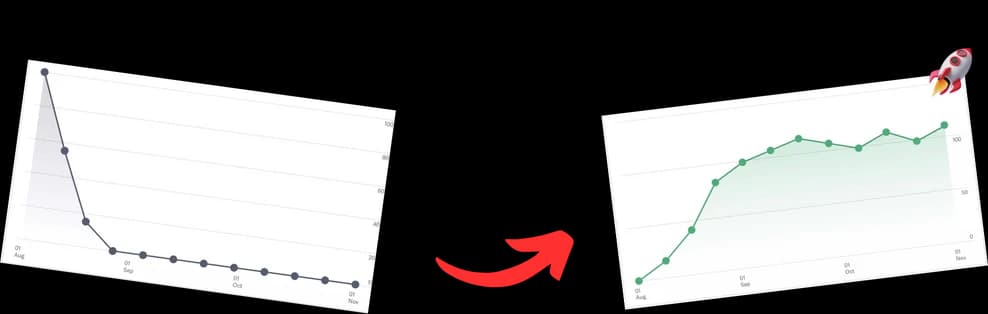
You upload a video you worked hard on. The topic is solid. The edit is clean. The hook feels decent. Then you open YouTube Studio and see a number that bothers almost every creator at some point: the click-through rate.
When that number looks low, it's easy to think the whole problem is your thumbnail. Sometimes it is. Often it isn't.
As a channel manager, I've learned to treat video click through rate as a useful signal, but not the final verdict. A click is only valuable if the right viewer clicks, watches, and feels like the video delivered what was promised. If your packaging gets curiosity clicks from the wrong people, your CTR can look better while the video performs worse.
That's the trap. Creators chase a higher score when they should be chasing better-fit clicks.
What Is Video CTR and Why It Matters More Than You Think
A simple way to think about video click through rate is this: it measures how often people choose your video after seeing it.
If your thumbnail and title are your shop window, CTR is the share of passersby who step inside. That's why it matters. Before watch time, before comments, before subscribers, there's a decision point. Someone sees your video and asks, “Is this worth my time?”

Most creators first learn about CTR as a packaging metric. That's true, but incomplete. It's also a relevance metric. A strong CTR usually means your title, thumbnail, topic, and audience are aligned. A weak CTR usually means at least one of those pieces is off.
Why creators get confused about CTR
CTR looks like a single clean number, but it hides a lot of context. A tutorial video shown to people actively searching has a different click environment than a vlog shown on the home feed. The same thumbnail can work in one context and fall flat in another.
That's why it helps to think about CTR as the first stage of video SEO and audience matching, not just as a design score. If you want a broader view of how discoverability works, this guide on video SEO for creators is a useful companion.
Practical rule: CTR tells you whether people wanted to start watching. It does not tell you whether they were glad they clicked.
Why CTR matters so much
CTR affects whether your video gets that first burst of momentum. If people consistently ignore the video when YouTube shows it, distribution becomes harder. If people click, YouTube gets a positive signal that your packaging matched viewer interest.
But there's a catch. A video with a tempting title and thumbnail can win the click and lose the viewer fast. That's why the healthiest channels don't optimize for clicks alone. They optimize for honest curiosity.
The best-performing videos usually make a clear promise and keep it quickly. That's what turns CTR from a vanity metric into a growth metric.
How to Calculate and Find Your Video CTR in YouTube Studio
The basic formula is straightforward: CTR = clicks divided by impressions.
On YouTube, though, the word impressions is where many creators get tripped up.

YouTube states that impressions click-through rate is based only on counted impressions, not every possible place someone might encounter your video. It excludes some views from places like external websites or end screens, as explained in YouTube's impressions CTR documentation. That's why your views and your CTR won't always line up the way you expect.
Where to find CTR for your whole channel
In YouTube Studio, go to Analytics and look in the Reach tab. That's where YouTube shows how your content earned impressions and how often those impressions turned into views.
This channel-level number is useful for pattern spotting. It can tell you whether your recent packaging is generally becoming more compelling or less compelling. It's less useful for judging any one video, because it blends different traffic sources, formats, and audience contexts together.
If you want a deeper analytics workflow, this breakdown of YouTube video analytics helps make the dashboard easier to interpret.
Where to find CTR for a single video
For an individual upload, open the video in YouTube Studio and click Analytics, then check the Reach tab again. That's the cleaner view when you're diagnosing performance.
Look at CTR next to impressions, then compare it with what happened after the click. Did average view duration hold up? Did the first part of the video keep people watching? Did one traffic source perform much better than the others?
That's where the story starts.
What a counted impression actually means
A counted impression is not “every time my thumbnail existed on a screen.” It's a registered YouTube impression under YouTube's own reporting rules. That distinction matters because creators often compare CTR against total views, external traffic, or embedded playback and end up drawing the wrong conclusion.
A low reported CTR doesn't always mean nobody wanted the video. It can mean a large share of views came from places YouTube doesn't count the same way.
A quick visual walkthrough can help if you prefer seeing the dashboard in action.
The numbers that matter together
When I review a video, I don't look at CTR alone. I look at this cluster:
- Impressions: How many chances did the video get?
- CTR: How often did viewers take the chance?
- Watch time and retention: Did the video satisfy the click?
- Traffic source: Where did the impressions come from?
That combination keeps you from overreacting to one number.
What Is a Good Video Click Through Rate in 2026
The most common answer creators hear is “it depends,” which is frustrating but true. Still, benchmarks are useful if you treat them as a starting point rather than a verdict.
A widely cited benchmark for YouTube video CTR is roughly 2% to 10%, with performance below about 4% often suggesting weaker packaging and performance above about 7% often pointing to strong title-thumbnail alignment and audience relevance, according to Switcher Studio's CTR benchmark overview.
YouTube video CTR benchmarks in 2026
| CTR Percentage | Performance Tier | Indication |
|---|---|---|
| 2% to under 4% | Lower range | Packaging may be weak, or the video may be reaching a broad or less aligned audience |
| Around 4% to under 7% | Solid range | The topic and packaging are connecting reasonably well |
| 7% to 10% | Strong range | Thumbnail, title, and audience intent appear closely aligned |
That table is useful. It's also incomplete unless you layer in context.
Why one good CTR number doesn't exist
A search-driven tutorial usually earns clicks differently from a browse-driven commentary video. Search traffic carries stronger intent. Home feed traffic is more passive. Suggested traffic sits somewhere in between.
That's why two videos on the same channel can have very different CTRs and still both be healthy. One may reach fewer people but attract highly motivated searchers. The other may be shown broadly and get a more modest click rate while still driving more total views.
Compare a video to its closest neighbors. Same format, similar topic, similar traffic source. That's more useful than comparing everything to one channel-wide average.
CTR outside YouTube matters too
If your videos appear in Google results, video snippets can influence discovery there as well. A 2026 benchmark study reported that Google video results typically achieved CTRs between 2.3% and 6.4%, and the same study found that the top 3 organic results receive 68.7% of all clicks, which shows how strongly visibility concentrates at the top of the page, according to First Page Sage's ranking CTR study.
That matters for creators because a well-structured video with a clear topic can earn search clicks beyond YouTube itself.
A better benchmark to use on your own channel
Your best benchmark is your own baseline.
Take a handful of recent videos in the same category and compare:
- Topic match: Was this aimed at the same viewer?
- Traffic pattern: Did impressions come from similar places?
- Packaging style: Was the thumbnail approach similar?
- Post-click quality: Did viewers stay?
If one video's CTR is lower but watch time is stronger, I usually don't panic. If CTR is higher but viewers leave fast, I start asking harder questions.
Diagnosing the Root Causes of a Low Video CTR
A low CTR can come from a weak thumbnail. It can also come from a weak topic, weak audience targeting, a vague title, poor timing, or a mismatch between promise and payoff.
That's why “just make a better thumbnail” is often lazy advice.
A higher video click-through rate isn't always better. CTR needs to be read alongside impressions, traffic source, and watch time. A video can earn a higher CTR and still underperform if it attracts the wrong viewers or creates weak retention, as explained in SubSub's discussion of good YouTube CTR.
The four common failure patterns
Here's how I usually diagnose low CTR, or misleadingly high CTR, in practice.
- Weak packaging for the right audience: The topic is good, but the title is bland or the thumbnail doesn't create enough clarity or interest.
- Strong packaging for the wrong audience: The title and thumbnail trigger curiosity, but the actual viewer being attracted isn't the viewer the video serves well.
- Clear packaging for a weak topic: The video is presented well, but the audience doesn't care enough about the subject.
- Fatigue from familiar packaging: Returning viewers have seen the same visual formula too many times, so they stop noticing it.
The dangerous combo of high CTR and low watch time
This is the pattern creators miss most often.
If a video gets clicked often but viewers leave early, the packaging may be overpromising. The click happened, but the viewer's expectation wasn't met. In practical terms, that often means the opening is too slow, the payoff is delayed, or the title framed the wrong promise.
When CTR rises and watch time falls, don't celebrate yet. You may have improved curiosity while damaging trust.
Questions to ask before changing the thumbnail
I'd ask these in order:
- Did the first moments of the video deliver the same promise as the title and thumbnail?
- Did YouTube show the video mostly to the audience you intended to reach?
- Was the topic specific enough to trigger interest quickly?
- Does the thumbnail communicate one clear idea at a glance?
- Did the title create curiosity through relevance, or just through ambiguity?
A practical example
Say your title suggests a fast tutorial, but the video opens with a long personal intro. Search viewers click because they want the answer now. They leave because the video starts by serving your channel identity instead of their problem.
In that case, the CTR issue isn't really a CTR issue. It's a viewer expectation issue.
That's why the number never stands alone. CTR is the symptom. The cause usually lives in the match between audience, packaging, and opening.
How to Improve Your Video CTR the Right Way
If you want more clicks that help the channel, work on click quality. That means attracting viewers who are likely to stay, not just viewers who are easy to tempt.
Stronger guidance on CTR makes this clear: clickbait can raise CTR while lowering average view duration if the opening doesn't satisfy the promise. The better target is click quality, not raw click volume, as discussed in Panda Video's CTR guidance.
Start with the thumbnail-title handshake
Your thumbnail and title should work as a pair, not as duplicates.
A common mistake is putting the exact same message in both. That wastes the limited attention you get. A better approach is to let the thumbnail create immediate visual context while the title adds precision.
For example, if the thumbnail shows a dramatic before-and-after editing screen, the title can clarify the payoff or audience. Together they tell one story quickly.
If you want to tighten the packaging side, this guide to a YouTube thumbnail preview workflow is useful for checking how your design reads before publishing.
Make the promise specific
Specificity improves the right kind of clicks.
Instead of broad curiosity, aim for targeted curiosity. The viewer should know who the video is for and what kind of result or insight they'll get. That doesn't mean titles need to be dry. It means they should reduce confusion.
A few practical rules help:
- Use concrete language: Say what changed, what failed, what was fixed, or what the viewer will learn.
- Avoid stacked promises: If the title tries to sell three different outcomes, viewers don't know what to expect.
- Match the opening: The first moments should confirm that the video they clicked is the video they're getting.
Honest packaging usually scales better than sensational packaging, because it builds repeat trust.
Improve the opening, not just the packaging
Creators often treat CTR and retention as separate jobs. They're connected.
If the title and thumbnail create a promise, the opening has one job: confirm that promise fast. That can be as simple as showing the result up front, naming the problem clearly, or telling the viewer exactly what they'll get from the next few minutes.
When I see a video with decent impressions and disappointing retention, I usually review the first part before I touch the thumbnail.
Use chapters to attract better-fit clicks
Chapters help in two ways. They improve viewer navigation after the click, and they can strengthen search visibility by making the video easier to understand for both viewers and platforms.
For long-form content, that matters. Clear timestamps can signal exactly what the video covers, which tends to attract viewers with more specific intent. One tool in this category is TimeSkip, which generates SEO-focused YouTube chapters and timestamps directly from the video workflow.

That kind of structure doesn't just make the video cleaner. It can also reduce the mismatch between what a viewer expects and what they find.
Test with discipline
A/B testing titles and thumbnails works best when you stay controlled.
Don't change everything at once. If you swap the thumbnail, title, and topic framing at the same time, you won't know what caused the shift. I prefer changing one major variable at a time and looking at CTR together with retention and traffic source.
Here are the tests I'd run first:
- Thumbnail clarity test: One version emphasizes emotion or tension. Another emphasizes outcome or transformation.
- Title angle test: One title leans on the problem. Another leans on the result.
- Audience framing test: One version speaks broadly. Another names a more specific viewer or use case.
Small changes that often help
Not every CTR lift comes from a full redesign. Sometimes the fix is simpler.
- Remove clutter: Too many thumbnail elements lower readability.
- Tighten the title: Shorter, clearer titles often improve first-glance understanding.
- Refresh old packaging: If a video still earns impressions, a better thumbnail can revive it.
- Check mobile first: Many creators design thumbnails on desktop and forget how tiny they look on phones.
CTR improves most reliably when the package is clearer, the audience fit is tighter, and the opening pays off the promise quickly.
Your Actionable Checklist for Boosting Video CTR
The easiest way to improve video click through rate is to stop treating it like a mystery and start treating it like a repeatable review process.
Before you publish, your job is to make the right promise clearly. After you publish, your job is to check whether the right viewers clicked and stayed.

Pre-publishing checks
- Clarify the promise: Can someone understand the video's core value in a glance?
- Check the thumbnail at small size: If it shrinks badly, it probably won't win the click.
- Tighten the title: Remove filler words and make the topic easier to scan.
- Align the opening: Make sure the first moments confirm the same promise the packaging makes.
- Add useful structure: Chapters, timestamps, and clear metadata help viewers know what they're getting.
Post-publishing checks
- Compare against similar uploads: Don't judge a tutorial against a vlog or a search video against a browse video.
- Look at impressions with CTR: A modest CTR on a large impression pool can outperform a high CTR on a tiny one.
- Inspect watch time next: If viewers click but leave fast, your packaging may be attracting the wrong viewer.
- Review traffic sources: A weak overall CTR can hide strong performance in one source and weak performance in another.
- Update what's fixable: Older videos with steady impressions are often worth refreshing.
The best CTR workflow isn't “make thumbnails forever.” It's “package clearly, verify with data, then improve the promise-to-payoff match.”
A healthy channel usually doesn't win by getting every possible click. It wins by getting the clicks that turn into satisfied viewing sessions, returning viewers, and stronger trust over time.
If you publish long-form YouTube videos and want a faster way to add search-friendly chapters, TimeSkip can help streamline that part of the workflow. It generates YouTube chapters and timestamps so you can make videos easier to browse and clearer for search-driven discovery without doing the chapter writing by hand.