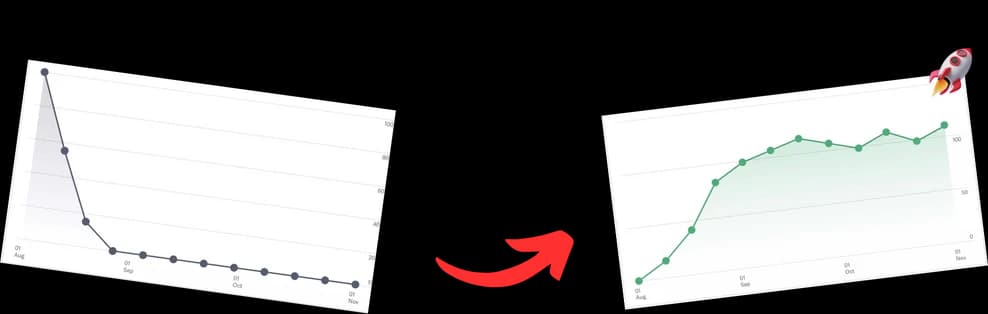
The fastest way to rethink click through rate is this. Search traffic behaves nothing like display traffic. In a benchmark cited by CXL's CTR guide, average CTR across industries is 6.64% for search and 0.57% for display. That gap tells you something important. People click when the package matches the moment.
That's why generic CTR advice usually underperforms. “Write better headlines” is directionally true, but it's incomplete. A YouTube Search viewer, a Google searcher, and a YouTube Suggested viewer don't click for the same reasons. The playbook that works is more specific. Align the title to intent, make the visual promise obvious, tighten the snippet, then test one variable at a time until the pattern is clear.
I've found that creators improve faster when they stop treating CTR as one metric and start treating it as a set of packaging problems. Search is about relevance. Suggested is about intrigue plus trust. Email is about clarity and placement. Video adds another layer because chapters, descriptions, and thumbnails all affect whether the viewer feels your content is immediately useful.
Mastering First Impressions with Titles and Thumbnails
A click usually comes down to three reactions happening fast: relevance, curiosity, and trust. If your title only triggers one of them, it's easy to ignore. Strong CTR packaging usually combines at least two.

Write titles that answer one clear question
Most weak titles fail because they try to describe the content instead of selling the outcome. The title doesn't need to summarize everything. It needs to make the right person think, “That's for me.”
A few title patterns work consistently:
- Problem plus outcome
“Why Your YouTube Titles Aren't Getting Clicks” - Specific method
“How I Rewrote Video Titles for Better Search CTR” - Curiosity with a concrete promise
“The Thumbnail Mistake That Tanks Suggested Traffic” - Comparison framing
“Search Titles vs Suggested Titles on YouTube”
For search, put the exact topic close to the front. For discovery surfaces, you can be looser, but the promise still has to be legible in a split second.
Practical rule: If the thumbnail creates curiosity, let the title carry clarity. If the title creates curiosity, let the thumbnail prove relevance.
That balance matters outside YouTube too. In email, presentation changes can swing results hard. GoFundMe Pro cites a Forrester report that adding video to email can increase CTR by 200% to 300%, and it also recommends keeping subject lines around 50 characters or less in its email CTR guidance. Different channel, same lesson. Small wording and format choices shape behavior.
For a useful outside perspective on packaging offers clearly, this expert guide for Amazon brand owners is worth reading because it shows how click behavior changes when the shopper compares multiple near-identical options.
Build thumbnails that earn attention without breaking trust
The thumbnail's job isn't to be pretty. It's to stop the scroll and reinforce the promise.
A practical thumbnail checklist:
- One focal point. Don't cram in five ideas.
- Readable contrast. If it's muddy on mobile, it's weak.
- Emotion or consequence. Faces, stakes, before-and-after tension.
- Text only when it adds new information. Repeating the title wastes space.
Here's the before-and-after mindset I use.
| Weak approach | Stronger approach |
|---|---|
| Generic face and logo | Face reacting to one visible result |
| Title repeated in thumbnail text | Thumbnail adds the tension or payoff |
| Busy background | Simple background with one dominant subject |
| Broad promise | Specific visual clue tied to the topic |
If you want to catch layout problems before publishing, a YouTube thumbnail preview workflow helps because many thumbnails look fine full-size and collapse on smaller screens.
Optimizing Snippets and Descriptions for Search
Search clicks are usually won in a few seconds. The result that gets the click is often the one that answers the query fastest and looks easiest to trust.
That changes how to write for CTR.
A good title creates interest. The snippet has to confirm relevance. On Google, that means matching the query closely enough that the searcher feels confident before clicking. On YouTube, it means using the first lines of the description to reinforce the promise and show what the viewer will get.
Write snippets for intent match, not for hype
Searchers already told you what they want. The snippet should reflect that language back to them with a clear outcome.
Three elements do the work:
- The query or problem in plain language
- The payoff or answer
- A preview of what's inside
Take a query like “how to improve click through rate on YouTube.” A weak description says the article is “ultimate” or “complete.” Those words do not help the searcher judge fit. A stronger description names the actual topics covered, such as title and thumbnail alignment, search snippet improvements, chapter strategy, and CTR testing by traffic source.
Specificity gets the click because it lowers uncertainty.
Use the first lines of a YouTube description like search-facing copy
YouTube descriptions do more than hold links. The opening lines can appear in search surfaces, influence relevance, and help a viewer decide whether your video is worth their time.
I write those lines with a simple test in mind: if someone only sees the title plus the first two lines, would they understand who the video is for and what they will learn?
A practical structure looks like this:
| Line | Job |
|---|---|
| Opening line | Match the core topic directly |
| Second line | Clarify the use case or audience |
| Third line | Preview the specific takeaways |
Example:
- Weak: “In this video I go over everything you need to know about CTR.”
- Stronger: “Learn how to improve click through rate on YouTube and Google using title tests, stronger search snippets, and chapter-based packaging.”
That second version gives YouTube and Google more usable context. It also sets up the click with a concrete promise instead of filler.
If you want examples and formatting options, this guide to writing a YouTube video description covers how to structure those opening lines so they support both discovery and clicks.
Improve the page so the snippet gets better
Better snippets often start on the page, not in a separate SEO field.
Google pulls visible language that seems useful for the query. If the page opens with vague framing, the snippet usually stays vague. If the page answers the question early, uses tight subheads, and explains the topic in clear terms, Google has better material to show.
I have seen this pattern repeatedly on tutorial content. Pages with a direct definition, a short answer near the top, and clean subheadings tend to earn snippets that are easier to scan. Pages that open with generic scene-setting tend to look interchangeable in the SERP.
That trade-off matters. Clever phrasing can sound strong on the page and still underperform in search if it hides the core answer.
Build for the platform you want the click from
Google Search, YouTube Search, and YouTube Suggested reward different packaging choices. The description and snippet strategy should reflect that.
For Google Search, lead with query match and a clear answer.
For YouTube Search, front-load the exact topic and likely follow-up terms.
For YouTube Suggested, the title and thumbnail usually carry more weight, but the description still helps YouTube understand context.
A systematic CTR process beats generic advice. Instead of writing one description style for every surface, test variants based on traffic source. A search-focused version may stress clarity and keywords. A suggested-focused version may support the broader topic cluster and viewer intent around related videos.
The goal is simple. Make the result feel easy to choose before the click, then make the content deliver on that promise after it.
Boosting Video CTR with Chapters and Timestamps
For video creators, chapters are one of the most underused CTR levers because they don't just help viewers find their way through the video. They also make the video more clickable in search by exposing clearer entry points.

Why chapters change the click decision
A long video can look expensive to a viewer. Chapters lower that cost. They signal, “You won't have to dig for the useful part.”
That matters on both Google and YouTube. In Google, chaptered videos can appear with key moments, which gives the searcher multiple reasons to choose your result. On YouTube, timestamps make the content feel structured and intentional. That's good for trust before the click and usefulness after it.
There's also a practical relevance benefit. A tutorial called “How to Improve Click Through Rate” is broad. A chapter called “Fixing Low YouTube Search CTR” is specific. Specificity helps the viewer self-select.
What good chapters actually look like
Bad chapters are vague. Good chapters read like mini search intents.
Compare these:
- Weak: Intro, Tips, More Tips, Final Thoughts
- Better: Why Titles Miss Search Intent, Thumbnail Patterns That Lift Suggested Clicks, Writing Descriptions for Better Search Visibility, Testing One Variable at a Time
The stronger set does two jobs at once. It improves navigation and sharpens the video's semantic relevance.
One way to speed that up is using TimeSkip's timestamp SEO workflow. It focuses on generating chapter structures that are easier to publish consistently than doing everything by hand, especially on long videos or podcast-style uploads.
Chapters work best when each label could stand on its own as a search phrase or a strong internal promise.
That same principle mirrors a verified Google Ads recommendation for video CTR. In a Google Ads expert breakdown on YouTube, splitting campaigns into narrow, tightly themed ad groups that align keywords with headlines “nearly always improves” click-through rate. The core idea is the same. Tight relevance beats generic grouping.
Here's a quick walkthrough of what better chapter packaging looks like in practice:
Where creators usually go wrong
The biggest mistake is treating chapters like housekeeping. If they're generic, they won't help CTR much. If they mirror real viewer intent, they can strengthen search visibility and make the video feel easier to consume before anyone presses play.
The second mistake is inconsistency. A chaptering system only compounds if you use it across the catalog, especially on searchable tutorials, interviews, and educational videos.
Implementing a Data-Driven Testing Framework
Most CTR advice breaks down at the same point. It tells you what to try, but not how to decide what worked. That's where a testing framework matters.

Start with one hypothesis, not five edits
If you change the title, thumbnail text, color palette, and description at once, you learn almost nothing. You might get better CTR, but you won't know why.
A cleaner process looks like this:
- Choose one variable
Title wording, thumbnail expression, CTA placement, snippet rewrite. - Write a specific hypothesis
Example: a more query-matched title will improve YouTube Search clicks. - Define the audience context
Search, Suggested, Google SERP, email click. - Run long enough to avoid premature calls
- Check post-click quality before declaring a win
This discipline lines up with the verified guidance from multiple sources. Litmus recommends analyzing historical performance by audience, content, and design/layout before changing anything, and testing one variable at a time in its email CTR article.
Measure the right outcome
A higher CTR can still be a bad trade if the clicks are low quality. That point gets missed a lot.
Bloomreach's guidance, summarized in the verified data, makes the key distinction. CTR levers differ sharply by channel, and higher CTR isn't always the goal if it lowers downstream quality. The practical implication is simple. Track what happens after the click.
Use a lightweight scorecard:
| Metric | What it tells you |
|---|---|
| CTR | Whether the packaging earns the click |
| Retention or watch time | Whether the promise matched the content |
| Conversion or next action | Whether the traffic was useful |
| Query or traffic source | Which context produced the result |
Working standard: A winning test improves clicks without creating a bigger mismatch after the click.
Build a repeatable review rhythm
For creators, the easiest schedule is operational, not theoretical. Review packaging when a video underperforms relative to similar uploads, when a search-driven page has impressions but weak click behavior, or when one traffic source lags behind another.
A simple review loop:
- Weekly check for titles and thumbnails on recent uploads
- Monthly audit for evergreen search content
- Quarterly pattern review to find recurring winners by topic and format
Once you've run enough tests, you'll see recurring truths. Your audience may prefer direct how-to titles in search, but more tension-led packaging in Suggested. That's not inconsistency. It's context.
Adapting Your Strategy for Different Platforms
The same video can need two very different packages depending on where the impression happens. Many creators falter here, making one title and one thumbnail, then expecting them to work everywhere.

Search wants precision
In Search, the viewer is solving a problem. Match that problem directly.
If your video teaches chapter optimization, a search-oriented package might look like this:
- Title: How to Add YouTube Chapters for Better Search Visibility
- Thumbnail: YouTube chapter bar plus a clear “Search SEO” cue
This works for the same reason narrow ad groups work in paid video campaigns. In the verified source, a Google Ads expert says tightly themed keyword structures aligned with headlines “nearly always improves” click-through rate because the message mismatch drops. The lesson carries over to YouTube Search. Tight topic alignment wins.
Suggested wants intrigue with credibility
In Suggested or Browse, the viewer wasn't actively asking for your video. The package has to interrupt passive discovery without feeling deceptive.
That same chaptering video might perform better with:
- Title: The YouTube Feature Most Creators Ignore
- Thumbnail: A highlighted chapter timeline and a surprised reaction
The topic is the same. The mental state is different. Search rewards explicit relevance. Suggested rewards a cleaner curiosity gap.
Google video results sit in the middle
Google video carousels often respond well when you combine specificity with visible usefulness. A benefit-led title helps, but chapter key moments can also make the result look more complete and scannable than surrounding listings.
Use this comparison when choosing the package:
| Platform | Viewer mindset | Better packaging style |
|---|---|---|
| YouTube Search | Solving a specific problem | Keyword-aligned, literal, direct |
| YouTube Suggested | Browsing and discovering | Curiosity-led, emotionally clear |
| Google video results | Evaluating usefulness fast | Benefit-driven and well-structured |
If you want to know how to improve click through rate across platforms, this is the biggest shift to make. Stop asking, “What's the best title?” Ask, “Best title for which surface?”
Common CTR Questions and Quick Answers
Should I chase a higher CTR at all costs
No. A click only helps if the content satisfies the reason for the click. If the title oversells and retention collapses, you didn't improve performance. You just bought a low-quality click with trust.
How do I know if my title is too clickbait
Use a simple test. After watching or reading, would the viewer say the packaging was fair? Strong titles create tension. Misleading titles create disappointment. The difference is whether the content delivers the implied promise.
What should I test first
Start with the element the audience sees first. On YouTube, that's usually the title and thumbnail pair. In Google, it's title plus snippet. In email, the subject line and CTA placement matter most.
Can a good thumbnail rescue a weak title
Sometimes, but not reliably. If the title is vague, the thumbnail has to work too hard. The best-performing assets usually divide the job cleanly. One creates interest. The other confirms relevance.
Why does a video do well in Search but not in Suggested
Because those are different intent environments. Search viewers want an answer. Suggested viewers want a reason to interrupt what they were already doing. Package accordingly.
How often should I revisit old content
Revisit content when impressions stay healthy but click behavior lags, or when a topic is evergreen enough that better packaging could revive it. Old videos and pages often have the easiest CTR gains because the content already exists.
If chaptering is the missing piece in your video packaging workflow, TimeSkip is built for that specific job. It generates SEO-focused YouTube chapters and timestamps inside the publishing workflow, which makes it easier to add the structure that helps viewers scan, click, and find their way through long videos.