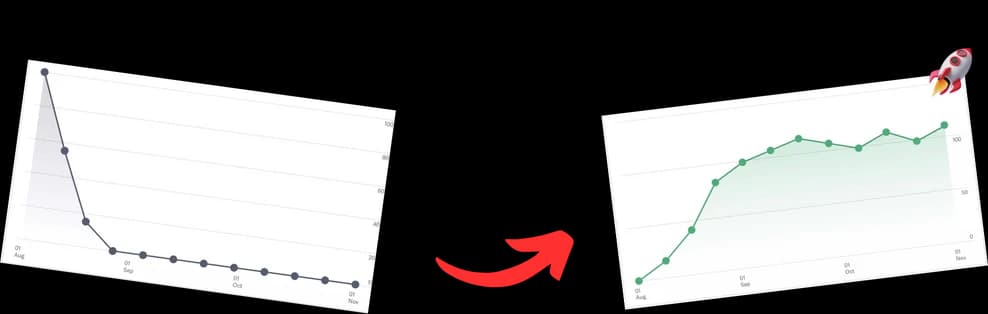
You open YouTube Studio a few hours after publishing. Impressions are moving. The platform is showing your video to people on Home, Search, or Suggested. But the views barely tick up.
That gap is where most creators get stuck.
You did the hard part. You researched the topic, recorded the video, edited it, wrote the description, and hit publish. Yet the packaging around the video, mainly the title and thumbnail, isn't convincing enough people to click. Or it's attracting the wrong people. Those are two very different problems, and they lead to very different fixes.
Impression click through rate is the metric that helps you tell the difference. It sounds technical, but it's really a first-impression score. It tells you whether the people YouTube is showing your video to feel an immediate reason to watch.
The useful part is this. CTR isn't just about making prettier thumbnails. It's about matching the promise on the surface with the value inside the video. Even structural choices, like adding clear chapters that signal depth and relevance, can support that promise before a viewer commits.
Your Video Is Getting Impressions But Not Views. Why?
A lot of creators misread this moment.
They see impressions rising and assume YouTube is “pushing” the video. Then they see low views and assume the algorithm changed, the niche is too competitive, or the topic is dead. Sometimes those things matter. Often, the simpler explanation is that your video was shown, but not chosen.
That's what CTR helps you diagnose. If impressions are the number of times YouTube puts your video in front of viewers, CTR tells you how often those viewers turn that opportunity into a watch. On YouTube, that means how often viewers watch a video after seeing a registered impression.
The first problem to solve
Think of your video as a pitch made in one second.
The viewer doesn't know your script is strong. They don't know the editing gets better after the intro. They don't know the tutorial solves the exact problem they have. All they can judge is the surface package in front of them.
Your thumbnail and title don't need to impress everyone. They need to feel obviously relevant to the right viewer.
If your CTR is weak, one of three things is usually happening:
- The promise is unclear. Viewers can't tell what they'll get.
- The promise is generic. The topic feels familiar, but not compelling.
- The promise attracts the wrong click. People click out of curiosity, then leave because the video doesn't match what they expected.
Creators who want more reach need to get fluent in this metric, because it sits near the top of the funnel. Better packaging can turn the same impression volume into more opportunities for watch time, retention, and channel growth.
If you want a broader view of how visibility starts before the click, this guide on getting your YouTube videos seen is a useful companion.
Unpacking Impression Click Through Rate
The cleanest way to understand impression click through rate is to separate being seen from being chosen.
An impression is your video appearing in a place where YouTube counts it as a registered impression. A view is what happens when someone clicks and watches. Those are not the same event.
A simple storefront analogy
Think of your video like a store on a busy street.
Your thumbnail and title are the window display. People walking by are your impressions. The ones who walk inside are your clicks. CTR tells you how effective the window is at turning attention into action.
A store can have great foot traffic and poor entry. A YouTube video can have solid impressions and disappointing views for the same reason.

The formula in plain English
The formula is simple: clicks / impressions × 100. A common example is 150 clicks from 3,000 impressions, which equals a 5% CTR, as explained in this breakdown of click-through rate and its calculation.
On YouTube, the metric specifically measures how often viewers watch a video after seeing a registered impression. That matters because it keeps your focus on the job of the title and thumbnail: turning exposure into watch starts.
Here's the practical interpretation:
| Scenario | What it means |
|---|---|
| High impressions, low CTR | Lots of people are seeing the package, but not enough feel compelled to click |
| Low impressions, high CTR | The package is resonating with a smaller pool, but distribution may still be limited |
| Strong CTR and strong viewing quality | The package attracts the right people and the video delivers |
What creators usually confuse
Many creators assume CTR measures overall channel health. It doesn't.
It measures packaging performance in a specific context. That context includes who saw the video, where they saw it, and what kind of video it is. A tutorial, reaction, documentary, and commentary video can all produce very different CTR patterns even if the channels are equally healthy.
That's why impression click through rate works best as a diagnostic lens. It answers one narrow but powerful question: when YouTube gives your video a chance to be chosen, how often does the viewer say yes?
How to Measure and Benchmark Your CTR
Inside YouTube Studio, most creators find this metric in the video analytics area, usually under the Reach tab. That's where it becomes tempting to ask the wrong question: “Is my CTR good?”
A better question is, “Good compared to what?”
CTR changes a lot by platform and placement. The same percentage can look weak in one context and excellent in another. If you compare your YouTube video to a display ad benchmark, you'll draw bad conclusions and probably change the wrong thing.
Benchmarks only help when the comparison is fair
Broad benchmark data shows just how different CTR can be across channels. CXL reports an average CTR of 6.64% for search ads and 0.57% for display ads, while many YouTube channels often see impression CTR in the 2% to 10% range depending on content type and traffic source, according to this summary of click-through rate benchmarks across channels.
That doesn't mean your video “should” land at one exact number. It means context rules everything.
Average Click-Through Rate Benchmarks (2026)
| Channel | Average CTR |
|---|---|
| YouTube videos | 2% to 10% range for many channels and videos |
| Search ads | 6.64% |
| Display ads | 0.57% |
The takeaway is straightforward. YouTube CTR is not interchangeable with ad CTR. Browse behavior, search intent, thumbnail design, and viewer expectations are different environments.
What to compare instead
If you want a useful benchmark, compare your video against things that share similar conditions:
- Your own channel history. A tutorial on a proven topic should be compared with similar tutorials, not with a viral short-lived trend video.
- The traffic source mix. Search-heavy videos often behave differently from Browse-heavy videos.
- The content promise. A highly specific “how to fix X” video attracts a different click pattern than a broad opinion piece.
Practical rule: Use industry benchmarks as outer boundaries, then use your own library as the real standard.
You can also pair CTR analysis with adjacent metrics that help you judge audience quality, not just click volume. If you're evaluating how viewers interact after the click, this resource on creator engagement rates adds helpful context.
For creators who want a better handle on what YouTube Studio is showing, this guide to a YouTube stats website and analytics workflow can help you read your numbers more clearly.
Why “good” can still be misleading
A creator can post a video with a CTR in the expected YouTube range and still feel disappointed. That's not unusual.
If the video got shown to a colder audience, the CTR may be acceptable but the growth impact may be limited. If the topic had narrow appeal, the CTR may look healthy while total opportunity stays modest. Metrics always need a setting around them. Without that setting, creators end up chasing percentages instead of outcomes.
Diagnosing the Story Behind Your CTR Data
CTR becomes dangerous when you treat it like a scoreboard instead of a clue.
A low number can trigger panic too early. A high number can make you feel confident for the wrong reason. YouTube's own guidance warns creators not to judge CTR without a substantial number of impressions, and notes that the metric covers only a subset of total views while excluding surfaces such as external websites and end screens, as explained in YouTube's official help on understanding impressions and CTR.
That single point clears up a lot of confusion. You are not looking at a full portrait. You are looking at one slice of viewer behavior.

Don't judge early noise
When a video is new, CTR can swing hard.
That early number often reflects a small and unusual sample. Maybe your most loyal viewers saw it first. Maybe YouTube tested it with a narrow slice of search traffic. Maybe it got a short Browse push. Early CTR is often emotionally loud and analytically weak.
Here's a better way to read it:
- Check impression volume first. If the sample is still small, hold off on major conclusions.
- Look at where the impressions came from. Search, Browse, and Suggested can produce different patterns.
- Ask whether the click matches the promise. If the package attracts curiosity but the topic is mismatched, the number can mislead you.
Traffic source changes the meaning
A CTR number is never just a CTR number. It's attached to viewer intent.
Search viewers usually arrive with a defined problem. Browse viewers are often responding to novelty, familiarity, or emotional pull. Suggested viewers may click because the new video feels like a natural next step from what they just watched.
A thumbnail that works in Search often wins with clarity. A thumbnail that works on Home often wins with tension, curiosity, or contrast.
That's why diagnosing CTR by traffic source is more useful than staring at the blended average. The same title and thumbnail can perform differently depending on the mental state of the viewer when they see it.
A quick diagnostic lens
If a video's CTR looks off, walk through these questions in order:
- Is the sample big enough to trust?
- Which traffic source is driving most impressions?
- Does the thumbnail clearly signal topic, outcome, or tension?
- Does the title sharpen the promise or blur it?
- Are the clicks coming from your target audience?
A creator who answers those questions will usually spot the issue faster than someone who keeps redesigning thumbnails blindly.
Proven Tactics to Increase Impression CTR
Most CTR advice stops at “make better thumbnails.” That's not wrong. It's just incomplete.
You improve impression click through rate when viewers can instantly answer three questions: What is this? Why should I care? Why this video instead of the others around it? Your thumbnail, title, and content structure all contribute to that answer.
A strong package doesn't only create curiosity. It signals relevance and credibility before the click.

Tighten the thumbnail promise
Your thumbnail has one job. Make the viewer stop and understand the premise fast.
That means reducing clutter and increasing signal.
- Use one dominant idea. If the frame contains too many competing elements, the viewer won't know what to process first.
- Build contrast on purpose. Contrast in color, scale, or emotion helps the subject stand out in crowded feeds.
- Show the tension, not the summary. “Before vs after,” “problem vs result,” or “expectation vs reality” often reads faster than a literal screenshot.
- Design for small size. If the thumbnail only works when enlarged, it's too dependent on detail.
For creators refining this part of the package, these YouTube thumbnail best practices are worth reviewing.
Write titles that complete the thought
Thumbnail and title should work like two halves of one sentence.
If the thumbnail creates the question, the title should sharpen the answer. If the thumbnail makes the benefit obvious, the title can add specificity. What you want to avoid is redundancy. Repeating the same phrase in both places wastes attention.
A stronger title usually does one of these:
| Title move | Why it helps |
|---|---|
| Clarifies the outcome | Viewers understand what they'll gain |
| Narrows the audience | The right people self-identify quickly |
| Introduces tension | The click feels necessary to resolve uncertainty |
| Signals usefulness | The video feels actionable, not vague |
Use structure to improve the perceived value before the click
This is the part most creators overlook.
Viewers don't only click because a thumbnail looks good. They click because they believe the video will be worth their time. Structured content helps create that belief.
Clear chapters and timestamps can support CTR indirectly by signaling that the video is organized, detailed, and easy to move through. For educational videos, breakdowns, interviews, and tutorials, that matters. A viewer who sees signs of structure expects less fluff and more payoff.
That's also why chapters can influence how your video appears in search surfaces. A video that looks segmented and intentional often communicates depth more effectively than one long unbroken block.
If a viewer thinks, “I can get exactly the part I need from this,” the click becomes easier.
One option creators use for this workflow is TimeSkip, a Chrome extension that generates SEO-optimized YouTube chapters and timestamps.
Here's where structured content helps your package feel stronger:
- Specificity: Chapter labels make the scope of the video feel concrete.
- Trust: Organized videos look more intentional and less rambling.
- Search alignment: Strong chapter wording can reinforce topic relevance.
- Reduced click risk: Viewers feel they can jump to the section they need.
Optimize for the surfaces YouTube actually tracks
Not every click opportunity affects impression CTR the same way.
YouTube has explained that impressions CTR measures clicks on specific tracked surfaces and excludes others like end screens and external sites, which means your improvement work should focus on places like Search and Browse, as covered in this YouTube explanation of impressions CTR and tracked surfaces.
That changes how you prioritize your effort.
If your video depends heavily on Search, your package should emphasize clarity, specificity, and intent match. If Browse is the main source, emotional framing and contrast often matter more. The thumbnail that wins in one environment can underperform in another.
A quick walkthrough can help here:
Run controlled packaging tests
Creators often change five things at once, then learn nothing.
If CTR drops, don't immediately rewrite the title, replace the thumbnail, change the description, and swap the first line of the hook. That muddies the signal. Change one visible variable at a time when possible.
A cleaner testing rhythm looks like this:
- Identify the likely failure point. Is the thumbnail unclear, or is the title underselling the value?
- Change one primary element. Start with the biggest suspect.
- Give the video time under similar conditions. Avoid instant conclusions.
- Check click quality, not just CTR movement. Better clicks should still lead to satisfying viewing.
Match the click to the actual video
The easiest way to destroy healthy CTR is to over-promise.
If your title promises a transformation, the opening seconds need to confirm that promise fast. If your thumbnail implies a direct tutorial, don't spend the first minute on backstory. Misalignment creates disappointment, and disappointment poisons downstream performance.
The best CTR gains often come from cleaner honesty, not louder hype.
That's especially true for creators in education, software, commentary, and long-form analysis. The audience doesn't just want a reason to click. They want reassurance that the click won't waste their time.
Beyond the Click Why CTR and Retention Work Together
A click is only the first agreement.
The viewer agrees to give you a chance. Then the video has to earn the next agreement, which is to keep watching. If that second part fails, CTR can become a trap. You attracted attention, but not satisfaction.
YouTube-focused creator guidance increasingly treats CTR as a partial metric, not a standalone win. A high CTR can be a negative signal if viewers leave quickly, and modern recommendation systems put more weight on satisfaction signals like watch time and retention, as discussed in this YouTube creator analysis on CTR, retention, and viewer satisfaction.
The real goal
The ideal video package doesn't chase the broadest possible click.
It earns the right click from the viewer most likely to stay, engage, and feel the video delivered what it promised. Sometimes that means a more selective title. Sometimes it means a less sensational thumbnail. Sometimes it means better chapters that make the value feel organized before the viewer even presses play.
The strongest creators don't optimize for curiosity alone. They optimize for trust.
That's why impression click through rate should sit next to retention in your decision-making. If CTR is the handshake, retention is whether the conversation was worth having. Channel growth happens when both work together.
If you want a faster way to make long videos feel more structured and easier to click, TimeSkip can help you generate YouTube chapters and timestamps without doing them manually. For creators publishing tutorials, podcasts, interviews, and educational content, that added structure can make the value of a video clearer before the click and easier to move through after it.