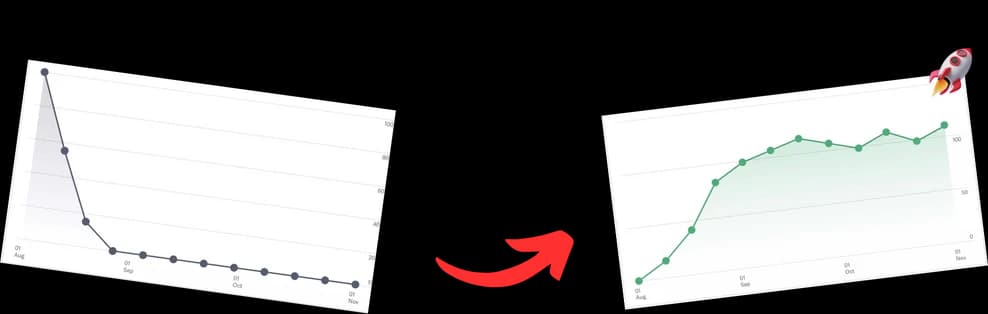
Let’s get one thing straight right away: Keywords are for people; tags are for platforms.
It’s a simple distinction, but getting it right is the first step toward getting your content discovered. Think of keywords as the actual words your audience types into a search bar. Tags, on the other hand, are the behind-the-scenes labels you use to give platforms like YouTube and Google the context they need to understand what your content is about.
To give you a clearer picture, here’s a quick breakdown of the core differences.
Tags vs Keywords at a Glance
| Aspect | Keywords | Tags |
|---|---|---|
| Primary Audience | Humans (your potential viewers) | Algorithms (the platform's system) |
| Purpose | To match search queries and user intent | To categorize content and help with recommendations |
| Visibility | Public (in titles, descriptions, etc.) | Mostly backend (hidden from most viewers) |
| Focus | Answering questions, solving problems | Providing broad and specific context |
Understanding this table is the foundation. Now, let's explore why this matters so much.
Why Visibility Is Your Most Valuable Asset

You can create the most brilliant content in the world, but it’s all for nothing if your audience can't find it. Getting eyeballs on your videos, blog posts, or podcasts is more than half the battle. This is where a smart strategy for tags and keywords becomes your secret weapon for growth. They are the digital signposts that guide search algorithms right to your doorstep.
The Digital Library Analogy
I love this analogy because it just clicks. Imagine all your content lives inside a massive digital library. Your potential viewers are the patrons walking through the doors, looking for something specific.
-
Keywords are the direct questions they ask the librarian. A patron might walk up and ask, "Where can I find a book on how to fix a leaky faucet?" It's a clear, intent-driven query.
-
Tags are the labels on the spines of the books—'Plumbing,' 'Home Repair,' and 'DIY Projects.' These help the librarian (the algorithm) keep the shelves organized and recommend other relevant books once the patron finds the first one.
This system ensures that when someone asks a question, the algorithm can zip through the shelves and deliver the most helpful answers. Mastering both tags and keywords isn't just a technical chore; it's the art of speaking the language of both your audience and the platforms they use every day.
The Scale of Modern Content Discovery
The need for this kind of optimization is more urgent than ever, especially on a platform like YouTube. It’s no longer just a video site; it’s the world's second-largest search engine, with over two billion monthly active users.
With 500 hours of video being uploaded every single minute and more than 70% of watch time happening on mobile, your content needs crystal-clear signals to have any chance of standing out. You can explore more data on YouTube's massive scale to see just how crowded it is. Strategic use of tags and keywords is the only way to cut through that noise and build a growing channel.
As viewers demand instant, relevant results, mastering these discovery tools is no longer optional. It’s the fundamental key to capturing attention and building a successful presence that lasts.
The Core Difference Between Tags and Keywords
If you want to master getting your videos discovered, you have to nail the difference between tags and keywords. They might seem similar, and they definitely work together, but they are not the same thing. Mixing them up is one of the most common mistakes I see creators make, and it can cripple a video's reach from the get-go.
Let's break this down with a simple rule that will guide your entire strategy from here on out.
Keywords are for people; tags are for platforms.
That single sentence is the whole game. Keywords are all about human language—the questions, problems, and curiosities that send someone typing into a search bar. Tags, on the other hand, are backstage passes for the algorithm, helping the platform figure out what your content is really about.
Keywords Represent User Intent
Think of a keyword as the exact language your audience uses. It’s the phrase someone types into Google or YouTube when they have a problem to solve or a question to answer. Keywords are public; they form the backbone of your video's title and description.
For instance, someone looking for baking advice isn't just searching for "bread." They have a specific goal in mind, and their search reflects that. Their queries might look something like this:
- Broad Keyword: "how to bake sourdough"
- Specific Keyword: "easy sourdough recipe for beginners"
- Long-Tail Keyword: "how to get a good sourdough crust without a dutch oven"
Each one of these represents a real person with a real need. Your job is to meet that need by speaking their language. This is where understanding user intent becomes your most powerful tool.
Tags Provide Algorithmic Context
If keywords are the question your viewer asks, tags are the cheat sheet you give the platform to help it answer, “What is this video about?” Tags are backend labels you assign to your video to give platforms like YouTube critical context. Most viewers will never see them, but they are absolutely essential for the recommendation engine.
Let's stick with our sourdough example. The tags for that video wouldn't just be a list of the keywords. Instead, you'd use a mix of broad and specific labels that help the algorithm build a complete profile of your content.
Example Tags for a Sourdough Video:
- sourdough bread
- baking from scratch
- bread recipe
- sourdough for beginners
- artisan bread
- kitchen tips
See how these tags weave a web of related concepts? They tell YouTube, "Hey, this video is a lot like other videos about home baking and artisan bread." This is how your video gets recommended alongside other relevant content, driving views from people who aren't even searching for you.
Modern search engines have become incredibly smart about understanding these relationships. To really wrap your head around the subtle but huge difference between old-school keywords and how today's algorithms think, you need to understand semantic search vs keyword search. At the end of the day, a solid tag strategy is what ensures your video finds its tribe within the platform’s massive ecosystem.
How Tags and Keywords Fuel YouTube's Algorithm
Think of the YouTube algorithm as a super-smart matchmaker. Its one and only job is to connect viewers with videos they’ll actually watch and enjoy, keeping them on the platform longer. To pull this off, it needs data—your data. This is where your strategic use of tags and keywords becomes a direct line of communication with the algorithm.
Keywords are your most direct signals, especially in your title and description. When someone types a phrase into the search bar, the keywords you've used act like big green flags, yelling, "Hey, over here! This video is a perfect match for that search!" They are the single biggest driver for how your video shows up in search results.
The Power of Contextual Tagging
While keywords are all about nailing search intent, tags play a different—but just as critical—role. They give the algorithm the bigger picture, the context it needs to figure out what your video is about and where it fits in the massive world of YouTube. Tags help answer the algorithm's silent question: "What other videos are like this one?"
This is exactly how your videos get discovered through suggested content. It’s what gets you placed in that coveted "Up Next" sidebar or on the homepage of someone who just watched a similar video. This drives a huge chunk of views, often from people who weren't even searching for your content in the first place.
Getting a handle on this is key, and it helps to understand the mechanics behind different formats, like learning how the YouTube Shorts algorithm works.
This diagram breaks down that core difference perfectly.

As you can see, keywords are for people. They connect your video to what a human is actively looking for. Tags, on the other hand, are for the platform's brain, helping it categorize your video and show it to the right people.
Unlocking Visibility with Video Chapters
Now, here's a real game-changer: keyword-optimized video chapters. Each chapter is like a mini-video with its own title and its own set of relevance signals. When you load up your chapter titles with specific, long-tail keywords, you’re essentially creating dozens of new doorways for search engines to find your content.
This strategy allows a single video to rank for dozens of different search queries discussed within it, dramatically expanding its potential reach and discovery.
For instance, a broad video titled "Ultimate Guide to Houseplants" can have chapters like "Best Low-Light Plants for Apartments" or "How to Propagate Pothos Cuttings." Suddenly, your video can rank for those super-specific searches on its own. It's no surprise that chaptered videos see a stunning 220% increase in engagement because they create a much better user experience—something the YouTube algorithm absolutely rewards. Automating this process with tools like TimeSkip has become a must for any creator serious about maximizing their visibility.
A Practical Guide to Video Keyword Research
Figuring out the right keywords for your videos shouldn't feel like a shot in the dark. With a simple, repeatable process, you can stop guessing and start knowing exactly what your audience is searching for. This isn't about some complicated technical wizardry; it's about using the tools right in front of you to build a solid content strategy.
Your first and easiest stop is the YouTube search bar. Seriously. Start typing a topic, and watch what YouTube’s autocomplete suggests. That dropdown list isn’t random—it's a real-time feed of the most popular searches related to your term. It’s a direct window into your audience's mind.
Uncover Keywords from Competitors
Next up, it’s time to do a little digital detective work. Head over to the channels of some successful creators in your niche and look at their most popular videos. What you’re looking for are the keywords they use in their titles and the first couple of sentences in their descriptions.
This isn’t about copying their work. It’s about spotting patterns. You’re looking for the topics and phrases that are already proven winners with the exact audience you’re trying to reach.
These two steps alone will give you a fantastic starting list of video ideas and core keywords. It’s the language that both viewers and the YouTube algorithm already get. If you want to dig even deeper, we cover more advanced methods in our guide on the best YouTube keyword research tools out there.
From there, you can start to think about how to balance out your keyword strategy.
Balancing Volume and Specificity
The real art of keyword research is finding the perfect mix of search terms. A winning strategy uses a combination of broad, popular keywords and super-specific, long-tail ones.
A long-tail keyword is a longer, more specific phrase that people use when they’re closer to making a decision or when using voice search. They get less search traffic, but that traffic is often more valuable and ready to convert.
Here’s an easy way to think about it:
- High-Volume Keywords: These are the big, broad terms like "video editing" or "iPhone 15 review." They get a ton of search traffic but are also incredibly competitive. Ranking for them is tough, but the payoff can be a huge, general audience.
- Long-Tail Keywords: These are much more specific, like "how to color grade video in DaVinci Resolve" or "iPhone 15 pro max camera test low light." The search volume is lower, but the people searching for these terms know exactly what they want. They’re a highly motivated audience looking for a precise answer.
A healthy strategy includes both. You use the broad terms to cast a wide net and the long-tail terms to catch the highly engaged viewers. This dual approach to tags and keywords gives you the best shot at getting discovered. By building a master list that covers both types, you create a powerful roadmap for your content, making sure every video you create is set up for success.
Best Practices for Using Tags on YouTube

Alright, enough with the theory—let's get our hands dirty. When it comes to tags, it’s not about how many you can cram in; it’s about precision. A smart tagging strategy is your direct line to the YouTube algorithm, giving it the context it needs to show your video to the right people.
Your very first tag should always be your main target keyword. No exceptions. This is the single biggest signal you can send. Think of it as the headline for your tag list, telling YouTube exactly what your video is about right out of the gate.
From there, you want a healthy mix of both broad and specific tags. This is how you cast a wide net while still catching those niche, super-engaged viewers who are looking for exactly what you've made.
- Broad Tags: These are the general, high-level topics. If your video is about baking sourdough bread, your broad tags would be things like "baking," "bread," and "sourdough."
- Specific Tags: These are the long-tail phrases that get into the nitty-gritty. Think "how to feed a sourdough starter," "beginner sourdough bread recipe," and "no-knead sourdough method."
This balanced approach connects your video to both massive topic pools and laser-focused search queries, which is the sweet spot for discoverability.
Common Mistakes to Avoid
Knowing what not to do is just as important. I’ve seen countless creators accidentally shoot themselves in the foot with simple tagging mistakes that confuse the algorithm and kill a video's momentum before it even gets started.
The biggest offender by far is tag stuffing. This is the old-school tactic of cramming your tags with dozens of popular but irrelevant keywords, hoping to snag some extra traffic. It doesn't work. YouTube’s algorithm is smarter than that and will penalize you for sending mixed signals.
Another classic mistake is just using way too many tags. Sure, YouTube gives you 500 characters, but this isn’t an invitation to use them all. A focused list of 10-15 highly relevant tags is infinitely more powerful than 40 weak ones. For help building a killer list, check out our guide on creating a tag list for YouTube.
Real-World Example: Video Title: Beginner's Guide to Digital Photography Bad Tags: photography, art, learning, video, best video, viral, nikon, canon, sony, fuji, how to take pictures, how to be a photographer Good Tags: digital photography for beginners, photography basics, how to use a dslr, understanding aperture, shutter speed basics, ISO for beginners, composition tips, photography tutorial, camera settings explained, best beginner dslr camera
Integrating Keywords Into Your Content Workflow
So, you’ve done your keyword research. Now what? This is where the magic happens—turning all that theory into a practical workflow that actually gets you views. Thankfully, modern tools mean you don’t have to awkwardly shoehorn keywords into your script. It's all about working smarter, not harder.
The process is surprisingly straightforward. Once you've recorded your video, you can use an AI-powered tool like TimeSkip to get an instant transcription. From there, the AI scans your entire transcript, figures out the main topics, and automatically suggests relevant tags and keywords. It even generates SEO-friendly chapter titles that perfectly match what you talked about.
Automating Discovery and Boosting Reach
This kind of automation is a lifesaver for busy creators. It takes a task that could easily eat up hours of manual research and condenses it into a few seconds. The outcome? A video that's perfectly optimized for discovery from the get-go.
By generating keyword-rich chapters, you’re basically spoon-feeding the YouTube algorithm precise contextual data. This allows a single video to rank for dozens of different long-tail search queries, dramatically boosting its reach without any extra effort on your part.
This approach turns your spoken words into a powerful SEO goldmine. For any creator trying to get more eyeballs on their content, knowing how to apply keywords on YouTube is a game-changer, and today's tools make it almost effortless. The AI handles the heavy lifting on the technical side, so you can stay focused on what you do best: creating awesome content.
Ultimately, this workflow ensures your video is ready to attract the right audience the second you hit publish. It’s not about changing what you say. It’s about making sure the algorithm understands the value in every single word. Your content ends up working harder for you, pulling in viewers long after you’ve uploaded it.
Of course. Here is the rewritten section, following all your requirements.
Your Top Questions About Tags and Keywords, Answered
As you dive into optimizing your videos, you're bound to run into some common questions about tags and keywords. Let's clear up the confusion with some straight-to-the-point answers so you can get back to creating.
How Many Tags Should I Use on a YouTube Video?
Forget trying to hit a magic number. It's all about quality over quantity. Aim for 10 to 15 highly relevant tags that accurately describe your video. The goal isn't to max out the 500-character limit; it's to give YouTube's algorithm the clearest possible signals.
Your very first tag should always be your main target keyword, no exceptions. From there, think strategically about the mix:
- Broad Tags: These are the general categories your video falls into, like "video editing" or "home cooking."
- Specific Tags: Think like your viewer. These are the detailed, long-tail phrases they'd actually type into the search bar, like "how to cut video in premiere pro" or "easy weeknight pasta recipe."
Whatever you do, don't just dump a bunch of unrelated terms in the tag box. That old-school trick, known as "tag stuffing," will only confuse the algorithm and could even get your video penalized.
Are Tags More Important Than Titles and Descriptions?
Nope. Your title and description are still the heavy hitters when it comes to search rankings. Your title is the hook that grabs a viewer's attention, and your description is where you provide all the critical details and context. Your primary keywords need to live in both of these spots.
But that doesn't mean tags are useless. They play a vital supporting role by giving the algorithm extra context. They help YouTube understand what your video is about on a deeper level and, more importantly, what other videos it should be recommended next to. That's a huge driver of discovery.
Think of it this way: Your title and description are what you say to your audience. Your tags are your notes to the YouTube algorithm, telling it where your video fits in.
Can I Reuse the Same Tags and Keywords for Every Video?
While having a couple of standard, channel-specific tags—like your brand name or a series title—is a smart move, the vast majority of your tags and keywords should be unique to each video. Every single video you upload is a new opportunity to address a specific topic and answer a specific search query.
Tailoring your optimization for each upload is how you start ranking for a wide variety of searches. The most successful creators treat every video as a fresh chance to connect with a new corner of their audience. It's more work, but it's how you maximize your reach.
Ready to stop guessing and start optimizing? TimeSkip automates the entire process of finding relevant keywords and generating SEO-optimized chapters in seconds. Get two free video generations and see the difference for yourself at https://timeskip.io.