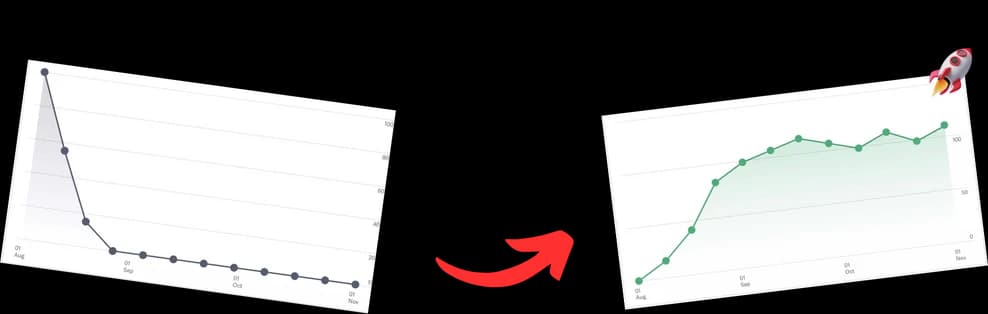
You probably already have the symptoms of bad playlist organization.
A YouTube playlist starts with a current series, then picks up two old uploads that no longer match the topic. Your Spotify playlists use three naming styles because you changed your mind halfway through the year. Your podcast app has seasons, bonus episodes, interviews, and clips mixed together, so finding one thing means scanning everything. Nothing is technically lost, but useful content keeps slipping out of view.
That kind of clutter costs more than convenience. It weakens discovery, confuses returning audiences, and makes every future upload harder to place. The fix isn't making each platform look prettier. The fix is building one cross-platform system that works everywhere, then adapting it to each app's quirks.
From Digital Chaos to Curated Clarity
The mistake most creators make is organizing reactively. They upload first, sort later, rename only when something feels messy, and end up with a library that reflects years of improvisation instead of a clear system. That's manageable at small scale. It breaks once your content spans formats, platforms, and recurring series.

A better approach is to treat playlist organization as infrastructure. Your playlist names, ordering rules, hierarchy, and tags should come from one operating model, even if the platforms display them differently. That's how you stop rebuilding the same logic in YouTube, Spotify, and podcast tools every few months.
By early 2025, Spotify hosted 4 billion playlists globally, following 1 billion new playlists created in 2020 alone, which shows how central playlists have become to discovery and consumption in streaming ecosystems, as noted in artist.tools on Spotify playlist data strategies. If platforms and audiences rely on playlists this heavily, creators can't afford to treat organization as afterthought work.
One system beats three separate fixes
Most platform-specific advice misses the fundamental issue. It tells you how to tidy a YouTube playlist or improve a Spotify sequence, but not how to build a structure that survives across platforms. That's why creators keep solving the same problem in slightly different interfaces.
Use a shared framework instead:
- One naming grammar for every playlist
- One hierarchy rule for broad hubs and narrower sub-playlists
- One maintenance routine for audits, archives, and updates
- One discoverability standard for titles, descriptions, and order
If you already think in systems outside content, Fluidwave's framework for managing life tasks is a useful parallel. The same principle applies here. A reliable structure reduces decision fatigue because every new item has an obvious place.
Playlist organization works best when it removes choices, not when it creates more of them.
For YouTube-heavy libraries, I also like reviewing practical examples of ways to organize YouTube videos because video creators often see the mess first in long-form content. Once you can sort episodic video cleanly, music and podcast libraries usually become easier to standardize too.
Establish Your Foundational Naming System
A playlist title is the smallest unit of organization, so it needs to do real work. Good names sort cleanly, scan fast, and make sense outside the platform where they were created. If a title only works because you personally remember what it meant at the time, it's not a system.

The format I keep coming back to is simple:
[Type] | [Topic] | [Context]
That syntax works because each part answers a different question. Type tells you what kind of playlist it is. Topic tells you what it covers. Context adds timing, audience, or use case.
In major markets like the US, 58% of Spotify users created playlists in 2017, and 32% shared them, which is one reason clear naming matters so much for shareability and discovery, according to the Boston University platform strategy paper.
A naming formula that scales
Use these rules consistently:
-
Start with the category Use a fixed prefix such as Series, Mix, Mood, Season, Interviews, Tutorials, Archive, or Highlights.
-
Keep the core keyword plain Don't bury the main topic in clever wording. Searchable terms beat novelty.
-
Add useful context last Date, part number, audience, event, or format belongs at the end.
Here's what that looks like in practice:
| Platform | Weak name | Strong name |
|---|---|---|
| YouTube | SEO Stuff | Tutorial | YouTube SEO | Beginner Series |
| Spotify | Chill songs | Mood | Late Night Focus | Winter |
| Podcasts | Season 2 | Season | Creator Interviews | 2026 |
| Mixed content archive | Favorites | Archive | Best of Shorts | Q1 |
Examples worth copying
For YouTube, avoid titles like “Marketing Playlist” if the content is really a structured sequence. Name it like a product line:
- Tutorial | Editing Workflow | Part 1
- Tutorial | Editing Workflow | Part 2
- Guide | Thumbnail Design | Advanced
For Spotify, separate genre, mood, and use case. Don't mash all three together unless all three are necessary.
- Genre | Indie Pop | New Finds
- Mood | Warm Acoustic | Morning
- Use Case | Deep Work | No Skip Set
For podcasts, build around season logic and episode type:
- Season | Founder Stories | 2026
- Bonus | Live Q and A | Spring
- Interviews | Production Systems | Experts
Practical rule: If two playlists could swap titles without anyone noticing, the names are too vague.
If you need help tightening a podcast title or naming pattern, SparkPod's AI guide to podcast naming is useful because it pushes you toward clarity over cleverness. That same mindset applies to playlist organization. A clean title should tell a stranger what they'll get before they click.
Design a Smart Playlist Hierarchy
Once the names are solid, the next failure point is structure. Many creators have decent playlist titles and still end up with a confusing library because every playlist sits at the same level. Audiences then have to decode your catalog on their own.

A stronger model uses master playlists and child playlists. The master playlist acts as the entry point. The child playlists handle narrower themes, formats, or stages. This mirrors how people browse. They start broad, then drill down.
The master and child model
Think of your library like a storefront.
A master playlist might be:
- Guides | Content Marketing
- Mixes | Focus Music
- Season Hub | Podcast Interviews
Child playlists would then split that topic by audience, depth, or time frame:
- Guides | Content Marketing | Beginners
- Guides | Content Marketing | Distribution
- Guides | Content Marketing | Case Review
That hierarchy matters even more across platforms because order doesn't always travel cleanly. A 2025 study noted that 62% of playlist placements fail to retain their intended order across platforms due to varying APIs, which makes explicit hierarchy more important than relying on sequence alone, as discussed in FreeYourMusic's overview of playlist ordering.
How to build hierarchy without overcomplicating it
Use this decision filter before creating a new playlist:
| Question | If yes | If no |
|---|---|---|
| Does this cover a broad repeatable topic? | Make it a master playlist | Keep it nested under an existing master |
| Does this serve a distinct audience or use case? | Create a child playlist | Fold it into a broader list |
| Will you keep updating it over time? | Keep it live and visible | Archive after its useful life |
A few platform-specific habits help:
- On YouTube, use descriptions to point viewers to related playlists. BeyondComments has a practical guide to strategic video organization for YouTube channels that aligns well with this hub-and-spoke approach.
- On Spotify, create a “Start Here” playlist if your catalog is deep or stylistically varied.
- In podcast apps, separate evergreen episode collections from chronological season feeds.
If you're restructuring your channel from scratch, it helps to review the mechanics of creating a new YouTube playlist while you map the hierarchy. The technical setup is easy. The hard part is deciding what belongs as a hub and what should stay a subcategory.
The cleanest libraries usually have fewer top-level playlists than creators expect.
Optimize Playlist Content for Discoverability
A playlist isn't just a folder. It's a search surface, a recommendation signal, and a viewing or listening path. That means internal playlist organization affects discovery as much as external structure does.

Weak playlists usually fail in one of two ways. They either hide useful keywords under vague branding, or they include strong items in an order that loses people before the playlist gets momentum. Both problems are fixable.
Start with search language, not internal language
Your audience won't search the nickname you use for a series in your own dashboard. They'll search the job they need done, the mood they want, or the topic they recognize.
For playlist titles and descriptions:
- Lead with the main keyword your audience would use
- Add a specific angle such as beginner, live, acoustic, tutorial, interview, or deep dive
- Write descriptions like navigation copy, not like slogans
- Mention adjacent topics naturally if they help clarify scope
A YouTube playlist description should help someone decide whether to start at item one or jump to a specific entry. A Spotify playlist description should signal the listening context. A podcast playlist description should explain why those episodes belong together.
Order for the next action
Independent creators can't assume inclusion alone is enough. A 2021 analysis of over 30,000 Spotify playlists found 88% were curated by Spotify itself and 7% by major labels, with curators deliberately ranking tracks to optimize streams. That's why independent creators have to be strategic about internal ordering, as noted earlier in the Boston University research.
The practical takeaway is simple. Put your strongest entry first if the playlist must win attention quickly. If the playlist is designed as a sequence, make the opening item the easiest on-ramp.
Here's the trade-off:
- Best-first ordering works when each item can stand alone.
- Sequential ordering works when the playlist teaches, builds, or tells a story.
- Mixed ordering often fails because it satisfies neither intent.
A playlist opener has one job. Earn the second click or second play.
Descriptions and order should reinforce each other
Use this quick audit:
-
First item check
Is the opener your clearest hook, not just your newest upload or favorite track? -
Mid-playlist slump check
Does the sequence drift into repetition, weaker production, or off-topic detours? -
Description check Does the text match what the order delivers?
-
Ending check
Does the final item point toward another playlist, series, or next step?
When playlist organization is done well, the list feels intentional from top to bottom. Viewers and listeners don't need to guess why item seven follows item six. The logic is visible.
Use Automation for Effortless Maintenance
Even a strong system decays if nobody maintains it. Links break. Old episodes stop representing your best work. New uploads land in the wrong place because you were moving fast. Playlist organization isn't a one-time cleanup. It's recurring operations.
Manual maintenance works up to a point. After that, automation becomes the difference between a library that stays usable and one that slowly fills with dead ends.
The quarterly audit that keeps libraries healthy
Run a light audit every quarter. It doesn't need to be complicated.
- Check broken entries. Remove deleted videos, unavailable tracks, and outdated references.
- Review titles. Tighten names that drifted from your current naming rules.
- Refresh descriptions. Add better keywords, clearer summaries, or updated series notes.
- Archive stale lists. Keep old playlists if they still have value, but move them out of primary navigation.
- Verify order. Make sure the opener is still the best first experience.
I've found that most creators don't need more playlists. They need fewer neglected ones.
Where automation actually helps
Automation is best for repeatable routing, not creative judgment. Use tools for placement and upkeep, then step in for editorial decisions.
Useful options include:
- Zapier for rules like sending new content into a category-specific workflow
- IFTTT for simple trigger-based actions between apps
- Soundiiz for moving or syncing music playlists across services
- Spreadsheet-based trackers for a master index of titles, dates, tags, and platform locations
The strongest current case for automation shows up in niche music curation. The microgenre trend saw a 180% rise in niche playlists from late 2024 to 2025, and modern tools use AI to match tracks to emerging playlists via audio features, boosting streams 3x over manual pitching, according to AWAL's playlisting tips.
That doesn't mean every creator should hand over the entire system to AI. It means automation is now good enough to handle repetitive matching and maintenance tasks that used to eat hours.
Keep one manual layer
Automate placement, but keep these calls human:
| Task | Automate or manual |
|---|---|
| Add new uploads to default playlists | Automate |
| Sync a music list across services | Automate |
| Rewrite vague playlist titles | Manual |
| Choose the opening item | Manual |
| Archive outdated collections | Manual |
For video-heavy workflows, it's worth exploring YouTube automation tools that reduce repetitive channel upkeep. The best use of automation in playlist organization is simple: let software handle routing, then use your judgment to protect quality.
Common Playlist Organization Questions
How many items should a playlist have
There isn't one perfect number that fits every platform or format, so don't force a fixed length. Use the smallest list that delivers a complete experience. If a playlist starts feeling like a dumping ground, split it.
For tutorials, shorter and tighter usually works better than one giant catch-all list. For music, length depends on listening context. For podcast collections, group by theme rather than trying to make every playlist equally sized.
If you can't explain why every item belongs, the playlist is already too big.
Should old playlists be deleted or archived
Archive most of them. Delete only when a playlist is broken, misleading, or no longer useful to anyone. Old playlists can still capture search intent, preserve context, or serve long-tail audience needs.
A practical rule is to remove them from front-facing navigation first. If nobody needs them after that, then consider deletion. Archiving protects your system from clutter without erasing work that may still have value.
How do you manage collaborative playlists without chaos
Set contribution rules before inviting people in. That matters more than any platform feature.
Use a short policy:
- Define the scope so contributors know what belongs
- Set naming and tagging rules for added items
- Assign one editor who approves order and removes off-theme entries
- Lock periodic reviews so the playlist doesn't drift
Collaborative lists fail when everyone can add anything and nobody owns the final sequence. Shared input is useful. Shared standards are what keep the playlist coherent.
If you publish long YouTube videos, clean playlist organization works even better when each video is easy to browse after the click. TimeSkip helps creators generate SEO-focused YouTube chapters fast, so your playlists don't just look organized at the library level. They also guide viewers inside each video with clearer structure, better search visibility, and less manual timestamp work.