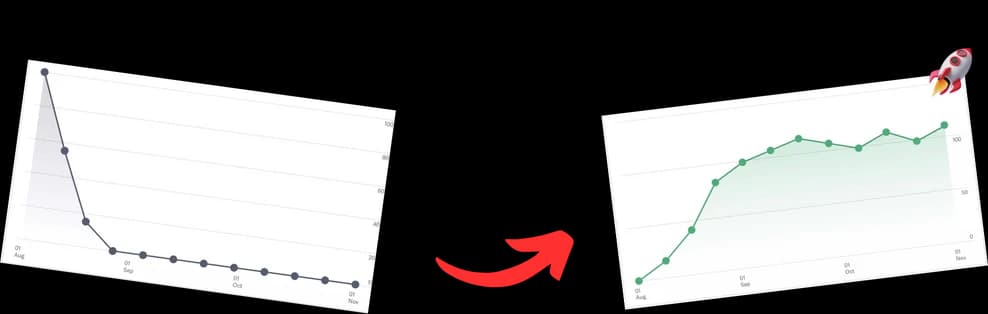
Most content doesn't fail because the idea is weak. It fails because people never really consume it. The average person reads only 20–28% of a web page, according to a Nielsen Norman Group survey cited by NYTLicensing. That should change how you think about content immediately.
If readers are scanning, then engagement isn't a vague creative goal. It's a production problem. You need better packaging, clearer structure, stronger hooks, and a workflow that helps you publish consistently without turning every piece into a custom project.
A lot of advice about how to create engaging content stays annoyingly abstract. Be authentic. Tell stories. Know your audience. None of that is wrong. It just isn't enough when you're trying to ship videos, articles, shorts, clips, and social posts on a real schedule.
The better approach is to build a system. Plan for attention. Choose the right format for the idea. Write and edit for retention. Optimize for discovery. Then measure what people did, not what you hoped they'd do.
Why Most Content Fails to Engage and How Yours Won't
The common mistake is treating engagement like a talent issue. It usually isn't. It's a formatting, positioning, and workflow issue.
Most creators put most of their effort into the body of the content. That's the wrong place to overinvest first. If the title is weak, the opening is slow, and the structure looks dense, people leave before they ever reach the good part. That isn't harsh. It's normal behavior in a crowded feed and a crowded search result.
Attention is won before the main point
When someone lands on a page or opens a video, they make a snap judgment. Can I get value from this quickly, or is this going to waste my time? Your job is to answer that question fast.
That means:
- Lead with a clear promise. Say what the content helps them do.
- Make the first lines earn attention. Open with a question, a sharp claim, a surprising fact, or a strong opinion.
- Design for scanning. Use subheads, short paragraphs, and visible takeaways.
- Cut throat-clearing intros. Nobody needs three paragraphs of setup before the useful part starts.
Practical rule: If your opening can be removed without changing the value of the piece, remove it.
A lot of creators think more detail automatically creates more engagement. Usually, the opposite happens. Dense content asks for commitment before trust has been earned. Good content earns trust in layers. First clarity. Then relevance. Then depth.
Engagement is a system, not a spark
The creators who hold attention consistently usually do one thing differently. They don't reinvent their process every time. They use a repeatable system for topic selection, scripting, editing, packaging, and distribution.
That matters because inconsistency shows up on the page. One week you publish a sharp, useful video. The next week you post something bloated and unfocused because you were rushing and had no production process. Audiences notice that.
If you want a broader set of practical tactics for getting people to participate instead of passively consuming, these audience engagement strategies are useful. But the bigger point is this: tactics work better when they're attached to a workflow.
Engaging content isn't mysterious. It's content that respects attention. It gets to the point quickly, delivers value in the right format, and removes friction at every step.
Plan Content Your Audience Actually Wants
Bad content plans start with the creator's urge to publish. Good content plans start with audience friction. What is the viewer stuck on, confused by, curious about, or trying to compare?
If you skip that step, you end up with content that sounds polished but lands flat. It may be accurate. It may even be well edited. But it won't feel timely or necessary to the person seeing it.
Start with audience stage, not just topic
One of the most useful planning lenses is audience awareness stage. The angle that works for someone who barely recognizes the problem won't work for someone actively comparing solutions.
Use a simple split:
| Audience stage | What they're thinking | Content angle that works |
|---|---|---|
| Problem unaware | Something feels off, but I can't name it | Educational content that names the issue clearly |
| Problem aware | I know the problem, but not what to do next | Step-by-step guidance and practical diagnosis |
| Solution aware | I'm comparing methods, tools, or creators | Specific frameworks, comparisons, demos, and objections |
Many content calendars often fall apart. They list topics, not decisions. A better plan asks, "What specific question does this audience stage need answered next?"
Generic advice gets polite agreement. Specific guidance gets saves, shares, and comments.

Use an expert-led workflow
Planning gets easier when you stop trying to generate every idea from scratch. A more reliable method is an expert-led workflow built around strategy alignment, structured interviews, and a repeatable editorial process, as described in this guide to expert-led content.
In practice, that looks like this:
-
Align the content with a business goal
Decide what the piece needs to do. Attract a new audience, support a product, answer objections, or build authority around a niche topic. -
Interview the subject matter expert
Use a question set instead of a blank conversation. Ask for mistakes people make, myths they believe, examples they see repeatedly, and the signs of a good outcome. -
Turn raw insight into multiple assets
One interview can become a long-form article, a video script, several short clips, and a handful of social posts. -
Run it through the same editorial steps every time
Draft, edit, fact check, expert review, publish. Repeat.
This isn't glamorous, but it prevents a lot of bad content. It also reduces rework because you aren't guessing what the audience cares about after the draft is already written.
Build a backlog that survives busy weeks
Creators often confuse inspiration with planning. Inspiration is unreliable. A backlog is operational.
A strong backlog includes:
- Evergreen questions your audience asks repeatedly
- Objection-driven topics that help people move toward action
- Format-specific ideas that fit video, text, or audio naturally
- Awareness-stage coverage so you're not only creating bottom-of-funnel content
If your schedule is messy, it helps to manage this inside a documented content calendar workflow rather than a notes app full of half-formed ideas. The point isn't bureaucracy. It's making sure good ideas don't disappear and weak ideas don't get published just because a deadline arrived.
Choose the Right Format for Your Message
A lot of creators ask which format performs best. That's the wrong first question. Ask which format best matches the job.
Some ideas need demonstration. Some need detail. Some need voice and nuance. If you pick the wrong format, you make the audience work harder than necessary.
What each format does well

Here's the practical version:
| Format | Best use | Common failure mode |
|---|---|---|
| Long-form article | Explanation, search intent, structured teaching | Slow opening and heavy paragraphs |
| Video | Demonstration, story, personality, visual proof | Rambling intros and weak editing rhythm |
| Podcast | Depth, interviews, opinion, companion listening | Low energy openings and poor episode structure |
Text still matters. It gives you room for precision, indexing, and depth. But if the topic benefits from visual proof, text can feel inefficient.
Video is often the better container when the message depends on pace, presence, and demonstration. In Sprout Social's 2026 marketing statistics, short-form social videos deliver the highest ROI at 41% for B2B marketers, while brand storytelling follows at 38%, according to Sprout Social's social media statistics. That doesn't mean every idea should become a reel. It means creators should stop treating video like an optional add-on.
Match the message to the medium
Use long-form articles when the audience needs:
- Detailed reasoning
- Searchable reference content
- Skimmable step-by-step instruction
Use video when the audience needs to see:
- A workflow in action
- A tool demo
- A personal take with emotional clarity
- A transformation before they trust the conclusion
Use podcasts when the audience wants:
- A longer conversation
- Expert interviews
- Background listening during routine tasks
The right format removes effort. The wrong format creates it.
Open differently depending on format
Each format needs a different kind of hook.
For articles, lead with the strongest claim or friction point. Don't spend the first paragraph warming up.
For video, the first seconds need immediate context. What is this about, why should I care, and why now? A good opening often previews the payoff before the explanation begins.
For podcasts, the intro can't sound like housekeeping. If the first minute is just branding, banter, and disclaimers, many listeners will mentally exit even if they don't physically stop the episode.
If your distribution depends heavily on social, it helps to think through a social media video strategy before production starts. The packaging usually determines whether a strong idea gets ignored or clicked.
Crafting Your Content From First Draft to Final Cut
Production is where good ideas often get flattened by bad execution. The topic is solid. The outline is solid. Then the draft turns stiff, or the video rambles, or the edit drags.
That usually happens because creators focus on what they want to say instead of how the audience will experience it.
Write for processing speed
The easiest way to make content feel more engaging is to make it easier to process. A Mailchimp guide on engaging content recommends strong openings, a conversational tone, visual support, and an average sentence length of about 14 words. That's a useful benchmark because it forces clarity without making every sentence choppy.
A few writing rules do most of the work:
- Use short paragraphs so the page looks manageable
- Keep one main idea per paragraph so readers don't lose the thread
- Favor concrete wording over abstract phrasing
- Trim transitions that don't add meaning
- Read the draft out loud to catch stiffness and filler
A sentence can be smart and still be hard to read. If a reader has to untangle it, you've created friction.
Script videos for rhythm, not just information
Video scripts need a different discipline. A useful script isn't just a spoken article. It accounts for pace, cuts, visuals, and attention resets.
A reliable sequence looks like this:
-
Hook the problem fast
Start with the pain point, the curiosity gap, or the promise. -
Prove relevance early
Show the viewer they're in the right place. Name the scenario or mistake they recognize. -
Break the body into segments
Each segment should feel like forward motion, not another pile of explanation. -
Use pattern changes
Shift visuals, framing, examples, or on-screen text before the energy drops. -
End with a clear next step
Summarize the takeaway and direct the viewer to the next action.
A clean edit can't rescue a shapeless script. The structure has to exist before the timeline opens.
Edit harder than you think you need to
Most first drafts are over-explanations. Most rough cuts are overlong. The fix is usually subtraction.
For articles, cut repeated points, soften jargon, and move the strongest line higher. For video, trim pauses that don't add tension, remove side roads, and add B-roll or captions where the spoken track alone feels thin. For audio, pacing matters more than people admit. Dead air, weak segues, and long disclaimers make an episode feel longer than it is.
When creators ask how to create engaging content, they often expect a list of creative tricks. The less glamorous truth is that engagement often comes from disciplined editing. The audience doesn't reward effort. They reward clarity.
Optimize Your Content for Discovery and Retention
Publishing isn't the finish line. It's where distribution work starts.
A lot of content underperforms because creators treat optimization like metadata cleanup. In reality, optimization shapes who finds the content, what they expect from it, and whether they stay long enough to get value.

Discovery starts with the promise
Titles, thumbnails, descriptions, intros, and chapter labels all make the same argument from different angles. They tell the audience what this piece is for.
A weak optimization pass usually sounds broad and self-centered. "My thoughts on content marketing." "Episode 42." "A few tips for creators." Those labels don't help a busy person decide.
A stronger pass is built around the audience's stage of awareness. Guidance from this content angle framework is useful here because it pushes you beyond generic advice and toward step-by-step solutions that fit where the audience is in their decision process.
That changes packaging in a practical way:
- Problem-aware viewers respond to clarity about what went wrong and how to fix it.
- Solution-aware viewers want comparisons, proof, workflows, and trade-offs.
- Early-stage viewers need the problem named in plain language before they'll care about your method.
Retention gets better when navigation gets easier
This is especially true for YouTube and long-form video. A long video doesn't feel long when the structure is obvious. It feels long when the viewer can't tell where the useful parts are.
Chapters help because they do two jobs at once. They make finding sections in a video simpler, and they sharpen topical signals around what the video covers. For creators producing tutorials, interviews, breakdowns, or podcasts, adding chapters is one of the simplest retention upgrades available.
One option for this is TimeSkip, which generates YouTube chapters and timestamps inside a Chrome extension workflow. The operational value is straightforward. It removes a repetitive task that many creators either postpone or do inconsistently.
A short walkthrough helps if you want to see how that workflow fits into publishing:
Don't separate engagement from discoverability
Creators often talk about discovery and engagement like they're separate systems. They aren't.
A confusing title attracts the wrong click or no click. A vague description lowers relevance. A hard-to-scan article loses readers. A long video without structure creates drop-off. All of those are engagement failures because they increase effort.
Optimization is part of content creation, not cleanup at the end. If you want better results, build packaging and navigation into the workflow before you publish.
Measure What Matters and Iterate Your Strategy
If you only track views, you'll keep learning the wrong lessons.
Views tell you that a click happened. They don't tell you whether the content delivered. Better measurement asks where attention held, where it dropped, and what specific decision likely caused that result.
Use signals that point to actual behavior
For written content, look at scroll depth, time on page, and where readers stop interacting. For video, audience retention is the most useful reality check. It shows whether your intro worked, whether the middle dragged, and whether the ending earned continued attention.

A few examples of what to watch:
- Sudden early drop-off usually means the hook didn't match the title or thumbnail.
- A dip in the middle often points to repetition, weak structure, or a segment that should've been cut.
- Strong completion with weak clicks suggests the content works, but the packaging doesn't.
- Good clicks with weak retention means the promise got attention, but the delivery didn't keep it.
Don't ask whether a piece "performed." Ask where it lost momentum.
Run small tests, not full reinventions
Creators waste time by changing everything at once. A better habit is testing one variable per cycle.
Try this:
-
Test the opening
Change the first lines or first spoken beat while keeping the rest intact. -
Test the packaging
Rewrite the title, thumbnail concept, or description to sharpen the promise. -
Test the structure
Reorder sections so the strongest material appears earlier. -
Test the prompt for interaction
Replace broad calls for comments with more specific opinion-based prompts.
If you're publishing on short-form platforms too, this TikTok content measurement guide is a useful companion because it focuses on interpreting performance signals instead of chasing vanity metrics.
Advantage comes from consistency. When you review results the same way every time, patterns become obvious. You stop guessing. You start spotting which hooks attract the right audience, which formats hold attention, and which topics deserve another variation.
That's the practical answer to how to create engaging content. Build a system that makes strong decisions before publishing, then improve the system with evidence after publishing.
If you're publishing long YouTube videos, tutorials, interviews, or podcast episodes, TimeSkip is worth checking out. It automates chapter creation inside a Chrome extension workflow, which makes it easier to add clear video structure without turning timestamps into another manual task.