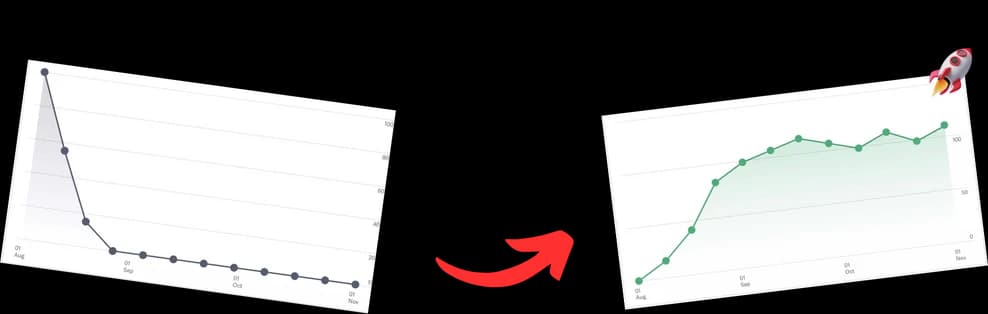
Most creators think subscriber growth is a content volume problem. It usually isn’t. The average channel takes 15.5 months of consistent uploading to reach 1,000 subscribers, according to Alex Hyett’s breakdown of VidIQ data. That number is useful because it resets expectations. It also shows why random uploading is too slow if you want growth fast.
The channels that move quicker don't just publish more. They build a system that turns the right viewers into subscribers on purpose. That means choosing topics for conversion, packaging videos for clicks, structuring videos for retention, and promoting with intent instead of chasing empty reach.
Your Blueprint for Rapid Subscriber Growth
Subscriber growth is a science, not a lottery. If your channel isn't converting, the problem usually isn't motivation. It's that the channel has no clear subscription reason.

A fast-growth channel starts with one question: why should this specific viewer subscribe instead of just watch one video and leave? If you can't answer that in one sentence, your audience can't either.
Define the promise before the content
Most creators describe their niche too broadly. “Business.” “Fitness.” “Podcast clips.” That doesn't create subscriber momentum. A better approach is to define a sharp value proposition tied to a repeatable outcome.
Use this simple framework:
-
Who exactly are you for Write down the viewer you want more of. Not “everyone interested in productivity.” Think “freelance designers who want better client systems” or “new podcast hosts trying to turn long interviews into discoverable YouTube content.”
-
What repeatable result do you help them get Subscription happens when viewers expect future videos to solve a recurring problem.
-
Why your channel, specifically Your angle could be your format, speed, point of view, niche depth, or practical style.
Practical rule: A viewer subscribes when they believe your next video will help them again, not when they merely enjoyed the last one.
This is especially important if you're building around interview content or educational media. If you're still shaping the show itself, this guide on starting an effective YouTube podcast is a useful companion because channel growth gets easier when the content format is designed for YouTube from day one.
Build a subscriber avatar, not a vanity audience
Views aren't equal. Some viewers binge, return, comment, and subscribe. Others create a spike and disappear. Fast growth comes from attracting the first group on purpose.
A subscriber avatar should include:
- Current problem: What are they trying to fix right now?
- Content preference: Do they want tutorials, breakdowns, reactions, case-led lessons, or clips?
- Subscription trigger: What would make them want ongoing updates?
- Channel expectation: What cadence or theme would make your channel feel dependable?
Here's the trade-off. Broad content often gets easier initial reach, but narrower content usually converts better. If your goal is how to get youtube subscribers fast, precision beats breadth.
Use the benchmark the right way
The average timeline matters because it tells you what happens when creators rely on consistency alone. The faster path comes from systematic optimization and identifying what already works, not from uploading on autopilot.
A practical growth system has five parts:
| Focus area | What it does |
|---|---|
| Foundation | Clarifies who should subscribe and why |
| Content | Produces videos built to convert, not just attract views |
| Packaging | Wins the click through stronger titles and thumbnails |
| Optimization | Improves retention so more viewers reach conversion points |
| Promotion | Sends qualified traffic into your channel ecosystem |
Creators who skip this groundwork often work hard without building momentum. Creators who do it early usually spot patterns faster and waste fewer uploads.
Engineer Content That Converts Viewers to Subscribers
A lot of channels confuse high views with high conversion. They aren't the same. Some videos bring traffic. A much smaller set brings subscribers.
Data from YouTube-focused creator analysis shows that one Subscriber Magnet video can generate as many subscribers as 13 other videos combined on the same channel, as discussed in this YouTube strategy video on subscriber magnets. That's the lever most creators miss.

What a Subscriber Magnet actually looks like
A Subscriber Magnet isn't just a “good video.” It's a video that makes the viewer want more from the same creator. That usually happens when a video does one or more of these jobs especially well:
-
Solves an urgent problem Tutorials, breakdowns, and tactical fixes often convert because the viewer wants repeated help.
-
Signals a repeatable series If the format clearly extends into future videos, subscription feels logical.
-
Matches the channel promise A random viral topic can bring strangers. A tightly aligned topic brings future fans.
The easiest mistake is chasing topics that produce curiosity but not commitment. A broad trend video may get attention. A focused, outcome-driven video often gets the subscription.
Plan around conversion, not just ideation
When I'm reviewing a channel strategy, I look at every video idea through one filter: if this performs well, will the resulting audience want more of the same? If the answer is no, it's a reach play, not a subscriber play.
Use this planning test before you produce:
| Question | If the answer is yes |
|---|---|
| Does this solve a repeat problem in my niche? | Stronger chance of ongoing interest |
| Can I make two or three follow-up videos naturally? | Better subscription logic |
| Would the right viewer binge more after this? | Higher session potential |
| Does this reinforce the channel identity? | Better long-term conversion |
For educational, interview, and podcast-led channels, scripting matters here more than people think. Tight scripting improves payoff, pacing, and clarity. If you need a cleaner workflow, this guide on writing a script for a YouTube video is a practical place to tighten the structure before recording.
Mix formats without diluting the brand
Fast channels rarely depend on one format alone. They use different formats for different jobs.
Long-form usually builds trust. Evergreen videos keep working after publish day. Shorts can introduce the channel to people who'd never see the long-form first.
Short-form can open the door, but long-form usually explains why the viewer should stay.
That doesn't mean every channel needs to flood the feed with every format. It means each format should support the same promise. Shorts should point toward deeper content. Evergreen videos should keep attracting the right audience over time. Long-form should make the channel worth subscribing to.
Build the first minute for commitment
High-converting videos usually make one thing clear right away: what the viewer will get, why it matters, and why this creator is worth listening to. The opening shouldn't stall with branding, throat-clearing, or backstory.
A strong opening does three things quickly:
- States the problem
- Signals the payoff
- Creates momentum into the next beat
If your first minute is vague, the viewer doesn't stay long enough to even consider subscribing. If it's sharp, you've earned the chance to deepen the relationship.
Craft Thumbnails and Titles That Demand Clicks
If nobody clicks, nothing else matters. Subscriber growth begins before the video starts.
Many creators still treat thumbnails and titles like finishing touches. That's backwards. They're the packaging that decides whether your video even gets a shot. According to this YouTube growth breakdown, A/B testing different thumbnail designs can boost click-through rate by up to 40%, and auto-subscribe links in pinned comments and descriptions can produce an 18-30% sub rate from engaged viewers.

Design for the glance, not the desktop
A good thumbnail passes the glance test. Someone should understand the core tension fast, especially on mobile.
That usually means stripping away anything that isn't doing work. Too much text, weak contrast, and cluttered compositions lower clarity. Strong thumbnails tend to emphasize one idea, one emotion, or one before-and-after tension.
Use this as a quick filter:
- Clear subject: One focal point beats a crowded frame.
- High contrast: If it blends into the feed, it loses.
- Visual tension: Show change, risk, result, surprise, or conflict.
- Mobile legibility: Shrink it mentally before you approve it.
If you're rebuilding your packaging process, these YouTube thumbnail best practices are useful for tightening the visual side without overcomplicating the workflow.
Write titles that create a reason to click
Titles should make a specific promise. Not a vague topic label.
Weak title: “Podcast Growth Tips”
Stronger title: “How I’d Fix a Slow-Growing YouTube Podcast”
The difference is intent. One names a category. The other creates a problem and a payoff.
A workable title framework:
| Type | What it does |
|---|---|
| Problem-led | Calls out a pain point the viewer already feels |
| Outcome-led | Promises a result worth chasing |
| Curiosity-led | Opens a loop without becoming misleading |
| Comparison-led | Frames contrast and helps decision-making |
Clickbait isn't the goal. Precision is. If the title promises one thing and the video delivers another, retention will expose the mismatch.
Here's a useful visual breakdown to study before you rework your next batch of packaging:
Test creative like a strategist
The fastest-growing creators don't “pick a thumbnail.” They test hypotheses.
Packaging insight: If a video underperforms, don't only question the topic. Question whether the topic was packaged clearly enough for the right viewer to click.
Run tests around a single variable at a time. Try expression versus no expression. Try a result-focused headline versus a curiosity-led one. Try a cleaner background. Then compare. Over time, you'll learn what your audience responds to, and that learning compounds across every upload.
Also, don't waste the viewers you already earned. Add an auto-subscribe link to pinned comments or descriptions for highly engaged videos, especially the ones already showing strong retention and comment activity.
Maximize Retention to Drive Subscriber Conversions
Views create opportunity. Retention determines whether that opportunity turns into a subscription.
A lot of advice on YouTube growth stops at thumbnails, titles, and posting cadence. The missing layer is video architecture. Many guides miss the relationship between structure and conversion, even though Backlinko’s YouTube subscriber guide highlights that improving viewer retention by 15% through technical optimizations like AI-generated chapters can compound into better ranking and a 25% increase in discovery.

Why structure affects subscriptions
People subscribe after enough trust accumulates. Trust builds when the video feels easy to follow, worth finishing, and consistent with the promise that earned the click.
If your video meanders, delays the payoff, or buries the useful parts, viewers leave before they hit your end screen, your call to action, or your next recommended video. So retention isn't just an algorithm metric. It's the path that gets viewers to the moments where they decide to stay with your channel.
Use chapters to reduce friction
This matters most in long-form videos, interviews, podcasts, tutorials, and breakdowns. The longer the runtime, the more structure matters.
Chapters help in three ways:
-
Navigation Viewers can jump to the exact segment they care about and stay engaged instead of abandoning the video.
-
Expectation setting A well-labeled chapter list tells the viewer the video is organized and worth their time.
-
Discovery Segmenting a video around clear topics helps YouTube and search surfaces understand what the content covers.
This is one of the few optimizations that improves both user experience and discoverability. For creators publishing long episodes or educational videos, that dual effect is valuable.
Build retention into the edit
You don't fix retention only after upload. You build it during planning and editing.
A practical retention checklist:
-
Open with payoff, not intro Start where the value begins.
-
Create forward motion Each segment should pull into the next naturally.
-
Remove repetition Repeating the same point burns attention fast.
-
Use visible structure Signpost what comes next so the viewer feels progress.
-
Place calls to action after value A subscription ask works better once the viewer has experienced something useful.
Most creators lose subscribers before they ask for them, because the video loses attention before it earns the request.
Make technical optimization part of the workflow
For busy creators, technical optimization usually gets skipped because it's tedious, not because it's unimportant. That's where tools become practical. One option is TimeSkip’s audience retention workflow, which focuses on chaptering and retention-related structure for YouTube videos.
The broader point is bigger than any one tool. If you're serious about how to get youtube subscribers fast, you can't treat timestamps, chapters, segment labels, and end-screen planning as optional polish. They shape the viewing experience itself.
Place subscription cues where they belong
Most channels either never ask for the subscribe or ask too early and too vaguely.
A better sequence looks like this:
| Moment | Better CTA approach |
|---|---|
| Early in the video | Light expectation setting tied to the channel promise |
| After a meaningful win | Direct ask connected to future value |
| Near the end | Clear next step into another relevant video |
The key is relevance. “Subscribe for more” is weak. “Subscribe if you want more breakdowns like this every week” is better because it gives the viewer a concrete reason.
End screens matter here too. A viewer who watches another video from your channel becomes more likely to treat your content as a habit instead of a one-off.
Use Promotion Funnels to Attract Loyal Subscribers
Promotion gets misunderstood because creators often optimize for traffic, not fit. Fast subscriber growth comes from sending the right people into a channel that converts well once they arrive.
TubeBuddy benchmark data summarized in this channel growth guide shows that channels that fully optimize their channel page and use the Community tab consistently can achieve a 20-30% subscriber conversion lift and reach 1,000 subscribers up to 40% faster.
Turn your channel page into a conversion page
A channel page isn't just a profile. For many unsubscribed viewers, it's the deciding screen.
The page should answer these questions fast:
- What is this channel about
- Who is it for
- What should I watch first
- Why should I subscribe instead of sampling one video and leaving
That means tightening your trailer, featured videos, channel art, tagline, and homepage organization. Don't feature whatever is newest by default if your strongest conversion video is older. Lead with what sells the channel best.
Your channel page should feel like a guided next step, not a storage archive.
Use community posts to warm up return viewers
Community posts are useful because they reach people who already know you a little. That's a better audience for subscription asks than cold traffic from a random trend.
Post formats that tend to work well include:
- Polls: Good for surfacing pain points and future topics
- Behind-the-scenes updates: Good for relationship-building
- Direct prompts: Useful when tied to an upcoming video or recurring series
- Follow-up questions: Strong for turning viewers into participants
Promotion for subscribers is different from promotion for views. A viral clip on the wrong platform can flood a video with casual attention and weak conversion. A smaller wave of qualified traffic often produces better subscriber results.
If you're using TikTok as part of that funnel, make sure profile traffic has a clean path to your channel. This guide on managing TikTok profile links is helpful if your external traffic is getting stuck before it reaches your YouTube ecosystem.
Choose channels that preserve intent
The test for any promotion channel is simple. Does the viewer arrive with enough context to care about the rest of your channel?
Good promotion doesn't just create a click. It carries intent. That could be a short teaser that points to a deeper tutorial, a creator collaboration with aligned audiences, or a community post that primes the next upload.
Bad promotion creates detached traffic. Good promotion creates return behavior.
Adopt a Growth Mindset with Rapid Testing and Tracking
The fastest channels aren't built by creators who guess better. They're built by creators who learn faster.
One of the biggest blind spots in YouTube advice is topic selection inside tough niches. This YouTube strategy discussion on underperforming niches points to a better approach: successful creators analyze comment patterns and audience behavior to reverse-engineer content angles that generate subscribers, even in saturated categories.
Stop measuring only views
Views tell you what got attention. They don't tell you what built the channel.
If you want faster subscriber growth, track signals that expose conversion quality:
| Metric to watch | What it helps you understand |
|---|---|
| Subscribers by video | Which topics actually grow the audience |
| Audience retention patterns | Where viewers lose interest |
| Comment themes | What problems and desires keep repeating |
| Returning viewer behavior | Whether you're building a habit, not just a spike |
| Subscriber source | Which surfaces bring your best audience |
A video with modest reach but strong subscription pull is often more valuable than a high-view video that sends nobody deeper into the channel.
Look for market inefficiencies
In this context, small channels can beat larger ones. You're not trying to out-upload everyone. You're trying to spot demand that isn't being served well.
Three places to look:
-
Comments on competitor videos What are viewers still confused about? What follow-up questions keep appearing?
-
Weak videos on strong topics If a topic clearly attracts interest but the existing videos are shallow, outdated, or poorly explained, that's an opening.
-
Audience mismatch Some popular videos pull broad traffic but don't satisfy a niche audience thoroughly. Better positioning can win those viewers.
This matters even more in niches that don't convert naturally. Technical tutorials, educational channels, and B2B-style content often need more deliberate topic design because curiosity alone doesn't create subscriptions.
Run small tests, then double down
A smart growth loop looks like this:
-
Publish one clear hypothesis Example: a narrower tutorial, a more opinionated breakdown, or a new recurring format.
-
Study conversion signals Not just views. Look at comments, retention shape, and whether the video attracts the kind of viewer you want.
-
Refine the next upload Keep the variable that worked. Replace the one that didn't.
Small tests beat big assumptions. One well-analyzed upload can teach more than a month of random publishing.
The deeper lesson is simple. You don't need every video to win. You need each video to teach you something useful about what creates subscribers on your channel.
If long videos, podcasts, or tutorials are part of your channel, TimeSkip is worth looking at as a practical way to speed up chapter creation and improve video structure without adding more manual work. That matters because retention and discoverability often improve when viewers can move through content cleanly, especially on longer uploads.