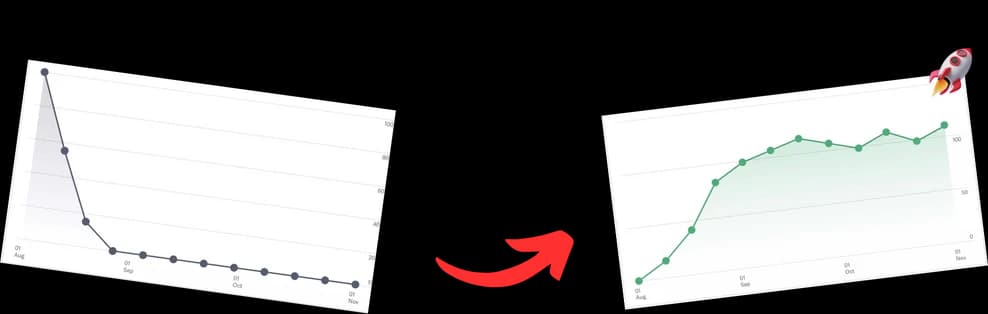
So, you want to make money on YouTube? The first magic number you’ll hear is 500 subscribers. But let's get one thing straight: you don't earn cash directly from subscribers. Hitting that 500 sub count is really about getting the key to unlock the first level of the YouTube Partner Program (YPP), where you can start earning from your biggest fans.
Your First Milestone: 500 Subscribers and Fan Funding
Lots of new creators get fixated on subscriber count, thinking it’s the only thing that matters. That's a classic rookie mistake. Your subscriber count is more like a key to a door—it gets you in, but it doesn't automatically fill the room with money. The real goal is meeting the specific thresholds YouTube sets.
For a long time, getting monetized felt like a huge mountain to climb. But YouTube has since rolled out a more gradual path, giving smaller creators a way to start earning much sooner. This first step is all about building a loyal community that wants to support you directly, long before you even see a dime from ad revenue.
Tier 1: The First Step to Monetization
Picture this: you've been grinding away, creating content, and you’re wondering when you'll finally see your first dollar. For 2026, the YouTube Partner Program has a clear entry point that makes it easier to get started.
Here’s what you need to unlock the first monetization tier:
- 500 subscribers
- 3,000 valid public watch hours in the past 12 months OR 3 million valid public Shorts views in the past 90 days
- At least 3 public uploads in the past 90 days
Once you hit these numbers, you unlock a suite of "Fan Funding" features. These are powerful tools that let your most dedicated followers support your work directly.
The features include:
- Channel Memberships: Your fans can pay a monthly fee for exclusive perks you create, like custom badges, emojis, or members-only videos.
- Super Chat & Super Stickers: During live streams, viewers can pay to have their comments highlighted, making them stand out in a busy chat.
- Super Thanks: Think of this as a digital tip jar. Viewers can leave a "Super Thanks" on any of your regular videos to show their appreciation.
This new, tiered approach creates a clearer path for creators. The first level gets your foot in the door with fan support, and the second level unlocks the full suite of monetization tools, including ad revenue.
Here’s a breakdown of how the two main YPP tiers compare.
YouTube Partner Program Monetization Tiers in 2026
| Requirement | Tier 1 Fan Funding | Tier 2 Full Monetization |
|---|---|---|
| Subscribers | 500 subscribers | 1,000 subscribers |
| Watch Time | 3,000 public watch hours (last 12 months) | 4,000 public watch hours (last 12 months) |
| Shorts Views | 3 million public Shorts views (last 90 days) | 10 million public Shorts views (last 90 days) |
| Monetization Features | Channel Memberships, Super Chat, Super Stickers, Super Thanks | All Tier 1 features PLUS Ad Revenue (Watch Page & Shorts Feed Ads) |
This table shows how you can start earning with a smaller, dedicated audience before pushing for the larger milestones needed for ad revenue.

As you can see, the journey starts with hitting 500 subscribers before you move on to the bigger goal of 1,000 subscribers for full monetization. Focusing on these initial fan-funded tools is the quickest way to make your first dollar on the platform.
It shifts your mindset from just chasing numbers to actually building a real community. And as you work on growing that community, our guide on how to increase your YouTube subscribers can help you get there even faster.
Unlocking Ad Revenue and Full Monetization

While fan funding gives you that first exciting taste of income, the real goal for most creators is getting to the main event: ad revenue. This is where you level up to the full YouTube Partner Program, and your videos start generating money from the ads that run before, during, and after them.
This is what most people are really asking when they wonder "how many subs do you need to make money?"—they're thinking about that scalable, more passive income from ads.
To get there, you need to hit some bigger milestones. For full monetization, you'll need 1,000 subscribers plus either 4,000 public watch hours in the last 12 months or a staggering 10 million public Shorts views within 90 days. You also have to keep your channel active with at least 3 public uploads in the last 90 days.
Hitting these numbers unlocks ad revenue sharing, a slice of YouTube Premium earnings, and access to Shorts ads. Just be aware that for Shorts, YouTube keeps a 55% share of that ad revenue. These requirements can shift, and you can explore the complete 2026 guide on InfluenceFlow.io for all the nitty-gritty details.
Decoding Your Earnings Potential
Once you're in the program, you'll start hearing two acronyms thrown around constantly: CPM and RPM. It’s easy to mix them up, but knowing the difference is absolutely critical for setting realistic expectations for your channel.
-
CPM (Cost Per Mille): Think of this as the "Cost Per 1,000 Impressions." It’s what advertisers agree to pay to show their ads on videos like yours. It's the sticker price of the ad space, not what you actually pocket.
-
RPM (Revenue Per Mille): This is your "Revenue Per 1,000 Views," and it's the number that actually matters to your bank account. RPM shows your true earnings after YouTube takes its 45% cut from ads on your long-form videos.
RPM is your take-home pay per 1,000 views. A high CPM doesn't guarantee a high RPM if viewers skip ads or if YouTube's system determines the ad isn't relevant. This is why a highly engaged audience is more valuable than passive viewers.
Let's say your CPM is a healthy $10. That sounds great, but if half your viewers skip the ad before it counts, and then YouTube takes its share, your actual RPM will be significantly lower. This is exactly why focusing on viewer retention is so important.
Longer watch times create more opportunities for mid-roll ads and send a powerful signal to YouTube that your content is valuable. That, in turn, can attract higher-paying advertisers. To really get a handle on this, check out our deep dive on what public watch hours are on YouTube.
Building Your YouTube Income Streams Beyond Ads

Relying just on YouTube ad revenue is like building a house with only one wall. It might look okay from one angle, but it’s incredibly vulnerable. The smartest creators know the real money isn’t about hitting a magic subscriber number for ads—it’s about building several different income streams.
This approach creates a stable, resilient business. If ad rates dip or a video flops, you're not left scrambling. Think of your channel as the central hub of a business, not just a collection of videos. Ad revenue is one spoke on the wheel, but the real power comes from diversifying.
The Seven Pillars of YouTube Income
A solid YouTube business stands on several pillars. Some of these you unlock through the YouTube Partner Program, while others you can start working on from day one, no matter how many subscribers you have.
Here are the seven main ways successful creators make money:
- Ad Revenue: This is the one everyone knows. You get a cut of the money from ads on your long-form videos, Shorts, and live streams. This kicks in once you hit the 1,000-subscriber tier.
- YouTube Premium Revenue: When a YouTube Premium subscriber watches your stuff, you get a small piece of their subscription fee. It's a smaller, but steady, source of income.
- Fan Funding: This is where your community can support you directly. It includes Channel Memberships, Super Chat, Super Stickers, and Super Thanks. You can unlock these features at just 500 subscribers.
- Merchandise Shelf: YouTube Shopping lets you connect a store (like Spring) to display your products right below your videos. It’s an awesome way to turn your brand into physical products like hoodies, hats, or mugs.
While YouTube's built-in tools are great, the highest-earning creators build their most profitable income streams off-platform. They use their channel to build an audience that trusts them, then point that audience to offers they control completely.
Branching Out for Maximum Profit
The real growth happens when you step outside of YouTube's playground. These next three income streams have the highest earning potential and give you total control, free from the whims of YouTube’s algorithm.
1. Affiliate Marketing This is often the quickest way to start earning, even before you're officially monetized. It’s simple: you recommend products or services you actually use and love. When someone buys through your unique affiliate link, you get a commission.
A tech reviewer can link to the camera they use, or a fitness creator can share a link to their favorite protein powder. It’s genuine, adds value for your audience, and can generate serious cash.
2. Brand Sponsorships (Brand Deals) This is when a company pays you a flat fee to feature their product in a video. Unlike ad revenue that swings with every view, a sponsorship is guaranteed money in the bank.
Even channels with a few thousand super-engaged subscribers in a tight niche can land deals worth hundreds or even thousands of dollars. Brands often care more about a loyal, targeted audience than a massive, generic subscriber count.
3. Selling Your Own Products or Services This is the holy grail of monetization. You control the product, the price, and you keep all the profit. It could be digital products like e-books and courses, physical merch, or even services like coaching and consulting.
Your YouTube channel becomes the perfect sales funnel, building the authority and trust that turns casual viewers into loyal customers.
What a Monetized YouTube Channel Actually Earns

Once you’ve made it into the YouTube Partner Program, the big question changes from "how many subs do I need?" to "how much money can I actually make?" The honest answer? It depends entirely on your niche.
You see, not all views are created equal. The key metric you need to get familiar with is RPM, or Revenue Per Mille. Think of it as your channel’s earning power for every 1,000 views. For example, a gaming or entertainment channel might see an RPM of just $1-$6. On the flip side, a channel focused on finance or business could pull in a much healthier $10-$20+ RPM. Advertisers are simply willing to pay a premium to get their products in front of people ready to spend on high-value topics like investing or software.
Calculating Your Potential Earnings
Let's break down what this looks like with some real-world numbers. Say you're a newly monetized creator who's finally starting to get some traction.
-
The Starting Point: Your channel hits 100,000 monthly views. You’re in a mid-range niche like cooking or DIY, and your RPM is around $4. That translates to an estimated $400 in monthly ad revenue.
-
Gaining Momentum: A few months later, your channel is booming and pulling in 500,000 monthly views. If you’re in a high-value niche like personal finance with a $15 RPM, you could be looking at $7,500 a month.
These numbers really drive home why a smaller, highly-engaged audience in a profitable niche can often out-earn a massive channel in a low-RPM category. If you want to dive deeper into these calculations, our detailed breakdown of how much money YouTube pays is a great place to start.
What About YouTube Shorts?
The Shorts earning model is a completely different ballgame. Instead of earning from ads on your individual videos, revenue from all Shorts ads is pooled together. From that pool, you get a share based on your percentage of total Shorts views. On top of that, YouTube takes a 55% cut of the revenue, which is a bigger slice than the 45% it takes from long-form videos.
Because the RPM for Shorts is significantly lower—often just a few cents—the only way to make real money is with massive volume. You need millions upon millions of views to see a substantial income, which is why your primary focus should always be on building a solid foundation with your long-form content first.
Recent data shows that once creators hit the 1,000-subscriber and 4,000-watch-hour mark, they can realistically expect to earn between $300-$600 per month in their first few months of monetization. As a channel grows past 300,000 monthly views, scaling to $1,000+ per month within the first 6-12 months is an achievable goal, as you can see in this monetization guide from vidIQ.
Accelerate Your Path to Monetization with Smart Tools
Hitting the YouTube Partner Program thresholds can feel like watching paint dry, especially when you’re staring down that 4,000-hour watch time requirement. New creators often get stuck on subscriber counts, but if you ask any seasoned YouTuber, they'll tell you the real secret to growth is viewer retention. The longer you can keep people watching, the more the algorithm will start working for you.
Think about it from YouTube's perspective. High retention is a massive signal that viewers are loving your content. In turn, YouTube rewards you by recommending your videos to new audiences, creating a snowball effect that drives up both your views and your precious watch hours. The problem? Manually optimizing for retention can feel like a full-time job.
Boost Watch Time with SEO-Optimized Chapters
Imagine handing someone a book with no table of contents. Chances are, they'll get frustrated and put it down. Your long-form videos are no different. This is where a few smart, AI-powered tools can become your secret weapon for getting monetized faster. Creating video chapters isn't just a nice-to-have for your viewers; it’s a killer growth hack.
Here’s a peek at how a tool like TimeSkip makes this almost effortless.
By scanning your video’s transcript, the tool whips up relevant, keyword-rich timestamps that make your content easy to skim and navigate. This simple addition has a direct impact on viewer retention because you're helping people find the exact gold nuggets they came for, which keeps them on your video longer instead of clicking away.
But here’s the real kicker: Google and YouTube index these chapters. When someone searches for a specific topic you covered, your video can show up in the results with a direct link to that exact moment. This is huge for discoverability and brings in highly motivated viewers who are more likely to stick around.
A video with well-structured chapters isn't just easier to watch; it becomes a more powerful asset for attracting organic traffic. By making your content more searchable, you’re effectively putting your watch time accumulation on autopilot, helping you cross the monetization finish line much faster.
Streamline Your Workflow to Focus on Growth
The name of the game for reaching monetization is consistency, and you can't be consistent if you're bogged down by tedious tasks. Smart automation is all about reclaiming hours that you can pour back into what really matters: creating your next great video. To grow your channel effectively, you need the right tech in your corner. You can find some of the best AI tools for content creators that help with every part of the production process.
For instance, letting a tool like TimeSkip handle your chaptering means you can:
- Save Hours of Manual Work: Why scrub through footage writing down timestamps by hand when you can generate chapters instantly?
- Improve Video SEO: The tool automatically infuses your chapters with relevant keywords that can give you a leg up in search rankings.
- Enhance Viewer Experience: You’re giving your audience control to navigate your content easily, which directly translates to better retention and satisfaction.
By automating the boring stuff, you free up your creative energy to focus on building a loyal audience and, finally, getting paid for your hard work.
Common Monetization Mistakes That Stall Your Growth
Hitting the numbers for the YouTube Partner Program feels incredible, but that excitement can turn to frustration fast if your application gets rejected. It happens more often than you'd think, and most of the time, it's because of a few common, easily avoidable slip-ups.
One of the biggest hurdles is a misunderstanding of YouTube's Community Guidelines and AdSense Program Policies. This isn't just about steering clear of the obvious no-nos. The platform is cracking down on things like reused or repetitious content, where creators simply stitch together clips from other sources without adding their own significant commentary or educational spin.
And it should go without saying, but trying to game the system by purchasing YouTube subscribers is a fast-track to getting penalized, not monetized. It completely undermines all the legitimate work you've put in.
Misinterpreting Watch Hour Sources
Here’s a tough lesson many creators learn the hard way: not all watch time counts toward that magic 4,000-hour goal. It's a critical detail that can leave you wondering why you're not getting approved even when your numbers look good.
Specifically, the watch time from these sources will not count toward your YPP application:
- Private videos
- Unlisted videos
- Deleted videos
- Ad campaigns (like running Google Ads for views)
- Views from the Shorts shelf
The watch hours that count must come from your public, long-form videos. This means that even if a Short goes viral and gets millions of views, the watch time generated from the Shorts feed won't help you qualify for full ad-revenue monetization on your longer content.
The Dangers of Copyright Claims
Finally, nothing sinks an application faster than copyright issues. Using music, video clips, or even images you don't have the rights to can land you a Copyright Strike. It's a serious penalty.
Having just one active strike on your channel when the YouTube team reviews your application is almost a guaranteed rejection. Always use royalty-free music or get explicit, written permission for any third-party content you feature. Dodging these common mistakes will save you from maddening delays and put you on the right path to a successful monetization journey.
Your YouTube Monetization Questions Answered
If you're just starting out, you've probably got a ton of questions about making money on YouTube. Getting straight answers is the best way to set goals that make sense and keep you focused on what actually moves the needle for your channel's growth.
Let's dive into some of the most common questions creators ask.
How Long Does It Take to Get 4,000 Watch Hours?
There's no single magic number, but for most creators who are posting consistently, hitting 4,000 public watch hours takes somewhere between 6 to 12 months. Of course, this all depends on your niche, how good your videos are, and how often you upload.
A channel that puts out one great, high-retention video every week will cross the finish line way faster than someone who posts randomly. The key is consistency. Think of every video as an asset that keeps working for you, racking up those precious hours long after you hit publish.
Can I Make Money Before Joining the YPP?
Absolutely. One of the biggest mistakes new creators make is waiting for the YouTube Partner Program (YPP) to earn their first dollar. You can—and should—start making money much sooner with strategies that have nothing to do with subscriber counts or watch time.
Here are two of the most popular ways to get started:
- Affiliate Marketing: Talk about products you genuinely use and love in your videos. When someone buys through your special link, you get a commission. You can start doing this from day one.
- Brand Sponsorships: You don't need a massive audience to land brand deals. Many companies would rather partner with a micro-influencer who has a small but super-engaged community than a huge channel with generic viewers.
You don't need YouTube's permission to build a business around your content. These off-platform methods give you full control over your income from day one.
Does Subscriber Count Still Matter After Monetization?
Yes, a thousand times yes. Your subscriber count is still a huge deal long after you're monetized. While they aren't directly paying you, subscribers are a vital sign of your channel's health and influence.
A growing subscriber base gives you crucial social proof, which is just a fancy way of saying new viewers are more likely to trust your content and hit subscribe themselves. It also shouts to brands that you have a loyal, dedicated audience, which is exactly what they're looking for when deciding who to sponsor.
Ready to slash the time it takes to get monetized? TimeSkip automatically generates SEO-optimized video chapters in seconds, boosting the retention and watch time you need to qualify for the YPP faster. Try it for free and see how effortless chaptering can be at https://timeskip.io.