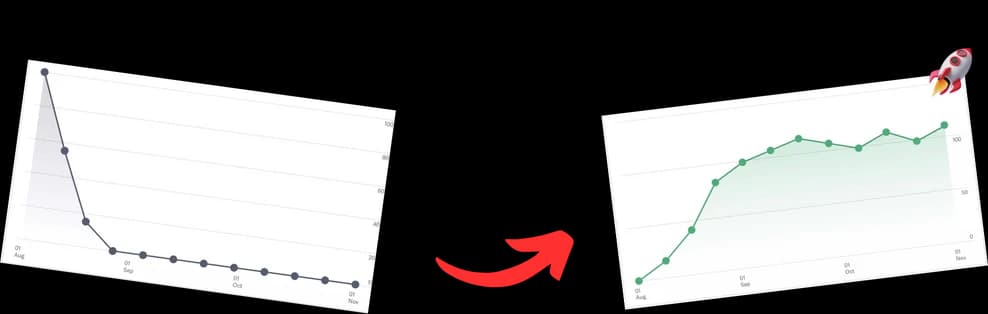
If you’ve spent any time around other creators talking about making money on YouTube, you’ve definitely heard the term “CPM” thrown around. So, what is it? Put simply, CPM stands for Cost Per Mille, which is just a fancy way of saying Cost Per 1,000 Impressions.
It’s the price advertisers are willing to pay to show their ads 1,000 times on YouTube videos.
What YouTube CPM Actually Means for Creators
Think of CPM as the wholesale price for an ad spot on your channel. Imagine your videos are a popular highway, and you own the digital billboards along the side. CPM is the rate a brand like Nike or HelloFresh pays for every thousand cars (viewers) that drive by and see their ad.
It’s a core metric that shows what advertisers are paying on the front end, before YouTube takes its cut or anything else happens.
This is the most important thing to get right about CPM: it's not the money that hits your bank account. It’s the total price advertisers pay to YouTube. The metric that shows what you actually pocket is called RPM, or Revenue Per Mille.
CPM vs. RPM: What You Need to Know
To really understand your channel's finances, you have to know the difference between what advertisers pay (CPM) and what you actually earn (RPM). Getting these two mixed up is one of the most common points of confusion for creators trying to figure out their analytics.
The easiest way to remember it is this: CPM is the sticker price advertisers pay. RPM is the take-home pay you get. Your RPM will almost always be lower than your CPM because it reflects your earnings after YouTube's 45% revenue share and views that weren't monetized.
Getting a handle on these metrics is the first step toward building a real income on the platform. Each one tells a different part of your monetization story. Here’s a quick comparison to make it all click.
YouTube Monetization Metrics at a Glance
This table breaks down the most important monetization metrics every creator should know. Think of it as your cheat sheet for understanding how the money flows.
| Metric | What It Measures | Who It's For | Simple Analogy |
|---|---|---|---|
| CPM | The cost advertisers pay for 1,000 ad impressions. | Advertisers | The "sticker price" of an ad spot. |
| Playback-based CPM | The cost advertisers pay for 1,000 monetized playbacks. | Creators & Advertisers | The price for ads shown during your actual video plays. |
| RPM | Your total revenue (from all sources) per 1,000 video views. | Creators | Your "take-home pay" per 1,000 views on your channel. |
As you can see, these metrics paint very different pictures. A high CPM is awesome—it means advertisers really value your audience. But at the end of the day, your RPM is the number that tells you how much money your channel is actually generating.
How YouTube Calculates CPM vs. Your Actual Payout
Getting your head around YouTube's metrics can feel like learning a new language. But once you grasp the difference between what advertisers pay and what you actually pocket, you gain real control over your channel's finances. The core formula advertisers use, CPM, is just straightforward math.
It looks like this:
(Total Advertiser Cost / Total Ad Impressions) x 1,000 = CPM
Let's say a brand spends $200 on an ad campaign that runs across different videos, and it gets shown 50,000 times. The math would be ($200 / 50,000) x 1,000, giving you a $4 CPM. This simply means the advertiser paid $4 for every thousand times their ad was displayed.
But that number doesn't tell you the whole story. A far more useful metric in your YouTube Studio is Playback-based CPM. This one zeroes in on the cost per 1,000 monetized playbacks—views on your videos where an ad actually ran. It's a much sharper view of what advertisers are willing to pay on your specific content.
RPM: Your True North for Earnings
Even with Playback-based CPM, you're still not looking at your take-home pay. For that, you need to turn to RPM (Revenue Per Mille). Think of RPM as your channel’s real-world earnings report. It calculates your total revenue from all sources (ads, Super Chats, memberships, etc.) for every 1,000 views, and—most importantly—it’s calculated after YouTube takes its 45% cut from ad revenue.
Key Takeaway: A high CPM doesn't automatically translate to high earnings. RPM is your true performance metric because it reflects the money that actually hits your bank account and considers all your views, not just the monetized ones.
This graphic breaks down how money flows from the advertiser (CPM) all the way down to you, the creator (RPM).

As you can see, the advertiser's payment is just the starting point. Your final earnings are what's left after YouTube takes its share.
A Real-World Example: CPM vs. RPM
Let's run the numbers. Imagine your video hits 10,000 views, and your Playback-based CPM is a healthy $10. Nice! But what if only half of those views were monetized? Maybe the other 5,000 viewers had ad-blockers or watched from a region where ads weren't served.
Here's how it plays out:
- Advertiser Payout: 5,000 monetized views at a $10 CPM generates $50 in gross ad revenue.
- YouTube's Share: YouTube takes its 45% cut, which comes out to $22.50.
- Your Earnings: You're left with $27.50.
Now, let's figure out your RPM for that entire video. You earned $27.50 from 10,000 total views.
($27.50 / 10,000 Views) x 1,000 = $2.75 RPM
See the difference? Your RPM is a modest $2.75, a far cry from that impressive-sounding $10 CPM. This is exactly why focusing only on CPM can be misleading. To get a better handle on these numbers for your own channel, you can play around with a dedicated YouTube CPM calculator. Understanding this distinction is absolutely essential for forecasting your income and building a sustainable career as a creator.
The Key Factors That Influence Your YouTube CPM

Ever wonder why your CPM swings wildly from month to month, or even video to video? It’s not just random chance. Your YouTube CPM is a direct reflection of how much advertisers are willing to pay to get in front of your specific audience. Think of it like a real-time auction where advertisers bid more when they think your viewers are ready to open their wallets.
Getting a handle on what drives those bids is the first real step toward growing your channel’s revenue. It all boils down to three core factors: where your audience lives, what your videos are about, and even what time of year it is.
Once you see how these pieces fit together, you can stop treating CPM as a number you just have to accept and start seeing it as something you can actually influence.
Audience Geography: The Power of Location
This is the big one. Where your viewers are watching from is arguably the single most important factor determining your CPM. Advertisers pay a huge premium to reach audiences in countries with higher disposable incomes and fiercely competitive ad markets.
This basically creates a tiered system for how much a viewer is "worth" to an advertiser.
- Tier 1 Countries: This group includes places like the United States, Australia, Canada, and the United Kingdom. Viewers here have serious purchasing power, which sparks intense competition among advertisers and leads to much, much higher CPMs.
- Tier 2 and 3 Countries: These regions have smaller, developing ad markets. You might have a massive audience in these countries, but with less advertiser competition, the CPM rates will be significantly lower.
The impact of geography is massive. We're talking a baseline of $5-18 CPM for Tier 1 countries like the United States, which can deliver 5-10x more revenue per view than traffic from developing markets. To put it in perspective, a creator who manages to shift even 70% of their viewership into Tier 1 countries could potentially double their earnings. You can dig into more of the country-specific rates over at youtubetoolshub.com.
Seasonality and The Q4 Effect
Your CPM also follows the calendar. Advertisers don't spend their budgets evenly throughout the year; they ramp up and pull back based on major consumer spending holidays, creating predictable highs and lows for creators.
The most famous example is the "Q4 Effect." The fourth quarter (October to December) is a gold rush for ad spending. Brands go all-in to capture holiday shoppers during Black Friday, Cyber Monday, and Christmas, which drives CPMs through the roof for nearly everyone.
On the flip side, the first quarter (January to March) is often called the "ad-pocalypse" for a reason. CPMs tend to dip as brands recover from their holiday spending spree.
Smart creators know this and plan their content calendars accordingly, saving some of their biggest video ideas for Q4 to ride the wave of higher rates. Understanding this timing is a huge part of grasping the broader cpm youtube meaning for your channel's annual revenue strategy.
Why Your Niche Can Make or Break Your Earnings
While things like seasonality and viewer location will make your CPM bounce around, nothing sets your earning potential in stone quite like your niche. It’s the single biggest factor you actually have control over. The topics you cover on your channel directly influence which advertisers show up, and more importantly, how much they’re willing to pay for a spot on your videos.
It all boils down to some pretty simple market economics. Advertisers are in a bidding war for your audience's attention. If they think your viewers are the type to pull out their credit cards for high-ticket items, they'll gladly pay a hefty premium for that ad space.
High-Value vs. High-Volume Niches
Put yourself in an advertiser's shoes for a second. A company selling investment software knows that landing just one new customer from an ad could be worth thousands. It’s a no-brainer for them to bid aggressively on a video about "stock market basics for beginners."
On the flip side, a creator in the entertainment or gaming space might pull in a massive, super-engaged audience. The problem? That audience isn't usually in a "buying" mood. The brands targeting them, like mobile game developers or snack companies, have much smaller returns per customer. This leads to lower bids and, you guessed it, a lower CPM for the creator.
Think of your niche as digital real estate. A video on personal finance is like a storefront on Fifth Avenue, attracting high-end brands. A general entertainment video is more like a billboard on a scenic highway—lots of eyes, but less commercial intent.
The difference in earnings can be absolutely wild. Just look at the numbers: niches like personal finance and investing can command a $20-50 CPM. Meanwhile, a gaming channel might only see $1-4. It all comes back to advertisers in lucrative fields like finance, real estate, and tech being willing to spend big to reach an audience with buying power.
YouTube CPM Rates by Niche (2026 Estimates)
To give you a clearer picture of how much this varies, here's a look at some estimated CPM ranges for different niches. Notice the "why" behind the numbers—it’s all about the audience's perceived value to advertisers.
| Niche | Estimated CPM Range | Why It's High/Low |
|---|---|---|
| Personal Finance & Investing | $25 - $50 | Advertisers are selling high-value services (e.g., investment platforms, financial advice) with high customer lifetime value. |
| Tech & Gadgets | $15 - $35 | Viewers are actively looking to make purchase decisions on expensive electronics. |
| Real Estate | $12 - $30 | Audiences have high purchase intent for big-ticket items like properties and mortgages. |
| Beauty & Fashion | $8 - $20 | Strong affiliate marketing and brand sponsorship potential, though ad rates are moderate. |
| Lifestyle & Vlogs | $3 - $10 | Broad audience with varied interests, making it less targeted for high-value advertisers. |
| Gaming | $1 - $4 | Massive audience, but advertisers are typically low-value (e.g., mobile games, energy drinks), resulting in lower bids. |
These are just estimates, but they paint a clear picture. You can dive deeper into how these rates are trending in this 2026 YouTube CPM analysis.
Now, this doesn't mean you should ditch your passion project to start a channel about cryptocurrency if you have zero interest in it. The key is to understand the market value of your chosen niche. Once you know why certain videos earn more, you can get smarter about positioning your own content to attract the best advertisers within your field.
Actionable Strategies to Increase Your YouTube CPM and RPM
 Knowing what CPM and RPM are is one thing, but actually making those numbers go up is a whole different ball game. This is where you shift from theory to action—transforming your channel from a fun hobby into a real, sustainable business.
The good news is, you don’t need any secret hacks. It all comes down to making smart, strategic tweaks to your content and SEO. By doing this, you can directly influence how much advertisers are willing to pay for your audience's attention and, ultimately, how much of that ad money ends up in your pocket. Let's break down the tactics that actually work.
Create Videos Longer Than Eight Minutes
One of the most powerful moves you can make for your ad revenue is simply making longer videos. Once a video crosses the eight-minute mark, it becomes eligible for mid-roll ads, which are commercials that can be placed at natural breaks during your video. This is an absolute game-changer for your RPM.
Instead of just one pre-roll ad, an 8-minute-plus video can host multiple ad breaks. This multiplies your ad impressions per view, even if your CPM rate stays the same. While the average CPM in 2026 is projected to be around $9.29, unlocking mid-rolls is what allows top creators to see earnings hit the $23 range. Many channels have seen a 20-30% revenue boost from this change alone. You can explore more benchmarks for YouTube ads on storegrowers.com.
Align with Advertiser-Friendly Guidelines
It’s simple: YouTube needs to keep its advertisers happy. And advertisers want their brands to appear next to safe, reliable content. That's why the platform's algorithm is built to reward videos that follow its advertiser-friendly guidelines and limit ads on (or demonetize) content that doesn't.
This means making sure your videos are free of excessive profanity, inflammatory political debates, and other sensitive subjects. When you consistently create "green-light" content, you're signaling to YouTube that your channel is a safe bet for big brands. This makes you eligible for more—and better-paying—ad placements, which is fundamental to any monetization strategy. To really kickstart your earnings, it's worth learning how to make money on YouTube fast by following these core principles.
Optimize SEO for High-Value Audiences
Your video's SEO does more than just get you found; it helps you get found by the right audience. When you target high-value keywords in your titles, descriptions, and tags, you start attracting viewers from wealthy Tier-1 countries and people searching with an intent to buy. This is a crucial piece of the puzzle when you're looking to improve your revenue.
Key Insight: Better SEO leads to a higher-quality audience. Ranking for terms searched by viewers in the US, UK, or Canada brings in an audience that advertisers will pay a premium to reach.
This is also where improving the viewer experience comes into play. Features like video chapters, which you can add instantly with tools like TimeSkip, are proven to boost retention and total watch time. These positive signals tell YouTube your video is high-quality, improving its ranking and getting it in front of those valuable audiences—ultimately lifting your RPM. If you're curious about what's possible, our guide on how much money does YouTube pay breaks down the earning potential.
Common Questions About YouTube CPM and Monetization
Let's clear up some of the most common head-scratchers creators have about making money on YouTube. We’ll tackle these questions with straightforward answers to make sure you know exactly how these numbers impact your channel's growth and your wallet.
Why Is My RPM So Much Lower Than My CPM?
This is easily one of the most confusing parts of looking at your YouTube analytics, but there’s a simple explanation. Your RPM (Revenue Per Mille) and your CPM (Cost Per Mille) are measuring two completely different things, which is why your RPM will almost always be lower.
Think of it this way: CPM is the gross price advertisers are willing to pay for 1,000 ad plays on your videos. This is the big number before YouTube takes its 45% cut.
RPM, on the other hand, is your net earnings per 1,000 video views, calculated after YouTube's share is taken out. RPM also accounts for all your views, even the ones that weren't monetized because the viewer used an ad blocker or no ad was available to show them.
In simple terms: CPM is the advertiser's price tag for ad space. RPM is the actual cash you, the creator, receive for your content's total performance. RPM is your financial reality check.
Can I See the CPM for a Specific Video?
Yes, you absolutely can—and you should! Digging into the analytics of individual videos is one of the most powerful things you can do to understand what’s actually making you money.
Just head over to your YouTube Studio and click on the 'Analytics' tab. From there, select the 'Revenue' tab at the top. This dashboard lets you click on any of your videos to see its specific Playback-based CPM and RPM.
Making this a regular habit is a game-changer. By spotting which videos have the highest CPM, you can start to see patterns. Are certain topics, formats, or video lengths your top earners? Once you know what works, you can double down on it and build a content strategy that’s designed to attract those high-value advertisers.
Do Shorter Videos Automatically Get a Lower CPM?
The CPM rate itself isn't directly tied to how long your video is. It's still all about your niche and audience demographics.
But, video length has a massive impact on your total revenue. This is because videos longer than eight minutes are eligible for mid-roll ads.
Placing one or two mid-roll ads in a 15-minute video can easily double or triple its earnings compared to a 7-minute video with the same CPM that only gets a single pre-roll ad. This is why longer videos almost always have a much higher RPM and are a core strategy for any creator serious about maximizing their income. If you're wondering about the overall subscriber count needed for monetization, you can find more details in our guide on how many YouTube subs you need to make money.
How Do Video Chapters Help Increase My Earnings?
While adding video chapters won't magically increase your CPM rate, they have a powerful indirect effect that can definitely boost your revenue. It all comes down to viewer experience and watch time.
When you add chapters, you make it easier for viewers to find what they want, which keeps them watching longer. These positive signals—higher engagement and watch time—tell the YouTube algorithm that your content is high-quality.
The algorithm then rewards your video by showing it to more people in search and recommendations. This bigger audience often includes more engaged viewers from high-value Tier-1 countries, which allows YouTube to serve them more relevant, premium ads. A better audience watching for longer is the perfect recipe for a higher effective CPM and, more importantly, a healthier RPM. Ultimately, a common question creators have is how much YouTubers make per view, which helps clarify the relationship between these crucial metrics.
Ready to boost your viewer retention and get your videos discovered by higher-value audiences? TimeSkip automatically generates SEO-optimized chapters for your YouTube videos in seconds. Install our Chrome extension, and with one click, create chapters that can improve your channel's visibility and earnings. Start for free at https://timeskip.io.