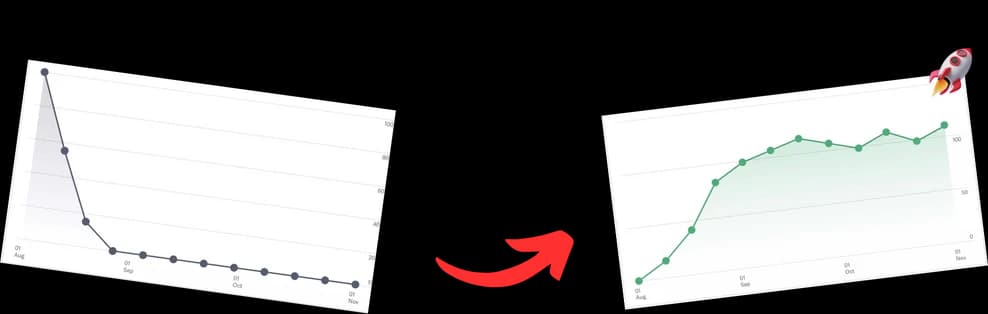
Ever wonder what your next video could actually earn? A YouTube view calculator takes the guesswork out of your channel's growth, giving you a data-backed forecast of your potential reach and revenue instead of just hoping for the best.
Quickly Estimate Your YouTube Earnings Potential
 Stop staring at abstract metrics and start seeing a clearer financial picture. A view calculator is one of the most practical tools in a creator's arsenal, translating your channel's performance data into a tangible earnings forecast. It’s like getting a financial snapshot for your content before you even hit publish.
These tools aren't pulling numbers out of thin air. They run on a straightforward formula that connects how viewers find your videos to how much you can potentially earn. Once you understand the moving parts, you can stop guessing and start making strategic decisions that lead to real growth.
The Core Metrics That Power a YouTube View Calculator
To really get the most out of a YouTube view calculator, you need to know what's going on under the hood. These tools are powered by three core metrics that tell the story of your video's journey from a thumbnail to a view.
| Metric | What It Measures | Why It Matters for Your Channel |
|---|---|---|
| Impressions | The total number of times your video's thumbnail is shown to users on YouTube. | This is your video's visibility. More impressions mean more opportunities for people to discover and click on your content. |
| Click-Through Rate (CTR) | The percentage of people who see your thumbnail (an impression) and decide to click on it. | A high CTR signals that your title and thumbnail are compelling and grabbing attention, which is half the battle. |
| Average View Duration (AVD) | How long, on average, viewers actually watch your video once they click. | This is a huge signal to YouTube that your content is engaging. A higher AVD tells the algorithm your video is valuable, which can lead to more impressions. |
Each of these metrics is a lever you can pull. By improving your thumbnails, titles, and content quality, you directly influence the inputs of the calculator and, by extension, your channel's potential.
By mastering these three metrics, you gain direct control over the inputs of a YouTube view calculator. This transforms it from a simple forecasting tool into a roadmap for strategic content creation.
Ultimately, these calculators help you visualize the entire creator funnel, from initial discovery all the way to monetization. They draw a straight line from your creative work to tangible results. Of course, AdSense isn't the only way to earn. Factoring in other income streams, like affiliate earnings, is crucial for building a complete financial picture.
The data also helps you put a real monetary value on your content. To dive deeper into how your earnings are calculated, check out our guide on the YouTube CPM calculator. This isn't just theory—it's the practical foundation you need to build a successful and profitable channel.
Deconstructing the YouTube Earnings Formula
So, you want to forecast your YouTube earnings? Before you plug any numbers into a calculator, you've got to understand what's actually happening behind the scenes. It all starts with one simple equation that every creator should know: Views = Impressions × CTR.
Think of it this way: an impression is just YouTube showing your thumbnail to someone. Your Click-Through Rate (CTR) is the percentage of people who see that thumbnail and actually click on it. A killer title and thumbnail combo will get you a high CTR, but that's only the first step.
Getting the click is one thing; keeping the viewer is another. Once they're watching, your job is to keep them engaged. The more they watch, the more watch time you rack up, and the more the algorithm starts to notice. This creates a powerful feedback loop where more watch time leads to more impressions, and so on. That’s how channels really start to grow.
From Views to Revenue
But how do those views and all that watch time turn into actual cash in your pocket? This is where a couple of key financial metrics enter the picture: RPM (Revenue Per Mille) and CPM (Cost Per Mille).
- CPM (Cost Per Mille): This is what advertisers are willing to pay YouTube for every 1,000 ad impressions shown on videos. It's a metric for the advertiser's side of the table.
- RPM (Revenue Per Mille): This is your total revenue—from ads, Super Thanks, memberships, all of it—for every 1,000 views your video gets. This is the creator metric, and it’s the one you need to obsess over.
A simple way to look at it is that CPM is the whole pie advertisers are spending, while RPM is the slice you actually get to take home. Don't forget, YouTube keeps 45% of the ad revenue from your long-form videos. The great thing about RPM is that it already accounts for this cut, making it a far more realistic number for your own financial planning.
Your RPM is the single most important metric for forecasting your income. It bundles everything—your niche, your audience's location, and YouTube’s revenue share—into one number that tells you what 1,000 views are truly worth to your channel.
The Impact of Niche on Your Earnings
Here’s where a lot of creators get their estimates wrong: not all views are worth the same amount. The niche you’re in has a massive effect on your RPM. Ever wondered why a finance channel with fewer views might be out-earning a massive gaming channel? The secret is in the RPM.
For instance, a channel reviewing investment platforms might pull in an RPM of $9–$11. A gaming channel, on the other hand, is often closer to $1–$5. Vlogs typically fall somewhere in the $2–$5 range.
With projected averages for 2026 hovering between $2 and $11 per 1,000 views, a channel hitting 10 million monthly views could earn anywhere from a solid $10,000 to a staggering $50,000 a month from ads alone. Tools can help you get a reality check on these estimates, and you can learn more about how monetization calculators work on sites like MyBoostPal.
Getting a handle on this formula is what separates guessing from strategy. When you feed a YouTube view calculator with accurate numbers and see how tiny adjustments to your CTR or watch time can ripple out, you're no longer just forecasting—you're building a real, data-driven plan for your channel's success.
Putting the Calculator to Work in Real Scenarios
Theory is one thing, but actually running the numbers is where a YouTube view calculator really starts to show its power. Let's walk through a couple of real-world situations to see just how much of a difference a few strategic tweaks can make. We’ll compare a baseline forecast against one that's been optimized to show you the massive impact of smart SEO.
At its core, your channel's financial health is a direct flow from impressions to views, and finally, to earnings. This visual really breaks down how those key metrics are connected.

As you can see, each number has a direct domino effect on the next, ultimately shaping your total earnings potential.
Scenario 1: The Baseline Projection
Imagine a creator just getting a new podcast-style channel off the ground. They’re uploading long-form interviews but haven’t really dug into optimization yet. Let's plug in some typical, industry-average numbers to get a baseline.
- Impressions: 50,000
- Click-Through Rate (CTR): 4%
- Average View Duration (AVD): 6 minutes (on a 30-minute video)
Using the formula (Views = Impressions x CTR), they land at 2,000 views. With an AVD of 6 minutes, their total watch time comes out to 12,000 minutes. It’s a respectable start, but engagement trails off, and the video doesn't gain much steam after its initial release. This is a story I've seen play out for countless new creators.
Scenario 2: The Optimized Projection with TimeSkip
Now, let's hit rewind. Same creator, same video—but this time, they use TimeSkip to add SEO-driven video chapters. This one change creates a ripple effect across all the core metrics.
For busy podcasters and educators, keeping people engaged can be a huge challenge. This is exactly where a tool like TimeSkip shines. It uses AI to generate keyword-optimized chapters that have been shown to boost viewer retention by 15% and improve search rankings, often leading to 25% more discovery. It’s trusted by creators like Try N Something New and can process hours of footage in seconds with one-click YouTube integration. You can find out more about how creators are using these tools to grow on Plerdy.com.
This single optimization directly juices our inputs. A 25% bump in discovery means more impressions, and a 15% lift in retention improves the AVD.
Here are the new numbers:
- Impressions: 62,500 (50,000 + 25%)
- Click-Through Rate (CTR): 4.5% (a conservative estimate, since chapters often make videos more appealing in search)
- Average View Duration (AVD): 6.9 minutes (6 + 15%)
By focusing on the viewer's experience with chapters, the creator not only keeps people watching longer but also sends a powerful signal to the algorithm that the content is high-value. In turn, the algorithm feeds it to more people.
Let’s run the new numbers. The optimized video now pulls in approximately 2,813 views, a major leap from the baseline. Even better, the total watch time soars to nearly 19,410 minutes. That's a massive 61% increase in total watch time—all from one simple tweak.
This side-by-side comparison makes it crystal clear: small, strategic improvements can lead to explosive gains in your projected views and overall channel health. You can apply these same principles to your own videos; for more ideas, check out our dedicated article on the views calculator for YouTube. It’s a powerful lesson in turning data-driven insights into real, tangible growth.
Turning Your Calculator Results into a Growth Strategy
So, you've punched in your numbers and have a projection staring back at you. Now what? Getting those results from a view calculator isn't the final report card; it’s your game plan. Those numbers are a goldmine, showing you exactly where to put your energy to see real growth.
Think of it as a diagnostic tool. Whether your sights are set on the YouTube Partner Program or you just want to build a bigger community, your calculator's output is telling a story about what’s clicking with viewers and what’s causing them to click away.
From Projections to a Partner Program Plan
One of the most powerful things a YouTube view calculator can do is turn the vague goal of monetization into a concrete, number-driven quest. The YouTube Partner Program has very clear entry requirements: 1,000 subscribers and 4,000 public watch hours within the last 12 months.
Let’s say your projections show you're on pace for 2,000 watch hours this year with your current strategy. The path forward becomes crystal clear. You know you need to find a way to double that number. You could just make twice as many videos, but a much smarter approach is to focus on doubling your average view duration.
A YouTube view calculator transforms abstract goals like "getting monetized" into tangible targets. It shows you exactly how much watch time you need to generate per video to hit those big milestones.
Decoding Your Audience Retention Opportunities
Take a hard look at your projected average view duration (AVD). This single metric is one of the most honest pieces of feedback you’ll ever get. If your AVD is low compared to your total video length, it’s a massive red flag that viewers are bailing early.
- Pinpoint the Drop-off: Are you losing a huge chunk of your audience in the first 30 seconds? Your intro is likely the culprit—it might be too slow or fail to deliver on the thumbnail's promise.
- Find Your "Sticky" Segments: Where do viewers consistently stick around or even re-watch? That’s your secret sauce. Double down on whatever you’re doing in those moments.
- Make Your Videos Scannable: For longer content, a lack of chapters can be incredibly frustrating. Viewers who can't find what they need will just leave. Adding chapters gives them a reason to stay.
By tackling these issues, you can systematically nudge your AVD upward. This doesn't just rack up more watch time; it sends powerful positive signals to the YouTube algorithm, which can lead to more impressions down the line.
Niche, RPM, and the True Value of a View
Here’s a reality check every creator needs: not all views are created equal, especially when money is involved. Your calculator’s outputs are deeply connected to your channel’s niche, which sets your Revenue Per Mille (RPM), or how much you earn per 1,000 views.
A million views on a gaming channel will almost always earn a different amount than a million views on a real estate channel. The difference can be staggering. For example, hitting 1,000,000 views could earn a creator anywhere from $800 to $11,000.
In high-RPM niches like finance, where rates can hit $9–$11 per 1,000 views, that same million views from a primarily US-based audience could net you around $10,000. You can play with these numbers yourself using tools like the calculator on Learning Revolution.
An interface for a tool like this makes the concept really clear.
This screenshot shows how you can toggle your niche and daily views to see a potential earnings range. It’s a perfect illustration of why your content vertical matters so much for your income goals. Use this insight not just as a fun fact, but as a strategic compass for the content you create next.
Your Action Plan for Boosting Key Metrics

Alright, getting your projected numbers from a YouTube view calculator is a great first step. But let's be real—insight without action is just trivia. Those numbers are your baseline, not your destiny.
This is where we get our hands dirty and turn those projections into actual channel growth. We're going to stop looking at the numbers and start influencing them by zeroing in on the metrics that really move the needle with the YouTube algorithm. It all comes down to making your videos more visible and keeping people watching longer.
Boost Retention with AI-Powered Chapters
Your Average View Duration (AVD) is one of the most powerful signals you can send to YouTube. When people stick around, it tells the algorithm your content is the real deal, which means it gets shown to more potential viewers. One of the single most effective ways I've seen to pump up this number is by adding SEO-driven video chapters.
Tools like TimeSkip have completely changed the game here. They use AI to generate keyword-optimized chapters, making it dead simple for viewers to find the exact moment they're looking for. Instead of getting frustrated and clicking away, they stay on your video, which directly juices your total watch time.
Think of chapters as a direct investment in your viewer's experience. A better experience leads to longer watch times, which signals to YouTube that your video is worth promoting. It's a powerful cycle of organic growth.
The setup is shockingly easy, often taking less than a minute. If you're creating long-form content like podcasts, tutorials, or interviews, this is a must. Imagine generating perfectly timed, engaging chapters for a two-hour video in just a few seconds.
A Simple Guide to Getting Started
You don't need to be a tech wizard to put a tool like TimeSkip to work. The whole point is to get you from analyzing your channel to actively improving it as fast as possible.
Here's how it usually goes:
- Install the Tool: Just add the extension to your browser. The whole setup takes maybe 30 seconds.
- Generate Chapters: Head over to your video's edit page in YouTube Studio and click the button. The AI scans your audio and spits out a full list of suggested chapters.
- One-Click Integration: Give the AI-generated chapters a quick look, make any small adjustments you want, and then copy them straight into your video's description.
By adding chapters, you're doing more than just organizing your video—you're optimizing it for search. Each chapter title can target long-tail keywords, helping your video show up higher in both Google and YouTube search. This is how you drive more impressions and clicks, feeding the very top of your growth funnel.
If you want to go even deeper on how watch time drives your channel's success, our dedicated YouTube watch time calculator can give you more specific insights.
Finally, to really pour gasoline on the fire, pay attention to your upload timing. Figuring out the best time to upload YouTube videos can give you a huge initial boost, sending all the right signals to the algorithm from the moment you hit "Publish."
Answering Your Top Questions About YouTube Calculators
Even with the best tools in your arsenal, it's natural to have some lingering questions. Let's be honest, a lot of the advice out there can be pretty vague. We're going to cut through the noise and tackle the most common questions creators have about using a YouTube view calculator.
How Accurate Are These Calculators for Income?
Think of them as a well-educated guess, not a crystal ball. A calculator is great for setting a baseline, but it relies on industry averages for things like Revenue Per Mille (RPM). Your actual earnings can swing wildly based on a few key factors.
Your niche, your audience's location (viewers in the US often have a much higher RPM), the specific ads that run on your videos, and even the time of year all play a huge role. Use a calculator to map out your potential and set ambitious goals, not to file your next tax return.
Do YouTube Shorts Views Count the Same as Regular Views?
Nope, and this is a massive distinction that trips up a ton of creators. Shorts run on a completely different monetization model, and the RPM is way, way lower—often just $0.03 to $0.15.
Most view calculators you'll find are built for long-form videos, which is where the real ad revenue is. A million views on a viral Short will earn you pocket change compared to a million views on a standard 10-minute video. Always double-check that the calculator you’re using is meant for the right format.
The big takeaway here is that a view isn't just a view. The format it's on (Short vs. long-form) and who's watching it dramatically changes its value. You have to use the right tool for the job.
What’s the Fastest Way to Improve My Calculator Inputs?
If you want to see better numbers come out of a calculator, you have to put better numbers in. It's that simple. The quickest way to do this is to obsess over the two metrics the YouTube algorithm cares about most: Click-Through Rate (CTR) and Average View Duration (AVD).
- To spike your CTR: Your thumbnails and titles need to be absolutely irresistible. They have to spark curiosity and stop the scroll in a sea of other videos.
- To increase your AVD: One of the most powerful things you can do is add SEO-optimized video chapters. When viewers can easily find what they're looking for, they stick around longer.
This is where automation becomes your secret weapon. Instead of spending hours manually creating timestamps, a tool can generate them for you, making your videos incredibly easy to navigate. That simple change keeps people watching, which sends a powerful signal to YouTube that your content is valuable and deserves to be pushed to more viewers.
Ready to stop guessing and start growing? TimeSkip uses AI to generate SEO-optimized video chapters in seconds, boosting your viewer retention and discovery. Get your first two videos free and see the difference for yourself at https://timeskip.io.