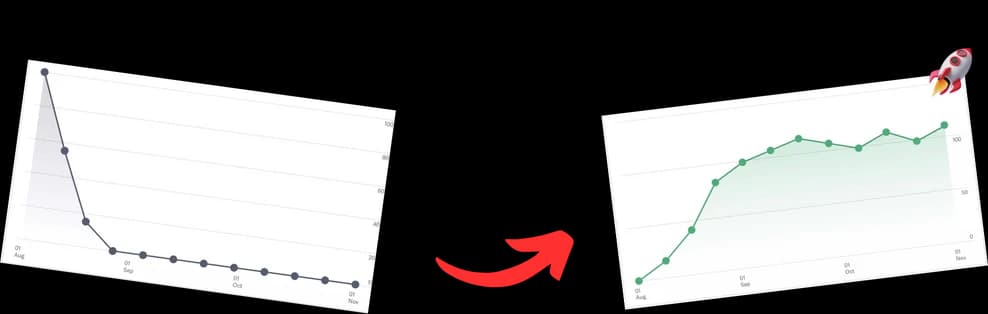
When someone talks about "search visibility," they're really asking one simple question: how easy is it for people to find you online? It’s not just about being the number one result anymore. It's about how much of the search results page your brand owns—from the classic blue links to video carousels, map packs, and everything in between.
Think of it as your brand's total share of voice in the digital world.
Defining Search Visibility Beyond Just Rankings
Imagine the Google search results page is a giant digital shopping mall. Just having a store in that mall (ranking somewhere on the page) isn't enough. True search visibility means having the biggest, brightest storefront right at the entrance, with eye-catching window displays and clear signs pointing everyone your way. It’s about capturing as much attention as possible.
This idea is so much bigger than just tracking a single keyword ranking. Modern search visibility is about every single chance a user has to see and interact with your brand on that results page. And that's a big deal, considering 53.3% of all website traffic comes from organic search. The competition is fierce, especially when the top result alone vacuums up an average of 27.6% of all clicks.
What Does Modern Visibility Include?
So, what are these "storefronts" and "window displays" on the search page? True visibility today is a mix of several different elements that show up on the Search Engine Results Page (SERP).
Let's break down what goes into a brand's overall presence with a quick summary.
Key Components of Modern Search Visibility
This table gives a snapshot of the various elements that search engines like Google and YouTube use to display results, all of which contribute to your visibility.
| Component | Description | Example |
|---|---|---|
| Organic Rankings | The traditional, text-based "blue link" results. This is the foundation of all search visibility. | Your blog post ranking #3 for a target keyword. |
| Rich Results | Visually enhanced listings that stand out, like review stars, FAQs, or event details. | A recipe search showing cooking time and user ratings. |
| Video Carousels | A horizontal row of video thumbnails, crucial for getting YouTube content seen on Google. | Searching "how to fix a leaky faucet" and seeing multiple video tutorials. |
| Local Map Packs | A map with 3-4 local business listings, shown for location-based searches. | Typing in "pizza near me" and seeing local pizzerias with their addresses and hours. |
Each of these components is a piece of digital real estate you can claim to get in front of your audience.
The goal is to not just rank, but to dominate these different features. This diagram helps visualize how all these pieces—rankings, snippets, and maps—fit together to create that powerful, can't-miss presence.
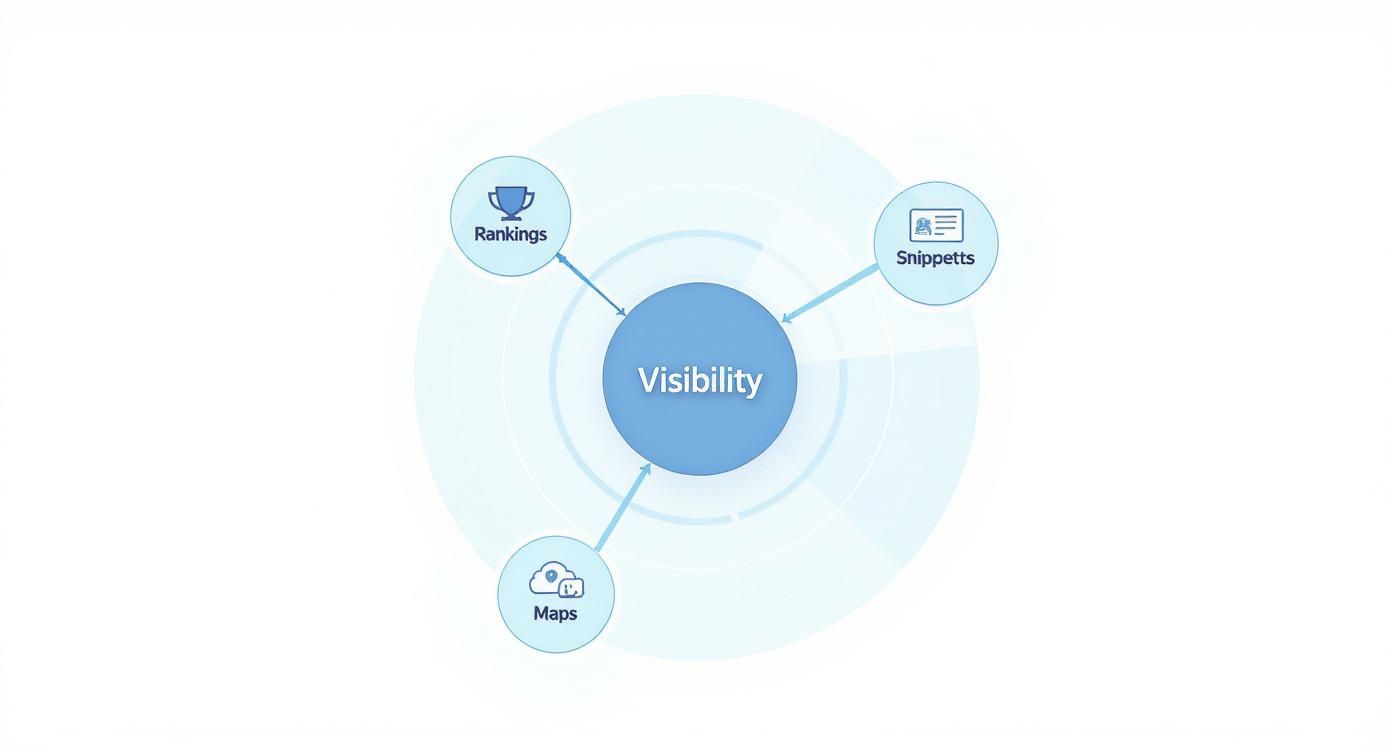
Ultimately, a smart strategy today is about capturing space across as many of these SERP features as you can, not just obsessing over a single number-one spot.
To get the full picture of how all this works together, this guide on What is Search Engine Marketing offers fantastic insights. Understanding this broader concept shows why visibility is a much richer measure of success than simply tracking individual keywords. It’s a core principle of any solid optimization strategy. If you're just starting out, check out our guide on what is search engine optimization to build up that foundational knowledge.
Why Visibility on Google and YouTube Matters

It’s one thing to understand what search visibility is, but it’s another thing entirely to know where to focus your energy for real growth. The two biggest search engines on the planet, Google and YouTube, operate in completely different ways because people show up with totally different expectations.
Think about the user’s mindset. Someone on Google is usually on a mission. They have a specific problem and need an answer right now—whether that’s buying a new pair of shoes, finding a plumber, or settling a bet with a friend. Their search is often transactional and immediate.
Now, picture someone opening YouTube. They’re more likely looking to learn something new or just be entertained. They might be searching for a "how-to" guide, a product review, or a deep dive into a niche hobby. Their intent is less about a quick transaction and more about engagement and education.
The Cost of Being Invisible
If you don't show up where your audience is looking, you're essentially invisible. The consequences are real, and they differ depending on the platform.
An e-commerce store with zero visibility on Google for its main products might as well not exist to customers ready to make a purchase. All the work you put into a beautiful website goes to waste if nobody can find it in their moment of need.
By the same token, a creator who pours their heart into an amazing YouTube tutorial but fails to optimize it will get swallowed by the algorithm. Their brilliant content never reaches the people who need it, killing channel growth before it even starts.
The bottom line is this: Visibility on Google drives immediate traffic and sales, turning searchers into customers. Visibility on YouTube builds a loyal audience and brand, turning casual viewers into dedicated fans.
The numbers don't lie. The market for SEO services is expected to rocket to $146.96 billion by 2025 because businesses know they have to be seen. With Google commanding a mind-boggling 89.74% of the search market, being visible there is non-negotiable. For a closer look at the data, you can check out the latest SEO statistics and market share trends.
Tailoring Your Strategy for Each Platform
A smart strategy acknowledges these different user mindsets. You can't just copy and paste your tactics from one platform to the other and hope for the best. You have to adapt.
-
For Google: The name of the game is solving problems—fast. This means optimizing your website pages for very specific keywords, owning your local search results with a solid Google Business Profile, and chasing rich results like featured snippets that deliver instant answers.
-
For YouTube: Your job is to engage and educate. This requires creating in-depth videos, crafting compelling titles, and optimizing for discovery with the right tags and detailed descriptions. This is just one piece of the puzzle, which we cover more in our guide on what is video SEO.
Ultimately, when you understand where your audience is and what they’re looking for, you can build a powerful presence on the platforms that matter most to your success.
How to Measure Your Search Visibility Accurately
If you can’t measure it, you can’t improve it. It’s a classic saying for a reason. Moving from theory to practice is what separates stalled channels from growing ones, and that means getting comfortable with the data that tells you how visible you really are.
Without concrete numbers, you’re just guessing. The key is to look past the flashy "vanity metrics" and zero in on the key performance indicators (KPIs) that tell the true story. These numbers show you not just if people are seeing you, but how they’re reacting once they find you.
What Should You Actually Be Tracking?
To get a clear picture of your performance, you need to keep an eye on a few core metrics. Each one is a piece of the puzzle, helping you figure out what’s working and where you need to put in more effort.
-
Impressions: This is your most direct measure of visibility. An impression is counted every single time your content—whether it’s a webpage or a YouTube video—shows up in someone's search results. Lots of impressions mean you're getting in front of eyeballs, even if they don't click just yet.
-
Average Position: This number tells you, on average, where you rank for a certain keyword or group of keywords. It’s not the only thing that matters, but it’s a crucial baseline to see if your optimization efforts are pushing you up the search ladder over time.
-
Click-Through Rate (CTR): This is where the rubber meets the road. CTR measures the percentage of people who saw your listing (an impression) and actually clicked on it. If your impressions are high but your CTR is in the gutter, it's a huge red flag that your title, thumbnail, or meta description isn't compelling enough to earn the click.
These are the foundational metrics, but the real magic happens when you understand how they influence each other. For a more comprehensive look at this, our guide on how to measure content performance breaks down how to track success across the board.
Finding Your Data in the Right Places
Knowing what to track is only half the battle. You also need to know where to find it. Thankfully, both Google and YouTube give you powerful—and free—tools to do just that.
First up is Google Search Console. Think of this as your command center for Google Search. It’s where you can see exactly which queries are bringing people to your website, how many impressions you’re getting, and what your click-through rate is.
Here's a look at the Performance report dashboard within Google Search Console:
This dashboard gives you a complete overview of your website’s visibility, showing total clicks, impressions, average CTR, and average position.
For your videos, YouTube Studio Analytics is your best friend. Head over to the "Reach" tab, and you'll find a goldmine of information on how viewers are discovering your videos. This includes impressions, CTR, and traffic sources from both YouTube search and Google.
To help you keep things straight, here’s a quick breakdown of the essential metrics and where to find them.
Essential Search Visibility Metrics And Their Meanings
| Metric | Platform | What It Measures | Where To Find It |
|---|---|---|---|
| Impressions | Google & YouTube | The number of times your content appeared in search results. | Google Search Console (Performance Report) & YouTube Studio (Reach Tab) |
| Average Position | Your average ranking in Google Search for specific keywords. | Google Search Console (Performance Report) | |
| Click-Through Rate (CTR) | Google & YouTube | The percentage of impressions that resulted in a click. | Google Search Console (Performance Report) & YouTube Studio (Reach Tab) |
| Traffic Sources | YouTube | How viewers found your video (e.g., YouTube Search, Google Search). | YouTube Studio (Reach Tab) |
| Queries | The exact search terms users typed to find your website. | Google Search Console (Performance Report) | |
| YouTube Search Terms | YouTube | The keywords viewers used on YouTube to find your videos. | YouTube Studio (Reach Tab) |
Tracking these metrics gives you the feedback you need to refine your strategy and make smarter decisions.
Key Takeaway: Regularly checking these platforms isn't just about watching numbers go up or down. It’s about connecting the dots between the work you’re doing and the results you’re getting, allowing you to make informed changes that actually drive growth.
The Three Pillars That Control Your Search Visibility
Getting great search visibility isn't about some secret trick or a single "magic bullet." It’s much more like building a house. A solid, inviting house that everyone wants to visit needs three things: a rock-solid foundation, great interior design, and a stellar reputation in the neighborhood.
Your search visibility works the same way. It’s built on three core pillars of Search Engine Optimization (SEO). Each one has a different job, but they all work together to decide how easily your audience can find you online. Nail these three, and you'll build something that both people and search algorithms will love.
Pillar 1: Technical SEO – The Foundation
Technical SEO is the bedrock of your website or YouTube channel. Think of it as all the crucial, behind-the-scenes work that makes your digital "house" structurally sound and easy for search engine crawlers to get around in. If your foundation is cracked, everything you build on top of it is going to crumble.
A shaky technical setup makes it a nightmare for search engines like Google to find, understand, and index your content. That means even the most amazing blog post or viral-worthy video might never see the light of day.
Key Takeaway: Technical SEO isn’t about your content; it's about making sure the structure holding your content is perfect. If search engines can't even get in the front door, your visibility efforts are dead on arrival.
A solid technical foundation comes down to a few key things:
- Crawlability and Indexability: Can search engine bots easily explore your site and add it to their massive library?
- Site Speed: Does your page load in a snap? A slow site is a one-way ticket to frustrated users and a major red flag for rankings.
- Mobile-Friendliness: Most people are searching on their phones. Your content absolutely has to look and work great on a small screen.
Pillar 2: On-Page SEO – The Interior Design
Once your foundation is solid, it's time to decorate. On-page SEO is like the interior design of your house—it’s the layout, the furniture, and all the stuff people actually see and interact with. This pillar is all about optimizing individual pieces of content to make them relevant, valuable, and genuinely helpful.
This is where you directly answer your audience's questions with high-quality content while sending clear signals to search engines about what it’s all about. It's about creating an experience that's both useful for a real person and crystal clear for an algorithm. Done right, your content becomes the best possible answer to someone's search.
This includes things like crafting titles that grab attention, writing clear descriptions, and strategically using keywords in your articles or video scripts.
Pillar 3: Off-Page SEO – The Neighborhood Reputation
Finally, even a perfectly built house with amazing decor needs a good reputation to get people to visit. Off-page SEO is your digital curb appeal—it’s everything that happens outside your own website to boost its authority and trustworthiness in the eyes of search engines.
The biggest piece of this puzzle is backlinks, which are simply links from other websites pointing to yours. Think of every backlink as a vote of confidence, like a referral from a respected neighbor. The more high-quality votes you get, the more authoritative you look. This pillar proves to search engines that other people find your content so valuable they’re willing to vouch for it.
Actionable Strategies to Boost Your Search Visibility

Knowing the theory is one thing, but getting your hands dirty is what actually gets results. Improving your search visibility isn’t about throwing random tactics at the wall and hoping something sticks. It’s a deliberate, step-by-step process.
Think of this as your playbook for making your content more discoverable, starting right now. The work begins long before you even think about hitting “publish.” It all starts with figuring out what people are actually looking for.
Master Keyword Research to Understand Intent
Keyword research isn't just about stuffing your pages with buzzwords. It's about empathy. You have to get inside your audience's head and figure out the exact words and questions they're typing into Google when they need help.
A killer strategy is to target long-tail keywords. These are longer, more specific phrases—think "how to edit a podcast on audacity for beginners." They signal someone is deep into their search and knows what they want. While they get fewer searches, the people using them are often ready to act, leading to much better conversion rates.
And if you’re serious about capturing a wider audience, implementing actionable video SEO tips is a non-negotiable for getting seen on platforms like YouTube.
Key Insight: Great keyword research isn't just about what people search for; it's about understanding why they're searching. That insight lets you create the perfect piece of content that solves their problem at just the right moment.
Craft Titles and Descriptions That Demand Clicks
Your title and meta description are your first impression in the search results. They’re like a digital billboard, and their only job is to convince someone that your link is the best answer to their query.
A solid title needs to be clear, to the point, and include your main keyword. But more importantly, it has to spark curiosity or promise a real benefit. Vague titles get scrolled past, but one that speaks directly to a person's problem will always earn the click.
Your meta description is your thirty-second sales pitch. It should build on the title, quickly summarizing the value inside and giving people a compelling reason to click through.
Structure Content for Humans and Search Engines
Once you get the click, the layout of your content determines if they stick around. Today's search engines are smart—they reward content that’s actually easy for people to read and digest.
This means breaking your content down into logical, bite-sized sections.
- Use Clear Headings (H2s and H3s): Headings are like a table of contents. They guide readers and search engine crawlers through the main points of your article.
- Keep Paragraphs Short: Nobody wants to read a giant wall of text. Aim for one main idea per paragraph, keeping them to just two or three sentences.
- Incorporate Lists and Tables: Bullet points and tables are your best friends. They make complicated information scannable and easy to absorb, which tells search engines you’re providing a great user experience.
Use Platform-Specific Features to Stand Out
Finally, don't sleep on the powerful, built-in tools platforms offer. For YouTube, one of the most effective ways to boost your visibility is by adding YouTube Chapters, also known as timestamps.
Chapters chop your video into navigable sections, each with its own descriptive title. This is a huge win for the viewer, but it also helps Google show "Key Moments" directly in the search results. This feature can make your video listing much bigger and more eye-catching, letting you gobble up more real estate on the results page and pull in way more clicks.
Your Top Search Visibility Questions, Answered
Even when you've got a solid plan, a few questions about search visibility always seem to linger. Let's tackle the most common ones head-on. My goal here is to clear up any confusion so you can get back to what matters: creating content that gets discovered.
How Long Does It Take to Improve Search Visibility?
Let’s get this out of the way first: improving your search visibility is a marathon, not a sprint. While you might see some small wins from quick technical fixes in a few weeks, real, lasting growth takes time. You’re looking at a 3 to 6 month runway before you start seeing substantial results from your content and authority-building efforts.
The exact timeline really depends on how competitive your niche is, where you’re starting from, and—most importantly—how consistent you are. Think of it like a fitness journey. You won't see a six-pack overnight, but with consistent effort, the results you build over time are the ones that actually stick.
Can I Have High Visibility Without a Number One Ranking?
Absolutely. In fact, that should be your goal. Chasing a single #1 ranking for a vanity keyword is old-school thinking. True visibility is about owning the entire conversation around your topic, not just one search term.
High visibility means showing up prominently and frequently across a whole range of relevant searches. Here’s what that looks like in the real world:
- Ranking on the first page for dozens of related, long-tail keywords.
- Owning rich results like featured snippets and video carousels that take up more screen real estate.
- Dominating the local map pack if you're a business that relies on location-based searches.
Does Paid Search Advertising Affect Search Visibility?
Yes, but it's critical to know the difference. This guide is all about organic visibility—the kind you earn through smart SEO. It’s the sustainable, long-term foundation of your online presence.
Paid search, like running Google Ads, is like renting a billboard at the top of the page. It gets you temporary visibility, fast. A good digital strategy often uses both: SEO builds your brand’s authority and trust over the long haul, while paid ads drive immediate traffic for specific campaigns or promotions.
There's a common myth that paying for ads will directly boost your organic rankings. That's just not true. While paid ads can increase brand awareness, they don't have a direct impact on the algorithms that decide organic search visibility.
How Is AI Changing Search Visibility?
AI is completely changing the game. With features like Google's AI Overviews, the search results page is becoming a conversation, not just a list of links. The very definition of "being visible" is shifting from ranking on a page to becoming the answer.
This makes certain strategies more important than ever. To stay ahead, you have to focus on being the clearest, most definitive source for the kind of concise answer an AI assistant or smart speaker would provide. This means structuring your content with clear Q&A formats, targeting longer, more natural-sounding questions, and optimizing for those coveted featured snippets. The goal isn't just to rank anymore; it's to be the source of the answer itself.
Ready to stop guessing and start growing? TimeSkip automates the creation of SEO-optimized YouTube chapters in seconds. Boost your video visibility, improve viewer retention, and get seen by the right audience. Try it free at https://timeskip.io.