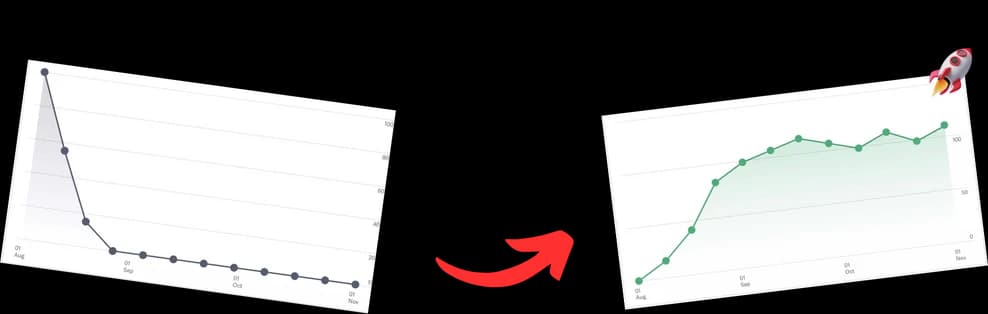
You're close to launch. The course outline is done, the checkout page mostly works, the teaser post is drafted, and there's still one ugly question hanging over everything. What if nobody cares?
That fear is rational. Creators feel it with a paid workshop, a podcast membership, a template pack, a Notion system, or a new YouTube series. The mistake is treating that fear like a motivation problem. It's a strategy problem.
A strong product launch strategy doesn't try to eliminate uncertainty with louder promotion. It reduces uncertainty before you ask the market to pay attention. For creators, that matters even more because your audience relationship is personal. If you launch the wrong offer, people don't just ignore the product. They start ignoring your future pitches too.
Beyond the 'Launch Day' Hype
The creator economy trained a lot of people to think in screenshots. Cart open. Countdown timer. Revenue dashboard. Celebration post.
That framing is seductive, and it's incomplete.
More than 30,000 new consumer products are launched annually, but only about 40% of developed products make it to market, according to G2's product launch statistics roundup. That should change how you think about launch day. The issue usually isn't whether a founder can post enough on social. The issue is whether the product, message, and audience match was tested hard enough before promotion started.
Launch day is a checkpoint, not the strategy
A creator launch usually fails in one of three quiet ways:
- The offer is too broad. “A course for creators” means nothing. “A course for podcasters who want to turn interviews into newsletter content” is usable.
- The message is feature-first. People don't buy “12 modules,” “lifetime access,” or “AI-powered workflows.” They buy a faster path to a result.
- The audience wasn't warmed properly. A launch post to cold followers isn't a launch plan. It's an announcement.
Practical rule: If launch day is carrying all the pressure, the pre-launch work was too thin.
Creators do better when they stop planning for one dramatic spike and start planning for a sequence. First, test the pain point. Then test the promise. Then test a lightweight version of the product. Then invite a small group in. Then scale the message that already proved it can convert attention into action.
What disciplined launches look like
The best launches I've seen for courses, paid communities, creator tools, and podcast products tend to share the same shape:
| Approach | What it looks like | What usually happens |
|---|---|---|
| Big bang launch | Full build, full promo, full audience all at once | High stress, noisy feedback, weak diagnosis if results disappoint |
| Staged launch | Validation first, smaller rollout, clearer feedback loop | Better positioning, cleaner onboarding fixes, more durable momentum |
This is why launch planning should feel less like a campaign calendar and more like risk management. You're not trying to prove confidence. You're trying to earn it.
For creators, that mindset is liberating. You don't need a giant audience. You need signal. A handful of sharp conversations with the right people will do more for your launch than a polished promo reel aimed at everyone.
Laying the Foundation Before You Build
A creator usually starts with the format. “I should make a course.” “I should package this into a membership.” “I should build a tool around this workflow.” Start one layer deeper instead. What repeated frustration are people already describing in their own words?
That's where the pre-launch work lives. Not in branding. In validation.
Roughly 40% of product launches fail because they don't accurately address a market demand, and one practical mitigation is using beta programs with 10 to 50 users and weekly feedback checks before a full release, based on Hanover Research's launch guidance.

Validate the audience
Creators already sit on a rich pile of demand data. Most just don't treat it that way.
Look at:
- YouTube comments on your tutorials, interviews, and live streams
- Replies to your newsletter
- Podcast listener questions
- Sales calls or DMs if you sell services already
- Search terms that bring people to your blog or channel
You're looking for repeated language, not compliments. “Loved this episode” is nice. “I still don't know how to turn long videos into searchable clips and chapters” is useful.
A simple creator validation stack often works better than a heavyweight research process:
- Audience survey with short-answer questions
- Comment mining across your highest-intent content
- Call or interview notes with people who already trust your work
If you need a practical walkthrough on organizing those inputs into an editorial angle, this guide to content marketing strategy for creators is a useful companion.
Validate the market
Audience pain alone isn't enough. You also need to know what people are already using instead.
Sometimes the competitor is another course. Sometimes it's ChatGPT plus a spreadsheet. Sometimes it's “I'll do it later” and a pile of unfinished drafts. For creator products, often the alternative is manual effort.
Ask market questions like these:
- What do people currently use to solve this?
- Where does that workflow break?
- What do they hate about the existing process?
- What would make them switch?
- What would make them pay rather than keep hacking together free tools?
This is also where SaaS MVP development and validation becomes relevant, even if you're not shipping traditional software. The principle is the same. Don't build the full machine before you know which problem is expensive enough for people to solve.
A creator MVP can be a live cohort, a manual service, a waitlist page, a workshop, or a stripped-down tool. It doesn't need polish. It needs signal.
Validate the message
Many creators have a decent product idea and a weak articulation of why it matters.
Your first message should answer three things:
| Message element | Weak version | Stronger version |
|---|---|---|
| Audience | For creators | For interview-based podcasters |
| Problem | Grow faster | Turn long episodes into searchable assets |
| Outcome | Save time | Publish faster and improve discoverability |
A smoke test landing page helps here. Not a polished homepage. A focused page with one audience, one problem, one promise, and one call to action. If people don't respond to that page, don't assume the audience is wrong. Sometimes the message is.
For creators, this phase is where a lot of wasted production gets avoided. You don't need to record twelve lessons before confirming that lesson one solves a problem people want solved.
Crafting Your Launch Message and Assets
Once the core problem is validated, the next failure point is inconsistency. The landing page says one thing. The teaser video says another. The email sequence sounds cautious. The checkout page sounds pushy. Buyers feel that wobble fast.
The fix is simple. Build one messaging document before you build assets.
Write the source document first
Your launch message needs a single source of truth. One page is often enough if it's sharp.
Include these pieces:
- Who it's for
- What frustrating job it helps them do
- What makes your approach different
- What proof or examples support the claim
- What objections you expect
- What action you want now
If you create video-first launches, draft the spoken version of that message before writing polished copy. Spoken language catches vagueness quickly. If it sounds unnatural out loud, it will usually read weak on the page too. This guide on how to write a script for a YouTube video is useful when your launch depends on demos, announcement videos, or sales explainers.

Build a launch kit, not random assets
A creator launch gets easier when every asset does a different job instead of repeating the same headline in five places.
A practical launch kit usually includes:
- Landing page. This is the conversion page. Keep it specific and outcome-led.
- Announcement email. This opens the loop and frames the offer.
- Nurture emails. These handle objections, examples, and urgency.
- Short-form social posts. These create repetition and recall.
- Demo or teaser video. This shows the workflow or transformation.
- FAQ document. This saves support time and reduces buyer hesitation.
The important part isn't volume. It's continuity. Your audience should hear the same core idea in different formats.
Match the asset to the buyer's moment
Not every follower needs the same content.
Someone who's been opening your newsletter for months might only need a direct launch email and a clean checkout page. A casual YouTube viewer probably needs a problem-first video and a few examples before they're ready to click.
Your assets shouldn't all persuade in the same way. Some should create awareness. Some should teach. Some should remove friction.
For creator products, a simple sequence often works:
- Problem content that names the bottleneck
- Process content that shows your method
- Offer content that introduces the product
- Proof content that handles skepticism
- Decision content that makes the next step obvious
What doesn't work is leading with “buy now” before the audience understands why the offer exists. Creators with trust can get away with that once or twice. They can't build a repeatable launch system on it.
Your Channel Plan and Launch Timeline
A launch can have strong messaging and still underperform because distribution was shallow. This happens constantly with creator products. The work goes into the course, the app, or the membership. Then promotion gets reduced to a launch thread, two emails, and a few stories.
That's not a channel plan. That's hope.
One of the most overlooked ideas in launch planning is the post-launch distribution problem. Many guides focus on the initial burst and say much less about building repeatable organic discovery, even though that matters for long-term success, as noted by Product Fruits on product launch strategy.
A creator launch needs both. Immediate attention and durable discovery.
Build channels in layers
Think in three buckets.
| Channel type | Creator examples | Best use |
|---|---|---|
| Owned | Email list, YouTube channel, podcast feed, blog, community | Highest-control launch communication |
| Earned | Guest podcasts, newsletter swaps, partner mentions, affiliates | Borrowed trust and audience expansion |
| Paid | Retargeting, sponsored placements, search ads | Controlled amplification after message validation |
Most creators should start with owned channels. They're cheaper, faster, and they produce cleaner feedback. If your email subscribers don't respond, spending on paid traffic usually won't solve the underlying issue.
For creator businesses, I also like separating channels by shelf life. Instagram stories disappear fast. A YouTube tutorial, a searchable blog post, or a podcast episode with strong metadata can keep compounding.

Plan for organic discovery before launch day
This is the part most launch calendars miss.
If your launch content has no search value, you're relying on attention that fades quickly. Creators should build at least a few assets designed to get discovered after the cart closes or the first promo week ends.
That can include:
- Problem-based YouTube videos
- Search-focused blog posts
- Podcast episodes built around high-intent questions
- Tutorials that naturally lead into the offer
- Repurposed clips tied to searchable phrases
If video is part of the launch mix, tools like TimeSkip can help structure long-form launch demos, webinars, or podcast uploads with SEO-focused YouTube chapters. That matters when a launch asset needs to stay useful after the initial push.
For a broader framework on getting more mileage from every launch asset, this guide to content distribution strategies is worth reading.
Here's a useful walkthrough before looking at the sample timeline:
Sample 4-Week Digital Product Launch Timeline
| Phase | Key Activities |
|---|---|
| Week 1 | Finalize message, segment email list, prepare landing page, record launch video |
| Week 2 | Publish teaser content, seed early access to trusted followers, collect objections and refine copy |
| Week 3 | Send warm-up emails, schedule social posts, line up partner mentions, publish discovery-focused content |
| Week 4 | Open launch, monitor response, answer questions publicly, publish follow-up content, collect early feedback |
Sequence your audience, don't dump everyone into one push
A phased rollout is usually smarter for creator products than a full public blast.
Start with:
- Warmest audience first. Existing buyers, subscribers, community members.
- Then adjacent followers. Social audience, podcast listeners, YouTube viewers.
- Then colder reach. Collaborations, paid traffic, broader promotion.
That sequence gives you something launch-day hype can't. Better signal. You'll hear objections early, catch onboarding confusion faster, and refine the message before widening the funnel.
The Launch Day and Post-Launch Checklist
Launch day feels intense because too many teams treat it like a performance. It's better run like an operations window. Calm, scheduled, checked twice.
The practical goal is straightforward. Get the offer live, make buying easy, keep communication clear, and watch the first signals closely.

What to check before you hit publish
The first pass is operational:
- Checkout flow. Test payment, confirmation, access delivery, and thank-you pages.
- Tracking setup. Make sure your analytics events and attribution links work.
- Support readiness. Prepare canned replies, FAQ answers, and escalation notes.
- Asset timing. Confirm emails, social posts, and videos are scheduled correctly.
- Access experience. If someone buys now, can they use the product without confusion?
Then do the obvious human check. Read your own landing page on a phone. Open your own emails. Click your own buttons. A lot of launch friction hides in plain sight.
Don't outsource the final buyer experience check. Founders and creators should walk through the path themselves.
How to run the day
A clean launch day usually follows a simple rhythm:
- Open access
- Send the primary launch email
- Publish the core public announcement
- Watch replies, sales, and support issues
- Post follow-up content based on real questions
- Document friction immediately
This is not the day to improvise your whole campaign. It's the day to execute the plan and adjust around the edges.
What works well for creators is visible responsiveness. If buyers ask the same question in comments, answer it publicly. If people are confused about who the offer is for, tighten the wording in real time. If onboarding creates friction, record a quick walkthrough instead of writing a defensive thread.
The KPIs that matter first
Modern launch strategies are metrics-driven, and key launch KPIs include sign-up rate, activation rate, and time to value, with sign-up rate defined as sign-ups divided by visitors and activation rate tied to users reaching the critical “aha moment,” according to Productboard's product launch strategy guide.
For creators, those metrics answer useful questions fast:
| KPI | What it tells you | Common interpretation |
|---|---|---|
| Sign-up rate | Does the page and offer convert interest? | If traffic is healthy but sign-ups are weak, fix the message or page friction |
| Activation rate | Do new users actually reach value? | If people buy but don't use the product, onboarding is the issue |
| Time to value | How fast does someone get the win they expected? | If value takes too long, buyers lose momentum and trust |
Early launch analysis should focus on behavior, not vanity. Views and likes can look healthy while the actual product experience is leaking conversions.
The first hours after launch matter because they expose where the system breaks. That insight is more valuable than a noisy pile of surface-level engagement.
Measuring Success and Planning Your Next Move
A launch is a data event with a sales layer on top. Treat it that way and you'll improve quickly. Treat it like a one-time verdict and you'll either get overconfident or discouraged for the wrong reasons.
The immediate work after launch is interpretation.
Read the signals together
Single metrics can mislead. Patterns are what matter.
If you get strong traffic and weak sign-up rate, the page or offer probably isn't landing. If sign-up rate looks healthy but activation is weak, the promise may be strong while onboarding is muddy. If people activate quickly but still ask for refunds or stop engaging, the product may solve the wrong slice of the problem.
Use a simple review grid:
- Traffic question. Did the right people show up?
- Conversion question. Did the message create enough confidence to act?
- Activation question. Did the product deliver a fast first win?
- Retention question. Did early value continue after first use?
Add qualitative feedback before you make changes
Dashboards won't tell you why someone hesitated.
Ask new buyers short questions:
- What almost stopped you from buying?
- What convinced you?
- What felt unclear after purchase?
- What did you expect to happen faster?
Ask non-buyers different ones:
- What felt missing?
- Was the product for someone like you?
- What alternative are you using instead?
This kind of feedback is especially useful for creator products because the gaps are often in framing, examples, or onboarding language rather than the core idea itself.
A smart post-launch review doesn't ask, “Did it work?” It asks, “Which part worked, which part leaked, and what should change before the next wave?”
Turn one launch into an operating system
The best outcome from a launch isn't a spike. It's a repeatable method.
Document:
- the message that got replies
- the channel that brought the best-fit buyers
- the objections that showed up most often
- the onboarding step where people slowed down
- the content that kept attracting interest after the launch window
That gives you material for the next version of the offer, the next campaign, and the next launch. Over time, your product launch strategy becomes less about guessing and more about pattern recognition.
If your launch relies on YouTube videos, demos, webinars, or podcast uploads, TimeSkip can help you turn long-form content into structured, chaptered assets that are easier to browse and easier to discover through search. It fits naturally into a creator launch plan built for both immediate promotion and long-term organic visibility.