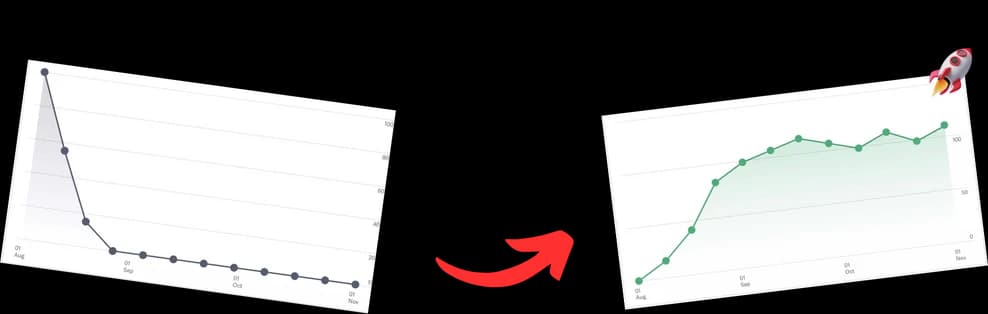
YouTube does not rank videos for "translation quality." It ranks them for relevance, click intent, retention, and how clearly the content matches what viewers in a specific market are trying to find. That is why localization best practices for video have to reach past subtitles and voice tracks. Chapters, metadata, naming conventions, and regional keyword choices all shape whether a video gets discovered or ignored.
Creators usually feel this problem after publishing the same asset across multiple markets and watching performance split. One version gets search traffic and strong chapter engagement. Another stalls, even though the video itself is identical. The difference is often operational, not creative. The title uses the wrong regional phrasing. The description mirrors source-language structure. The chapters make sense to the production team but not to local viewers scanning for a solution.
Good localization work fixes the packaging around the video, not just the words inside it.
That starts with research. A data-driven keyword research guide helps teams identify how local audiences search, while a stronger long-tail keyword strategy for video chapters improves the odds that chapter labels match specific intent instead of broad category terms. If you're already working on video optimization strategies for businesses, localization is what turns one video into a multi-market asset with a real shot at ranking, earning clicks, and holding attention.
1. Keyword Research and Localization for Regional YouTube Audiences
A direct translation of your chapter titles is usually the fastest way to miss regional search intent. People may speak the same language and still use different terms for the same topic. A U.S. creator, a U.K. viewer, and an Australian subscriber can all understand the video while searching with different wording.
That means your chapter strategy has to start with local phrasing, not your source language phrasing. If your video covers software setup, one market may search for "getting started," another may lean toward "installation," and another may respond better to task-based language like "how to connect" or "how to fix."

Build around market language, not textbook language
Start with your top few geographies in YouTube Analytics and compare how viewers describe the same need across those regions. Then map that language to chapter titles, descriptions, and supporting keywords. A focused long-tail keyword strategy for video chapters then becomes useful, because chapter labels often perform better when they match specific search behavior instead of broad category terms.
A few patterns work well:
- Prioritize high-intent wording: Use chapter titles that reflect what a viewer wants to do now, not the broad theme of the segment.
- Separate locale from language: U.S. English and U.K. English often need different metadata even when the video itself stays the same.
- Review trends monthly: Search vocabulary shifts with news cycles, product launches, and platform slang.
Practical rule: Translate the outcome, not just the words.
Creators in tech, education, and podcasting often get better traction when they localize chapter names the same way they localize thumbnails or titles. For additional workflow ideas, this data-driven keyword research guide is a useful complement to your YouTube research process.
2. Metadata Localization for Platform-Specific Rankings
Titles drive the click. Metadata decides whether the platform keeps surfacing the video after that first impression.
Too many teams localize the headline and stop there. On YouTube, that creates a weak listing. The title may match local search behavior, but the description, chapters, and tags still signal another market. That mismatch hurts ranking, lowers click confidence, and makes the video feel imported instead of made for the viewer.
Treat metadata as a stack. Every layer should support the same regional search intent and the same promise.
A creator publishing for Canada, the UK, and the US might use the same footage across all three markets. The metadata should still change. Product names, spelling, shorthand, and problem framing often differ enough to affect performance. Viewers notice it fast. So does the platform.
Localize the full metadata stack, not just the title
The title should match how people in that region search. The first lines of the description should restate that topic in natural local language. Chapter names should help skimmers confirm, within seconds, that the video answers their version of the problem. Tags should support the visible phrasing instead of introducing a different terminology set.
That last point matters more than many teams realize.
If your title says one thing, your description uses a translated variant, and your chapters revert to source-language phrasing, YouTube gets mixed signals about relevance. Viewers get the same problem. A clean metadata stack improves both discovery and conversion because the whole page reads as one coherent package.
A practical workflow is to maintain a locale-by-locale metadata sheet for each video. Keep separate fields for:
- Title framing: Match regional search wording and urgency.
- Description openers: Rewrite the first two lines for local phrasing, not literal translation.
- Chapter labels: Use skimmable terms that sound native in that market.
- Tags: Support the visible metadata with the same vocabulary cluster.
For teams refining chapter structure at the same time, this guide to watching video with timestamps for clearer navigation decisions helps keep metadata and on-page skimmability aligned.
If you want a cleaner process for structuring that stack, this guide to YouTube metadata that supports discoverability is worth keeping in your workflow.
The trade-off is operational complexity. A single global metadata template is faster to manage. Region-specific metadata performs better when your audience is large enough to justify the extra versioning work. The right move is usually selective localization. Start with the markets that already show traction, then build a repeatable system before expanding further.
3. Timestamp Accuracy and Cultural Context Alignment
Timestamps look mechanical, but they carry editorial meaning. The points you choose to mark tell viewers what matters in the video. That's why localization best practices for video can't stop at "make chapters accurate." They also need to ask whether the chapter moments are meaningful for the audience you're trying to reach.
A finance creator might highlight tax examples for one region and payment methods for another. A tutorial creator may need to chapter the segment where local settings, keyboard layouts, or date formats change. The core video stays the same, but the chapter emphasis changes what viewers notice first.
Treat chapter placement like editorial packaging
Pull up a long-form tutorial or podcast and scan the chapters as if you were a first-time viewer in another country. Would those chapter labels signal relevance? Or do they assume cultural context that only your home market understands?
This becomes easier when you use a workflow that lets you review the video with timestamps visible. A toolset built around video with timestamps for skimmable navigation helps because it forces you to evaluate not just where a segment begins, but whether that segment deserves prominence for that market.
Some chapters should mark moments of cultural relevance, not just topic changes.
For educational channels, this often means elevating examples tied to local exams, local laws, or local product availability. For podcasters, it may mean chaptering around regional stories that would otherwise be buried deep in the timeline. For software tutorials, it often means marking the exact point where localized settings, currencies, or interfaces appear.
Accurate chaptering is a technical task. Relevant chaptering is a localization task. The strongest channels do both.
4. Multi-Language Chapter Generation with Native Speaker Validation
Machine help is useful. Native judgment is still the quality gate. That's especially true with chapter titles, because chapters have to do several jobs at once: summarize the segment, fit the available space, preserve the tone of the video, and make sense to someone scanning quickly on mobile.
A translated chapter can be linguistically correct and still be wrong for the platform. It might sound stiff, over-literal, or disconnected from how people search and browse in that language. That's why native speaker validation belongs in the workflow, even when automation handles first drafts.

Validate for search, tone, and scannability
When reviewing multilingual chapters, ask three questions.
- Would a local viewer say it this way? Native grammar isn't enough. The phrase has to sound natural on YouTube.
- Would a local viewer search it this way? Search language often differs from spoken language.
- Would a local viewer understand it instantly? Chapters are skimmed, not studied.
This matters even more because translated text often grows. Lionbridge recommends planning for at least 30% text expansion in software localization, and Pairaphrase makes the same point in discussing localization-friendly design and layout flexibility in global products. For video chapters, that means compact wording wins. A chapter title that fits cleanly in English may wrap awkwardly or lose clarity in German, French, or Spanish.
Good teams solve this with language-specific style guides. They define preferred length, capitalization rules, when to include keywords, and how to handle branded terms. Then native reviewers adjust the draft for platform fit, not just translation quality.
This is one of the most practical localization best practices because it prevents the common trap of publishing chapter titles that are technically translated but strategically useless.
5. Dynamic Chapter Adaptation Based on Audience Location Analytics
A translated chapter list is a starting point, not a finished system.
The channels that grow internationally treat localization as an editorial feedback loop. They publish, watch regional performance, and then adjust chapter order, wording, and emphasis based on how viewers in each market behave. That is how video localization moves beyond translation and starts affecting watch time, search visibility, and click behavior on YouTube.
Audience location analytics are useful because they expose a practical truth. Different markets often value different parts of the same video. A viewer in one country may stay for the setup and explanation. A viewer in another may skip straight to the tutorial, pricing breakdown, or tool demo. If your chapters treat every region as identical, you hide the parts that matter most to local viewers.
Use geography to guide chapter decisions in future uploads.
YouTube Analytics shows which countries drive watch time, but the essential work starts when you compare geography with retention patterns and chaptered segments. If viewers in Brazil consistently hold through case studies while viewers in Germany stay longer on implementation steps, your next localized chapter set should reflect that. Put the stronger local value proposition earlier. Name it in terms that match viewer intent in that region.
This does not mean rebuilding every published video. It means spotting repeat patterns across a small batch of long-form content, then updating your chapter template, metadata priorities, and editorial sequencing for the next round.
A simple review cycle works:
- Check regional watch time each month: Identify countries growing faster than expected or driving unusually strong retention.
- Map retention to chapter types: Look for patterns such as intros being skipped, examples outperforming theory, or product segments carrying more watch time in specific regions.
- Adjust chapter order for future videos: Move the chapter type local viewers care about closer to the top when the format allows it.
- Rewrite recurring labels by market: If one region responds better to action-led wording and another responds better to outcome-led wording, keep the structure but change the phrasing.
- Update metadata with the same insight: Chapter adaptation works better when titles, descriptions, and keywords reinforce the same regional intent.
The trade-off is operational complexity. Market-specific chapters can improve performance, but they also create more review work and more opportunities for inconsistency across uploads. That is why strong teams do not localize every detail for every country. They prioritize the markets that already show traction, then build repeatable rules for those regions first.
As noted earlier, localization programs improve when teams track workflow and quality signals instead of treating translation as a one-time task. The same discipline applies here. If a market starts contributing meaningful watch time, your chapter strategy should change with it.
6. SEO-Optimized Chapter Naming Conventions for Multiple Regions
Naming conventions save channels from inconsistency. They also save channels from over-optimization.
Without a naming convention, chapter titles drift. One editor writes short labels. Another writes sentence-length summaries. A third stuffs in keywords. By the time you've localized across several regions, the result is a scattered metadata footprint that doesn't teach the algorithm or the audience what to expect.
Standardize the frame, localize the wording
The best chapter conventions are rigid in structure and flexible in language. You might keep a simple pattern such as keyword first, benefit second. Or problem first, fix second. What matters is that every market version follows the same editorial logic while using local phrasing.
For example, a tutorial channel can use one convention for all regions:
- Problem-led chapters: Lead with the issue the viewer wants solved.
- Action-led chapters: Lead with the step the viewer needs to take.
- Outcome-led chapters: Lead with the result the segment delivers.
The point isn't to make every chapter look identical. The point is to make every chapter easy to scan and easy to localize. Once editors know the frame, native reviewers can adapt the terms without reinventing the structure each time.
A naming convention should reduce decisions, not create a new debate for every upload.
Many creators improve quickly when they stop writing clever chapter names and start writing useful ones. For multilingual channels, useful almost always beats clever. It travels better, translates better, and aligns better with search intent.
Quarterly review helps. Pull your best-performing videos in each market and look for patterns in the chapter names. If one style consistently gets stronger engagement or clearer viewer flow, make it the house style.
7. Synchronized Chapter Release Strategy Across Time Zones
Publishing globally doesn't mean publishing blindly. If your video launches when one region is active and another is asleep, your initial discovery signals will be uneven. That's manageable for the video itself. It's less manageable when your localized chapters and metadata aren't ready at the same time.
A common mistake is to upload the video, publish the English chapter set, and add the localized versions later. By then, your strongest launch window in some regions may already be gone. The result is fragmented indexing and weaker first impressions.

Coordinate operations, not just language
If you serve audiences across North America, Europe, and Asia-Pacific, build a launch checklist that includes localized metadata and chapter readiness before publish time. That sounds obvious, but many teams still treat localization as a post-publish cleanup job.
A better release rhythm usually includes:
- Preloaded regional metadata: Finalize chapter labels, descriptions, and titles before launch.
- Time-zone-aware scheduling: Publish when your priority market can generate early engagement.
- Fast post-launch checks: Review how chapters display on mobile and desktop in each key locale.
- Version control for updates: If you revise one localized chapter set, document the change for every language owner.
The operational side matters because unclear ownership causes localization debt. SimpleLocalize highlights ownership confusion as a common source of localization dysfunction and recommends a more actionable testing mix that includes pseudo-localization, unit tests for formatting and fallbacks, and per-locale visual regression testing in its software localization best practices article. Video teams can borrow the same discipline. Someone should own timing, someone should own metadata, and someone should approve locale readiness.
8. Cultural Sensitivity Review and Local Community Feedback Integration
Most localization mistakes aren't grammar mistakes. They're judgment mistakes.
A chapter title can be accurate and still feel off because it uses the wrong example, the wrong joke, the wrong level of directness, or a phrase locals would never use in that context. Video creators often catch this only after comments come in, which is late and unnecessary.
Build a feedback loop before the audience does it for you
If you're entering a new market, ask a local reviewer to assess more than the words. They should check references, assumptions, examples, and whether the chapter framing feels relevant for that audience. For creators with active communities, a Discord group, email list, or member community can become a lightweight review panel.
A practical review pass might cover:
- Terminology fit: Does the market use that phrase, or is it a direct translation?
- Reference fit: Do the examples land locally, or do they require U.S.-specific context?
- Tone fit: Is the chapter voice too formal, too casual, or too salesy for that audience?
- Sensitivity fit: Could any label, visual, or example create confusion or offense?
Pairaphrase argues that modern localization has become more data-driven and workflow-oriented, with stronger attention to layout flexibility, cultural references, and review loops with local experts in its localization best practices guide. That's the right model for video, too. Cultural review shouldn't be reserved for major ad campaigns. It belongs in regular publishing workflows.
For creators handling sensitive topics, this cultural sensitivity guide with examples is a useful reminder of how small wording choices can change perception fast.
9. Cross-Language SEO Optimization Without Keyword Cannibalization
When creators expand into multiple languages, they often create accidental competition between their own assets. The problem isn't just duplicate wording. It's overlapping intent.
If your English, Spanish, and French versions all target the same broad phrase in a sloppy way, the platform gets mixed signals about which asset serves which audience. Even when each page is translated, the keyword strategy may still be too generic to separate markets cleanly.
Assign each language version a clear search job
Think of each locale as its own search campaign. The English version shouldn't exist as the default authority for every market. The Spanish version shouldn't be a mirrored afterthought. Each needs its own keyword set, metadata framing, and audience promise.
A keyword matrix is helpful. Put every target language and region in rows. Add primary topic, search variation, chapter vocabulary, and local terminology in columns. That simple document prevents your team from repeating the same targeting logic across every version.
A few practical rules make this easier:
- Target by locale, not just language: Spanish for Spain and Spanish for Latin America may need different search wording.
- Differentiate broad and specific terms: Let one version own the broad term and another own a more localized variant.
- Keep chapter language aligned with page intent: Don't mix one market's keywords into another market's chapter set.
- Audit overlap regularly: Search your own terms in each market and check whether your assets are colliding.
RWS notes that 76% of consumers prefer to buy products when information is available in their native language. The strategic implication is simple. Prioritize the languages and locales that matter most, and localize them thoroughly instead of spreading effort thinly across too many partially adapted versions.
10. Performance Benchmarking and Regional A/B Testing of Chapter Strategies
A small chapter change can shift how a video performs in one market while doing nothing in another. That is why localization teams need benchmarks, not preferences.
Chapter strategy affects more than readability. On YouTube, chapter names shape scan behavior, influence whether viewers jump ahead or stay put, and change how clearly the video matches local search intent. If a French audience responds better to task-first chapter titles and a U.S. audience prefers outcome-first wording, the right move is to test both and keep the winner by region.
Good regional testing starts with a narrow question. Test whether shorter chapter labels improve click-through from search. Test whether placing the tutorial payoff earlier increases retention in Brazil. Test whether a locally familiar term outperforms a direct translation in Mexico. Each test should tie to a viewer action you can measure, not a stylistic debate inside the team.
Benchmark what changes viewer behavior
Useful benchmarks usually fall into four buckets:
- Naming style: Plain labels versus benefit-led labels
- Chapter depth: Fewer broad chapters versus more granular chapters
- Chapter order: Core action first versus background first
- Local wording: Native market terminology versus translated source phrasing
Keep the setup disciplined. Change one variable per test cycle. Split results by market, not by total channel traffic. Review retention, chapter click behavior, average view duration, and traffic source mix. Then log the result in a shared testing record so future uploads start from evidence instead of memory.
Teams also need to benchmark the workflow behind the chapters. As noted earlier, teams that measure localization operations often find faster turnarounds, fewer revision loops, and cleaner QA. That matters because a testing program breaks down if regional versions go live too late or with inconsistent chapter logic.
One rule saves a lot of wasted effort. Do not run the same chapter test everywhere at once. Viewer habits differ by region, and platform signals get noisy fast. Treat each locale like its own performance lab. That is how localized chapters stop being translated add-ons and start becoming a real growth system.
10-Item Localization Best Practices Comparison
| Item | Implementation Complexity 🔄 | Resource Requirements ⚡ | Expected Outcomes 📊 | Ideal Use Cases 💡 | Key Advantages ⭐ |
|---|---|---|---|---|---|
| Keyword Research and Localization for Regional YouTube Audiences | Medium–High, requires per-region research and testing 🔄 | Moderate–High, keyword tools, analytics, possible native speakers ⚡ | Better regional rankings; +25–40% global discovery 📊 | Creators expanding into multiple countries or languages 💡 | Expands international reach; captures local long-tail keywords ⭐ |
| Metadata Localization for Platform-Specific Rankings | High, maintain variants per platform/region 🔄 | Moderate, metadata tools, tracking, QA across sites ⚡ | Improved country-specific rankings and regional visibility 📊 | Channels targeting platform-specific searches (e.g., .co.uk) 💡 | Boosts local search presence and UX in each region ⭐ |
| Timestamp Accuracy and Cultural Context Alignment | Medium, combines precise timing with cultural research 🔄 | Moderate, analytics, cultural insight or consultants ⚡ | +15–25% engagement; longer watch time in target regions 📊 | Content with culturally relevant segments (news, holidays) 💡 | Increases relevance and reduces skip rates for regional viewers ⭐ |
| Multi-Language Chapter Generation with Native Speaker Validation | High, multi-language workflows and QA needed 🔄 | High, translators, native validators, QA processes ⚡ | Reach non-English audiences (60%+); +40–60% discoverability 📊 | Global creators seeking broad multilingual coverage 💡 | Preserves tone/SEO across languages; improves accessibility ⭐ |
| Dynamic Chapter Adaptation Based on Audience Location Analytics | High, requires analytics integration and automation 🔄 | Moderate–High, analytics setup, engineering, data analysis ⚡ | Data-driven chapter optimization; higher watch time in key regions 📊 | Channels with diverse geographic audiences and growth goals 💡 | Targets actual audience behavior; reduces localization guesswork ⭐ |
| SEO-Optimized Chapter Naming Conventions for Multiple Regions | Medium, develop and maintain templates 🔄 | Low–Moderate, initial research, style guides, occasional updates ⚡ | Higher CTR (+20–35%) and improved chapter discoverability 📊 | Creators wanting consistent SEO-friendly chapters across markets 💡 | Streamlines workflow and maintains professional, searchable titles ⭐ |
| Synchronized Chapter Release Strategy Across Time Zones | High, complex scheduling and coordination 🔄 | Moderate–High, scheduling tools, monitoring, ops support ⚡ | Maximizes initial visibility and algorithmic freshness per region 📊 | Major global launches and channels targeting multiple peak windows 💡 | Captures peak viewing hours and boosts early engagement momentum ⭐ |
| Cultural Sensitivity Review and Local Community Feedback Integration | Medium–High, coordination with experts and communities 🔄 | High, regional experts, community management, review cycles ⚡ | Prevents missteps; builds trust and audience loyalty 📊 | Sensitive topics or brands prioritizing reputation across regions 💡 | Mitigates risk, improves authenticity and community relations ⭐ |
| Cross-Language SEO Optimization Without Keyword Cannibalization | High, careful keyword mapping and technical setup 🔄 | High, SEO tools, hreflang implementation, specialist expertise ⚡ | Maximizes multilingual rankings; avoids internal competition (+50–100%) 📊 | Multilingual channels with overlapping topic coverage 💡 | Ensures distinct targeting per language and stronger organic reach ⭐ |
| Performance Benchmarking and Regional A/B Testing of Chapter Strategies | High, statistical design and continuous testing 🔄 | High, analytics platforms, sufficient view volume, analysts ⚡ | Identifies region-specific best practices; reduces guesswork 70–80% 📊 | Data-driven creators with enough traffic for valid tests 💡 | Evidence-based optimization and measurable ROI improvements ⭐ |
Your Roadmap to Global Video Dominance
The biggest shift in localization best practices is this: translation is now the minimum. Real performance comes from adapting the full discovery layer around the video. That includes titles, descriptions, chapters, keyword targets, release timing, and the cultural signals built into every metadata decision.
If you're a creator, podcaster, educator, or marketer, don't try to localize everything for every market at once. That's where teams get buried in rework. Start with one market that already shows signs of demand in your analytics, then localize the search and navigation experience around that audience. For most channels, that means your first move isn't dubbing. It's chapter localization, keyword adaptation, and metadata cleanup.
This is also where planning matters more than most creators realize. Lionbridge's localization guidance recommends building for internationalization early, including UTF-8 encoding, avoiding hardcoded text, using internationalized UI components, and planning for text expansion so releases don't break across languages in global markets. The lesson for video teams is similar. Localization isn't a finish-line task. It's an architecture decision for your content operations. If your chapter system, naming rules, and review process aren't built to support multiple locales, every new market becomes a custom project.
The channels that scale internationally usually share the same habits. They choose a few priority locales. They define ownership. They create language-specific style guidance. They validate with native speakers. Then they measure what changes behavior instead of assuming the same packaging will work everywhere.
There is also a business reason to treat this seriously. Native-language experience affects purchase behavior and trust, and the same logic carries into video discovery and audience growth. When people can find your content in the terms they use, skim it through chapters that make sense in their context, and understand the promise immediately, they're more likely to click, watch, and come back. That's the practical edge of localization. It removes friction before the viewer even notices friction was there.
If you want a smart starting point, localize the chapter experience for your top non-English or top non-home-market audience first. Rewrite the chapter names with local search intent in mind. Clean up the metadata. Review the labels with a native speaker. Then compare performance against your default version over the next publishing cycle.
This work compounds. One better chapter system leads to cleaner metadata. Cleaner metadata leads to better discoverability. Better discoverability gives you more regional data. More regional data tells you where to localize next. That's how a channel becomes global without becoming chaotic.
TimeSkip helps you do the part most creators delay. It generates SEO-focused YouTube chapters fast, so you can spend less time formatting timestamps and more time improving localization strategy, regional keyword targeting, and metadata quality. If you're building a channel for global reach, TimeSkip gives you a faster way to turn long videos into searchable, skimmable, localization-ready assets.