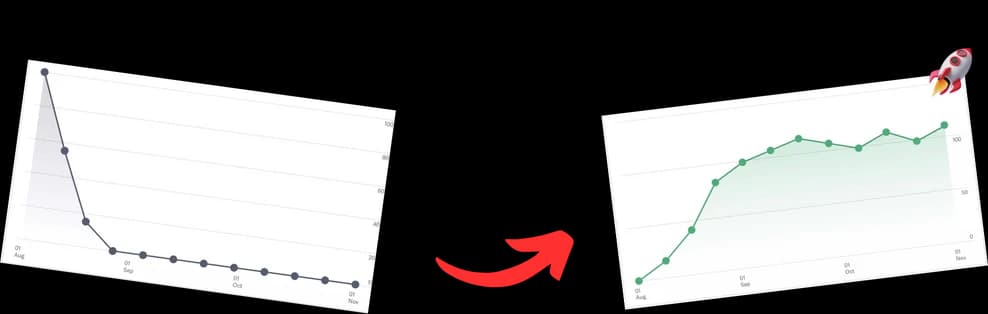
YouTube analytics often gives creators the same surprise. You open Audience or Geography, expecting the usual English-speaking split, and there it is: viewers from Brazil, Germany, Mexico, India, or Japan already watching, even though your channel was built for English.
That moment matters because it changes the question. You're no longer asking, “Should I go global?” You're asking, “How much am I leaving on the table by staying English-only?”
For creators, a multilingual content strategy isn't some enterprise project with layers of approvals and giant localization software contracts. It's a growth decision. If your videos already connect with people outside your primary language, you've got signal. The job is to turn that signal into a repeatable system.
Why Your Next 1000 Fans May Not Speak English
A creator usually notices international demand before they formally plan for it. It shows up in comments you need to translate, unexpected watch time from specific countries, or traffic from search terms that clearly aren't English. That's usually the first clue that your channel has already outgrown a single-language assumption.
The business case is stronger than many creators realize. A widely cited benchmark says 60% of online shoppers avoid or only infrequently buy from websites that are exclusively in English, while 72.4% of consumers prefer to purchase products in their native language according to Smartling's overview of multilingual content marketing. Even if you're not running an ecommerce brand, the same behavior shows up in media consumption. People may tolerate English. They still prefer familiarity when they decide what to trust, follow, and act on.
Your analytics already holds the clue
If a viewer can understand your content well enough to watch in a second language, that doesn't mean they want to. Preference drives click decisions. It shapes whether a thumbnail feels relevant, whether a title looks worth opening, and whether a call to action feels natural or slightly off.
For YouTube creators, that means multilingual strategy affects more than comprehension:
- Titles matter differently: A direct translation can be accurate and still fail to earn the click.
- Descriptions shape searchability: If you keep only English metadata, local discovery stays limited.
- Captions influence retention: People stay longer when they don't have to work to follow your point.
- Offers convert better when they feel local: Courses, newsletters, affiliate products, and merch all benefit when the surrounding language matches audience expectations.
Practical rule: Treat multilingual expansion like launching a second channel around proven demand, not like “translating everything.”
That's the mindset shift. This isn't about publishing more words in more languages. It's about helping the right viewers find the version of your content that feels made for them.
Laying the Groundwork for Your Global Audience
A good multilingual content strategy starts with your own data, not with a list of popular languages. The best first move is usually smaller than creators expect. Pick the audience that has already raised its hand.

Step one, read your existing signals
Open YouTube Studio and look beyond raw views. Views can fool you because they reward broad reach, not depth. What you want is evidence that a language group already finds your content useful.
Look for patterns like these:
- Watch time concentration: Which countries generate meaningful watch time, not just accidental clicks?
- Retention consistency: Are viewers in certain regions sticking with your best videos longer than average?
- Comment quality: Are people asking thoughtful questions, requesting translations, or quoting your ideas back to you?
- Traffic source behavior: Are international viewers arriving from search, suggested videos, or external sources?
If you also run a site, check analytics there by language or country. Pay attention to session quality, not just entrances. Someone who lands, reads, and clicks deeper is usually a better market signal than a large country with weak engagement.
Step two, prioritize opportunity, not volume
Creators often make the same mistake here. They choose the biggest non-English audience and assume that's the right first target. Sometimes it is. Often it isn't.
A better shortlist comes from balancing three things.
| Market factor | What to check | Why it matters |
|---|---|---|
| Audience signal | Watch time, comments, repeat views | Shows existing demand |
| Content fit | Whether your topic translates culturally | Some niches travel better than others |
| Execution ease | Access to reliable translators, reviewers, keywords | Determines whether you can actually ship consistently |
A creator teaching coding, productivity, gaming, beauty, music, or language learning often has obvious cross-border potential. A creator built on dense local humor, niche sports references, or country-specific news usually needs deeper adaptation before translation pays off.
Don't pick five languages because your analytics shows five flags. Pick one language where demand, relevance, and execution all line up.
Keep the first test narrow
Most creators should begin with one to three target languages, not because more languages can't work, but because consistency matters more than breadth. A thin effort across many markets creates clutter. A focused effort in one market creates feedback.
Your first target set should usually come from content that already performs well. Don't localize your entire backlog. Start with your strongest evergreen videos, your core lead magnet, or the product page tied to your main offer. Proven content travels better than experimental content.
That gives you a clean question to answer: when this specific content is adapted for this specific audience, does it earn better engagement and more meaningful actions?
Translation vs Localization What Creators Must Know
Translation changes words. Localization changes experience.
That distinction trips up creators all the time because machine tools make translation feel easy. Paste in a script, get another language out, upload new captions, done. The problem is that viewers don't respond to correctness alone. They respond to familiarity, rhythm, references, and framing.

The menu analogy creators remember
Translation is like taking your restaurant menu and printing it in another language. The names of the dishes change, but the dishes stay the same.
Localization is what happens when the restaurant adjusts the food, presentation, and recommendations for local taste. Same brand. Same kitchen. Different experience because the audience expects different signals.
For YouTube creators, that difference shows up everywhere:
- Translation: changing subtitles from English to Spanish
- Localization: rewriting a title so it matches how Spanish-speaking viewers search and click
- Translation: converting a call to action word for word
- Localization: changing the CTA so it sounds natural for that audience's buying habits
- Translation: carrying over a joke built on American slang
- Localization: replacing the joke because the original won't land
A quick explainer helps show the gap in practice:
Where literal translation breaks
Literal translation usually fails in five predictable places:
-
Humor and idioms
Wordplay rarely survives intact. If the joke needs local context, rewrite it. -
Thumbnail text
Short text on thumbnails has to feel native at a glance. A faithful translation can still look awkward or too long. -
Examples and analogies
A US tax example, a Black Friday reference, or a baseball metaphor may confuse viewers elsewhere. -
Calls to action
“Join my newsletter” might be fine in one market and feel too direct in another. -
Formatting expectations
Date formats, currency mentions, punctuation style, and on-screen layouts all affect trust.
Good localization protects the intent of the message, not the exact shape of every sentence.
If you want a practical checklist for adapting content without making it sound robotic, this guide to localization best practices is a useful reference.
What creators should localize first
Not every asset deserves the same level of adaptation. High-impact items deserve the human touch first.
Focus on:
- Video titles and descriptions
- Thumbnail text
- Channel trailer or welcome video
- Lead magnets and landing pages
- Email opt-in sequences tied to your videos
Leave low-stakes assets for lighter translation until the audience proves itself. That keeps your multilingual content strategy lean instead of turning it into a giant rewrite project.
Building Your Multilingual Content Workflow
A multilingual content strategy succeeds or fails in the workflow. Not in the brainstorm. Not in the first translation test. In the week-to-week system that decides whether localized content ships on time and still sounds like you.
For creators and small teams, the simplest workable model has three parts: tools, team, and quality control.

Tools that save time without lowering the bar
Use AI for speed, not for final judgment. It's useful for first drafts, subtitle cleanup, glossary building, and creating a rough version a human can improve. It's less reliable for humor, persuasion, and anything tied closely to your brand voice.
That matters because 65% of non-native English speakers prefer content in their native language even if they speak English fluently, as noted by Transpose on multilingual content marketing strategy. If the goal is connection, “understandable” isn't enough. The content has to feel right.
A practical creator stack often looks like this:
- Drafting tools: AI translation for first-pass script or caption conversion
- Subtitle tools: software that exports and edits caption files cleanly
- Project tracking: Notion, Trello, or Airtable for status by asset and language
- Glossary storage: a shared doc with brand terms, product names, and phrases that should never be translated loosely
If your team is also juggling distribution, this guide on streamlining social media tasks is worth a look because multilingual publishing gets messy fast when every caption, clip, and promo asset needs variants.
Team choices that fit creator budgets
You don't need an agency on day one. You do need someone accountable for language quality.
Here are the common options:
- Freelance translator: Best when you have one language, a steady publishing rhythm, and clear brand guidelines.
- Bilingual editor: Useful when AI or a translator creates the draft and you need tone cleanup.
- Localization specialist: Better for launches, funnels, sales pages, or videos where nuance matters a lot.
- Agency: Makes sense when you're coordinating many languages and want one point of contact.
When vetting people, don't ask only, “Are you fluent?” Ask whether they understand YouTube. A strong linguist who knows thumbnails, watch behavior, hooks, and search intent is more valuable than a generic translator who treats everything like a document.
Quality control that a non-speaker can still manage
Creators sometimes avoid multilingual work because they think they can't verify output in a language they don't speak. You can't judge nuance alone, but you can still catch many problems with a simple checklist.
Use a review pass for:
- Brand consistency: Are product names, series names, and taglines handled the same way every time?
- Formatting: Do captions break cleanly? Does thumbnail text fit? Are timestamps and links still correct?
- Tone match: Does the localized version feel like your channel, not a corporate brochure?
- Back-translation: Ask a reviewer to translate key lines back into English so you can check whether meaning drifted.
- Native-viewer pass: Have someone from the target audience tell you where it feels unnatural or overly literal.
If you're creating multilingual subtitles for YouTube, this walkthrough on YouTube auto-translate is a practical starting point for the mechanics.
A scalable workflow doesn't try to perfect every asset. It decides which assets deserve human polish and which can move faster.
That's how small teams stay consistent. You build one path for high-value content, one lighter path for supporting content, and you keep both documented so the process doesn't live in your head.
Mastering Multilingual SEO for Discoverability
Localized content that nobody can find won't move the channel. Discoverability is where many multilingual efforts stall. Creators translate captions or descriptions, publish them, and assume search engines and YouTube will connect the dots.
They won't. You have to give platforms explicit signals.
Start with localized keyword research
Direct translation is not keyword research. People in one market often search for the same need using a different phrase, a different level of specificity, or a different format altogether.
A creator might optimize an English video around “best budget camera for YouTube.” Another market may search more like “cheap vlogging camera,” “camera for recording lessons,” or a local-brand variation that never appears in the English query set.
That changes how you handle:
- Video titles
- Descriptions
- Chapter titles
- Blog embeds
- Landing pages connected to videos
The simplest rule is to research demand in the target language first, then write metadata around those phrases. Don't start with English and translate backwards.
Hreflang works like a shout-out for your international channels
If you publish localized versions on your website, use hreflang tags. Creators tend to hear this term and assume it's technical overkill. It's not.
Think of hreflang like a clear shout-out to search engines: “This page is the Spanish version for these users. That page is the French version for those users.” It helps platforms serve the right version to the right audience instead of forcing your language pages to compete with each other.
Without that signal, search engines can misread your setup. They might index the wrong version in the wrong market, or treat similar pages as duplicates.
YouTube needs metadata, captions, and structure
YouTube multilingual SEO is more practical than mysterious. Start with the elements viewers and search systems read first.
A solid setup includes:
- Localized title: written for click behavior in that language
- Localized description: adapted for search intent, not copied word for word
- Localized tags or supporting metadata: where relevant to your workflow
- Translated captions: especially for videos with dense information
- Localized chapters: useful for both navigation and search clarity
Captions do more than help accessibility. They make the content easier to interpret across languages and create a cleaner text layer around the video. If you need the mechanics, this guide to YouTube closed captioning covers the operational side.
The easiest multilingual SEO win for creators is usually not a new website. It's better metadata on videos that already have proven demand.
Keep the structure simple
A creator-friendly multilingual SEO system usually looks like this:
| Asset | Minimum viable localization | Higher-effort version |
|---|---|---|
| YouTube video | Captions and title | Full metadata, chapters, thumbnail text |
| Blog post | Localized summary | Fully localized article and page SEO |
| Landing page | Headline and CTA | Full page localization with local keyword targeting |
That setup keeps your multilingual content strategy focused on discoverability first. Once viewers can find the content, you can decide where deeper localization belongs.
Estimating Costs and Timelines Realistically
Most creators overestimate the size of the first launch and underestimate the friction of keeping it going. That's why multilingual expansion feels expensive before it even starts. The fix is simple: budget by workflow, not by ambition.
Think in pricing models, not one mystery number
Translation and localization work usually gets priced in one of three ways.
- Per word: Common for scripts, descriptions, and written assets. Good when the scope is stable.
- Per hour: Better for editing, consulting, keyword adaptation, and nuanced review work.
- Per project: Useful for bundled jobs like a video package with captions, title options, thumbnail text, and description localization.
None of those models is automatically better. The right one depends on what you're asking for. If you need direct text conversion, per-word pricing can be straightforward. If you need strategy, rewrites, or creator voice adaptation, hourly or project pricing usually reflects the work more appropriately.
Separate low-risk tasks from high-impact tasks
Creators waste money when they apply the same quality level to every asset. A better approach is tiered.
| Content type | Better for lighter translation | Better for deeper localization |
|---|---|---|
| Older low-traffic videos | Yes | Usually no |
| Evergreen top performers | Sometimes | Often yes |
| Sales pages and offers | Rarely | Yes |
| Community updates and support content | Often | Depends on audience value |
That split helps you control costs without pretending every translated line needs premium attention.
Build time into review and implementation
The translation itself is rarely the only time cost. The hidden work sits around it.
Expect your timeline to include:
- Research: deciding which market and which assets go first
- Preparation: cleaning scripts, organizing subtitle files, gathering glossaries
- Translation or localization: the core language work
- Review: checking tone, layout, and meaning
- Publishing: uploading files, replacing thumbnail text, updating descriptions, testing links
A simple creator rhythm is usually better than a big launch. Start with one language, one batch of evergreen content, and one review cycle. Then tighten the process before you expand. If a workflow feels annoying at small scale, it will break at larger scale.
Budget for repetition, not just setup. The first launch teaches you the process. The second launch tells you whether the process is sustainable.
Measuring Success Beyond Views and Subscribers
A localized video can pull fewer views than the English original and still be the smarter bet. If viewers in that market watch longer, click through to an offer, and come back for the next upload, the strategy is working.

What to track by language and market
Measure performance at the language or market level. Channel-wide averages hide the signal you need to make decisions.
For creators, four buckets usually matter more than anything else:
- Engagement by language: comments, watch time, retention patterns, shares, and saves
- Conversion by market: email signups, affiliate clicks, product page visits, or sales from localized assets
- Organic visibility: how your localized videos or pages show up for local search intent
- Audience quality: whether viewers from that market return, subscribe, or go deeper into your content ecosystem
If you also run a site, track those same patterns by language version. Look at organic sessions, engagement, conversion rate, and keyword movement. One market can send less traffic but produce stronger buying intent, which matters a lot more than a flattering view count.
Why fair comparison gets messy
International performance is rarely a clean side-by-side test. Search demand differs by market. Seasonality hits countries at different times. One translated video may ride the momentum of an English hit, while another has to earn discovery from scratch.
That is why context matters more than totals. Key Content notes in its discussion of multilingual content marketing that many teams struggle to separate gains from localization versus gains from market size or timing. Creators run into the same problem, just with smaller teams and less room for wasted effort.
A better benchmark looks like this:
- Compare each localized asset to its English source
- Compare that asset against similar content in the same market
- Review performance over time, not only in the launch window
- Check audience intent before calling a market strong or weak
That last point gets missed a lot.
A tutorial video in Spanish that brings fewer views than your English version may still outperform if it attracts the right audience, holds attention, and leads to more meaningful actions.
Build a scorecard you will actually use
Creators do not need a giant reporting setup. A simple monthly scorecard is enough if it helps you decide what to translate next, what to localize more thoroughly, and what to stop doing.
| Question | Example of what to review |
|---|---|
| Are people finding it? | Search impressions, localized keyword visibility, browse reach |
| Are they staying? | Retention, watch depth, repeat viewing, comments |
| Are they acting? | Email opt-ins, affiliate clicks, purchases, replies |
| Is it worth repeating? | Time and cost versus quality of outcomes |
Treat this like a channel review, not a vanity report.
If a market gives you modest reach but strong retention and conversion, keep going. If another gives you lots of views and weak follow-through, adjust the content or lower its priority. The goal is not perfect attribution. The goal is making better bets with each new language you add.
Frequently Asked Questions About Going Multilingual
Can I just use AI for YouTube captions?
Yes, for a first draft. No, if the video carries important nuance, persuasion, humor, or product messaging. AI is good at speed and rough comprehension. It's less reliable for tone and cultural fit. Use it to get moving, then add human review where mistakes would be expensive or embarrassing.
What's the smallest possible test?
Take one evergreen video that already performs well internationally. Localize the title, description, captions, and thumbnail text for one language. Then watch search behavior, retention, comments, and downstream actions. That's a real test. Translating your whole library isn't.
How do I handle comments in languages I don't speak?
Use translation tools for triage, but don't fully automate your public voice. For high-value comments, have a trusted bilingual reviewer help you respond naturally. If the audience grows, create saved reply patterns for common questions and let a native speaker adapt them.
Should I create separate channels for each language?
Sometimes. Usually not at first. Start by validating demand with localized assets around your main content. Separate channels add publishing overhead, moderation work, and brand management. They make more sense once a specific language audience proves it wants a dedicated experience.
What content should never be left to literal translation?
Anything tied to trust or money. That includes product pages, sponsorship language, course sales pages, legal-sensitive messaging, and channel positioning statements. If it affects reputation or conversion, give it proper localization.
How many languages should I launch at once?
Fewer than you want. One strong language launch beats a scattered rollout every time. The main bottleneck isn't translation volume. It's maintaining quality, consistency, and discoverability after the first batch goes live.
If you're growing globally through YouTube, clean structure matters as much as clean translation. TimeSkip helps creators generate SEO-friendly YouTube chapters fast, which makes long videos easier to move through, easier to localize, and easier to surface in search. If your multilingual content strategy starts with better video organization, it's a practical tool to keep in the stack.