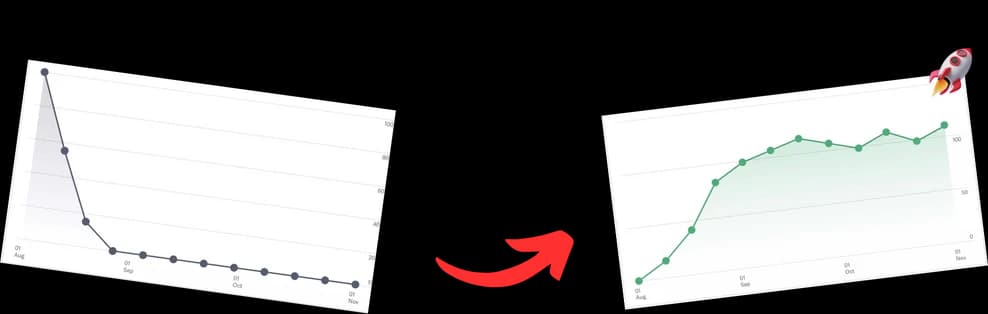
Global podcast listening reached an estimated 584.1 million people in 2025 and is projected to exceed 650 million by 2027, according to Teleprompter's podcast statistics roundup. That should change how you think about podcast audience growth. The problem isn't whether demand exists. The problem is whether your show is discoverable, relevant, and strong enough to hold attention after the first click.
Most podcasts stall for a simple reason. Creators treat recording, distribution, search, and retention as separate jobs. They publish audio to podcast apps, maybe upload a full episode to YouTube, then wonder why growth feels random. It isn't random. It's fragmented.
The system that works is more integrated. Your audio feed, your YouTube version, your episode packaging, your metadata, your chapter structure, and your analytics all need to function as one engine. That's where a lot of practical podcast audience growth advice falls short. It still treats YouTube like a side channel instead of a discovery layer that can pull in listeners who never intended to “watch” a podcast.
That's the strategic advantage. Long-form video with strong chapters doesn't just help people move through an episode. It can widen search visibility, improve content scanning, and create another path into your audio-first ecosystem. If you want sustainable growth, build for both discovery and retention at the same time.
Your Blueprint for Sustainable Podcast Growth
A growing market doesn't guarantee a growing show.
Podcast audience growth comes from matching the right show to the right listener, then removing friction at every stage: first impression, first listen, second episode, subscription, and repeat habit. Most creators overinvest in recording quality and underinvest in packaging, search structure, and episode architecture. That imbalance keeps good shows invisible.
The practical model is straightforward. Build a narrow audience promise. Publish episodes that fit repeatable content patterns. Distribute each episode in audio and video form. Use chapters to improve navigation and search visibility. Then study what listeners finish, replay, and share.
Practical rule: Don't ask how to get “more listeners.” Ask how a specific listener discovers you, why they start, and why they return.
The strongest shows usually do three things well:
- They're easy to understand. A new listener can tell who the show is for within seconds.
- They create consistent expectations. The format is familiar enough to build habit, but not so rigid that it gets stale.
- They reduce discovery friction. Titles, descriptions, clips, and chapters help people find the exact conversation they need.
That last point matters more than most podcasters realize. If your YouTube upload is just a mirror of the audio feed with weak descriptions and no chapter strategy, you're leaving search visibility on the table. A podcast growth system should make every episode easier to find and easier to finish.
Laying the Foundation for Predictable Growth
The first job isn't “grow fast.” It's define the smallest audience that will care strongly.
A broad target creates weak messaging. A narrow target creates recognition. If your show is for “entrepreneurs,” you're competing with everything. If it's for agency owners trying to tighten operations, or first-time managers in SaaS, or B2B creators building authority with content, now people can identify themselves in the pitch.
Build the listener around a problem

Start with a listener problem, not a topic. Topic-led positioning sounds tidy, but problem-led positioning gets traction because listeners search for outcomes, frustrations, and questions.
Use this framework:
- Identify the pressure point. What's frustrating your listener right now?
- Define the promise. What useful change should someone expect from the show?
- Choose content pillars. These are recurring themes, not random ideas.
- Set a point of view. Why should someone hear this from you instead of another host?
A useful audience persona includes more than demographics. It should answer things like:
- What they're trying to fix
- What other shows they already listen to
- What they're skeptical of
- What kind of episode they save or share
- What would make them come back next week
Forecast before you push harder
Audience growth gets more disciplined when you stop treating it like hope and start treating it like a model. Jar Podcasts' guide to forecasting audience growth recommends benchmarking against comparable shows and mapping your promotional reach to expected conversion rates. That's the right way to think about it.
In practice, that means estimating growth from three inputs:
| Input | What to look at | Common mistake |
|---|---|---|
| Category demand | Comparable shows, niche interest, search behavior | Assuming the niche is bigger than it is |
| Promotional reach | Email list, social audience, guests, community access | Counting all followers as likely listeners |
| Conversion reality | How many people actually become podcast listeners | Using optimistic assumptions |
Conservative assumptions beat exciting assumptions. Most shows don't have a reach problem first. They have a conversion problem.
Stress-test every estimate. If you think your existing audience will move into the podcast, cut that assumption down and see if the plan still holds. If it doesn't, your launch and growth strategy depends on wishful thinking.
Predictable podcast audience growth starts when your niche, message, and forecast all line up. Then you can build content against a real target instead of publishing into the dark.
Crafting Content That Attracts and Retains Listeners
A good episode can win a click. A good format wins a habit.
That distinction matters. Plenty of podcasts get temporary attention with a timely guest or a clever title, then fail to convert listeners into regulars because every episode feels structurally different. People don't binge chaos. They binge familiarity with variation.
Build repeatable episode formats
The easiest way to improve retention is to make your show easier to re-enter. That usually means recurring episode types. A solo analysis episode, a teardown format, a listener Q&A, a tactical interview, a trend breakdown. The names don't matter. The consistency does.
Repeatable formats help in three ways:
- Listeners know what they're getting. That lowers decision friction.
- You get faster at producing strong episodes. The structure does part of the work.
- Your back catalog becomes bingeable. Episodes start to feel connected rather than isolated.
One practical way to sharpen structure is to review proven podcast production tips for stronger episodes and use them to standardize openings, transitions, and pacing. Strong production isn't only about sound quality. It's about making the listening experience feel intentional.
Retention starts with narrative shape
Even interview shows need a narrative arc. Without one, the episode feels like a transcript instead of a story.
A simple retention-friendly arc looks like this:
- Open with the tension. What question or problem is this episode resolving?
- Move into context. Give the listener enough background to care.
- Deliver the useful middle. The framework, story, or insight is delivered here.
- Close with a next action. Tell the listener what to apply, test, or watch for next.
If a listener can leave for five minutes and come back without feeling lost, your structure is probably solid. If they leave once and never return, the episode likely lacked momentum.
Plan content in arcs, not singles
Most podcasters plan episode by episode. That creates variety, but not momentum. Stronger shows group episodes into short thematic runs. A sequence of related episodes teaches listeners that if they liked one, they'll probably want the next two.
Try organizing your calendar around:
- Foundational episodes that define your point of view
- Demand episodes tied to recurring audience questions
- Bridge episodes that connect one topic to the next
- Flagship episodes that represent the show at its best
That kind of planning improves discoverability and retention at the same time. Discoverability improves because your catalog becomes easier to understand. Retention improves because listeners can follow a thread instead of sampling disconnected conversations.
Mastering Distribution on YouTube and Beyond
If you're serious about podcast audience growth, YouTube can't sit in the “nice to have” column.
Audio platforms are where many listeners consume the show. YouTube is where a huge amount of discovery happens. That's especially true for long-form conversations, educational content, and interviews with strong search intent. The mistake is thinking you need a studio-heavy video production setup to benefit. You don't. You need usable video packaging, a clean publishing workflow, and chaptering that turns a long recording into searchable entry points.

Treat the YouTube version as a discovery asset
Your YouTube upload should not be a lazy archive.
It should help a new person answer three questions fast:
| Question | What solves it |
|---|---|
| Why should I care? | Clear title and thumbnail promise |
| Where's the part I need? | Useful chapters |
| Is this worth my time? | Strong opening and visible structure |
That can be a full camera-recorded episode, a remote interview with branded visuals, or even a clean static format with motion and text support. The exact video style matters less than the packaging. What does matter is that the YouTube version is optimized for search, navigation, and first-click confidence.
A practical workflow for this is to repurpose a podcast to YouTube with a structured process, rather than uploading ad hoc files whenever time allows. Consistency in titles, descriptions, and chapter formatting compounds.
Chapters do more than improve navigation
This is the overlooked lever. Chapters aren't only there to help viewers skip around. They also create text structure around your long-form video, which improves how platforms and search engines understand the content.
According to the verified guidance provided for this article, optimizing YouTube chapters directly boosts a podcast's discoverability on text-based search engines, and recent Google updates show that text transcripts and chapters are a primary driver for audio content discovery in 40% of non-video voice search queries in major markets. That matters because many people discover podcast topics through text search behavior long before they commit to listening in a podcast app.
In plain terms, chaptering helps your episode surface for specific intents. Not just the show title. Not just the guest name. The actual subtopics inside the conversation.
Broad metadata tells platforms what the episode is about. Good chapters tell them what's inside it.
Build chapters for search and session depth
Bad chaptering hurts both usability and retention. Generic labels like “Intro,” “Main Discussion,” and “Final Thoughts” do almost nothing. Hyper-fragmented labels can also create problems if every tiny jump point breaks the flow.
A better chaptering process looks like this:
- Name core subtopics. Use language a listener would search.
- Place chapters around meaningful transitions. New argument, case, framework, or story.
- Keep titles specific. “How founders hire their first operator” beats “Hiring talk.”
- Match chapter depth to episode style. Interviews, analysis, and educational episodes need different segmentation.
For teams that want to automate this step, TimeSkip is one option. It's a Chrome extension that generates YouTube chapters and timestamps for long-form videos. Used well, that kind of tool helps standardize a task many podcasters otherwise skip because it's tedious.
After the chapters are in place, the next job is to publish the episode in a way that supports multiple listening behaviors. Some people will watch. Some will scrub to a chapter, decide it's relevant, and then subscribe to the audio feed later. That's still a win. The point is not to force every user into one platform. The point is to create multiple discovery routes into the same show.
Here's the workflow in motion:
Distribute as one ecosystem
Think in terms of one episode, multiple surfaces:
- Podcast apps capture habitual listening.
- YouTube captures search, suggested content, and chapter-driven scanning.
- Clips and posts create reminders and entry points.
- Show notes and transcript assets support search context and conversion.
That's why chapters are such a vital growth lever. They connect the long-form asset to both discovery and retention. Few changes improve both at once.
Amplifying Your Reach with Smart Promotion
Promotion works better when you stop treating every channel equally.
Podcast listeners don't all behave the same way. Some discover shows through recommendations. Some through search. Some through guests, communities, or niche forums. That means smart promotion isn't about maximum volume. It's about matching the episode to a place where the right listener is already paying attention.
Edison Research reports that in the United States, total weekly time spent with podcasts among people age 13+ has grown 355% since 2015, reaching 773 million hours per week in 2025, as shown in The Podcast Consumer 2025. That level of engagement changes the promotional math. You don't need a massive casual audience first. A smaller committed audience can create real momentum if you keep them close.
Use the owned, earned, paid model
A practical promotion stack usually fits into three buckets.
Owned channels
These are the channels you control: your email list, your site, your private community, your podcast feed, and your direct social presence. Owned channels don't always create the biggest spikes, but they give you repeatable advantage.
Focus on:
- Email recaps that frame why the episode matters
- Pinned posts and profile links that route people to your latest priority episode
- Private communities where discussion continues after the episode ends
Earned channels
Such approaches often lead to more durable growth. Guest appearances, podcast swaps, creator collaborations, newsletter mentions, and community referrals exemplify this. They work because the recommendation comes with trust attached.
One underused tactic is participating in niche communities with actual value instead of dropping links. If Reddit is part of your channel mix, these tips for posting on Reddit are useful because they focus on how to contribute in a way that doesn't trigger resistance.
Paid channels
Paid promotion has a role, but it's rarely the first lever I'd pull for an early-stage show. If the episode packaging is weak, paid traffic just buys more weak conversion. Paid works better when you already know which topics, titles, and audience segments respond.
Promotion should amplify proof, not compensate for the lack of it.
Community beats shallow reach
A lot of creators spend too much time chasing broad social distribution and not enough time building direct audience relationships. That's backwards for podcast audience growth.
A small, active group can do more than a large passive following because podcast consumption is habitual. If someone already trusts your taste or your point of view, they're more likely to listen repeatedly, recommend the show, reply to emails, and show up for live sessions or bonus drops.
Good promotion creates awareness. Better promotion creates belonging.
Using Analytics to Create a Growth Loop
Most podcasters still overrate total downloads.
Downloads matter, but they don't explain why an episode worked, whether new listeners stayed, or which topics deserve more investment. If you only track the top-line number, you'll end up chasing spikes you can't reproduce.
Build a decision system, not a vanity dashboard

The more useful view is episode-level. Bloom Ads' guide to podcast analytics recommends identifying which episodes outperform the rest, then extracting repeatable variables like topic, format, guest type, and title patterns. It also argues for monitoring unique downloads, completion rate, and search rankings, not just raw downloads.
That's the right direction.
A practical internal scorecard might include:
- Unique listener movement to show whether the episode attracted fresh people
- Completion behavior to show whether the content held attention
- Subscriber or follower movement to show whether the episode built habit
- Search visibility signals to show whether the packaging improved discovery
If one episode gets respectable downloads but weak completion, the problem is usually inside the content. If completion is strong but discovery is weak, the problem is packaging or distribution. Those are very different fixes.
Find your golden episodes
Every show has a small set of episodes that punch above the average. Don't just celebrate them. Reverse-engineer them.
Look for patterns such as:
| Pattern area | What to examine |
|---|---|
| Topic | Was it a persistent audience pain point or timely trend? |
| Format | Solo, interview, breakdown, debate, case review |
| Guest type | Operator, founder, creator, analyst, customer |
| Packaging | Title phrasing, thumbnail angle, opening hook |
| Distribution | Search traffic, community shares, guest amplification |
Then test the variable, not the whole formula. If a topic worked, run a second angle on the same issue. If a title style worked, reuse the framing on a related episode. If one guest category consistently holds attention, book more guests from that profile.
A helpful way to organize this is to use a content performance tracking workflow that compares episodes across both discovery and retention signals. The point isn't to create a perfect spreadsheet. It's to make future editorial choices less subjective.
The best growth loop is simple. Publish, measure, isolate what worked, then build the next episode with one deliberate improvement.
That loop is where steady podcast audience growth comes from. Not from random experimentation, but from repeated pattern recognition.
Your 90-Day Podcast Growth Implementation Plan
A growth strategy only matters if it survives contact with your calendar.
The next ninety days should tighten the system, not overload it. Most podcasters already have enough ideas. What they need is sequencing. Start by fixing foundations and packaging, then expand distribution, then use the data to make sharper decisions.

Days 1 through 30
This month is about clarity and cleanup.
Audit your show from the outside. Read your show title, description, episode titles, and recent thumbnails or cover treatments as if you've never seen them before. If a stranger couldn't tell who the show is for, fix that before you touch promotion.
Use the first two weeks to tighten positioning:
- Refine the audience promise. Make it specific enough that the right listener immediately recognizes it.
- Review your back catalog. Flag episodes that still solve strong evergreen problems.
- Define three to five content pillars. These should represent recurring audience needs, not your passing interests.
Use the second two weeks to improve discoverability:
- Standardize episode packaging. Titles should be clear, searchable, and benefit-led.
- Refresh show notes and descriptions. Help a listener understand the value fast.
- Prepare YouTube versions of your strongest episodes. Prioritize episodes with clear demand and enduring relevance.
If your catalog is messy, don't fix everything at once. Clean the episodes most likely to become entry points.
Days 31 through 60
This month is for distribution and deliberate promotion.
Publish each new episode with a dual-platform mindset. The podcast feed serves regular listeners. The YouTube version serves discovery, scanning, and search. Pair each release with a small promotion package: one email, one community post, a few clips, and one relationship-based outreach push.
A strong rhythm looks like this:
- Release the episode
- Publish the YouTube version with chapters
- Send a short email with one clear reason to listen
- Share clips specific to the idea, not just random highlights
- Reach out to one collaborator, guest, or adjacent creator
This is also the month to test earned distribution. Appear on other shows. Swap mentions with adjacent creators. Join relevant conversations where your episode solves a real problem.
If something underperforms, diagnose it before you react:
- If YouTube click-through feels weak, revise thumbnail and title alignment.
- If people start but don't stay, inspect the opening minutes and chapter structure.
- If social engagement exists but listens don't follow, move people toward email or direct listening prompts instead of hoping the platform does the conversion for you.
Days 61 through 90
This month is where the feedback loop starts paying off.
Review the full set of episodes from the prior two months and sort them into simple categories: strong discoverability, strong retention, both, or neither. You don't need a huge sample to see patterns. You need honest comparisons.
Look for questions like:
- Which topics attracted new listeners?
- Which episode structures held attention better?
- Which guests improved retention versus only creating noise?
- Which chapter styles made episodes easier to move through without harming flow?
Then turn findings into decisions:
| If this happens | Then do this |
|---|---|
| Strong discovery, weak retention | Rewrite openings and tighten the first segment |
| Strong retention, weak discovery | Improve titles, thumbnails, descriptions, and chapter wording |
| Neither discovery nor retention works | Reassess topic fit and audience relevance |
| Both work | Build a follow-up episode and promote it harder |
By the end of the ninety days, you should have a much clearer operating system. Not just more content, but better inputs. Better titles. Better chaptering. Better format discipline. Better evidence for what to repeat.
That's what sustainable podcast audience growth looks like in practice. Less guesswork. More compounding.
Frequently Asked Questions About Podcast Growth
Should long podcast episodes have lots of detailed chapters
Not always. For podcasts over sixty minutes, the better move is often broader chaptering rather than highly granular segmentation. The verified data for this article shows that 2 to 3 broad, thematic chapters of 15 to 20 minutes can increase total viewing duration by 15%, while more than 3 highly granular chapters under 5 minutes can reduce it by 18% by breaking narrative flow. The right takeaway is simple: use enough chapters to improve discovery and navigation, but not so many that people keep hopping out of the story.
Is paid promotion necessary for podcast audience growth
No. It can help, but it's rarely the first bottleneck. If your positioning is fuzzy, your titles are weak, or your retention is poor, paid traffic usually magnifies those problems. I'd fix packaging, YouTube distribution, chaptering, and episode structure first. Paid works better after you know what converts.
Is the podcast market too crowded to grow now
No, but broad, undifferentiated shows have a much harder time. Growth is still available to podcasts with a clear niche, a recognizable format, and strong discoverability systems. Saturation is real at the generic level. It's much less severe at the specific listener-problem level.
If you're publishing podcast episodes on YouTube, TimeSkip can help you add SEO-focused chapters and timestamps without turning chapter creation into a manual chore. For podcasters trying to build one system across audio, YouTube, and search, that workflow makes it easier to improve discoverability while keeping long-form episodes easier to explore.