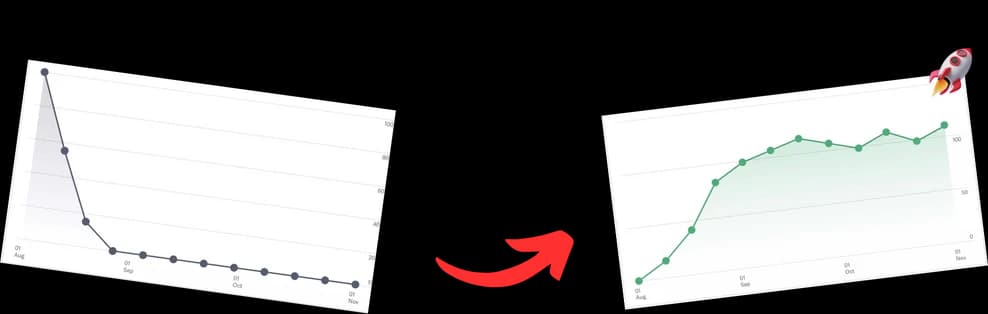
You finish recording a 60-minute episode and the main work starts. You trim filler, rename files, level audio, write a description, build chapters, pull clips for YouTube, then realize the episode still needs a thumbnail and title. That production sprawl is what slows busy creators down, not the conversation itself.
Podcasting keeps growing, and projections show that more than 584 million people will listen to podcasts in 2025, with that number growing to 619 million by 2026. Audience attention is there. The bottleneck is execution. If a show sounds uneven, lacks chapters, or arrives late, listeners have too many other options.
The fix is a system. Strong capture. Fast post-production. Packaging that works for both audio apps and YouTube. Clear navigation so viewers can jump to the segment they want instead of dropping off. If you record video too, the workflow matters even more because every episode has to function in two formats without doubling your workload.
That is where smart tooling earns its place in the stack. Tools like TimeSkip speed up repetitive publishing tasks by helping teams create cleaner navigation and reuse moments from long-form episodes. If your setup includes external mixers, interfaces, or capture devices, this guide to recording from line-in sources for cleaner podcast input is a practical place to tighten the front end of the workflow.
The tips below focus on high-impact production decisions. Use better gear where it saves editing time. Build episodes so they are easy to search, easy to watch, and easy to repurpose. If you are balancing an audio feed, a YouTube channel, and a real schedule, this is the production system that keeps quality high without turning every release into a full-time job. For gear choices, especially dynamic and condenser microphones, the right setup starts with the room and the workflow, not the spec sheet.
1. Invest in Quality Microphone and Audio Equipment
Most production problems start before you hit record. If the raw audio is harsh, roomy, or noisy, you'll spend your editing time trying to rescue a bad capture instead of improving a good one.
A decent microphone, a stable boom arm, closed-back headphones, and a controlled room do more for a podcast than another plugin ever will. That's true for audio-first shows and even more true for video podcasts, because viewers will forgive a simple frame faster than they forgive ugly sound.

Fix the capture before you fix the edit
You don't need a luxury studio. You need control. A microphone placed correctly in a soft room will beat an expensive mic pointed across a reflective kitchen.
A practical starting point is to choose between USB simplicity and XLR flexibility. USB is faster for solo creators. XLR gives you more upgrade room if you're recording guests often, using a mixer, or building a permanent set. If you're comparing capsule types, this breakdown of dynamic and condenser microphones is useful because the right choice depends more on your room than your budget.
Practical rule: Buy for your recording environment first, not your wish list.
If you record remote interviews or bring in external audio feeds, clean signal routing matters too. This guide on recording from line in is helpful when you need to capture direct sources without adding unnecessary room noise.
- Place the mic close: Keep it roughly a hand span from your mouth and angle it slightly off-axis to reduce plosives.
- Treat the room cheaply: Blankets, rugs, curtains, and full bookshelves usually help more than decorative foam.
- Monitor while recording: Wear headphones and catch mouth noise, clipping, hum, or laptop fan bleed immediately.
- Use a repeatable setup: Mark boom arm position, camera framing, and chair placement so every session starts faster.
Joe Rogan, Lex Fridman, and other studio-heavy shows get attention for their gear, but the main lesson isn't to copy their exact setups. It's that they remove variables. The less variability in your capture, the less time you lose in post.
2. Create Detailed Show Notes and Chapter Timestamps
Long-form podcasts need navigation. If a viewer lands on a sixty-minute episode and can't tell what's inside, many won't commit. Chapters solve that fast.
This matters on YouTube because podcast episodes often function like searchable archives. A good chapter list turns one episode into multiple entry points. It also helps listeners who want one topic now and the full episode later.

Make your episodes skimmable
Podcast analytics guidance consistently separates core metrics like downloads, listener retention, and completion rate, while many dashboards also track audience location, playback app, and subscriber counts. In a market with over 4 million podcasts worldwide in 2023 and nearly 600,000 publishing at least monthly, with the U.S. accounting for over half of those shows, easier navigation isn't a nice extra. It's part of making the show usable.
Good chapters do three jobs at once. They help the audience jump around, help you repurpose clips later, and help search systems understand the episode's topics.
What works in practice:
- Name chapters by topic, not banter: "How sponsors affect retention" is stronger than "Interesting discussion."
- Mark ad breaks clearly: It keeps your structure clean and helps future ad operations.
- Use the same chapter style every week: Viewers learn how to scan your episodes.
- Build show notes from the same source document: Don't write chapters, descriptions, and clip notes separately if one transcript can drive all three.
Viewers don't need perfect timestamps. They need trustworthy ones.
For busy creators, this is exactly the kind of repetitive task worth automating. Tools like TimeSkip fit naturally into a YouTube podcast workflow because they speed up chapter creation without forcing you into another long post-production step.
3. Optimize for Search and Discovery Through Strategic Keyword Research
A strong episode can still disappear if nobody can find it. Search-driven discovery matters more on YouTube than many podcasters realize, especially when your show covers education, business, news, interviews, or tutorials.
Most creators title episodes too broadly. "Episode 48 with Sarah" tells the audience nothing. A better title gives the main promise first, then the guest or show branding after that.

Think like a search editor
The easiest win is to build every episode around a handful of phrases your audience would type. Not abstract brand language. Plain-language questions, problems, comparisons, and outcomes.
For example, "how to price freelance work" will usually carry more discovery value than "building confidence as a creator," even if both describe the same conversation. One maps to a clear search intent. The other is too vague.
A few ways to tighten this up:
- Lead with the topic: Put the searchable promise at the start of the title.
- Reflect the language in chapters: If your chapters echo the subtopics, the episode becomes easier to index and easier to skim.
- Write descriptions like summaries, not filler: Mention the actual questions answered in the episode.
- Mine your own comments: Audience questions often become the best next-keyword targets.
This is one place where audio and video production overlap cleanly. Good keyword research doesn't just improve discoverability. It also improves structure because it forces you to define what each segment is about.
If you're already using TimeSkip for chapters, the keyword angle becomes more practical. You're not inventing metadata from scratch. You're labeling the conversation in a way platforms can understand.
4. Maintain Consistent Publishing Schedule and Format
Tuesday morning hits, your audience expects a new episode, and nothing is ready. That single miss creates extra work everywhere else. You rush the edit, the YouTube upload goes out late, clips slide to the next day, and the episode loses momentum before it has a chance to build.
Consistency is a production system. Busy creators do better with a schedule they can keep for six months than an ambitious plan they can only sustain for three weeks. A weekly release with a repeatable format usually beats a higher-effort show that disappears whenever life or client work gets busy.
Format matters for the same reason. Regular listeners get used to your pacing, segment order, ad placement, and episode length range. Video audiences on YouTube pick up those patterns too. Predictable structure helps retention because people know where the payoff is and how long they need to stay.
Build a format that removes decisions
A stable episode framework saves more time than people expect. It cuts recording friction, makes editing faster, and gives your team clean handoff points if more than one person touches the show.
A practical structure might look like this:
- Cold open: Start with the strongest clip or clearest promise.
- Short intro: Keep branding tight and skip the long preamble.
- Main segments: Use the same sequence each week so prep stays light.
- Mid-roll slot: Leave a clean break for host-read ads or promos.
- Outro: End with one clear next action.
For shows that sell sponsorships, repeatable ad placement is not a small detail. Nielsen's podcast ad research, summarized by Content Allies, found stronger performance for host-read ads and broad listener acceptance of podcast advertising when it is part of the exchange for free content (Content Allies summary of Nielsen podcast advertising research). That is a strong argument for planning ad space into the episode outline instead of dropping reads into whatever silence you can find in post.
One mistake I see all the time is treating audio and video as separate publishing jobs. They should share the same production template. Record with the final chapter flow in mind, keep intros and outros modular, and standardize lower thirds, thumbnail style, file naming, and export presets. If you publish on YouTube, this discipline pays off twice. The full episode gets out faster, and the clip workflow becomes easier because the structure already gives you likely cut points.
Batching helps if your energy holds up on mic. Record two or three episodes in one setup, but only if you can keep performance quality steady. Some hosts get sharper in a batch. Others flatten out after the second recording. Know which camp you're in and plan around it.
TimeSkip fits well here as a workflow tool, not a gimmick. If your format stays consistent, chaptering and clip selection get faster because recurring segments are easier to identify and package. That matters when you're trying to run audio, video, and YouTube distribution without turning the show into a full-time operations job.
A consistent release schedule is a production decision, not a motivation problem.
Use templates for everything that repeats. Intro scripts, session layouts, folder names, audio chains, export settings, upload checklists. Save creative energy for the conversation itself. Systematize the rest.
5. Leverage Guest Interviews and Collaborative Content
Guest episodes can grow a show, but only if the guest fits the audience and the format supports them. Chasing recognizable names without a strong interview angle usually produces flat episodes and weak follow-through.
The best guest strategy is a mix. Bring in a few reach-expanding names, a steady stream of reliable peers, and occasional specialists who answer a very specific audience need. That's what keeps the show fresh without making booking a full-time job.
Build for chemistry, not just credibility
A guest with a large audience can still underperform if they speak in canned talking points or don't match your pace. A smaller guest who's clear, opinionated, and prepared can carry an episode much further.
That's why prep matters:
- Send a one-page brief: Include audience profile, format, runtime, and what makes your show different.
- Pre-interview when needed: Ten minutes of setup can prevent an hour of vague answers.
- Ask for stories, not opinions alone: Stories produce better clips and stronger retention.
- Record separate local tracks when possible: Remote interviews fail at the worst times.
Collaborative content also reduces your idea burden. When the right guest brings a sharp framework, opposing view, or lived experience, the episode feels bigger than a solo monologue without requiring more editing complexity.
One overlooked benefit is packaging. A guest episode gives you better thumbnail options, clearer chapter labels, more clip opportunities, and easier cross-promotion. For YouTube-facing podcast production tips, that's a real operational advantage, not just a content one.
6. Master Audio Editing and Post-Production Workflow
You finish recording, open the project, and lose 3 hours fixing things that should have been handled by process. That is the core post-production problem for busy creators. The goal is a repeatable edit that gets the episode out fast, sounds professional, and does not create extra work once you publish to audio feeds and YouTube.
Editing starts with priorities. Listeners will forgive a natural breath or two. They will not forgive noisy tracks, uneven levels, slow intros, or a conversation that takes too long to get to the point. Strong post-production removes friction and protects momentum.
If you want a repeatable baseline, this guide to a podcast editing workflow shows how to turn recurring editing tasks into a system instead of rebuilding your process every week.
Edit in passes, not all at once
The fastest editors do not solve every problem on the same timeline pass. They make big decisions first.
Start with the structural cut. Remove false starts, long setup before the main point, repeated answers, and tangents that weaken retention. After that, run your technical pass with the same chain each episode: noise reduction, EQ, compression, de-essing if needed, then loudness normalization. That order keeps you from polishing sections that should have been cut.
A few habits save more time than any fancy plugin stack:
- Build presets by speaker type: one for your mic, one for common remote guest audio, one for backup tracks.
- Edit from the transcript: rough cuts are faster, and the same transcript helps later if you repurpose podcast episodes for YouTube clips and supporting content.
- Mark instead of fixing on the fly: drop timeline markers during the first listen, then batch the fixes.
- Audit transitions on headphones and cheap speakers: clean speech matters more than perfect tone.
- Set a stopping point: after a certain level of cleanup, extra editing time rarely creates a better episode.
That trade-off matters even more for video podcasts. Small teams do better with a setup they can repeat every week than with an ambitious production they cannot maintain. The guidance in Cutback Video's video podcast blueprint for 1 to 4 person setups, camera angles, and lighting diagrams supports that approach directly, and the source is the Cutback Video article itself, not the embedded video above.
For YouTube-facing shows, post-production is also packaging work. Clean edits create clearer chapters, stronger clips, and better watch time because the episode moves with intent. Chase clarity, pace, and consistency. That is what makes a workflow sustainable.
7. Repurpose Long-Form Content Across Multiple Platforms
A podcast episode shouldn't live once. If you record an hour of usable conversation and publish only the full episode, you've left most of the value on the table.
Repurposing works best when you build for it during production. That means asking sharper questions, pausing briefly between major points, and using chapters so you can spot clean clip boundaries later.
Turn one recording into a content stack
The fastest workflow is to treat the full episode as the source file for everything else. Pull clips, quotes, summaries, newsletter angles, and social posts from the same transcript and chapter map.
This approach also helps you avoid random clip selection. Instead of choosing moments by feel, you can choose by topic, emotional punch, disagreement, or direct usefulness.
A simple reuse stack might include:
- Short vertical clips: Best moments for Shorts, Reels, and TikTok.
- LinkedIn or X posts: Strong quotes, contrarian takes, or concise lessons.
- Email newsletter recap: A short summary with one key insight and the full episode link.
- Blog support content: Expand one segment into a written article if the topic has search value.
If you're publishing on YouTube, this gets easier when your timestamps are already in place. TimeSkip fits that workflow well because chaptered episodes are easier to scan for clip candidates and easier to organize after publishing. This is especially useful if you're trying to repurpose a podcast to YouTube without adding another manual review step.
The best clip is usually the moment where the audience instantly understands the stakes.
Repurposing also lengthens the life of interview episodes. A good guest conversation can feed your channel and social calendar long after the full release date, which is one of the most practical podcast production tips for creators with limited time.
8. Analyze Audience Data and Optimize Based on Performance Metrics
A familiar pattern shows up in growing shows. An episode posts, downloads come in, the thumbnail gets clicks on YouTube, and the team assumes it worked. Then the retention graph shows a steep drop in the opening minutes, weak chapter engagement, or a guest segment that loses viewers faster than usual. That is the difference between distribution metrics and production metrics.
Downloads are still widely used as a headline number, but they are a weak editing signal. According to The Podcast Consultant's analysis of podcast analytics that matter, 74% of podcasters still use downloads as their primary success metric. That metric does not tell you whether the intro ran too long, the host buried the best question, or the mid-roll landed at the worst possible moment.
Retention does.
The same Podcast Consultant benchmark on completion rate and podcast analytics says completion rates above 70% generally signal strong content quality, while rates below 50% across multiple episodes usually justify a review of pacing, format, or segmentation.
For busy creators, the useful question is simple. What changed in the episode, and where did the audience react?
Use performance data like a post-production review:
- Check the first 2 to 5 minutes: Early drop-off usually means the cold open is weak, the setup takes too long, or the episode promise is unclear.
- Look at chapter-level interest: On YouTube, chapter clicks and retention around specific segments show which topics deserve follow-up episodes, clips, or stronger placement next time.
- Review ad and promo timing: If viewers consistently leave around sponsor reads, shorten the transition, move the placement, or test a tighter host-read.
- Compare formats: Solo episodes, interviews, roundtables, and video-first conversations often perform differently. Keep the format that holds attention, not the one that feels easiest to record.
- Study watch time alongside listens: For audio and video podcasts, total consumption matters more than raw starts because it reflects whether the structure kept people engaged.
This matters even more on YouTube, where podcasting is part audio strategy and part video packaging. A strong workflow connects episode structure, chaptering, clip selection, and retention review in one loop. If a chapter consistently gets skipped, rewrite that segment type. If one topic keeps viewers watching, build the next recording outline around it. If a guest format produces better watch time than solo analysis, book more guests and tighten the host monologue.
Analytics are also useful for positioning. Advice about differentiation often stays abstract, but choices like co-host dynamics, recurring segments, pacing, and visual cut patterns directly shape how distinctive a show feels. The team at The Podcast Host explains podcast differentiation in practical terms. Performance data lets you test whether those choices hold attention instead of relying on instinct.
The producers who improve fastest are rarely the ones publishing the most. They are the ones reviewing the graph, spotting the weak section, and fixing the next episode before the same mistake repeats.
8-Point Podcast Production Comparison
| Strategy | Implementation Complexity 🔄 | Resource Requirements ⚡ | Expected Outcomes 📊 | Ideal Use Cases ⭐ | Key Advantages & Tips 💡 |
|---|---|---|---|---|---|
| Invest in Quality Microphone and Audio Equipment | Low–Moderate, purchase + basic technique; acoustics add complexity | High upfront cost ($100–$3,000+); some maintenance | Clearer audio, higher retention, less editing time | Audio-first podcasts and professional productions ⭐⭐⭐ | Start with good USB mic, mic 6–8" away, budget for room treatment |
| Create Detailed Show Notes and Chapter Timestamps | Moderate, manual process; easily automated | Low–Moderate time without tools; minimal cost with automation | Better discoverability, improved retention and accessibility | Episodes needing discoverability and segment navigation ⭐⭐ | Use AI tools (e.g., TimeSkip) for fast chapters; include 3–5 word keywords |
| Optimize for Search and Discovery Through Keyword Research | Moderate, research skill required; tools simplify | Low–Moderate (tools/subscriptions); ongoing monitoring | Increased organic visibility and targeted reach | Creators prioritizing organic growth and niche targeting ⭐⭐⭐ | Use long-tail keywords, update older episodes quarterly, align keywords to content |
| Maintain Consistent Publishing Schedule and Format | Moderate, discipline and planning; workflow setup | Time commitment; possible batching/crew | Improved audience loyalty, algorithm favorability | Shows aiming for steady growth and subscriber retention ⭐⭐ | Plan 4–8 week calendar, batch-record, build 2–3 week buffer |
| Leverage Guest Interviews and Collaborative Content | Moderate–High, coordination and guest management | Time for outreach, scheduling tools, remote recording setup | Expanded reach, credibility, cross-promotion opportunities | Growing shows leveraging guest audiences ⭐⭐⭐ | Vet guest fit, use reliable remote recorders, prepare briefing/questions |
| Master Audio Editing and Post-Production Workflow | High, learning curve for software and techniques | Software subscriptions, monitoring gear, time for edits | Polished output, fewer distractions, improved retention | Creators seeking professional sound quality ⭐⭐⭐ | Use presets, normalize to -3dB LUFS, batch edits, use noise gates and quality headphones |
| Repurpose Long-Form Content Across Multiple Platforms | Moderate, requires format conversion and design | Tools for clip extraction, captions, design; time for variants | Higher content ROI, extended reach, more entry points | Creators maximizing reach and social distribution ⭐⭐ | Extract 3–5 top clips, use vertical/square formats, add captions and CTAs |
| Analyze Audience Data and Optimize Based on Performance Metrics | Moderate, requires analytics literacy and time | Analytics platforms (free/paid), time to analyze (weekly) | Data-driven improvements, better topic/length choices, ROI insights | Creators focused on growth optimization and retention ⭐⭐ | Check retention curves weekly, test variations, align chapters with high-performing topics |
Your Blueprint for Efficient, High-Impact Podcasting
The best podcast production tips don't add work. They remove waste. That's the lens to keep as you improve your show.
Start with the parts that are hardest to fix later. Capture clean audio. Standardize your recording setup. Choose a format you can repeat without draining yourself. Then tighten the post-production chain so every episode moves from recording to publishing without a dozen avoidable decisions.
If you're publishing to both podcast apps and YouTube, treat the show like a media system, not a single file. Chapters, searchable titles, useful descriptions, and repurposed clips aren't extras anymore. They help people find the episode, explore it, and share it. In a market where podcast listening has grown to massive scale, discoverability and retention aren't separate jobs. They support each other.
The same goes for analytics. Stop rewarding yourself for numbers that don't explain behavior. Downloads matter for distribution. They don't tell you why listeners stay, skip, or leave. Retention patterns do. Completion rate does. Listen time does. Those metrics tell you whether your opening works, whether the structure drags, and whether your sponsor placement is helping or hurting.
Busy creators also need to accept a hard truth. Perfect production can kill consistent publishing. The sweet spot is professional enough to build trust, simple enough to repeat, and structured enough to scale. That's why single-camera video podcasts, controlled audio chains, reusable templates, and automated support tools often outperform more elaborate setups in real-world production.
If you're trying to decide what to fix first, pick one bottleneck from this list. Maybe it's your audio capture. Maybe it's the time you lose writing timestamps. Maybe it's the lack of a real release workflow. Solve that one bottleneck completely before chasing another shiny upgrade.
That approach compounds. Cleaner source audio cuts editing time. Better chapters improve navigation and repurposing. More consistent formatting makes sponsor reads easier to place. Better analytics review sharpens future topics. Over time, your show gets better because your system gets better.
If chaptering is one of the tasks slowing you down, TimeSkip is one relevant option for YouTube-focused workflows. It helps automate chapter creation for long videos, which fits naturally into podcast publishing systems that rely on timestamps for navigation, search visibility, and clip extraction. The broader point is bigger than any single tool. Build a workflow that protects your time, and your content usually improves with it.
For a broader view of how podcasts fit into a wider publishing strategy, it's also worth reviewing Netco Design's content marketing guide, especially if you're turning episodes into clips, articles, and newsletter content.
If you're publishing podcast episodes on YouTube and chapter creation keeps slowing you down, TimeSkip is worth a look. It automates chapter timestamps for long videos, which can make podcast post-production, SEO packaging, and clip planning faster for busy creators.