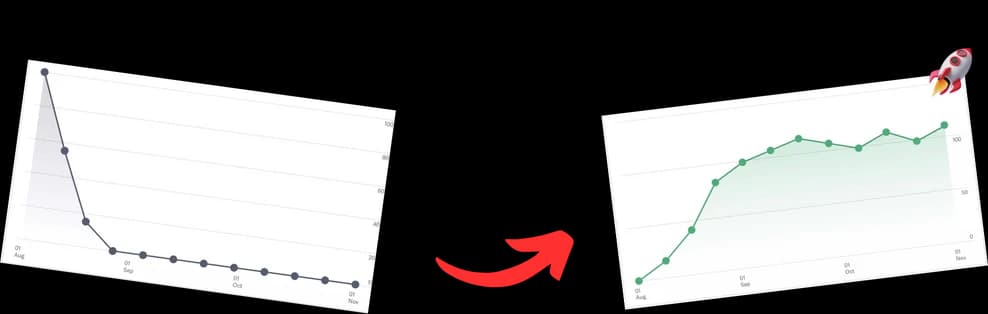
You spent hours scripting, recording, editing, and packaging a video. You publish it, refresh analytics a few times, and nothing much happens. A few views come in. Maybe a couple are from subscribers. Search barely moves. Recommendations never really kick in.
That experience pushes creators toward the wrong conclusions. They blame bad luck, the algorithm, timing, or the idea that YouTube only rewards channels that already have momentum. In practice, most channels stall for a simpler reason. Their videos are treated like isolated uploads instead of parts of a system.
If you want to learn how to increase organic reach on youtube, stop asking, “How do I get more views on this upload?” Start asking two better questions. How will people discover this video? And once they do, what will keep them watching and moving into the next one?
Those are the two levers that matter most. Discovery gets the right people in the door. Engagement gives YouTube a reason to keep showing the video. Channels that grow consistently usually aren't gaming the platform. They're building content that can be found, watched, and chained into a longer session.
Beyond the Upload Button A New Mindset for YouTube Growth
Most creators still treat YouTube like a publishing platform. Record, edit, upload, promote, repeat. That workflow feels productive, but it misses what the platform rewards.
YouTube works more like a feedback loop. The platform tests a video with a specific audience, watches how those viewers respond, and then decides whether to expand distribution. That means your job isn't just to make a “good video.” Your job is to make a video that clearly fits a viewer need and keeps attention once the click happens.
Think in systems, not single uploads
A video title, thumbnail, topic, opening hook, chapter structure, and next-video path all affect the same result. If one part breaks, the whole system weakens.
Creators who grow steadily usually build around two pillars:
- Discovery: Search intent, metadata, topic selection, thumbnails, and packaging that help the right viewer find the video.
- Engagement: Retention, watch time, session flow, and content structure that persuade viewers to stay.
That shift changes what you optimize for. Views alone can mislead you. A video can get traffic and still train YouTube not to push it further if viewers leave quickly or don't continue watching. On the other hand, a tightly structured video with a clear audience match can keep earning reach long after upload day.
Practical rule: Stop evaluating videos as posts. Evaluate them as entry points into a viewing session.
A lot of general organic growth advice still applies here, especially the idea that discoverability and content quality have to work together. If you want a broader framework beyond YouTube, Sight AI’s guide on 12 Proven Ways to Increase Organic Traffic in 2025 is useful because it reinforces the same discipline: match content to intent, then make the experience strong enough that people keep going.
Replace “viral” goals with repeatable signals
A sustainable channel usually grows from repeatable patterns:
- Clear topic targeting so YouTube knows who the video is for
- Strong opening structure so viewers don't bounce early
- Intentional sequencing so one view can become two or three
- Consistent packaging so viewers recognize your value quickly
That mindset is less exciting than hoping for a breakout hit. It works better.
The Foundation of Discovery Winning with YouTube SEO
SEO on YouTube starts before you record. If the topic has weak intent, muddled phrasing, or no clear angle, no title rewrite will save it later.
The simplest way to improve discovery is to stop choosing topics based only on what you want to say. Choose topics based on what a specific viewer is already trying to solve, compare, learn, or decide.

Start with search intent, not keywords alone
Creators often collect keywords and then force a video around them. That's backwards. Search terms only matter when they reveal what the viewer wants.
When researching a topic, separate intent into a few useful buckets:
| Intent type | What the viewer wants | Example angle |
|---|---|---|
| How-to | A clear process or fix | Tutorial, walkthrough, setup guide |
| Comparison | Help choosing between options | Tool A vs Tool B |
| Problem solving | A solution to a pain point | Why your audio sounds bad |
| Strategic learning | Context and decision-making | How to grow a podcast on YouTube |
That framework keeps you from making vague videos. “YouTube growth tips” is broad and crowded. “How to structure a tutorial so viewers stop dropping in the first minute” is narrower, clearer, and easier for YouTube to classify.
Find opportunity keywords your competitors skip
You don't need expensive software to uncover useful search terms. Start inside YouTube itself.
Use this quick workflow:
- Type your topic into YouTube search and note autocomplete suggestions.
- Look at the top-ranking videos and study how tightly they match the query.
- Scan comments for follow-up questions the existing videos didn't answer.
- Check related searches and adjacent phrasing on Google and YouTube.
- Choose phrases with clear intent instead of broad vanity topics.
The best opportunities are often phrases with a built-in problem and a specific audience. Tutorials, reviews, breakdowns, and “why this isn't working” formats usually do better than generic motivation videos because the viewer's need is obvious.
A good practical companion to this process is TimeSkip’s YouTube SEO checklist, especially if you need a tighter pre-publish workflow for titles, descriptions, and metadata.
Broad topics attract broad competition. Narrow topics attract the right viewer faster.
Write titles that rank and still get clicked
A title has two jobs. It has to help YouTube understand the topic, and it has to make a real person curious enough to watch.
That means you shouldn't stuff keywords, but you also shouldn't hide the main phrase behind clever writing. Put the core topic close to the front, then add a useful angle.
A few title patterns that work well:
- Direct solution: “How to Increase Organic Reach on YouTube Without Posting More Often”
- Specific outcome: “How to Write YouTube Titles That Match Search Intent”
- Clear conflict: “Why Your YouTube Videos Get Clicks but No Watch Time”
- Audience-specific framing: “YouTube SEO for Podcasters and Long-Form Creators”
Weak titles usually fail in one of two ways. They're too generic, or they're too cute. If a stranger can't tell what problem the video solves in a second or two, you've made discovery harder.
Descriptions should support the topic, not repeat buzzwords
A lot of creators either ignore descriptions or dump a template full of links. Neither helps much.
Your description should do three practical things:
- State the video topic clearly in natural language
- Reinforce key subtopics that appear in the video
- Help YouTube connect the content to related searches and recommendations
The first few lines matter most. Lead with a concise summary that mirrors the actual viewer intent. If the video teaches, compare, or explains something, say that plainly. Then add supporting detail that reflects what the video covers.
Here's a useful benchmark. If someone copied only your title and opening description into a document, would they understand exactly what the video is about? If not, your metadata is still vague.
Later in the workflow, it helps to review examples of strong packaging in action:
Build topical consistency across the channel
One video can rank. A cluster of related videos gives YouTube more confidence in your niche.
If you're trying to increase organic reach, don't jump randomly between disconnected subjects. A viewer who watches your camera tutorial may also watch your lighting setup, editing workflow, or audio fix guide. They probably won't jump from that into an unrelated vlog.
That doesn't mean every video must be identical. It means your channel should have recognizable lanes.
- One lane can teach beginners
- Another can compare tools
- A third can solve recurring problems
- A fourth can document advanced workflows
This helps search and recommendations work together. Search may bring in the first view. Relevance across your library helps earn the second and third.
Mastering Viewer Retention with Optimized Engagement
A lot of creators obsess over getting the click. That's understandable, but it's incomplete. YouTube doesn't just care whether someone starts your video. It cares whether that viewer keeps watching and whether your content contributes to a longer session on the platform.
That's why retention work usually produces bigger gains than endless metadata tweaking. A decent title can get sampled. A strong video structure earns distribution.

Thumbnails and titles are one decision, not two
Viewers don't evaluate these separately. They scan both in a split second and decide whether the promise feels relevant.
What works is contrast and clarity. If the title says what the video does, the thumbnail should intensify the reason to watch. It can show the result, the mistake, the tension, or the before-and-after. It shouldn't repeat the title word for word.
A few practical checks help:
- Can someone understand the topic on a phone screen?
- Does the thumbnail create curiosity without becoming confusing?
- Does the title promise something the video delivers?
Misalignment is expensive. A high-curiosity package can generate clicks, but if the opening doesn't quickly validate that promise, viewers leave fast.
The first seconds decide whether the video lives
Most weak hooks fail because they spend too long warming up. The creator introduces themselves, explains what they'll cover, thanks subscribers, and only then starts the video.
Viewers already clicked. They don't need another invitation. They need evidence they made the right choice.
A stronger opening usually does one of these immediately:
- States the problem the viewer likely has
- Shows the result they'll get by staying
- Creates tension around a common mistake
- Starts with the payoff before unpacking the steps
Compare these two openings.
| Weak opening | Strong opening |
|---|---|
| “Hey everyone, welcome back to the channel. Today we're talking about YouTube growth.” | “If your videos get some clicks but die in recommendations, the issue is usually retention structure, not effort.” |
The second one respects the viewer's time and names the pain directly.
If the viewer can't tell why this video matters in the opening, YouTube usually won't get enough positive watch signals to keep testing it.
Retention comes from structure, not just charisma
Creators often assume retention is about personality. Personality helps, but structure carries more weight than is commonly believed.
A well-retained video usually has clear progression. Each segment creates a reason to continue into the next. That can come from curiosity, rising stakes, sequence, or practical dependency.
Use these structural moves inside the body of the video:
- Preview the path early so viewers know the journey has direction.
- Remove dead space between points. Tiny pauses, repeated phrasing, and scene drag add up.
- Open loops carefully by teasing the next important idea before the current segment ends.
- Reset attention visually with cuts, examples, screen changes, or framing shifts.
- End sections with momentum instead of mini-outros.
A common mistake is treating every section like a standalone speech. Better videos behave more like guided movement. One point naturally pulls the viewer into the next.
For creators who want to tighten this skill, TimeSkip’s article on YouTube audience retention is a useful reference because it focuses on practical retention signals instead of vague engagement advice.
Chapters aren't just helpful. They're a retention tool
Long videos often lose reach for a simple reason. They feel difficult to follow. Viewers don't know where the relevant part starts, how the information is organized, or whether the answer they need is buried deep in the timeline.
Chapters fix that. They reduce friction and make long-form content easier to trust.
According to Neil Patel’s breakdown of YouTube algorithm best practices, since YouTube’s 2020 chapters rollout, creators using timestamps have seen sustained ranking improvements. The same source notes that TimeSkip users report up to a 220% visibility boost from AI-generated chapters, along with a 25% increase in discovery and a 15% boost in total viewing duration, with the approach trusted by over 10,000 videos.
Those numbers matter, but the practical reason matters more. Chapters help viewers self-select into the exact segment they need, which reduces frustration and can keep them in the video longer. They also create more semantic detail around the content, especially when chapter titles reflect real search phrasing.
Use AI to speed up chaptering, then edit for intent
Manual timestamps are tedious, especially for podcasters, educators, and anyone publishing longer videos. That's why AI-assisted chaptering has become part of a serious workflow.
One efficient option is TimeSkip, which generates SEO-oriented chapters and timestamps for YouTube videos so you can review and paste them quickly instead of building them by hand. The advantage isn't just speed. It also helps surface clearer segment labels that support search and navigation.
That said, don't publish raw chapters blindly. Review them like an editor.
- Tighten vague labels such as “Important Point” or “More Tips”
- Use audience language that mirrors what viewers search for
- Keep chapter names outcome-focused rather than overly clever
- Make the sequence logical so the video feels organized at a glance
Good chapters make a long video feel lighter. Bad chapters make it feel chopped up or generic.
Building a Binge-Worthy Channel Experience
A single solid video can pull in traffic. A channel built for continuation earns more from every click.
The metric behind this is session time, which reflects how long people stay on the platform after interacting with your content. If your video helps keep someone watching YouTube, especially by moving them into more relevant videos, your channel becomes more useful to the platform.
Playlists should guide behavior
Most creators build playlists as storage bins. They group videos by topic and stop there. That isn't enough.
A playlist should act like a path with a clear start point and a next best step. Think less like a folder and more like a guided series.
Use playlists in a few intentional ways:
- Beginner to advanced progression for educational channels
- Problem to solution sequence for tutorial-heavy niches
- Series-based grouping for recurring formats
- Decision support paths for reviews and comparisons
If a new viewer lands on one playlist entry, they should immediately see what to watch next and why it relates.
End screens should continue the argument
A lot of end screens are wasted because they appear after the creator has mentally ended the video. The energy drops, the viewer senses closure, and then the recommendation shows up too late.
Instead, tee up the next video before the current one feels finished. Mention the next step while the main point is still active. Then use the end screen to make the decision easy.
A useful formula is simple:
- Close the current promise
- Name the next obstacle or question
- Present the next video as the natural answer
Your best end screen CTA isn't “watch this next.” It's “if you're at this stage, this is the next thing you need.”
Series outperform random uploads for channel momentum
The easiest way to make a channel more bingeable is to create connected videos that belong together. A strong series creates anticipation and lowers the cognitive load for the viewer. They don't have to wonder what to watch next. You already decided for them.
That can look different depending on your niche:
| Channel type | Series idea | Why it works |
|---|---|---|
| Podcaster | One theme explored across several episodes | Encourages deeper listening and topic continuity |
| Educator | Beginner, intermediate, advanced lessons | Creates a clear learning ladder |
| Tool reviewer | Setup, use case, mistakes, comparison | Turns one search visit into a mini-journey |
| Creator channel | Build-in-public episodes | Gives viewers a reason to return |
Series also sharpen topic relevance across your channel. When several videos speak to the same audience need from different angles, recommendations become easier for YouTube to align.
Channel architecture matters more than people think
A creator can publish good videos and still lose reach because the rest of the channel gives no obvious continuation path. That's a channel architecture problem.
Audit your channel page like a new visitor would:
- Does the homepage tell people what the channel helps with?
- Are playlists arranged by need, not just chronology?
- Can someone understand the next step after a first video?
- Do your recent uploads reinforce a consistent audience promise?
The goal isn't aesthetic perfection. The goal is reducing exits.
Strategic Promotion and Smart Audience Building
“Promote everywhere” sounds smart, but it often produces the wrong kind of traffic. A random blast across every platform can send people who aren't a fit, don't watch for long, and don't continue into more content. That kind of promotion may create activity without strengthening organic reach.
The better question isn't whether to promote. It's how to promote without confusing YouTube about who the content is for.

The downside of sloppy external traffic
A useful contrarian point comes from Ruddle Digital’s discussion of YouTube organic reach. It cites a 2025 experiment showing that aggressive, un-targeted self-promotion can initially reduce algorithmic push by 20-30%. The same source says that chaining videos into binge-series with compelling next-video teases can reverse that, producing 40% higher session watch time. It also notes that a nuanced approach to embeds can support authority, and that limiting embeds to 20% of traffic sources while pairing them with retention tactics can produce a 15% net organic gain.
The main takeaway is simple. Quality traffic beats broad traffic.
If you post a video link into unrelated groups, generic social feeds, or low-intent communities, you may get clicks without meaningful watch behavior. That doesn't help much. Promotion works when the audience already wants the topic and is likely to keep watching after the first video.
Promote in places where context already exists
External promotion works best when the viewer arrives with a reason to care.
Good examples include:
- An email list where subscribers already expect this topic
- A niche community where the video answers an active question
- A blog post or resource page where the video deepens the written content
- A social post with a specific angle instead of “new video is live”
This is also where repurposing becomes useful. Instead of dropping raw links repeatedly, cut the core idea into native snippets, summaries, or clips that create intent first. If you want a practical workflow for that, this guide on how to repurpose YouTube videos for social media is a helpful reference because it frames promotion as adaptation, not spam.
Use promotion to start sessions, not just collect clicks
The strongest external promotion strategy sends viewers into a chain.
That means when you share a video, the destination shouldn't be a dead end. It should be the first logical step in a sequence with a clear next recommendation built into the video itself.
Try this framework:
- Choose one primary video that addresses a clear pain point.
- Make sure it points to a closely related follow-up through the outro and end screen.
- Share it only where the audience match is strong.
- Watch whether viewers continue into the second video.
- Trim channels that drive empty traffic.
A companion resource that covers channel promotion from a more operational angle is TimeSkip’s guide on how to promote YouTube channels.
Promotion should help YouTube identify your audience faster. If it sends mixed signals, it's doing the opposite.
Community beats broadcasting
Audience building isn't only a distribution problem. It's also a relationship problem.
Creators with stronger organic reach usually do a few quiet things well:
- They answer comments in ways that keep discussion moving
- They notice recurring questions and turn them into future videos
- They collaborate with adjacent creators whose audiences already overlap
- They make returning viewers feel recognized through consistent formats and follow-ups
That work doesn't look glamorous, but it improves the fit between your content and your audience. And fit is what makes every other growth tactic work better.
Your 30-60-90-Day YouTube Growth Action Plan
You don't need a full channel rebuild this week. You need an execution rhythm. The fastest way to increase organic reach is to fix the biggest leaks first, then layer in consistency.

First 30 days
Start with your existing library. Your easiest wins often come from improving videos that already have some traction.
Focus on these moves:
- Audit your top five videos for title clarity, thumbnail alignment, and opening strength.
- Add or improve chapters on longer videos so viewers can jump to different sections more easily.
- Rewrite weak descriptions so each one states the topic and subtopics more clearly.
- Check end screens and make sure each video points to a closely related next step.
- Group existing videos into playlists based on viewer need, not upload date.
This phase is about cleanup. You're making the channel easier to understand for both viewers and YouTube.
Days 31 to 60
Once the foundation is cleaner, shift to content planning.
Pick one or two topic lanes that fit your audience well, then build around them with intention. Don't chase random ideas just because they seem timely.
Use a working cadence like this:
| Weekly focus | What to do |
|---|---|
| Research day | Collect search phrasing, comments, and topic gaps |
| Planning day | Build titles and outlines around specific viewer intent |
| Production day | Record with retention in mind, especially the opening and transitions |
| Publish day | Optimize metadata, playlists, and next-video links |
| Review day | Study retention drops, clicks, and continuation behavior |
The point isn't rigid scheduling. It's making growth work repeatable.
Days 61 to 90
By this stage, you should have enough data to identify patterns. Not perfect certainty. Patterns.
Look for answers to questions like:
- Which topics bring in the most qualified viewers?
- Which openings hold attention better?
- Which videos lead into second views most reliably?
- Which traffic sources bring viewers who keep watching?
Key takeaway: Don't scale what gets attention. Scale what gets attention from the right viewers and leads to more viewing.
Use those answers to make sharper decisions. Double down on the series that keep people moving. Retire formats that attract shallow clicks. Simplify topics that confuse the audience. Strengthen the videos that already act like good entry points.
A lot of channels stay flat because the creator keeps publishing without closing the loop. This plan fixes that. You publish, observe, adjust, and build from what the audience rewards.
Frequently Asked Questions About Organic Reach
Do YouTube Shorts help long-form organic reach
They can, but only when they're strategically connected to your main content. Shorts are useful for exposure and audience testing. They become less useful when they attract viewers who only want quick clips and never move into your longer videos.
If you use Shorts, treat them as top-of-funnel content. Point them toward a related long-form video, a series, or a clear next step. Don't assume Shorts success automatically transfers to long-form reach.
How long does it take to see results
Usually longer than creators want, and faster than they think once the right systems are in place. Organic growth on YouTube tends to compound when topic selection, packaging, retention, and channel structure start aligning.
The key is to watch for directional improvement before breakout growth. Better retention curves, stronger click behavior on the right topics, and more second-video views are often the early signs that the channel is moving in the right direction.
Should you delete old underperforming videos
Usually, no. Deleting videos is rarely the first fix. Old videos can still bring search traffic, support topical relevance, or connect viewers to newer content later.
A better first move is to evaluate whether those videos are merely weak or actively confusing your channel positioning. If an old upload is off-topic, badly branded, or aimed at a completely different audience, you may choose to remove or unlist it. But don't assume deletion by itself improves organic reach. Clearer topic focus and stronger new content usually matter more.
If long videos are part of your strategy, chaptering shouldn't slow you down. TimeSkip helps creators generate SEO-focused YouTube chapters and timestamps quickly, which makes it easier to improve navigation, tighten metadata workflow, and support the kind of retention structure that organic reach depends on.