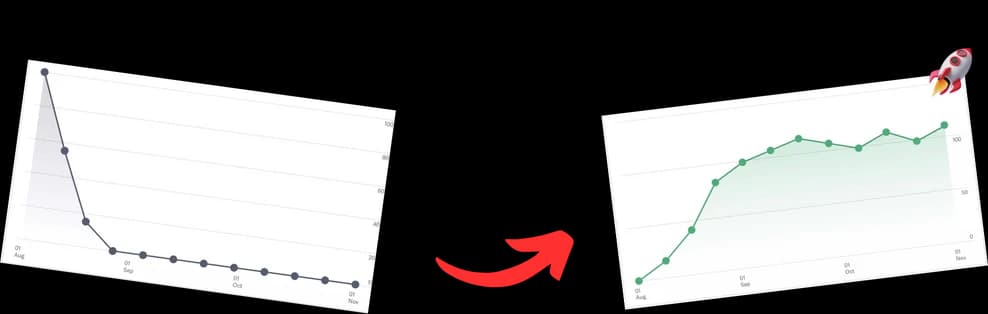
Creating impactful educational videos isn't just about what you teach; it's about how you teach it. In a saturated content environment, the creators who succeed are those who master the art and science of instructional design. They intentionally structure their videos to transform passive viewers into active learners, boosting engagement, retention, and ultimately, their channel's authority and growth. This isn't just theory; these are the mechanics behind why some educational content goes viral while other, equally informative content, falls flat.
This guide moves beyond generic advice to deliver 10 powerful, best practices for instructional design, specifically tailored for video-first educators and digital marketers. Each practice is a concrete lever you can pull to increase comprehension, skyrocket watch time, and build a loyal audience that doesn't just watch, but learns and applies your knowledge. For those looking to push the boundaries of engagement even further, understanding concepts like immersive learning can reveal how principles of deep engagement are being applied in next-generation training. We'll explore how structuring your content with these proven methods can make high-level instructional design accessible and actionable for every creator, turning your expertise into a truly effective learning experience.
1. Modular Content Segmentation
Modular content segmentation is one of the most effective best practices for instructional design, especially for video-first creators. This approach involves breaking down long-form instructional content into discrete, self-contained modules or chapters. Each module focuses on a single learning objective, providing standalone value while contributing to a larger, cohesive whole. For educators creating extensive video tutorials, this means structuring content into logical segments that function as independent learning units.
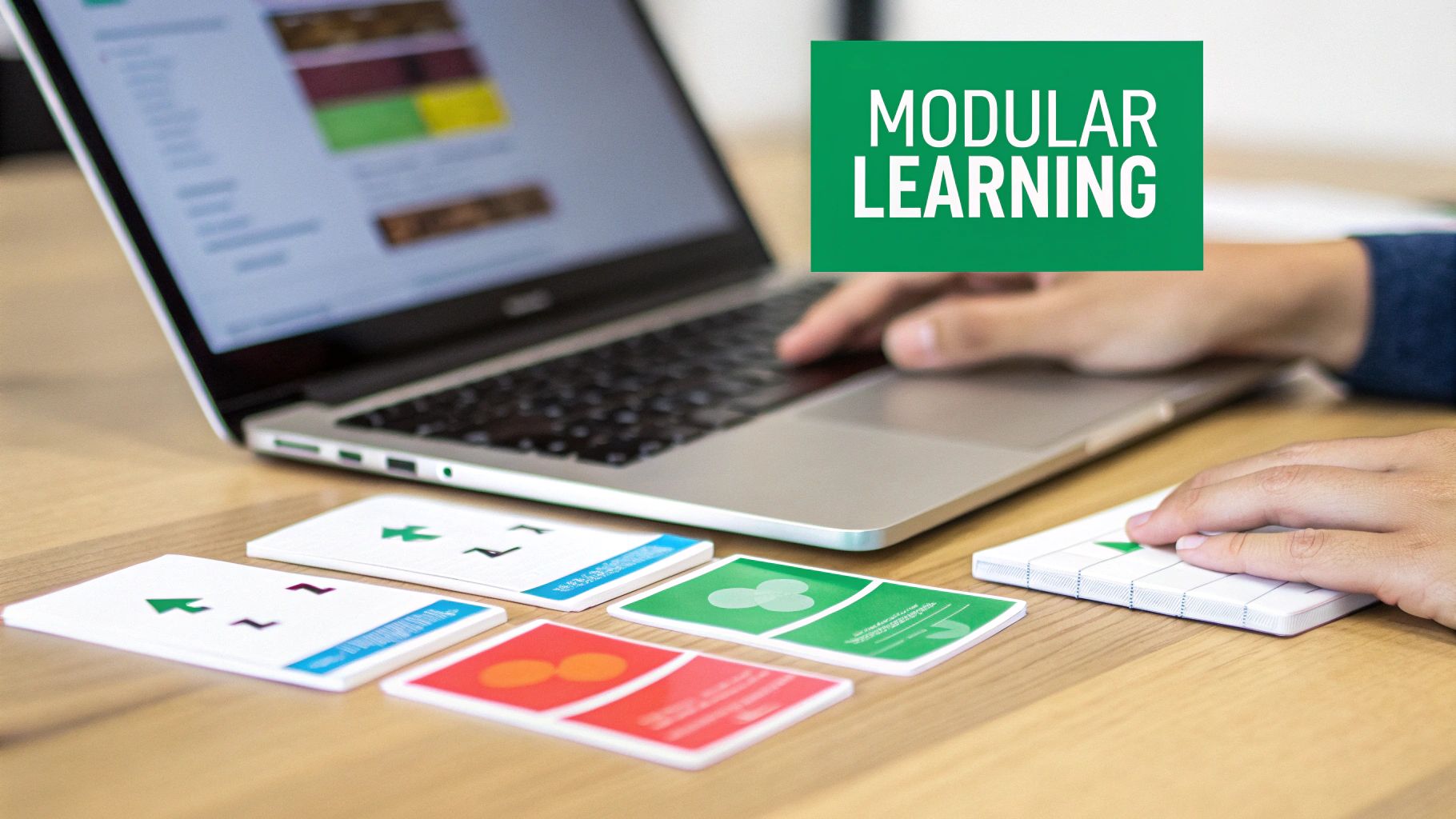
This method transforms overwhelming, multi-hour videos into digestible, searchable segments. It significantly improves viewer comprehension, reduces cognitive load, and boosts engagement by allowing learners to navigate directly to the information they need.
Why It Works
Modular design respects the learner's time and attention span. Platforms like YouTube have popularized this with their chapter feature, which not only enhances user experience but also improves SEO performance. When chapter titles are keyword-optimized, they appear in Google search results, driving targeted traffic directly to specific moments in your video.
How to Implement It
- Structure Your Content: Before recording, outline your video into logical, sequential topics. Each topic will become a module.
- Define Clear Objectives: Ensure every module has one primary learning goal. For example, a module could be "Setting Up Your Camera" or "Exporting Your Final Project."
- Use Transitional Cues: Verbally signal the end of one module and the beginning of the next to maintain a smooth narrative flow for viewers watching in sequence.
- Optimize Chapter Titles: Keep titles concise, descriptive, and keyword-rich. Instead of "Step 2," use a title like "Configuring Audio Settings for Clear Sound."
- Maintain Optimal Length: Aim for modules between 2-8 minutes to align with typical online attention spans.
2. Active Learning Through Interactivity
Active learning is a foundational element in the best practices for instructional design, shifting the learner from a passive consumer to an active participant. For video-first creators, this means embedding interaction points directly into the content. Instead of just presenting information, you prompt viewers to think, do, and engage, which dramatically boosts retention and transforms a monologue into a dialogue.
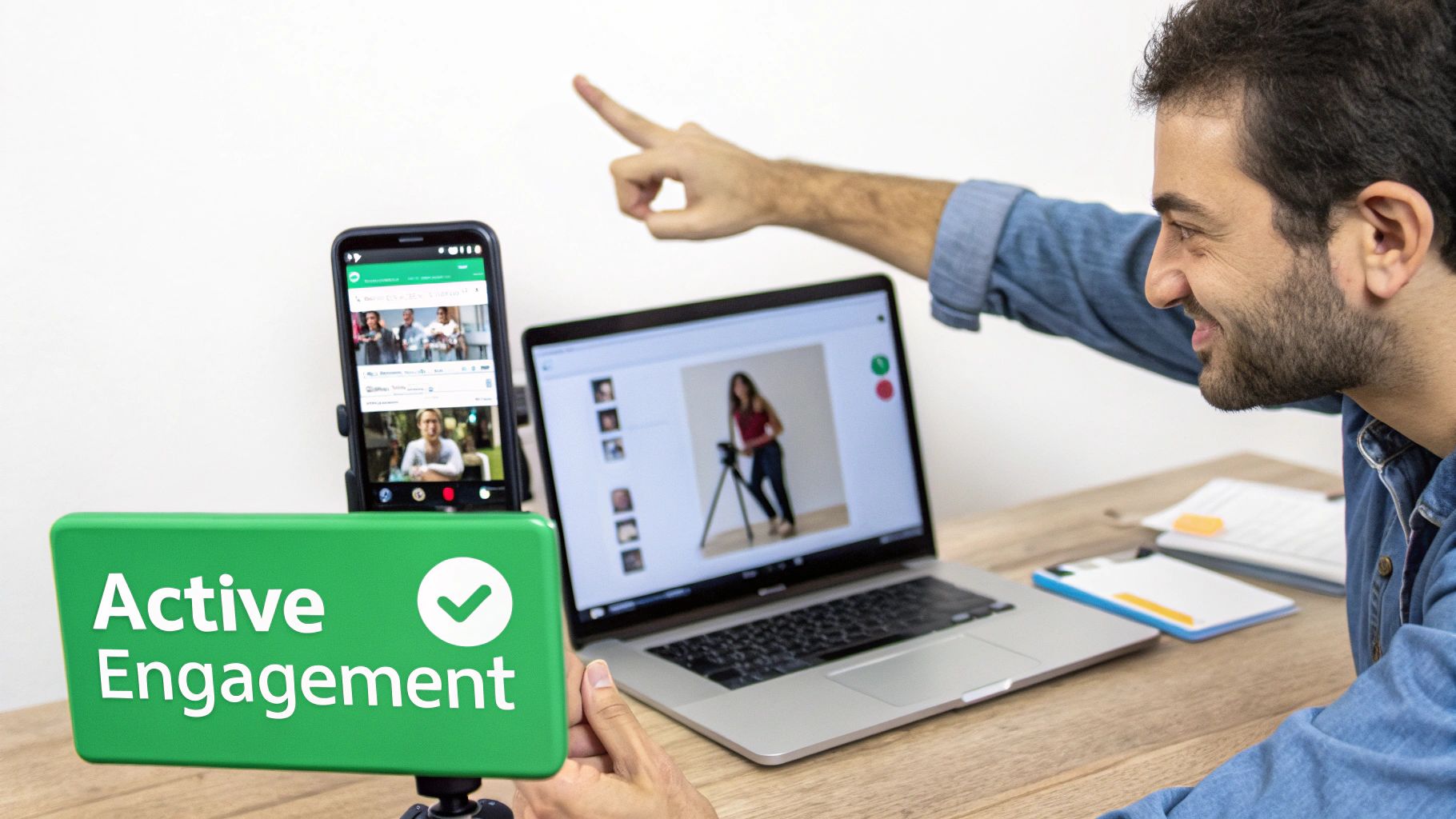
This strategy moves beyond simple viewership metrics to foster a genuine learning community. It requires viewers to pause, reflect, and apply knowledge, which is a key differentiator between content that is watched and content that is learned.
Why It Works
Interactive learning leverages cognitive science principles, proving that we learn best by doing. For video creators, posing a question at the end of a chapter or linking to a related exercise creates a "retention hook." This small act of engagement forces the brain to process the information more deeply, solidifying the lesson. These techniques are central to many successful best practices for online courses that prioritize tangible outcomes.
How to Implement It
- Pose Chapter-End Questions: At the end of a key module, ask viewers a direct question related to the content and encourage them to post their answers in the comments.
- Create "Pause and Do" Moments: Instruct viewers to pause the video and complete a small, relevant task, such as writing a line of code or sketching a concept.
- Use Interactive Cards: Add YouTube cards at strategic timestamps that link to quizzes, supplemental readings, or downloadable worksheets.
- Prompt for Timestamped Feedback: Ask your audience to leave questions or insights in the comments using timestamps to reference specific points in the video.
- Leverage Natural Breaks: Use chapter breaks identified by tools like TimeSkip to insert your calls to action, ensuring they feel natural and not disruptive.
3. Progressive Disclosure and Sequencing
Progressive disclosure is a cornerstone of the best practices for instructional design, involving the strategic presentation of information in a logical, layered sequence. This method introduces foundational concepts first and gradually builds to more complex topics, revealing information only when the learner is prepared. For video creators, it means structuring chapters from basic principles to advanced applications, guiding viewers on a clear learning path.
This approach prevents cognitive overload by managing complexity effectively. It ensures learners build a solid understanding before moving on, which significantly improves retention and reduces the frustration that can lead to viewer drop-off. By controlling the flow of information, you create a more effective and satisfying educational experience.
Why It Works
Grounded in learning theories like Bloom's Taxonomy and Vygotsky's scaffolding, progressive disclosure mirrors how people naturally learn. It builds confidence and mastery by creating a logical progression. In video content, this translates to higher completion rates and better comprehension, as viewers are not overwhelmed by advanced details presented out of context.
How to Implement It
- Map Prerequisites: Before recording, identify all the prerequisite knowledge needed for each topic and use this map to sequence your video chapters.
- Start with the 'Why': Begin with foundational concepts and the overall purpose before diving into specific features or techniques. For example, in a software tutorial, start with an interface overview.
- Build in Complexity: Organize your chapters to move from simple to complex. A coding tutorial might progress from basic syntax to building a full project.
- Reference Previous Concepts: Use verbal cues or chapter titles to briefly recap or reference previously covered material, reinforcing the learning journey (e.g., "Building on Our Audio Setup...").
- Analyze Viewer Retention: Use your platform's analytics to check for sharp drop-offs in your retention graph. These often indicate a jump in complexity that was too steep for viewers.
4. Multimedia Learning Principles
Applying multimedia learning principles is a cornerstone of modern best practices for instructional design. This approach involves strategically combining multiple modalities, such as text, audio, visuals, and interactive elements, to enhance comprehension and retention. For video creators, this means going beyond just visuals and sound; it's about making sure your on-screen text, clear narration, supporting graphics, and chapter titles all work together to create a cohesive learning experience.

Based on Richard Mayer's cognitive theory, this method recognizes that learners process information through separate channels for visual and auditory data. By presenting information in multiple formats, you reduce cognitive load and cater to different learning preferences, significantly boosting engagement and knowledge retention.
Why It Works
When visual and verbal information complement each other, learners can build stronger mental models of the content. For video-first creators, this means a well-placed title card, a clear audio explanation, and keyword-optimized chapter titles all reinforce the same concept. This synergy makes complex topics easier to understand and remember, as research suggests multimedia integration can increase retention by up to 65% compared to single-modality instruction.
How to Implement It
- Align Modalities: Ensure your narration directly explains what is happening on screen. Avoid conflicting messages between your audio and visuals.
- Optimize Text Elements: Use your video's chapter titles and descriptions as a powerful text layer for SEO. Ensure they are rich with keywords that accurately describe the content.
- Include Captions: Add accurate subtitles or captions to support auditory and visual learners, improve accessibility, and boost watch time.
- Link Supplementary Materials: Connect your video chapters to downloadable resources like PDFs, worksheets, or detailed transcripts to provide a multi-layered learning environment.
To see these principles in action, check out this video breakdown:
By thoughtfully combining these elements, you can create more effective and engaging educational content. If you're looking for more guidance, you can learn how to make instructional videos that captivate and educate your audience.
5. Clear Learning Objectives and Outcomes
Defining clear learning objectives and outcomes is a cornerstone among the best practices for instructional design. This principle involves explicitly stating what learners will know or be able to do after completing a lesson. For video creators, this means each module or chapter should have a clear, measurable learning outcome, often communicated directly in the chapter title or within the first few seconds of the segment. This sets clear expectations and frames the content's value upfront.
This approach transforms passive viewing into an active learning experience. Instead of a vague topic like "Advanced Techniques," a clear objective such as "Master 5 Advanced Techniques to Double Your Productivity" immediately communicates tangible value. This clarity improves viewer motivation, increases watch time, and ensures the content directly meets the learner's needs.
Why It Works
Grounded in educational theories from figures like Benjamin Bloom, this practice aligns content with learner intent. When viewers know exactly what they will gain, they are more invested and better able to absorb the information. For video SEO, outcome-driven chapter titles match specific search queries, attracting highly motivated viewers who are looking for concrete solutions and skills.
How to Implement It
- Start with Action Verbs: Begin your chapter titles and module descriptions with action-oriented words like "Master," "Implement," "Discover," or "Build."
- Include Quantifiable Outcomes: Whenever possible, add specific numbers to create tangible goals (e.g., "Learn 3 Strategies," "Increase Speed by 25%").
- State the Objective Early: Mention the specific learning outcome within the first 10 seconds of each video segment to reinforce the goal.
- Match Titles to Search Intent: Use keyword research to align your objectives with what your audience is actively searching for.
- Deliver on the Promise: Ensure the content within the module thoroughly fulfills the stated objective to build trust and credibility with your audience.
6. Spaced Repetition and Retrieval Practice
Spaced repetition is a powerful learning technique and one of the most impactful best practices for instructional design you can implement. Instead of presenting a concept once and moving on, this method involves strategically reintroducing key information at increasing intervals throughout your video. This combats the natural "forgetting curve" and helps embed knowledge in the learner's long-term memory.
This approach transforms passive viewing into active learning by prompting viewers to recall, or retrieve, previously learned information. By weaving core concepts through your introduction, demonstrations, and conclusion, you significantly boost comprehension and long-term retention of complex topics.
Why It Works
Based on Hermann Ebbinghaus's research on memory, spaced repetition interrupts the process of forgetting. Each time a learner retrieves a piece of information, the memory trace becomes stronger and more durable. For video creators, this means viewers are more likely to remember and apply the skills you teach, leading to greater satisfaction and perceived value from your content.
How to Implement It
- Identify Core Concepts: Select 3-5 foundational ideas that are critical for understanding the entire video. These are the concepts you will reinforce.
- Plan Your Repetitions: Intentionally map out where you will reintroduce these concepts. For instance, introduce a framework in Chapter 1, apply it in Chapter 4, and reference it during the conclusion in Chapter 8.
- Use Linking Language: Create explicit connections between modules. Use phrases like, "Remember the technique we discussed in Chapter 2? We're going to apply it now."
- Cross-Reference in Descriptions: Mention related chapters in your video or chapter descriptions to encourage viewers to revisit key sections.
- Create Retrieval Prompts: Ask questions that require viewers to recall information from earlier in the video before you provide the answer.
7. Responsive Design for Multi-Platform Consumption
Responsive design is a critical component of modern best practices for instructional design, ensuring content is accessible and effective across all devices. This approach involves creating educational videos and materials that adapt seamlessly to various screen sizes, from large desktops to tablets and mobile phones. With over 70% of YouTube viewership on mobile, content must be optimized for on-the-go consumption, where viewers often jump between topics non-sequentially.
This practice goes beyond just video resolution. It extends to how chapters, titles, and on-screen text are presented. A responsive structure ensures that a learner on a smartphone can navigate your content just as easily as someone on a 27-inch monitor, which is vital for maintaining engagement and improving course completion rates.
Why It Works
A mobile-first approach acknowledges modern learning habits. Mobile learners consume content in short bursts and value the ability to quickly find specific information. Responsive chaptering, with short, scannable titles, directly caters to this behavior. It makes your content more accessible and user-friendly, which can significantly boost watch time and viewer satisfaction on the devices they use most.
How to Implement It
- Optimize Chapter Titles: Keep chapter titles under 60 characters to prevent them from being cut off on mobile YouTube interfaces.
- Test Across Devices: Before publishing, preview your video on a smartphone, tablet, and desktop to check chapter visibility and overall layout.
- Front-Load Key Information: Place the most crucial information within the first 10-15 seconds of each chapter to capture short mobile attention spans.
- Simplify On-Screen Visuals: Ensure any text or graphics are large and clear enough to be easily read on a small screen.
- Monitor Device Analytics: Use your platform's analytics to track watch time by device type and identify where your mobile experience can be improved.
8. Constructivist Learning and Knowledge Building
A powerful approach within the best practices for instructional design is to create experiences where learners actively construct their own knowledge. Instead of passively receiving information, constructivist learning encourages exploration, problem-solving, and direct application. For video creators, this means designing content that prompts viewers to engage, experiment, and build a deeper understanding on their own terms.
This method shifts the focus from simply explaining concepts to facilitating discovery. By structuring videos with built-in challenges and reflection points, you empower viewers to connect new information with their existing knowledge, which dramatically improves learning retention and transfer.
Why It Works
Constructivist learning mirrors how people naturally learn outside of formal instruction: by doing. This active engagement creates stronger neural pathways than passive viewing. When a programming tutorial challenges a viewer to "try this yourself" before showing the solution, it forces cognitive engagement that solidifies the lesson. It also fosters a community of active learners rather than passive consumers.
How to Implement It
- Pose Problems First: Start a module by presenting a problem or a question before delivering the explanation. Let viewers think about a solution first.
- Include "Pause and Practice" Prompts: Explicitly tell viewers to pause the video and apply the skill you just demonstrated, like in a design tutorial asking them to create their own version.
- Use Chapter Breaks for Reflection: Use the end of a chapter as a natural point to ask a reflective question or assign a small application task.
- Encourage Community Sharing: Prompt viewers to share their attempts, results, or questions in the comments section, fostering a collaborative learning environment.
- Provide Actionable Resources: Link to downloadable worksheets, code snippets, or templates that viewers can use to apply what they've learned in a specific chapter.
9. Cognitive Load Management and Pacing
Strategically managing the amount of information presented is a cornerstone of the best practices for instructional design. This principle, rooted in cognitive load theory, focuses on preventing learner overwhelm by carefully pacing content delivery. For video creators, this means structuring long-form content into smaller, focused segments that respect the limits of human working memory.

The goal is to present information in a way that is challenging enough to be engaging but not so complex that it hinders comprehension. Proper pacing, often documented through video chapters, directly correlates with higher watch completion rates, better knowledge retention, and overall viewer satisfaction.
Why It Works
The human brain can only process a limited amount of new information at once. When learners are overloaded, their ability to encode information into long-term memory diminishes significantly. By breaking down complex topics into digestible chapters, you align your content with natural learning processes. This approach reduces frustration and allows viewers to master one concept before moving to the next, building confidence and momentum.
How to Implement It
- Segment Intelligently: Break down your video into chapters that are 2-8 minutes long. This length is optimal for maintaining attention and preventing cognitive fatigue.
- Limit Key Ideas: Focus on conveying no more than 3-5 main ideas or steps within each chapter to ensure the core message is absorbed.
- Vary Visuals and Audio: Maintain engagement by introducing visual changes like animations, screen cuts, or B-roll every 30-60 seconds to reset viewer attention.
- Monitor Analytics: Use YouTube's average view duration and audience retention graphs to identify points where viewers drop off, which often signal cognitive overload.
- Summarize and Transition: Conclude each chapter with a brief summary of what was covered before introducing the next topic to reinforce learning.
10. Authentic Assessment and Performance Feedback
Authentic assessment is a powerful yet often overlooked instructional design best practice for video-first educators. It moves beyond simple quizzes to evaluate how learners apply knowledge in real-world scenarios. For creators, this involves designing opportunities for viewers to demonstrate their skills and receive constructive feedback, even within the typically passive medium of video. It's about shifting from "Did they watch?" to "Can they do?"
This approach transforms passive consumption into active participation. By prompting viewers to apply concepts and share their work, you foster a deeper level of engagement and create a feedback loop that validates learning. Monitoring comments for questions and analyzing watch patterns also serve as indirect forms of assessment, revealing which concepts need clarification.
Why It Works
Authentic assessment proves the real-world value of your content and builds a highly engaged community. When learners see tangible results from applying your teachings, their trust and loyalty grow. This method also provides invaluable feedback on your content's effectiveness, highlighting areas of confusion or opportunities for supplementary material. For more insights on this topic, explore these online education best practices.
How to Implement It
- Prompt Viewer Creation: Explicitly ask viewers to apply a technique and share their results. A coding channel might ask viewers to post their solutions in the comments or on GitHub.
- Monitor Viewer Questions: Treat questions in the comments as feedback on comprehension. A high volume of questions on a specific chapter indicates a need for clarification.
- Analyze Engagement Data: Use YouTube Analytics to identify chapters with significant drop-off rates. This data points to sections that may be confusing or poorly explained.
- Create Follow-Up Content: Address common misconceptions or frequently asked questions from the comments in a dedicated follow-up video or community post.
- Request "Show Your Work" Submissions: Encourage viewers to submit their work, such as a before-and-after photo for a design tutorial, for public feedback.
Top 10 Instructional Design Best Practices Comparison
| Approach | 🔄 Implementation complexity | ⚡ Resource requirements | ⭐ Expected outcomes | 📊 Key advantages | 💡 Ideal use cases & quick tip |
|---|---|---|---|---|---|
| Modular Content Segmentation | Medium — planning & consistent structure | Low–Medium — editing & chapter titling | High ⭐ — better retention & SEO | Jump-to sections; reduced cognitive load; mobile-friendly | Long tutorials/courses — tip: 2–8 min chapters; refine TimeSkip titles |
| Active Learning Through Interactivity | High — scripted interaction points & moderation | Medium–High — polls, cards, monitoring | High ⭐ — increases engagement & watch time | Stronger comprehension; richer engagement data | Tutorials/live lessons — tip: place interactions at chapter breaks; A/B test |
| Progressive Disclosure and Sequencing | High — design prerequisite flow & ordering | Medium — curriculum mapping & editing | High ⭐ — improved comprehension, reduced drop-off | Scaffolded progression; supports mixed skill levels | Multi-part lessons/courses — tip: map prerequisites before recording |
| Multimedia Learning Principles | Medium–High — coordinate modalities & timing | High — visuals, captions, transcripts, tools | Very High ⭐ — large retention gains | Accessibility; SEO via transcripts; multimodal reinforcement | Any instructional video — tip: use captions and TimeSkip chapters as text layer |
| Clear Learning Objectives and Outcomes | Low–Medium — craft measurable outcome language | Low — title edits & intro scripting | High ⭐ — higher CTR & viewer intent match | Sets expectations; improves self-selection & perceived value | Short explainer chapters — tip: use action verbs and quantifiable outcomes |
| Spaced Repetition and Retrieval Practice | Medium — plan spaced mentions & links | Medium — scripting cross-references & links | High ⭐ — stronger long-term retention | Reinforces core concepts; deepens understanding over time | Complex topics/series — tip: pick 3–5 core concepts to repeat strategically |
| Responsive Design for Multi-Platform Consumption | Medium — adapt titles/formatting for devices | Medium — testing across devices & edits | High ⭐ — captures mobile-first audience | Mobile-first reach; improved cross-device UX | Mobile-heavy audiences — tip: keep titles <60 chars; test on mobile UI |
| Constructivist Learning and Knowledge Building | High — design problems, scaffolds, prompts | High — resources, monitoring, follow-up | Very High ⭐ — better transfer & engagement | Encourages application, reflection, community learning | Project-based tutorials — tip: include 'pause and practice' prompts + resources |
| Cognitive Load Management and Pacing | Medium — control density and pacing | Medium — editing, visual/audio variety | High ⭐ — increased completion & comprehension | Reduces overwhelm; optimal chapter lengths improve metrics | Attention-limited content — tip: aim 2–8 min chapters; 3–5 main ideas each |
| Authentic Assessment and Performance Feedback | High — create assessment pathways & moderation | High — feedback loops, comment review, follow-ups | High ⭐ — measures transfer; informs iteration | Actionable feedback; community-driven improvement | Skill-transfer videos — tip: request viewer submissions and respond within 24h |
From Creator to Educator: Your Next Steps
You've just explored ten of the most impactful best practices for instructional design, each one a powerful tool for transforming your content. From modular segmentation and cognitive load management to authentic assessment and spaced repetition, these principles are the building blocks of effective, engaging, and memorable educational videos. They represent the crucial shift from simply presenting information to architecting a genuine learning experience.
The core takeaway is this: great teaching isn't accidental. It's designed. By intentionally structuring your content with clear learning objectives, building in opportunities for active learning, and respecting the principles of multimedia consumption, you elevate your role from a content creator to a respected educator. This strategic approach not only serves your audience better but also strengthens your authority and builds a more loyal, engaged community around your work.
Your Blueprint for Implementation
The path forward doesn't require a complete overhaul of your production process. Instead, focus on incremental, consistent improvements. Here are your next actionable steps:
- Start with One Practice: For your very next video, choose just one or two principles to integrate. Start with Clear Learning Objectives to frame your content and Modular Content Segmentation to structure it. This focused approach makes the process manageable.
- Audit Your Existing Content: Review one of your most popular videos. Where could you have applied principles like Progressive Disclosure or added interactive elements? Identifying these opportunities retroactively will sharpen your eye for future projects.
- Prioritize Feedback Loops: Implement a simple feedback mechanism, like a poll or a targeted question in your comments section, to gather insights on viewer comprehension. Use this data to refine your approach to Authentic Assessment and performance feedback.
Expanding Your Educational Ecosystem
As you master these instructional design techniques, you may find your content naturally evolving beyond standalone videos. Many creators build dedicated courses or learning communities to provide a more structured educational path for their most dedicated followers. Choosing the right foundation for this expansion is critical. To effectively transition from a creator to an educator and choose the ideal learning environment, consider reviewing an in-depth online course platform comparison.
Ultimately, applying these best practices for instructional design is an investment in your audience's success and, by extension, your own. It’s the key to creating content that doesn't just get watched but gets results. You are no longer just a voice on a platform; you are a catalyst for change and skill development. Embrace that role, and you will build a lasting legacy that transcends views and subscribers.
Ready to implement modular design and clear chaptering without sacrificing hours of manual work? TimeSkip automatically generates accurate, SEO-optimized YouTube chapters and timestamps from your video transcript in seconds. Try TimeSkip today to put these instructional design best practices into action and give your audience the structured, easy-to-navigate learning experience they deserve.