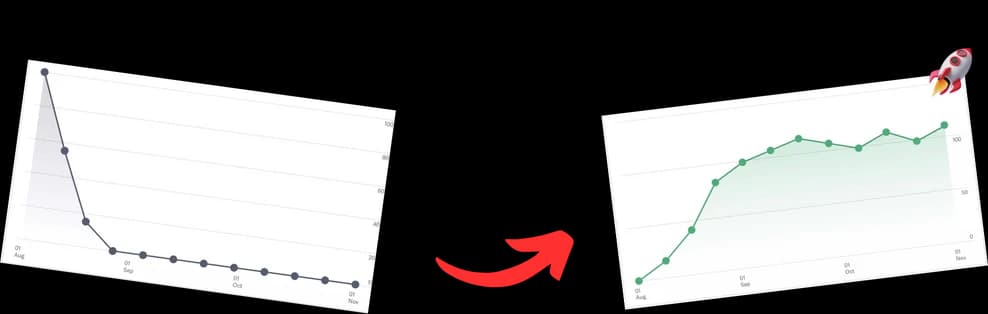
Welcome to your definitive guide on mastering YouTube's algorithm. Many creators focus solely on video keywords, overlooking a more powerful asset: channel-level keywords. These are the foundational terms that tell YouTube who you are, what your content is about, and who your ideal audience is. Getting them right means consistent, long-term organic growth. Getting them wrong means getting lost in the noise.
This article breaks down the best channel keywords for YouTube, moving beyond generic advice to provide actionable strategies, niche-specific examples, and tactical implementation guides. You will learn not just what keywords to use, but precisely where to place them for maximum impact. We'll cover everything from high-intent search phrases to community-specific jargon that builds a loyal viewership.
We will explore ten distinct categories of keywords, including:
- Long-tail phrases for targeted search traffic.
- Branding keywords that define your channel's identity.
- Niche community terms to connect with a dedicated audience.
- Voice search keywords to capture natural language queries.
This guide provides a complete framework for optimizing your channel description, tags, playlists, and even your video chapters. By the end, you'll have a clear roadmap to transform your channel from a collection of videos into a discoverable authority within your niche. Forget guesswork; it's time to implement a keyword strategy that drives real, sustainable growth.
1. YouTube SEO and Video Optimization
YouTube SEO is the practice of optimizing your channel and videos to rank higher in YouTube's search results and suggested video feeds. It’s a foundational strategy that goes beyond simple keyword stuffing, focusing instead on aligning your content's metadata with what your target audience is actively searching for. This involves a comprehensive approach to keywords in your titles, descriptions, tags, and even the video’s internal structure.
A powerful, often overlooked, aspect of video optimization is the use of chapters, or timestamps. These break your video into navigable sections, dramatically improving the viewer experience and providing crucial SEO signals. For those looking to deepen their understanding of how these elements integrate into a bigger picture, exploring a modern video content marketing strategy can provide invaluable insights for holistic brand growth.
How to Implement Video Optimization SEO
The key is to treat every piece of metadata as an opportunity. By strategically placing keywords, you help YouTube's algorithm understand your video's content and relevance to specific search queries.
- Educational Channels: Take a cue from creators like Crash Course, who use detailed, descriptive timestamps to segment complex topics. Each chapter title acts as a mini-headline, targeting specific long-tail keywords.
- Tech Reviewers: Optimize chapters with exact product names and feature-related keywords (e.g., "iPhone 15 Pro Max Camera Test," "Unboxing and Setup"). This captures viewers searching for specific information within a broader review.
- Podcast Channels: Podcasters can achieve significant visibility boosts by turning discussion topics into keyword-rich chapters. This makes dense, long-form content searchable and accessible.
Pro Tip: Using an AI-powered tool like TimeSkip to generate SEO-optimized chapters can significantly improve your video's discoverability. The AI analyzes your transcript to create relevant, keyword-focused timestamps, helping your content rank for more specific search terms. For additional tools and techniques, explore this guide to the best YouTube keyword research tools to find what works best for your workflow.
2. Long-Form Content Chapter Timestamps
Long-form content, particularly videos exceeding an hour, presents a unique SEO challenge and opportunity. Chapter timestamps transform these extensive videos into user-friendly, navigable segments. This not only enhances viewer retention by allowing audiences to jump directly to sections of interest but also provides YouTube's algorithm with a rich set of keyword-dense data points, effectively turning a single video into multiple searchable assets.
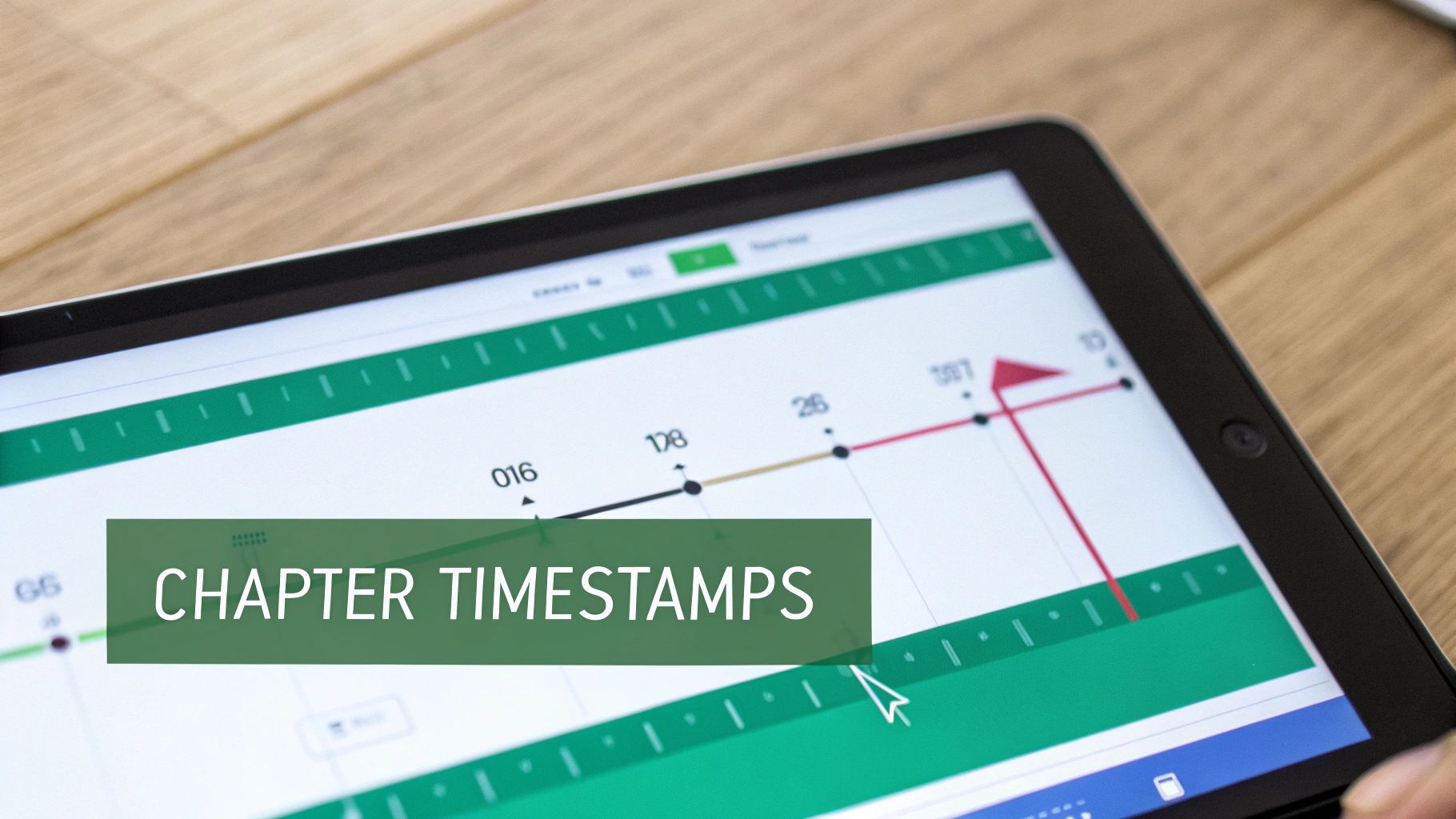
Each chapter title serves as a distinct keyword target, enabling your content to appear in search results for highly specific, long-tail queries. This strategy is essential for podcasters, educators, and any creator producing in-depth content, as it maximizes the visibility and value of every minute of their work.
How to Implement Chapter Timestamps
The goal is to deconstruct your video into its core topics, making each segment discoverable. By treating chapter titles like mini video titles, you can target a wider range of the best channel keywords for YouTube within a single piece of content.
- Podcast Channels: For interview-style podcasts, create chapters for each major discussion point or question. A title like "Tim Ferriss on Morning Routines" targets a more specific audience than the general episode title.
- Educational Webinars: Segment a lengthy webinar by topic. For example, a digital marketing seminar could have chapters like "Introduction to SEO," "Advanced Link Building," and "Content Strategy for 2024."
- Online Courses: Break down course videos into individual lessons or modules with timestamps. This helps students easily review specific concepts and improves the video's ranking for educational search terms.
Pro Tip: Manually creating chapters for long videos is incredibly time-consuming. An AI-powered tool like TimeSkip automates this process by analyzing your video's transcript to generate accurate, SEO-optimized timestamps in seconds. This allows you to focus on content creation while ensuring your videos are fully optimized for search.
3. Podcast Channel Keyword Strategy
Podcast channels on YouTube require a distinct keyword strategy that prioritizes listener search behavior over purely visual queries. Success hinges on targeting episode topics, guest names, series themes, and the specific problems listeners want to solve. This approach treats your YouTube channel less like a video platform and more like a searchable audio library, optimizing every piece of content for both broad and highly specific inquiries.
The core of this strategy lies in recognizing that podcast listeners often search with conversational language. For instance, a well-structured podcast not only needs great content but also an engaging delivery. For guidance on structuring your narrative, understanding how to write a podcast script can lay a crucial foundation for keyword-rich discussions.
How to Implement a Podcast Keyword Strategy
The key is to leverage the names, topics, and unique segments that make your podcast valuable. By embedding these keywords in your metadata, you make long-form audio content discoverable to new audiences.
- Interview & Guest-Based Podcasts: Channels like The Joe Rogan Experience excel by using guest names and their areas of expertise as primary keywords (e.g., "Elon Musk on AI," "Dr. Andrew Huberman on Sleep").
- True Crime & Narrative Podcasts: Use case-specific keywords that followers of a story would search for. Think of how Serial could target keywords like "Adnan Syed case updates" or "unsolved mysteries podcast."
- Business & Niche Topic Shows: Focus on keywords related to the guest's credentials and the specific advice shared, such as "startup funding advice with a VC" or "marketing strategies for small business."
Pro Tip: For podcasters uploading frequently, manually creating keyword-rich chapters for each episode is time-consuming. An AI tool like TimeSkip can automate this process, analyzing your transcript to generate searchable, SEO-optimized chapters. This ensures every episode is indexed for maximum visibility. For a deeper dive, explore these effective podcast marketing strategies to amplify your reach.
4. Tutorial and Educational Content Keywords
Tutorial and educational content thrives on precision. Viewers aren't just browsing; they're actively searching for answers, solutions, and step-by-step guidance. The best channel keywords for YouTube in this niche directly target a user's learning intent, addressing specific skills, topics, and difficulty levels. This means moving beyond broad terms and focusing on keywords that promise a clear educational outcome.
The goal is to capture the exact phrasing a learner would use when stuck on a problem. By aligning your metadata with these specific queries, you position your content as the go-to resource. This strategy is particularly effective for long-form tutorials, where dissecting the content into smaller, keyword-rich segments can attract viewers interested in niche sub-topics.
How to Implement Tutorial and Educational Keywords
Focus on the language of learning. Structure your keywords to answer questions, guide users through processes, and segment complex information into digestible lessons. This approach helps YouTube’s algorithm match your video to users with high purchase or learning intent.
- Coding Tutorials: Creators can target specific queries by using chapters like "Python for Beginners: Setting Up Your Environment" or "JavaScript ES6: Arrow Functions Explained." This captures both broad and specific searches.
- Digital Marketing Courses: Break down vast topics with chapters titled "Google Analytics 4: How to Track Conversions" or "SEO Basics: On-Page Optimization Checklist," making the content highly searchable.
- Software Training: Use chapters that highlight specific features and actions, such as "Photoshop Tutorial: Mastering the Pen Tool" or "Figma for UI/UX: Creating Interactive Prototypes."
Pro Tip: For dense instructional content, using a tool like TimeSkip to generate SEO-optimized chapters is a game-changer. It analyzes your video transcript to identify key steps and concepts, creating chapter titles that function as powerful long-tail keywords. This helps learners find the exact moment they need, dramatically improving viewer retention and search visibility.
5. Long-Tail Keyword Optimization
Long-tail keyword optimization is the strategy of targeting highly specific, multi-word search phrases that, while having lower search volume, carry much higher viewer intent. Instead of competing for broad terms like "yoga," this approach focuses on precise queries like "beginner-friendly aerial yoga poses for flexibility." These keywords attract a more qualified audience that is actively seeking a solution to a specific problem, leading to better engagement and conversion rates.
This technique is fundamental for creators looking to carve out a niche and avoid the immense competition surrounding general keywords. By aligning your content with these specific search phrases, you position your channel as an authority on niche topics. For a deeper dive into finding and leveraging these powerful phrases, exploring an effective long-tail keyword research process is an essential next step for any creator serious about growth.
How to Implement Long-Tail Keyword Optimization
The goal is to answer the very specific questions your audience is asking. Integrating these detailed phrases into your channel's metadata, especially within video chapters, helps YouTube's algorithm match your content directly with these high-intent searches.
- DIY & Craft Channels: Instead of a video titled "Painting Tutorial," use chapters like "How to prep a canvas for acrylics," "Best brush techniques for blending," and "Sealing your finished acrylic painting."
- Cooking Channels: A video on "Sourdough Bread" can be broken down into chapters targeting long-tail keywords like "Best sourdough starter maintenance tips," "How to achieve an open crumb," and "Perfect baking temperature for a dutch oven."
- Finance & Business Channels: A general topic like "Excel Tutorial" becomes more discoverable with chapters targeting specific user problems, such as "How to fix Excel pivot table grouping errors" or "Using VLOOKUP across multiple sheets."
Pro Tip: Focus on answer-based long-tail keywords that start with "how to," "what is," or "why is." These phrases directly mirror user search behavior. Using a tool like TimeSkip can automate this process by analyzing your video transcript and suggesting SEO-optimized, long-tail keyword variations for your chapters, capturing traffic from dozens of niche queries.
6. YouTube Channel Branding Keywords
Channel branding keywords are the foundational terms that define your entire YouTube presence. They communicate what your channel represents, establish your niche authority, and set clear expectations for potential subscribers. These are the high-level concepts that anchor your content, appearing in your channel description, "About" section, and consistently woven through your video metadata to tell YouTube what you’re all about.

Unlike specific video-level keywords that change with each upload, branding keywords provide long-term consistency. They help YouTube categorize your channel and recommend it to the right audience. Think of them as the pillars of your content strategy, ensuring every video, playlist, and description reinforces your core identity and attracts loyal viewers looking for your specific expertise.
How to Implement Channel Branding Keywords
The key is to define 3-5 core brand keywords and use them consistently across your entire channel to build a strong, recognizable identity. This strategic repetition reinforces your niche and signals to YouTube’s algorithm that you are a go-to source for a specific topic.
- Entertainment Channels: Look at MrBeast, whose brand is built on keywords like "epic challenge videos," "extreme stunts," and "viral challenges." These terms appear everywhere, from his channel banner to video titles, setting a clear viewer expectation.
- Tech Channels: Marques Brownlee (MKBHD) solidifies his authority with consistent use of "tech reviews," "gadget reviews," and "product testing." Viewers know exactly what to expect, and YouTube's algorithm does too.
- Finance Channels: Graham Stephan targets a specific audience with "financial advice," "real estate investing," and "money tips." These keywords define his value proposition and attract viewers seeking actionable financial content.
Pro Tip: Use your brand keywords as a filter when brainstorming new video ideas. Ask yourself if a potential topic aligns with your core terms. This not only keeps your content focused but also strengthens your channel's authority over time, making you a more discoverable and trusted resource in your niche.
7. Viewer Retention Keywords
Viewer retention keywords are a powerful, often-overlooked strategy focused on viewer psychology. Instead of just describing what’s in a section, these keywords are placed in chapter titles to create curiosity and highlight upcoming value, compelling viewers to keep watching. This approach blends SEO with user experience, turning your video’s timeline into a roadmap of must-see moments. The goal is to answer the viewer's subconscious question: "Why should I keep watching?"
These keywords function as mini-headlines within your video, teasing compelling content without giving everything away. By framing a chapter title around a benefit or a mystery, you encourage viewers to stick around for the payoff. This directly boosts your Audience Retention and Average View Duration, two critical metrics that YouTube’s algorithm uses to recommend content.

How to Implement Viewer Retention Keywords
The implementation is all about framing your content's value. Think less about a literal description and more about the emotional or informational hook of each segment. This is one of the most effective ways to use the best channel keywords for YouTube directly in your video's structure.
- Storytelling Channels: Instead of a generic chapter title like "The Confrontation," use a more intriguing one like, "The Secret Nobody Tells You." This creates an information gap that viewers will want to see closed.
- DIY & Craft Channels: Replace a simple "Final Step" with a benefit-driven title such as "The Game-Changing Technique You Haven't Tried." This frames the information as exclusive and highly valuable.
- Commentary Channels: A standard chapter like "Part 3" can be transformed into "This Is Where It Gets Interesting," directly telling the viewer that a key moment is approaching and increasing the incentive to stay.
Pro Tip: Balance curiosity with clarity. While you want to tease upcoming content, avoid misleading clickbait in your chapter titles. The promise you make must be fulfilled within that section to maintain viewer trust. Using an AI tool that understands this nuance can help you craft chapter titles that are both enticing and accurate, boosting retention without sacrificing integrity.
8. Voice Search and Natural Language Keywords
Voice search optimization is the process of targeting keywords based on how people speak rather than how they type. With the rise of smart speakers and voice assistants, a growing number of YouTube searches are initiated through conversational voice queries. This strategy involves shifting from rigid, technical search terms to natural, question-based phrases that mirror real human speech patterns.
By aligning your channel and video metadata with these spoken queries, you tap into an increasingly important discovery channel. Videos that directly answer conversational questions are more likely to be served as results by assistants like Siri, Alexa, and Google Assistant, making them some of the best channel keywords for YouTube growth in the modern search landscape.
How to Implement Voice Search SEO
The key is to frame your metadata, especially titles and chapter headings, as direct answers to common questions. Think about the exact phrasing a user would speak into their device when seeking information on your topic.
- DIY & Home Improvement Channels: Instead of a chapter titled "Faucet Repair," use a natural question like, "How do I fix a leaky faucet?" This directly matches the most likely voice search query.
- Fitness & Wellness Channels: A video section titled "Lower Back Exercises" is good, but "What are the best exercises for lower back pain?" is far better for voice search. It captures the user's exact intent and phrasing.
- Cooking & Lifestyle Channels: Rephrase technical keywords into everyday questions. For example, change a chapter from "Coffee Storage Methods" to "Can you freeze leftover coffee?" to align with conversational curiosity.
Pro Tip: Use an AI tool like TimeSkip to generate voice-search-optimized chapters automatically. The AI is trained to recognize natural language patterns and can create chapter titles that function as direct answers to spoken questions, significantly boosting your visibility in voice search results.
9. Niche Community Keywords
Niche community keywords are terms and phrases used by specific, passionate subcultures within a broader topic. Using this specialized language signals to both the audience and YouTube's algorithm that you are an insider, not just an observer. This strategy is incredibly effective for building a loyal, engaged community because it speaks directly to their shared experiences, challenges, and humor.
Instead of targeting broad terms, you focus on the unique lexicon of a micro-audience. This approach helps you connect with highly invested viewers who are more likely to subscribe, comment, and share your content. It’s a powerful way to establish channel authority and become a trusted voice within a dedicated group, making it one of the best channel keywords for YouTube growth strategies focused on community building.
How to Implement Niche Community Keywords
The goal is to integrate these terms naturally into your content's metadata, demonstrating genuine understanding and membership within the community. This builds immediate rapport and trust with your target viewers.
- Gaming Channels: Go beyond the game title and use keywords related to community-specific challenges or inside jokes. For example, an educational gaming channel playing Strands nyt might use Keywords like "strands archive", "spangram", and "strands unlimited" to attract its hardcore fans and maximize reach.
- Fitness Creators: Target specific training philosophies or diet communities. Use terms like "progressive overload," "macros for body recomposition," or "keto-friendly meal prep" to connect with viewers dedicated to those particular methods.
- Crypto Channels: Incorporate community slang and technical terms that insiders search for. Keywords like "HODL strategy," "understanding gas fees," or "diamond hands portfolio" will resonate deeply with the crypto community.
Pro Tip: Spend time in the community’s natural habitats like subreddits, Discord servers, and forums. Note the recurring questions, popular slang, and common pain points. Building your content and keywords around these observations shows you are an authentic part of the conversation, not just trying to exploit a trend.
10. Seasonal and Trending Keywords
Seasonal and trending keywords are time-sensitive terms that capitalize on massive spikes in search volume around holidays, events, seasons, and viral cultural moments. Tapping into these trends allows your channel to attract a huge influx of temporary traffic that can be converted into long-term subscribers. The key is to anticipate these moments and prepare content that aligns your niche with what the world is currently searching for.
This strategy is powerful because it positions your channel directly in the path of high-intent search traffic. A well-timed video can capture a wave of interest, providing a significant boost in views, watch time, and subscribers. By aligning with current events, you demonstrate relevance and can reach audiences who might not have discovered your content otherwise, making it one of the best channel keywords for YouTube growth tactics.
How to Implement Seasonal and Trending Keywords
Success depends on proactive planning and reactive speed. You need to prepare for predictable events while staying agile enough to jump on unexpected trends.
- Financial Channels: During tax season, create videos with chapters like "Maximizing Deductions" or "Filing for Freelancers." In December, pivot to "Year-End Investment Strategies" or "2025 Financial Planning."
- Lifestyle & DIY Creators: Capitalize on holidays with videos like "Last-Minute DIY Halloween Costumes" or "Affordable Christmas Decor Ideas." In summer, target keywords like "Summer road trip hacks" or "Backyard BBQ recipes."
- Gaming Channels: Align content with major game releases or seasonal in-game events. Use chapters to break down new updates, such as "New Winter Event Skins" or "Summer Games Quest Guide."
Pro Tip: Keep a content calendar for predictable seasonal events and use Google Trends to spot emerging viral topics. For rapid response, an AI tool like TimeSkip can analyze your video and generate optimized, keyword-rich chapters in minutes, allowing you to publish trend-responsive content faster than competitors and capture peak search interest.
Top 10 YouTube Channel Keywords Comparison
| Item | Implementation Complexity 🔄 | Resource Requirements ⚡ | Expected Outcomes ⭐📊 | Ideal Use Cases 💡 | Key Advantages ⭐ |
|---|---|---|---|---|---|
| YouTube SEO and Video Optimization | Moderate 🔄 — ongoing keyword research; automation helps | Moderate ⚡ — analytics tools, TimeSkip, time for optimization | High ⭐📊 — up to ~25% discovery lift; better CTR & session time | General creators, educational channels, product reviewers | Organic discovery, multiple entry points, automatable |
| Long-Form Content Chapter Timestamps | Low 🔄 — one-click automation; occasional manual review | Low ⚡ — TimeSkip credits; ~30s setup | Moderate–High ⭐📊 — ~15% retention boost; improved navigation | Podcasts, webinars, long courses, interviews | Fast segmentation, better navigation, reduced manual work |
| Podcast Channel Keyword Strategy | Moderate 🔄 — requires accurate episode metadata & guest info | Moderate ⚡ — batch processing, TimeSkip, metadata input | High ⭐📊 — improved podcast discoverability and authority | Podcasters with frequent episodes and guest interviews | Saves research time, consistent structure, guest-based discovery |
| Tutorial and Educational Content Keywords | Moderate 🔄 — needs clear instructional structure and hierarchy | Moderate ⚡ — subject expertise + keyword tooling | High ⭐📊 — better ranking for learning intent; easier referencing | Coding tutorials, software training, certification prep | Skill-level targeting, clearer organization, learner discoverability |
| Long-Tail Keyword Optimization | Moderate 🔄 — strategy to accumulate variations over time | Low ⚡ — AI suggestions + keyword tools | High ⭐📊 — higher intent traffic; easier to rank for niches | Niche topics, how-to queries, review/comparison videos | Low competition, higher conversion potential, micro-niche growth |
| YouTube Channel Branding Keywords | High 🔄 — defining and locking channel positioning | Moderate ⚡ — branding work, content alignment, monitoring | High ⭐📊 — stronger channel identity; improved recommendations | Channels building long-term identity and authority | Consistent identity, attracts ideal audience, differentiates brand |
| Viewer Retention Keywords | Moderate 🔄 — balance curiosity cues with genuine value | Low ⚡ — content quality + optimized chapter naming | High ⭐📊 — increased watch time and session duration | Story-driven videos, tutorials, high-engagement content | Boosts watch time, improves algorithm signals, enhances loyalty |
| Voice Search and Natural Language Keywords | Moderate 🔄 — requires conversational phrasing & testing | Low–Moderate ⚡ — NLP-aware titles, read-aloud testing | Medium ⭐📊 — captures growing voice traffic; accessibility gains | How-to Q&A, mobile-first audiences, smart-speaker queries | Future-proofs content, more natural CTAs, voice-friendly discovery |
| Niche Community Keywords | High 🔄 — deep community immersion and accurate jargon | Moderate ⚡ — community research, engagement, monitoring | High engagement ⭐📊 — loyal viewers but smaller volume | Hobbyist/professional communities, micro-niches | Strong community loyalty, credibility, word-of-mouth growth |
| Seasonal and Trending Keywords | Moderate 🔄 — rapid detection and timely optimization | High ⚡ — trend tools, fast content production, monitoring | Spike-driven ⭐📊 — short-term traffic surges (early movers 300%+) | Holiday/event content, trend-reactive creators | Captures spikes, rapid growth opportunities, recurring relevance |
From Keywords to Community: Your Next Steps
You've just navigated a comprehensive guide to the best channel keywords for YouTube, moving far beyond simple tags into the strategic heart of channel growth. We've explored everything from foundational SEO principles and long-tail keyword templates to the nuanced language of niche communities and the power of seasonal trends. The central theme is clear: effective keyword strategy is not a static, one-time task. It is a dynamic, ongoing dialogue between you, your audience, and the YouTube algorithm.
The journey from a newly created channel to a thriving community hub is paved with strategic keyword choices. By mastering these concepts, you are not just optimizing for search engines; you are building a clearer, more direct path for your ideal viewer to find you. Think of each keyword as a signpost, guiding someone from a vague question or a passing interest directly to your video, your playlist, and ultimately, your channel.
Key Takeaways and Immediate Actions
Let's distill this wealth of information into actionable priorities. If you do nothing else, focus on these core principles to see a tangible impact on your channel's visibility and growth.
- Audit Your Foundation: Before creating new content, revisit your channel's core assets. Is your channel name, description, and "About" page infused with the primary and secondary keywords that define your niche? This is the bedrock of your entire SEO strategy.
- Embrace the Long-Tail: General keywords are competitive. Your greatest opportunity lies in long-tail keywords that capture specific user intent. Instead of "baking tips," target "vegan sourdough baking tips for beginners." This specificity attracts a more engaged and loyal audience.
- Think in Chapters, Not Just Videos: For any content over five minutes long, implementing keyword-rich chapters is non-negotiable. Chapters transform a long video into a skimmable, user-friendly resource, dramatically improving viewer retention and unlocking video "key moments" in Google search results.
- Listen to Your Community: The most potent keywords often come directly from your audience. Pay close attention to the language they use in comments, on social media, and in community forums. These are the natural language phrases and niche terms that will resonate most authentically.
The True Value of Mastering YouTube Keywords
Ultimately, mastering the best channel keywords for YouTube is about more than just numbers and rankings. It is about empathy and understanding. It’s about anticipating the exact question a viewer types into the search bar and being the one to provide the most helpful, clear, and engaging answer. When you align your content with user intent, you do more than gain a view; you build trust and establish authority.
Your next step is to move from learning to doing. Don't feel pressured to implement every strategy at once. Choose one key area from this guide that resonates with your current goals. Whether it's optimizing your podcast chapters, refining your educational content with tutorial-specific keywords, or preparing a content calendar around a seasonal trend, take that first step. Apply the principles, publish your content, and analyze the results. This iterative process of applying, measuring, and refining is the engine of sustainable YouTube growth.
Ready to stop manually typing timestamps and start automating your YouTube SEO? TimeSkip uses AI to instantly generate accurate, keyword-optimized chapters for your videos, saving you hours while boosting your visibility. Try TimeSkip today and turn your content into a search-optimized powerhouse with just one click.