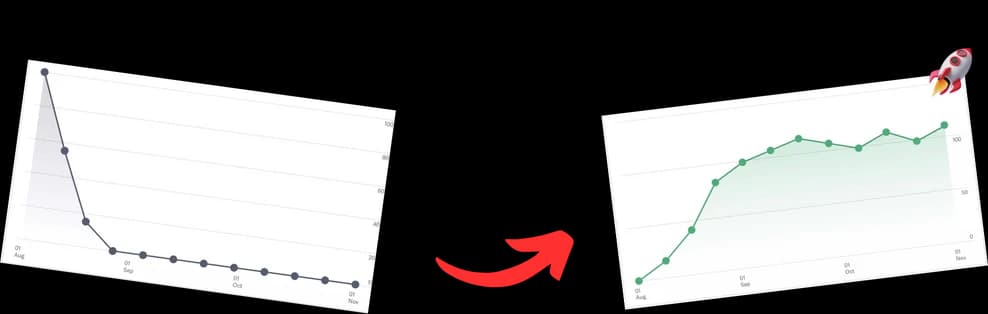
You open YouTube Studio, see a removal notice, and your stomach drops. Sometimes it's one video. Sometimes it's a strike that puts the whole channel at risk. The worst part isn't only the takedown. It's how little control you feel in the first few minutes.
That's the moment to slow down.
Most creators who get banned from youtube videos make the same early mistake. They react before they diagnose. They delete things too fast, send an emotional appeal, re-upload the same file, or start changing titles and descriptions without understanding what triggered the action. That usually makes recovery harder.
A cleaner approach works better. Identify the exact type of enforcement, respond in the format YouTube reviewers can process quickly, and then rebuild the channel so the next upload is less likely to get flagged. If you run long-form videos, podcasts, tutorials, interviews, or educational content, structure matters more than most appeal guides admit.
Why Your YouTube Video Was Banned
Before you do anything, figure out what kind of ban you're dealing with. “Removed” is not a complete diagnosis.

Know which system hit you
There are three common buckets:
| Type | What it usually means | Best first move |
|---|---|---|
| Community Guidelines strike | YouTube thinks the content itself, or how it's presented, violated platform rules | Read the cited policy language line by line and isolate the exact segment |
| Copyright strike or claim escalation | A rights holder or Content ID matched audio, video, or other protected material | Review match details before editing or disputing |
| Terms of Service or channel suspension | YouTube believes the account behavior, evasion, spam pattern, or broader channel activity broke platform rules | Stop uploads and audit channel-level behavior, not just one video |
The email subject line usually tells you more than creators notice on the first read. If it says “Community Guidelines,” the problem is often content context, title, thumbnail, metadata, or a specific section of the video. If it mentions copyright, go straight to rights and asset use. If it says suspension or termination, think bigger than the single upload.
Read the notice like an investigator
Open the notification email and YouTube Studio side by side. Then check these items in order:
-
Policy named in the notice
Don't summarize it from memory. Read the exact policy YouTube cited. -
Video URL and upload date
Make sure the removed video is the one you think it is. On busy channels, people appeal the wrong upload more often than they admit. -
Strike history
A first strike and a repeated-pattern issue are different situations. Your response should reflect that. -
Restriction type
Removed, age-restricted, limited, blocked, demonetized, or channel-level enforcement each point to different underlying systems. -
Metadata audit
Review title, description, tags, pinned comment, thumbnail text, and chapters. A compliant video can still attract enforcement if the packaging overpromises or misleads.
Practical rule: The notification tells you what YouTube enforced. Your metadata usually explains why the system noticed the video in the first place.
Borderline content often gets hit before a strike
Many creators focus only on obvious violations. That misses a real problem. YouTube can limit distribution on “borderline” content before formal enforcement. According to Creator Tools' explanation of YouTube shadow ban behavior, watch time from non-subscribers can drop by as much as 70%, which can make a video nearly invisible in recommendations without a formal strike.
That matters because some videos don't start with a clean removal. They first lose search and recommendation momentum, then later trigger closer review. If your analytics collapsed before the ban, review that pattern too. If you need a deeper primer on suppressed distribution, this breakdown of a YouTube shadow ban is useful background.
What usually triggers removals in practice
On creator-managed channels, I see four repeat offenders:
-
Context mismatch
The video may be educational or commentary, but the title and thumbnail frame it like endorsement or sensationalism. -
Clipped source material
Short borrowed segments, background music, reaction footage, and archive clips create risk even when the commentary is original. -
Bulk behavior
Rapid reposting, duplicate formatting across channels, repetitive descriptions, and aggressive upload patterns can look spammy. -
Weak structure on long videos
Long, unstructured uploads are harder for both viewers and systems to interpret. If the topic is sensitive, poor segmentation makes intent less obvious.
If you're dealing with banned from youtube videos, don't ask only, “What rule did I break?” Ask, “What did the system think this video was trying to do?” That question gets you much closer to the actual cause.
How to Appeal a YouTube Ban Effectively
Appeals fail when creators argue feelings instead of facts. Reviewers don't need your frustration. They need a fast, credible explanation that maps to policy.

Write for a tired reviewer
Assume the first human who sees your appeal has limited time and a queue full of similar claims. Your job is to make the decision easy.
Use this structure:
-
State the action clearly
Identify the removed video or channel and the exact enforcement action. -
Acknowledge the cited policy
Name the policy without debating its existence. -
Give the intended context
Educational, commentary, documentary, reporting, parody, or review. Be precise. -
Point to timestamps
Mention the exact moments that support your explanation. -
Offer a correction path
If packaging caused confusion, say you're willing to revise title, thumbnail, or description.
Here's the tone that works:
“I'm requesting review of the removal of [video title]. The notification cites [policy]. The video's purpose is commentary and analysis, not promotion of the behavior shown. The context is clearest at [timestamp] and [timestamp], where I explain the critical framing. If the title or thumbnail created ambiguity, I'm willing to revise them to better match the video's intent.”
That's better than: “This is ridiculous. I did nothing wrong. Please restore my video immediately.”
Include evidence that reduces reviewer effort
You don't need a legal brief. You need a clean packet.
Use a short checklist:
- Screenshots of the notice
- The original title and thumbnail
- Timestamps with one-sentence explanations
- Any licensing or permission records if copyright is involved
- A plain statement of whether the video was edited, repurposed, or partially reused
If your issue is copyright-related, get familiar with the distinction between claims and strikes before you file. This guide on a copyright claim on YouTube helps clarify the response path.
Don't overload the appeal
Creators often sabotage valid appeals by adding too much. Skip these:
- Long emotional backstory
- Threats about taking legal action
- Repeated submission of the same text
- Claims you can't prove
- Rambling explanations about channel growth or income loss
One compact appeal beats five messy ones.
Reviewers respond better to a narrow argument tied to the cited policy than a broad defense of your entire channel.
Why concise appeals matter more now
Automated enforcement runs at huge scale. In one recent quarter, automated flagging drove the majority of removals globally, including nearly 3 million videos removed in India and over 1 million in Brazil, as noted in Creator Tools' discussion of shadow banning and removals. That doesn't prove your video was wrongly removed. It does mean the review environment is built for volume, so clarity matters.
This is similar to other platform reinstatement processes. If you've ever seen legal guides on help with Amazon account suspension, the pattern is familiar. The strongest appeals identify the exact violation, show corrective action, and avoid emotional noise. YouTube rewards the same discipline.
A simple appeal quality test
Before you submit, ask:
- Could someone understand my case in under a minute?
- Did I mention the exact policy and exact timestamps?
- Did I avoid accusing YouTube of bad faith?
- Did I explain intent without pretending intent erases impact?
- Did I offer a practical fix if packaging was part of the problem?
If you can answer yes to all five, the appeal is ready.
When an Appeal Fails What to Do Next
A denied appeal doesn't mean your channel is finished. It means you need to manage risk instead of chasing vindication.

Decide whether the video is worth saving
Don't re-upload on instinct. Start with a hard question: is the core asset salvageable, or is the concept itself the problem?
Use this decision lens:
| Situation | Better move |
|---|---|
| The issue came from one short segment | Edit that segment out and keep the revised file offline until the strike window and risk are understood |
| The issue came from title, thumbnail, or framing | Rebuild packaging first, then reconsider publishing |
| The issue came from the main premise | Retire the video and move on |
| The issue involved repeated channel behavior | Pause publishing and clean up the broader channel pattern |
The wrong move is usually fast re-uploading with tiny edits. Systems are good at catching near-duplicates, especially when the underlying issue remains.
Why re-uploading is riskier than it looks
According to YouTube Transparency Report policy data, 62% of violating videos are flagged before they receive a single view. That's why “I'll just upload it again and see what happens” is a weak strategy. Safe re-uploading is hard when classifiers inspect files, metadata, and other signals immediately.
That doesn't mean you can never republish. It means the burden is on you to make the new version materially different and clearly safer.
What safe editing actually looks like
Safe editing isn't cosmetic. It changes the risk profile of the video.
Here's what I'd adjust before even considering a return:
-
Remove the trigger segment completely
Don't blur one frame and call it done if the problem was the surrounding context. -
Rewrite the opening minute
Many videos get judged quickly. The first minute should establish purpose, framing, and audience benefit. -
Rebuild metadata from scratch
Reusing the same title, description, tags, and chapter labels is a mistake. -
Change the thumbnail concept
If the first packaging looked inflammatory, the second version can't be a variation on the same idea.
If the original upload invited the wrong interpretation, fixing only the footage won't solve the problem.
Protect the rest of the channel
After a failed appeal, channel health matters more than one asset. Audit your library for similar risks.
Look for patterns such as repeated controversial phrasing, borrowed clips used the same way across multiple videos, repetitive mass-upload behavior, or old thumbnails that still push the line. A strike often exposes a system-level weakness in how the channel is packaged.
I also recommend keeping a simple internal log with the removed video, cited policy, appeal result, and any related uploads that might carry similar exposure. That log becomes your operating manual. Over time, it helps you stop repeating the same mistakes under different titles.
Proactive Strategies to Prevent Future Bans
The strongest ban strategy isn't a better apology. It's a more resilient publishing system.

Most creators think prevention means “avoid obvious rule-breaking.” That's too narrow. Good prevention also reduces ambiguity. You want viewers, reviewers, and recommendation systems to understand what the video is, who it's for, and how each section fits the stated purpose.
That's especially important on long-form content. Podcasts, interviews, lectures, reaction breakdowns, and tutorials often contain mixed topics in one file. Without structure, a system sees a long video with uneven retention and murky topic shifts. With structure, the same upload becomes easier to classify and easier to trust.
Build a pre-upload risk routine
You don't need a giant compliance team. You need repeatable checks.
A practical routine looks like this:
-
Review the first minute
The opening should state context plainly. If the topic is sensitive, say what the video is and isn't doing. -
Audit title and thumbnail together
Ask whether they summarize or sensationalize. A lot of trouble starts in packaging, not footage. -
Check borrowed assets
Background music, intro animations, memes, clips, and screenshots all deserve a second look. -
Read the transcript, not just the script
Auto-captions reveal how the platform may interpret your words. Spoken phrasing often sounds riskier than written notes. -
Map topic changes
Long videos need clear transitions so context isn't lost halfway through.
This is standard operating discipline. If you work in adjacent risk-heavy fields, the thinking is familiar. Frameworks used in broader business planning, like this 2026 Guide to Commercial Risk Management, are useful because they treat prevention as system design, not luck.
Chapters are more than a viewer convenience
This is the missed angle in most banned from youtube videos advice. Chapters and timestamps help define intent.
According to TimeSkip metrics cited here via Wikipedia's Unfavorable Semicircle page, SEO-optimized chapters can improve viewer retention by 15% to 25% and increase video discovery by up to 220%. Those aren't just growth metrics. They also create stronger signals that a long video has structure, relevance, and a clear viewer path.
That matters because unstructured long videos often look lower quality than they really are. When retention is weak and topic boundaries are fuzzy, the system has fewer reasons to trust the upload. Clear timestamps reduce that ambiguity.
What good chaptering looks like
Bad chapters are generic. Good chapters explain the actual value of each segment.
Compare these:
| Weak chapter | Stronger chapter |
|---|---|
| Intro | Why this policy triggered a ban |
| Main part | Reviewing the exact strike notice |
| More tips | Safe edits before a re-upload |
| Ending | SEO recovery after reinstatement |
The stronger version helps both users and search systems. It also gives your own team a cleaner way to audit the video later.
After you've mapped the content, video structure becomes much easier to maintain. This walkthrough is worth watching if you want a visual sense of how chaptered content changes usability and discoverability:
Signals that usually reduce trouble
No tactic creates immunity. But these habits consistently lower avoidable risk:
-
Context first, controversy second
Put explanation before the sensitive clip or claim. -
Segment long videos clearly
Timestamps, chapter labels, and spoken transitions matter. -
Avoid lazy metadata reuse
Recycled descriptions and near-identical packaging across uploads can create problems. -
Keep your archive clean
Old videos still affect channel perception when patterns repeat.
Structured videos are easier for people to trust and easier for systems to classify. That's a practical advantage, not just an SEO trick.
Recovering Your SEO After a Video Takedown
Getting a video reinstated feels like the finish line. It isn't. The ranking damage usually remains.
A takedown interrupts momentum. Search positioning cools off, recommendation signals weaken, and audience response history gets broken. Even when the video comes back, it often returns without the same pace of impressions or the same click behavior. So the recovery job is not “wait and hope.” It's re-indexing, re-framing, and rebuilding engagement velocity.
Fix the metadata before you push traffic again
Don't send viewers back to a restored asset with stale packaging.
Update these first:
- Title so it's accurate, specific, and less likely to be misread
- Description so the first lines explain the actual purpose of the video
- Chapters so long-tail search queries can latch onto distinct sections
- Pinned comment so returning viewers understand what the video covers now
- Thumbnail if the old one contributed to confusion
If the video disappeared from search during the takedown period, give it stronger re-entry points. This guide on a YouTube video not showing up in search is a useful reference when you're troubleshooting that exact problem.
Rebuild click quality, not just clicks
A common mistake is blasting a reinstated video everywhere at once. That can produce weak traffic if the audience isn't matched to the content.
Start narrower. Send the video to the people most likely to watch meaningfully. Email subscribers who already know the topic. Post it where the context is clear. If you have a community tab or an active comment base, explain why the video matters and what's new or clarified. You want qualified early viewers, not random traffic.
Use structure to create new search surfaces
Long-form creators recover faster than they expect in this scenario. A reinstated video can still rank for fresh queries if its internal structure improves.
Well-written chapters do two things. They help viewers jump to the exact section they need, and they give YouTube and Google more semantic hooks to understand the content. That's useful after a takedown because the original momentum may be gone, but the content can still win on relevance.
A practical recovery sequence looks like this:
- Audit the restored video page
- Rewrite title and first lines of description
- Add or improve chapter labels
- Reply to fresh comments quickly
- Promote the video with context, not hype
- Watch search terms and audience retention for signs of re-indexing
A reinstated video rarely returns to life on reputation alone. It needs new signals.
The channels that recover best after banned from youtube videos are usually the ones that treat restoration as a relaunch. They sharpen the framing, improve the structure, and make the video easier to understand than it was the first time around.
If you publish long videos and want an easier way to add SEO-focused chapters that improve structure and search visibility, take a look at TimeSkip. It helps turn long recordings into clearly segmented videos faster, which makes recovery work and future prevention much easier.