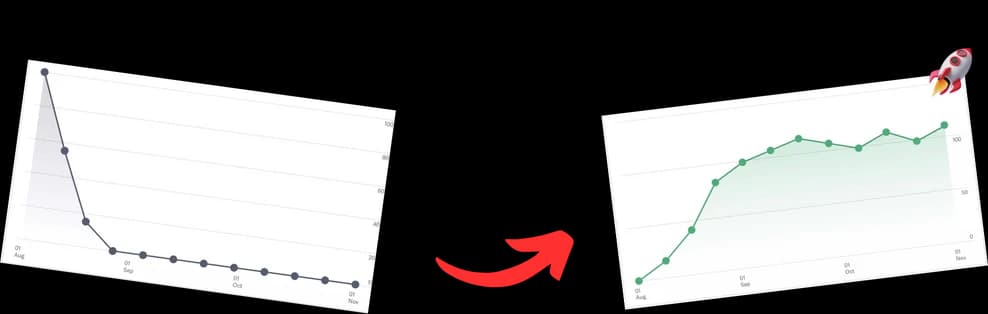
YouTube Shorts typically pays about $0.03 to $0.07 per 1,000 views, though the broader observed range runs from $0.01 to $0.16 per 1,000 views. In practical terms, 1 million views often earns only $30 to $70.
That’s the part most creators don’t expect when they start seeing Shorts rack up huge view counts. A Short can look viral on the surface and still pay less than a decent long-form upload. If you’re searching how much does youtube pay for shorts, the answer isn’t just “not much.” It’s that Shorts uses a system where your earnings depend on how much of the ad pool your content keeps and how valuable your views are inside that pool.
A lot of frustration comes from treating Shorts like long-form monetization. They aren’t the same business model. Shorts can deliver reach at a massive scale, but the money per view is much thinner, and a few creative choices can shrink it even more.
The Reality of YouTube Shorts Monetization
You’ve probably seen a creator post a Short that pulls in millions of views and wondered what that paid. The amount generated is often assumed to be bigger than it is.
The platform itself is enormous. YouTube Shorts generates over 200 billion views daily as of 2026, up from 70 billion in March 2024, and that’s a 186% increase in two years according to these YouTube Shorts usage statistics. But the money side looks very different. The same data says only 8% of Shorts creators rely on ads as their primary income source, which tells you a lot about how limited ad payouts still are.
That gap is the core reality of Shorts. Huge attention. Small creator share.
Practical rule: A viral Short is usually a reach asset first, not a revenue asset first.
Creators who do well with Shorts usually stop asking, “How many views did I get?” and start asking, “What kind of views did I get, and what did I give up to get them?” That shift matters because Shorts monetization is less about a fixed payout rate and more about how the platform slices a shared revenue pool.
If you want a broader playbook beyond ads alone, this guide on how to boost your Shorts earnings is useful because it frames Shorts as one part of a larger monetization system.
Why creators feel misled by view counts
A million views sounds like a life-changing number. On Shorts, it often isn’t.
What trips people up is that Shorts feeds train you to think in scale. You see velocity, broad reach, and rapid follower growth. Those are real benefits. But the payout mechanics are built in a way that rewards the platform’s total feed economy, not necessarily your individual upload in the way long-form does.
What actually matters
Three things shape the financial reality:
- The revenue is pooled: You’re not getting paid a direct amount per view.
- Music can reduce your share: Using licensed tracks can cut the portion of revenue that even reaches the creator pool.
- Engagement quality matters: Strong viewer response can matter more than raw volume.
If you understand those three levers, Shorts monetization stops feeling random.
How the Shorts Ad Revenue Share Model Works
A Short can pull in huge views and still produce modest revenue because Shorts ads are sold and distributed at the feed level, then split through a pool. That is the part many creators miss.
Instead of tying one ad directly to one video, YouTube collects revenue from ads shown between Shorts, groups that money, adjusts for music licensing, then pays creators a percentage of their allocated share. If you want a clearer refresher on the earnings metric that shows up later, this guide on how to compute RPM helps connect the payout model to what you see in Analytics.

The five moving parts
-
Ads create feed revenue
Shorts ad money comes from the broader Shorts Feed, not from a single ad attached only to your upload. -
Revenue enters a shared creator pool
Eligible Shorts creators are paid from that pool rather than from a fixed rate per view. -
Music costs are accounted for first
This is one of the biggest controllable trade-offs. A Short that uses no music keeps more of its revenue contribution in the creator pool. A Short that uses licensed music sends a smaller portion forward because rights holders are paid first. -
Your share is based on engaged views
View count still matters, but weak views are less helpful than creators expect. Shorts that hold attention and generate stronger viewer response tend to earn a better slice of the pool. -
Creators receive 45% of the allocated amount
After the pool is divided, the creator share is 45%.
Why music matters more than creators expect
Music is not just a creative decision on Shorts. It is a margin decision.
I see creators treat trending audio as a free growth tool, then wonder why the payout feels disconnected from the view count. The trade-off is simple. Popular music can improve retention or increase the odds of feed distribution, but it can also reduce how much revenue from that Short flows into the creator side before your percentage is calculated.
That does not mean "never use music." It means use it on purpose. If a licensed track is doing real work by improving watch behavior, it may be worth the cut. If it is there only because the edit feels empty without it, original audio or a lighter approach often makes more business sense.
What creators can actually control
The pool model limits control over raw ad rates, but it does not make revenue random.
Creators still influence the outcome through format choices, music choices, and audience response. In practice, the strongest Shorts monetization setups usually look like this:
- Original audio when possible: More of the revenue contribution can stay on the creator side.
- Selective music use: Use licensed tracks when they improve performance enough to justify the trade-off.
- Stronger engagement signals: Retention, rewatches, and audience satisfaction matter more than vanity views.
- Repeatable formats: Shorts that consistently hold attention give YouTube more reason to keep distributing your content efficiently.
The creators who earn the most from Shorts usually stop treating monetization like a mystery and start treating it like yield optimization. Same feed, same platform, different economics depending on the choices made before upload.
What Is a Realistic YouTube Shorts RPM
A Short hits 1 million views, your phone keeps buzzing, and the payout still looks closer to lunch money than rent. That gap is what confuses creators. RPM on Shorts is real, but it behaves very differently from long-form.
RPM means revenue per 1,000 views after YouTube’s cut and the platform’s monetization rules. If you want a cleaner breakdown of the metric itself, this guide on how to compute RPM covers the formula.

For Shorts, a realistic RPM is usually measured in cents, not dollars. In practice, many creators land somewhere in the low-cent range per 1,000 views, which is why a viral Short can look huge on the front end and still produce modest ad revenue on the back end.
That low number is not random. It is the result of the Shorts pool model, plus a few inputs creators can influence.
What a realistic benchmark looks like
A practical planning range for Shorts RPM is this:
| RPM Range | What it usually means |
|---|---|
| Very low | Content is getting views, but the revenue share reaching the creator is thin |
| Middle of the pack | Healthy for Shorts, but still small compared with long-form |
| Upper end for Shorts | Strong result, usually tied to efficient distribution, solid viewer response, and favorable revenue share inputs |
The useful takeaway is simple. Shorts ad revenue usually stays low on a per-view basis, even when performance looks excellent in YouTube Studio.
I tell creators to treat Shorts RPM like airport Wi-Fi speed. It can be good enough to do something useful, but it is not built for heavy lifting. Shorts can drive discovery, subscribers, leads, and indirect revenue. Pure ad payout is usually the weakest part of the package.
Why one creator’s Shorts RPM is better than another’s
Two Shorts can get similar view counts and produce different earnings.
The main reason is that Shorts RPM is tied to more than raw reach. The payout depends on how much revenue flows into the creator side of the pool, and that is where execution matters. Original audio can help preserve more of that value. Licensed music can improve performance, but it can also reduce the amount available before your share is calculated. Audience quality matters too. A Short that gets quick swipes and hollow views is less useful than one that earns strong watch time, rewatches, saves, and repeat session activity.
That is the part many creators miss. Shorts monetization is not just a traffic question. It is a yield question.
A realistic benchmark to remember
If your Shorts RPM sits in the low-cent range, you usually need millions of views before ad revenue feels meaningful. That is why experienced creators rarely judge Shorts by payout alone.
Here’s a helpful walkthrough if you want to see the payout discussion in video form:
The smarter approach is to use RPM as a planning metric, not a vanity metric. If a Short brings in low direct revenue but feeds subscribers into long-form videos, products, affiliates, or brand deals, it is still doing real financial work.
Your YouTube Shorts Earnings Calculator
The simplest way to estimate Shorts income is:
Estimated earnings = RPM × (views ÷ 1,000)
That formula won’t predict your exact payout, but it gives you a grounded range. If you want to compare this against broader ad economics, a YouTube CPM calculator can help frame the difference between advertiser-side pricing and creator-side earnings.
Estimated YouTube Shorts Earnings 2026
| Total Views | Low-End RPM ($0.02) | Average RPM ($0.05) | High-End RPM ($0.10) |
|---|---|---|---|
| 100,000 | $2 | $5 | $10 |
| 1,000,000 | $20 | $50 | $100 |
| 10,000,000 | $200 | $500 | $1,000 |
This table is useful for expectation-setting, not fantasy-building. Even at the stronger end of the range, Shorts usually needs very large volume before ad revenue becomes meaningful.
How to use the table
A few practical reads:
- If you’re below 100,000 views per Short: ad revenue is usually negligible on a per-video basis.
- If you’re around 1 million views: you’re often in “nice bonus” territory, not “this pays the rent” territory.
- If you’re reaching 10 million views consistently: the ad income starts to matter more, but it still may not compare well with a healthy long-form catalog.
Working rule: Don’t budget your channel around Shorts ad revenue unless your view volume is consistently very large.
What this means for planning
Use Shorts revenue estimates for three things:
- Forecasting upside: Know what a hit might realistically return.
- Evaluating trade-offs: If a creative decision hurts monetization, you’ll spot whether the reach benefit justifies it.
- Choosing channel priorities: If your ad earnings target is meaningful monthly income, Shorts alone usually won’t get you there.
The calculator also helps you avoid one of the most common creator mistakes. They see a fast-growing Short, mentally convert views into long-form money, and overestimate what’s coming. Shorts doesn’t work like that.
Strategies to Actually Boost Your Shorts Revenue
Most creators try to improve Shorts earnings by chasing more views. That’s incomplete advice. Better monetization often comes from protecting your share of the pool and improving the quality of viewer response.

One documented example shows why. A Short with 40,000 views earned $23, which is an RPM of $0.60, while another Short with 2.5 million views earned a much lower $0.16 per 1,000 views, according to this Shorts RPM comparison video. Fewer views, better earnings per view. That’s the game.
Protect revenue before you try to multiply it
Some fixes are boring, but they work.
- Use no music when possible: This preserves the largest possible revenue contribution from your Short.
- Favor original voiceover and native audio: It gives you more control over both brand feel and monetization.
- Avoid copying the same edit style everyone else uses: Trends can help distribution, but they can also lock you into lower-value creative choices.
If your format depends on licensed tracks, understand that you’re making a creative trade, not a neutral one.
Optimize for engaged viewers, not cheap views
Creators often celebrate the wrong metric. Passive swipes can inflate the number on the screen without improving earnings much.
What tends to help instead:
- A stronger first second: The opening frame and first line need to stop the scroll.
- A clear payoff: Viewers stay longer when they know what they’re getting.
- A reason to react: Comments, shares, and replay value are stronger signals than empty reach.
A Short that people finish, replay, and share can outperform a bigger Short that gets swiped past quickly.
Build monetization outside the ad pool
Shorts gains power. Ads may be thin, but audience attention can still lead somewhere valuable.
For creators who want to turn Short-form attention into partnership income, looking at examples like Mifu's brand ambassador program can help you think beyond feed payouts and into creator-brand relationships that don’t depend on RPM.
If you want a practical breakdown of platform-native monetization paths, this guide on how to monetize YouTube Shorts is worth reading alongside your own analytics.
What doesn’t work well
A few habits usually disappoint:
- Chasing viral formats with no audience fit
- Stuffing in trendy music without considering the revenue trade-off
- Judging performance only by view count
- Treating every Short as a standalone paycheck
The creators who make Shorts useful tend to treat each upload like an entry point into a broader monetization system.
Shorts vs Long-Form Videos Which Earns More
A creator gets 1 million Shorts views, opens analytics, and sees a payout that barely covers a few software subscriptions. The same creator gets strong traction on a long-form video and suddenly ads feel like a real business model. That gap is the core financial reality on YouTube.
If the goal is ad revenue, long-form usually wins by a wide margin.
According to vidIQ’s YouTube Shorts monetization analysis, long-form videos can generate $1,000 to $30,000 per million views, while Shorts typically bring in $30 to $100 for the same number of views. The same analysis notes that a creator making $5 from 100,000 Shorts views could potentially earn over $300 by turning that same traffic into a monetized long-form video.
The reason matters. Long-form gives YouTube more room to place ads, match viewers with higher-value inventory, and reward deeper watch sessions. Shorts runs on a pooled model with thinner economics per view, and your share can shrink further depending on factors you can only partly control, including music usage and the quality of viewer response.
That changes the job Shorts should do in your channel.
The better role for Shorts
Shorts is usually a discovery tool first and a revenue tool second. Creators who treat it like a direct paycheck often get disappointed. Creators who use it to bring the right viewer into a longer session tend to get more total value from the same attention.
A practical setup looks like this:
- Use Shorts to reach new viewers fast
- Send interested viewers to a related long-form video
- Earn more from the longer watch session, stronger ad inventory, and better conversion opportunities
I see this work especially well for education, commentary, podcasts, tutorials, and product-led channels. Those formats build trust over minutes, not seconds. A Short can spark interest, but the long-form video is where the business case usually shows up.
Where Shorts still earns its place
Shorts still deserves a spot in the mix when it helps you do one of these jobs well:
- Generate discovery at scale
- Test hooks, topics, and angles quickly
- Feed viewers into longer videos
- Support revenue outside ads, including sponsors, affiliates, products, and services
That last point matters more than many creators expect. A Short with modest ad earnings can still be valuable if it brings in the right audience and starts repeat viewing behavior. In practice, that often beats chasing raw view count from viewers who never come back.
The practical takeaway
Creators rarely need to choose one format exclusively. The stronger strategy is usually assigning each format a clear role.
Shorts grabs attention fast. Long-form captures more value from that attention.
If ad cash flow is the priority, put more effort into long-form. If growth and audience acquisition are the priority, keep Shorts in the system, but judge it by what it leads to, not just what it pays on its own.
If you’re using Shorts to drive viewers into longer videos, the next bottleneck is making those long videos easier to browse and more attractive to click through. TimeSkip helps create SEO-optimized YouTube chapters fast, which makes long-form content easier to explore, more searchable, and more likely to convert Shorts attention into higher-value watch time.