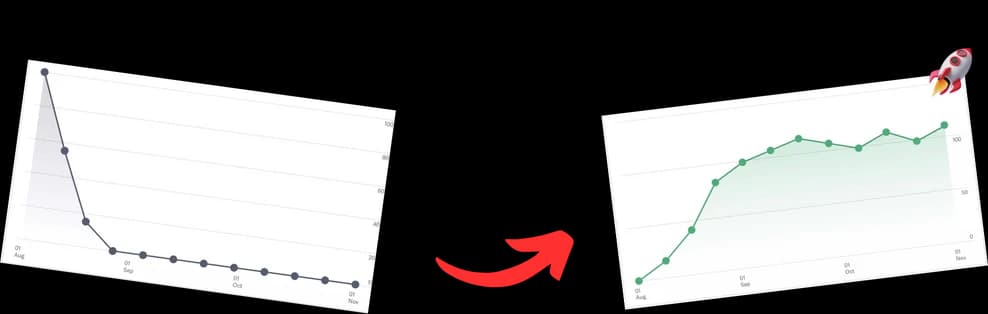
It starts with a sinking feeling you know all too well: your latest posts are getting crickets. Absolute silence. Your engagement has fallen off a cliff, and you can't help but ask, "Am I shadowbanned?"
A shadowban, sometimes called a stealth ban, is when a platform's algorithm decides to hide your content from everyone except your existing followers. And the worst part? They don't send a notification. You're just... invisible.
What a Shadowban Looks Like in 2026

The term "shadowban" might sound a bit cloak-and-dagger, but its effects are painfully obvious to any creator who’s been through it.
Picture this: you’re a food blogger who just dropped the most amazing new recipe. Normally, it would be racking up hundreds of likes from people discovering it through hashtags. But now? Only a handful of your die-hard followers see it. A quick look at your analytics confirms your worst fear: reach from non-followers has tanked to practically zero. It feels like you're shouting into a digital void.
This isn't just a bad day at the office or a slight dip in performance. A real shadowban is a sudden, dramatic, and sustained drop in visibility, specifically to people who don't already follow you. Platforms will never admit they do it, which is exactly why there’s no warning. Their automated systems just quietly demote your content, putting up an invisible wall between you and any potential new audience.
Shadowban Symptoms Quick Check
Before you jump to conclusions, it helps to see the signs laid out clearly. Here’s a quick table of the most common symptoms I've seen pop up for creators across different platforms.
| Symptom | What to Look For | Severity |
|---|---|---|
| Sudden Engagement Drop | A sharp, sustained decrease in likes, comments, and shares, especially from non-followers. | High |
| Posts Hidden from Hashtags | Your content doesn't appear in the "Recent" tab for the hashtags you've used. Ask a non-follower to check. | High |
| Content Not on Explore/FYP | Your posts or videos completely disappear from discovery pages like Instagram's Explore or TikTok's For You Page. | High |
| Follower Growth Stalls | Your follower count hits a brick wall and stops growing, no matter how much great content you post. | Medium |
| Search Invisibility | Your profile or posts don't show up in search results, even when someone searches for your exact username. | High |
Seeing one of these might just be a fluke. But if you're ticking off two or three of these boxes, it's a strong indicator that you're dealing with more than just a bad algorithm day.
Is It a Ban or Just an Algorithm Shift?
It’s easy to confuse a shadowban with a regular old algorithm change, which can also mess with your engagement. The key difference is that a platform-wide update tends to affect a broad swath of creators, while a shadowban targets your account specifically. To really tell them apart, it helps to have a baseline understanding of how the social media algorithm explained by PostSyncer actually works to surface content.
Here are the tell-tale signs of a shadowban that set it apart:
- Vanishing from Hashtags: Your posts are nowhere to be found in the "Recent" feed for the hashtags you use, even for totally innocent ones.
- Plummeting Non-Follower Reach: Your analytics show a severe and immediate drop in impressions from sources like the Explore Page, For You Page, or Suggested Videos.
- Zero Follower Growth: Your follower count completely flatlines, even though you’re sticking to your content schedule.
A shadowban is a psychological game. The platform hopes that seeing fewer likes will cause anxiety and push you to self-censor and comply with its unwritten rules. It’s a way to shape behavior without ever having to send a warning.
Even though it’s incredibly frustrating, a shadowban is almost always reversible. Unlike a permanent account suspension, it’s a temporary measure. If you're seeing these signs, don't take it as a final judgment on your content's quality. Instead, see it as a signal that you've accidentally tripped one of the platform's automated tripwires.
In the next sections, we'll walk through exactly how to diagnose the problem and get things back on track. It's also smart to learn how to adapt to bigger platform shifts, like a major YouTube algorithm change, to build a more resilient content strategy for the long run.
How to Diagnose a YouTube Shadowban
A YouTube shadowban can feel like the platform has turned off your microphone mid-sentence, cutting you off from new viewers. The good news is that your analytics dashboard inside YouTube Studio holds all the clues you need. You just have to know where to look.

The very first place I always tell creators to check is their traffic sources. Jump into the individual analytics for a recent video and click over to the "Reach" tab. A healthy, growing video will get a ton of its views from two key places: Browse Features (the home screen) and Suggested Videos.
If you notice those two sources have practically flatlined compared to your older videos, that's your biggest red flag. It’s a strong signal that the algorithm has stopped serving your content to anyone who isn't already a subscriber.
Check Your Impressions and Retention
Your impression count is another mission-critical metric. When you post a new video and it barely gets any impressions outside of your subscriber notifications, it means the algorithm isn't even bothering to test it with new audiences.
I’ve seen this happen countless times: a video has shockingly low impressions but fantastic audience retention. This is a classic sign of suppression. It means the handful of people who do see it are loving it, but no one else is getting the chance.
Spotting a shadowban isn't black and white since there's no official alert from YouTube, but the numbers in your analytics can practically scream that something’s wrong. By 2026, it's become a common creator practice to check first-day impressions; a healthy video should easily hit 1,000-5,000 impressions within 24 hours as the algorithm tests the waters. If you're seeing under 100, you have a real reason to be concerned.
According to some creator guides, this exact issue impacted between 15-25% of creators on forums in early 2026, often right after their content was flagged as "borderline" or advertiser-unfriendly. You can dig into tons of data on creator experiences with these sudden visibility drops across YouTube.
Use Incognito Mode to Confirm Suppression
After you've done your data-digging, it’s time for a manual check to see how your video looks to the outside world. This two-part test gives you solid evidence if you’re being suppressed.
- Open an incognito window in your browser. This is crucial because it logs you out of your Google account and removes any personalized search history.
- Search for your video on YouTube using its exact, full title or a few highly specific, unique keywords from your description. If your video is nowhere to be found, that's a bad sign. If this is happening, our guide on what to do when your YouTube video is not showing up in search offers some extra context.
- Now, enable Restricted Mode. You can find this at the bottom of the YouTube page or in the profile menu. This mode is designed to filter out potentially mature content.
- Search for your video again. If your video was visible before but has now completely vanished with Restricted Mode turned on, the algorithm has almost certainly flagged it as unsuitable for all audiences. This will severely tank its reach.
A common misconception is that a shadowban wipes your content off the map entirely. In reality, it’s more surgical. It often just filters you out of the most important discovery systems—recommendations, search, and the home page—or hides you behind safety filters like Restricted Mode. Your subscribers might still see your videos, but your channel's growth will come to a dead stop.
By combining these analytics deep-dives with a few manual tests, you’ll get a pretty clear answer to the dreaded question, "Am I shadowbanned on YouTube?" Once you have a diagnosis, you can finally start taking the right steps to get your visibility back.
Checking Your Status on Instagram, TikTok, and X
While a YouTube shadowban has pretty clear tells in the analytics, other platforms demand different kinds of detective work. The core idea, though, is always the same: you need to figure out if your content is actually visible to people who don't already follow you. If you're wondering, "Am I shadowbanned?" on Instagram, TikTok, or X, here are some specific, battle-tested ways to find out.
The Instagram Niche Hashtag Test
For Instagram, the most reliable method I've found is what I call the niche hashtag test. It’s a simple but surprisingly effective way to see if your posts are being buried and kept out of discovery feeds.
First, create a new post. But instead of your usual go-to hashtags, pick one or two that are super specific and have very low volume—think fewer than 1,000 posts. You're looking for something unique, like #MyCitysBestBurger2026 or #WatercolorWednesdayVibes.
Next, you'll need a friend who does not follow your account. Ask them to search for that exact hashtag on Instagram. The critical part is that they must check the "Recent" tab, not just the "Top" posts. If your brand-new post is missing from that recent feed, it’s a massive red flag. This strongly suggests your account has been flagged and your reach is being actively suppressed.
Diagnosing a TikTok or X Shadowban
On TikTok, the evidence of a shadowban is hidden in your analytics. The platform's version of this penalty directly targets your access to the For You Page (FYP), which is the absolute lifeblood for almost every creator out there.
To check, dive into the analytics for your last handful of videos. Pay very close attention to the "Traffic Sources" section. If you notice the percentage of views from the For You Page has suddenly nosedived into single digits—or even 0%—that's the classic sign of a shadowban. Healthy videos pull a huge chunk of their traffic from the FYP. A sudden and total stop means the algorithm has slammed the door on your content.
A sudden drop in FYP traffic is the equivalent of a store being moved to a deserted alleyway overnight. People can still visit if they know the address (your direct followers), but no new customers will ever wander in.
Over on X (formerly Twitter), the problem usually shows up as a search ban. This kind of suppression makes your account and tweets totally invisible in search results for anyone who isn't a follower, which effectively kills any chance of growth.
The test is simple. Log out of your X account or just open an incognito browser window. Then, use the search bar to look up your exact @username. If your profile doesn't show up in the results, you're almost certainly dealing with a search ban. You can also try searching for the exact text of one of your recent, non-reply tweets. If it's nowhere to be found, your content is being hidden from public view.
So, Why Did You Get Shadowbanned?
Figuring out you've been shadowbanned is one thing. Pinning down the why is the real challenge, but it's absolutely crucial for getting your account back on track and staying out of algorithm jail in the future.
If you're asking, "am I shadowbanned?" you've likely—and unintentionally—tripped one of the platform's invisible wires. Social media algorithms are designed to protect users and promote positive interactions. Anything that looks like it might disrupt that flow can get your content quietly suppressed.
The problem is, the triggers aren't always big, obvious rule violations. They're often subtle patterns that the algorithm is trained to spot and demote.
This flowchart breaks down the most common mistakes that can land an account in a shadowbanned state.

As you can see, it usually boils down to three culprits: actions that seem spammy, using the wrong hashtags, or posting content that lives in a gray area.
Spammy Behavior and Automation
One of the fastest ways to get flagged is to act like a bot. Platforms are in a constant war against automated accounts that make the experience worse for everyone.
This includes things like:
- Mass following and unfollowing: If you rapidly follow hundreds of accounts just to unfollow the ones who don't follow you back, you’re mimicking a classic spam tactic.
- Using engagement bots: Any third-party app that automatically likes, comments, or sends DMs for you is a huge red flag and a direct violation of most platforms' rules.
- Posting too frequently: Dumping a dozen posts in a five-minute window might just be you being excited about a product launch, but to an algorithm, it looks like spam.
Think about it from the algorithm's perspective: a real person doesn’t perform hundreds of identical actions in under a minute. When your account does, the system assumes you aren't human and puts you in a digital "time out."
Shadowbanning is a psychological game. The platform quietly throttles your reach, which naturally makes you anxious about the drop in engagement. That stress often nudges creators to self-censor and stick to unwritten rules, shaping behavior without ever sending an official warning.
Banned Hashtags and Borderline Content
Another major trigger comes from your content itself, especially the stuff that falls into a gray area. On a platform like Instagram, using just one banned or broken hashtag can tank the reach of your entire post. These are tags that have been flooded with inappropriate content, and the platform has essentially blocked them from search results.
"Borderline" content is even trickier to navigate. This is material that doesn't technically violate the community guidelines enough to be deleted, but it's still seen as low-quality, unoriginal, or sensitive. Constantly reposting other people's viral videos without adding any real value is a perfect example.
Likewise, content that’s considered sexually suggestive—even if it isn't outright pornographic—can get suppressed. Author Mia Knight experienced this firsthand when her romance book was banned in certain regions on Amazon because its title was flagged for "sexually explicit title language." This prevented it from showing up in general searches, making it practically invisible without an outright ban.
This shows just how easily automated systems can penalize content that straddles the line. Once you understand what these triggers are, you can start navigating the rules more carefully and keep your content from disappearing into the void.
Your Action Plan for Account Recovery

Finding out you've likely been shadowbanned is a gut punch. I get it. But this isn't the time to panic—it's time to get strategic and show the algorithm you're a creator worth keeping around. The first thing many seasoned creators do is surprisingly simple: just go dark.
That means hitting pause on all account activity. No new posts, no liking, no commenting, and yes, not even replying to DMs for at least 48 to 72 hours. Think of it as a soft reset. This short break can give the platform's algorithm a chance to stop flagging your account for whatever behavior triggered the suppression in the first place.
Conduct a Thorough Content Audit
While your account is in cooldown mode, you get to play detective. Your mission is to scrub your profile of anything that might have landed you on the algorithm's naughty list. A full content audit is absolutely non-negotiable here.
Go through your recent posts with a fine-tooth comb, especially the ones you published right before your engagement tanked. You’re on the hunt for any potential red flags:
- Banned or broken hashtags: Double-check every single hashtag you've used. If just one has been flagged for spam or sketchy content, it can drag down the reach of your entire post.
- Borderline content: Be ruthless. Get rid of anything that feels even slightly sensitive, overly promotional, or just plain low-quality. This also includes unoriginal content, like reposting someone else's viral video without adding any value or your own creative spin.
- Spammy captions or comments: Have you been leaving repetitive comments everywhere or stuffing your captions with a million tags? It's time to delete them.
The goal isn’t just to erase the problematic content; it’s about figuring out why it happened. A sudden drop in visibility requires digging into the root cause, much like you would when diagnosing Why Your Website Traffic Dropped Suddenly and How to Fix It. You have to treat the disease, not just the symptoms.
Refocus on High-Value Signals
Once your quiet period and content audit are done, your comeback needs to be all about quality over quantity. Your job now is to send powerful, positive signals to the algorithm, proving that your content is valuable and that real users genuinely love it.
On YouTube, for instance, you can focus on improving key user-experience metrics. One of the best ways I’ve seen this done is by adding well-structured, SEO-optimized chapters to videos. Why? Because good chapters directly boost watch time and audience retention—two of the most critical metrics YouTube’s algorithm cares about. Strong retention sends a clear message that your content is super engaging and deserves to be shown to more people. This detailed YouTube SEO checklist breaks down exactly how to do this for better discovery.
When you start posting again on any platform, put all your energy into creating original, top-tier content that truly serves your audience. Engage authentically with the comments you get, stick to the community guidelines like glue, and avoid any of the spammy behaviors that got you into this mess. Consistent, positive activity is your best bet for getting out of the shadowban doghouse and back into the algorithm’s good graces.
Frequently Asked Questions About Shadowbanning
After digging through your analytics and running a few tests, it's normal to feel a bit lost. When you're trying to figure out "am I shadowbanned?" a ton of uncertainty can creep in. Let's clear the air with some direct, no-nonsense answers to the questions I hear most often from creators in your shoes.
How Long Does a Shadowban Typically Last?
This is the million-dollar question, but there's no official timeline because platforms don't really admit shadowbans are a thing. That said, based on countless creator experiences I've seen over the years, a temporary suppression can last anywhere from 72 hours to a few weeks.
If there's a "common" duration people talk about, it's usually around 14 days. How long it sticks around often depends on how serious the platform thinks your slip-up was and how fast you act to fix it. My advice? Take a short break from posting altogether, then come back with consistently clean, high-value content. It’s often the quickest way to get back in the algorithm's good graces.
Will Contacting Support Help Remove a Shadowban?
In almost every single case, the answer is a hard no. Since platforms like Instagram and TikTok officially deny that shadowbanning even exists, their support teams are neither trained nor allowed to help you with it.
You'll most likely get a generic, canned response about following community guidelines. Your time and energy are much, much better spent auditing your own content and following a recovery plan than sitting in a support queue for a ticket that’s going nowhere.
Instead of getting frustrated with a support bot, focus on the actionable steps in this guide. Cleaning up your account and signaling positive behavior to the algorithm will get you a lot further.
Can I Get Shadowbanned for Using a VPN?
Just using a VPN for basic privacy or to keep your connection secure is highly unlikely to trigger a shadowban. The risk comes from how you use it. If your activity starts looking like a bot, the platform might get suspicious.
For example, rapidly jumping between server locations to game the system or make it look like you're in multiple places at once is a huge red flag. That kind of erratic behavior looks just like the non-human activity the algorithm is built to sniff out. But for normal, everyday use—like securing your connection at a coffee shop or logging in while traveling—a VPN is generally safe.
How Does Video SEO Help with a Shadowban?
Think of good video SEO as your secret weapon against a shadowban, especially on YouTube. A shadowban usually crushes your algorithmic reach—your visibility on "Suggested Videos" and "Browse Features" plummets. But here's the thing: it doesn't always kill your reach from search.
By optimizing your titles, descriptions, and tags with the right keywords, you create a direct path for viewers to find your content through the search bar. This strategy completely bypasses the suppressed algorithmic channels.
- Boost Your Watch Time: Using a tool to generate SEO-rich video chapters is a game-changer for keeping viewers watching longer.
- Send the Right Signals: High watch time is a powerful, positive signal to the algorithm that your content is valuable and engaging.
- Help Your Recovery: These positive signals can eventually help convince the algorithm to lift the suppression on your channel, getting your reach back on track.
Basically, strong SEO gives you a reliable way to keep attracting viewers while you work on getting out of shadowban jail.
Are your YouTube videos underperforming because they lack chapters? With TimeSkip, you can generate SEO-optimized chapters in seconds, boosting watch time and helping your content rank higher. Get started for free at https://timeskip.io.