Consider that you are reviewing your campaign’s performance, and someone from your team points out the problem.
“Our reach is down.”
Wait a second. Low reach is an outcome, not a plan.
“Our engagement is weak.”
Hold on. Engagement is a signal, but it does not directly explain what to fix.
“Our conversions are not improving.”
That sounds serious. But again, it is a result, not a strategy.
In online marketing, it is easy to spot the problems, but a clear direction to fix these is often missing. Teams keep talking about reach, engagement, or conversions as separate goals. But in reality, they are parts of the same system.
A better approach is to connect all three. Reach brings the people to your page. Engagement keeps them interested, and conversions occur when the experience feels clear and useful. But how can you actually attract visitors, keep them engaged, and guide them to take action? This is what I’ll help you learn in this blog. Below, I’ll share some of the most effective strategies to strengthen your online efforts to improve conversions.
Tactics That Improve Online Performance
The following are some of the best tactics that you can consider implementing.
Understand where reach actually comes from
It is a common belief among many people that posting more content increases reach. But let me clear this up, reach depends on how easily people find and interact with your content. Like, a page written around a clear search intent often outperforms one written around a broad idea.
For example, a blog post titled “Marketing Tips” competes with thousands of similar pages. Whereas a blog titled “Ways to Increase Website Signups Without Paid Ads” answers a specific need and attracts more relevant traffic.
Social media also works the same way. Posts that mention one clear idea often get more interactions than the posts that try to cover everything. When the message is focused, it becomes easier for people to decide whether to engage and share that post. Reach improves when content matches how people search, scroll, and skim.
Craft an Engaging Introduction
Engagement begins the moment someone lands on your page. But if the content feels heavy, the users might leave instantly. A common issue I see in many write-ups is a slow buildup.
Many introductions take too long to come to the main problem, which tests the reader’s patience. However, when the opening lines clearly describe the problem, the readers feel understood. And when they understand the point quickly, they are more likely to continue reading.
Starting a blog post with a very long background context often pushes away the readers. A better approach is to plot the problem early and then explain it in simple steps.

In the image above, you can see that the writer clearly mentioned the problem in the early lines and then used short sentences to build momentum and keep the reader moving forward.
Build engagement through specific examples
General advice often does not seem very intriguing. Use specific examples to show how something works in real situations, and to which readers can relate to. This makes your content more shareable, which naturally improves its reach.
For example, instead of saying “use social media effectively,” you could explain a real scenario: “Post one helpful tip each morning on Instagram and reply to comments within an hour to keep followers engaged.” This is a solid example that shows how to make your advice actionable.
Specific examples also reduce doubts among the readers. When people see how a tip is applied in practice, it feels more achievable and realistic. They are more likely to try it, and most probably they return to your post and share their experience in the comments. This improves the reach and engagement of your post.
Avoid repetition and improve clarity
When you write consistently, some sentences may begin to sound repetitive. Your ideas are not conveyed properly, even though the point itself is clear in your mind. This makes your content boring and hard to follow.
Proofread your write-up to locate sentences that use the same words and structure repeatedly. Fix such sentences so that your ideas are clearly expressed, and your content becomes easy to read. However, doing it manually can consume much time and effort, and there are still chances of errors. This is where you can get help from online tools.
For example, AI Sentence Generator can help generate clear sentences for your content. If you are explaining a point that you find hard to frame into proper wording, the tool can suggest multiple ways to turn it into proper sentences. This makes your writing smooth, ensuring the readers get the intended meaning without confusion.
Turn engagement into conversions with clear paths
Conversions are often not achieved when the next step feels unclear. Readers may enjoy your content, but might leave without acting. This usually happens when you haven’t mentioned a clear next step.
Below is an example of a clearly mentioned next step:
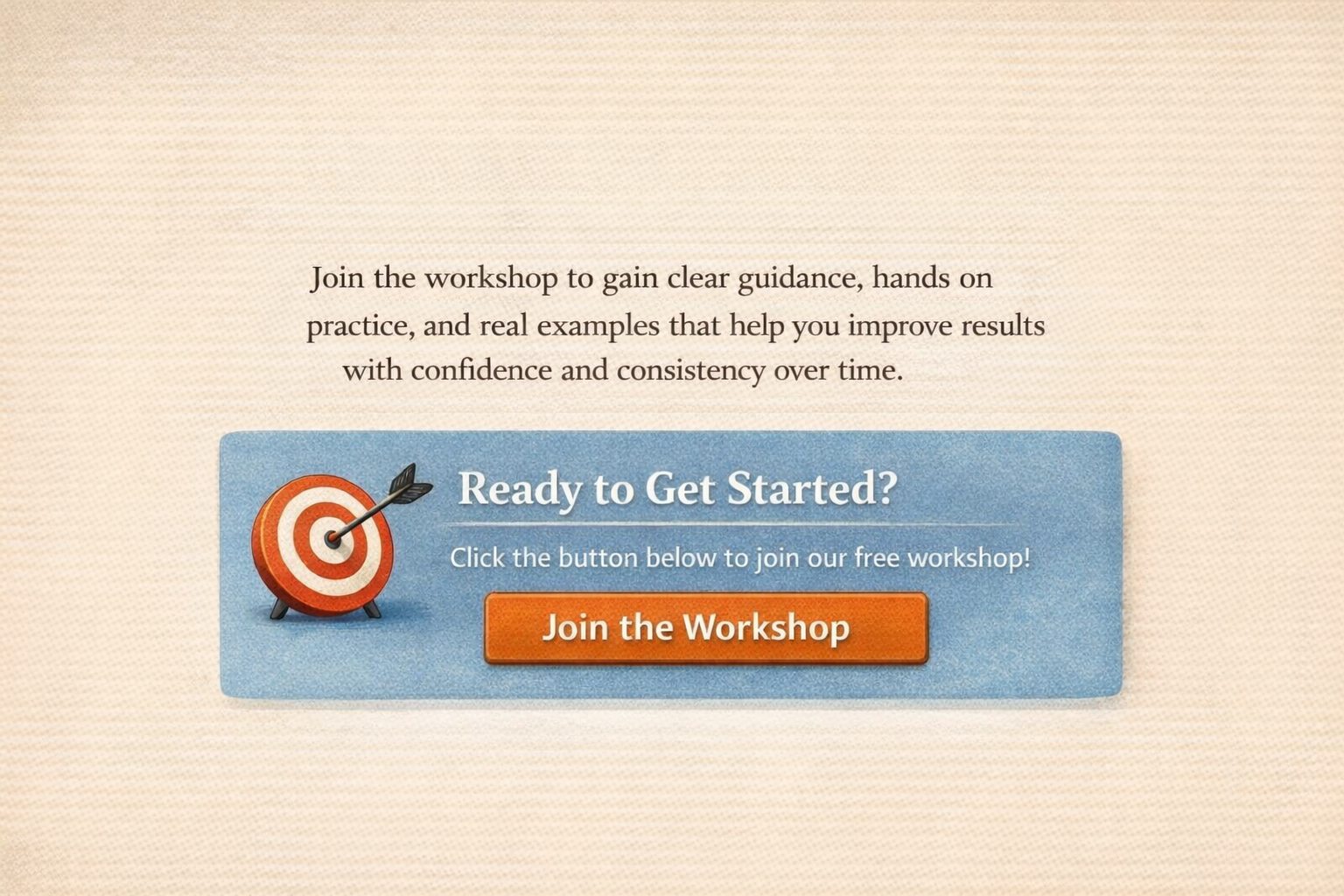 Image source - https://www.orbitmedia.com/blog/ai-search-competitive-analysis/
In the image, you can see that it tells readers to join the workshop, giving them a direct action to take and showing exactly how to move forward with confidence. If your goal is to encourage the readers to contact you, you can use the CTA (Call to Action) and a few lines at the end of your page that clearly explain what happens after reaching out.
Placement of the CTA also matters. The best place to use it is after a helpful section rather than before it. This helps readers understand the value of connecting with you and makes them more likely to take the next step.
Optimize the experience for mobile readers
A major portion of the online traffic on any page comes from mobile devices. According to research, about 64.35% of global web traffic comes from smartphones and tablets. This depicts that your content should be mobile-friendly as well.
Content that looks great on a desktop may not feel the same on mobile screens. Paragraph length is one example of it. A large block of text may look okay on a desktop screen, but cluttered on a smartphone screen. However, breaking down the text into shorter sections can fix this.
Use fonts that are easy to read without zooming. Buttons and links should also be easy to tap. Such small details have a great impact on how long users stay on your page.
Refine your strategy instead of just chasing trends
User habits evolve with time, and so their patterns of online interaction also change. Platforms also change their algorithms, features, and formats. So what worked yesterday might not work so well today. This means that your strategies need regular adjustment rather than trend chasing.
Refresh your content to maintain relevance. Update the examples, add clarity, and remove a few that no longer apply. This helps maintain relevancy and trust among the users.
Feedback from readers is also an important signal. If users leave questions and comments about an area that needs clearer explanation, address that so that it improves future engagement.
Improvement might not come from one big change. It usually comes from steady refinement across reach, engagement, and conversion-focused actions.
Final thoughts
Spotting problems regarding online performance is easy. But fixing them is the real task that requires a keen focus. You need steady thinking and connected actions. When content follows a clear structure, readers stay engaged longer. And when the content genuinely solves a problem, that interest naturally turns into meaningful action.
I’ve explained the most essential tactics to improve your online performance. Try these, and with time, you may see improved connections and better results online.