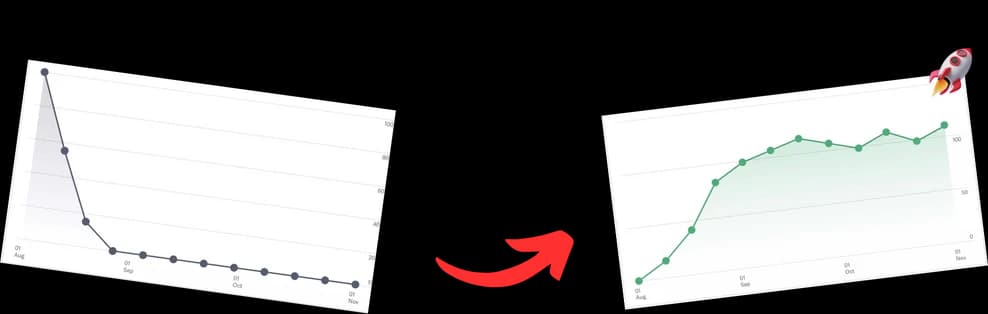
Most roundups of educational youtube channels answer the easiest question: which channels are popular. That's not the same as asking which ones help you learn, retain, and come back later when you need the concept again. If you've ever opened a brilliant hour-long explainer, understood the first ten minutes, and then lost the thread by minute thirty-seven, you already know the problem isn't just content quality. It's navigation.
That gap matters because YouTube is already a mainstream learning platform. A Pew-based analysis cited by Videomaker's coverage of YouTube learning behavior says 51% of YouTube users use the platform to learn new things. Educational viewing isn't a side use case. It's core behavior.
For creators, that changes the job. You're not only choosing smart channels to watch or emulate. You're choosing systems that make long videos usable: playlists, timestamps, chapter labels, companion exercises, and tight topic boundaries. That's also why I keep pointing educators toward operational tools, not just content libraries. If you run tutoring or course delivery around YouTube, these tools that replace spreadsheets for tutors can clean up the logistics around assigning, tracking, and revisiting lessons.
The seven channels below are worth following. Each one teaches a different lesson about how educational youtube channels should structure deep content so learners can finish it, review it, and find the right moment later.
1. Crash Course

How do you keep a fast, information-heavy lesson useful after the first watch?
Crash Course answers that better than many teaching channels on YouTube. It organizes videos like a syllabus. Series have a clear scope, episodes fit a sequence, and viewers can tell whether they are starting a subject or dropping into the middle of it. That structure matters because dense videos only work long term if people can return to the right segment without hunting through the entire runtime.
For learners, Crash Course is best used as a guided overview with built-in momentum. History, literature, science, and study-skills playlists move quickly, which helps maintain attention. The trade-off is obvious. Speed keeps energy high, but it can also compress too many ideas into one sitting for a first-time learner.
That is why this channel is a good case study in modern video navigation. A strong Crash Course episode gives you the broad map first. Then chapter markers, timestamps, transcript search, or AI chaptering tools can turn a dense watch into a usable reference. I recommend treating these videos less like something to binge and more like a textbook chapter with tabs. Watch once for the big picture, then jump back to the exact section that carries the concept you missed.
Creators should pay attention to the packaging as much as the teaching. Crash Course consistently does a few things well:
- Series design creates retention: viewers have a reason to watch the next lesson because the sequence is already defined.
- Repeatable episode framing reduces confusion: intros, pacing, and topic boundaries stay familiar across a course.
- Course-style labeling improves rewatch value: viewers can find the right lesson later instead of remembering only a clever title.
Visit Crash Course if you want the companion site and course organization, not just the YouTube feed.
Practical rule: If a video belongs to a larger curriculum, title and structure it like a module people may revisit under time pressure.
The limitation is real. Crash Course is excellent for orientation, review, and connecting ideas across a subject. It is less effective as a stand-alone replacement for slow practice, worked examples, or deliberate repetition. For creators, that is the lesson: strong educational content is not only about explanation quality. It is also about making dense material easy to scan, revisit, and continue.
2. Khan Academy

Khan Academy is the most practical option on this list when the goal is skill progression, not inspiration. If Crash Course feels like a guided lecture hall, Khan Academy feels like a workbook with video support. That distinction matters. Many educational youtube channels are great at sparking interest, but weaker at helping someone move from “I kind of get it” to “I can solve this on my own.”
Its YouTube presence also sits on top of a larger learning system. You can move from explanation to practice without rebuilding the lesson yourself, which is exactly why teachers and tutors keep using it.
Best use case
Use Khan Academy when you need a sequence with low ambiguity. Math, science, computing, and test prep benefit from that approach because skill gaps compound. If a learner misses one core step, the next lesson often collapses.
That's where Khan Academy's style wins. The explanations tend to prioritize process and progression over spectacle.
When a student says, “I watched the video but still can't do the problem,” the issue usually isn't motivation. It's missing practice directly after the explanation.
Where it's strongest and where it isn't
Khan Academy is strong in structured fundamentals. It's less compelling if you want broad, high-concept exploration or documentary-style storytelling. Some lessons feel procedural by design, and that's a feature when your goal is mastery.
A few practical creator takeaways stand out:
- Pair video with action: Educational videos stick better when the next step is immediate practice.
- Keep lessons narrow: One skill per video is easier to revisit than a broad lecture with five concepts mixed together.
- Design for assignment: Teachers adopt content faster when it maps cleanly to a lesson objective.
Khan Academy also remains one of the best-known names in the category. The same 2025 roundup cited earlier places Khan Academy at about 8.6 million subscribers, which reinforces how much demand exists for direct, structured teaching without entertainment wrappers.
3. TED-Ed

How much can a learner really absorb in five minutes?
TED-Ed answers that question better than almost anyone on YouTube. Its strength is not coverage. It is precision. Each video usually starts with one sharp question, builds a clean explanation around it, and uses animation to lock the idea into memory.
That makes TED-Ed useful for two different jobs. Learners get a fast on-ramp into a topic before reading more or watching a longer lesson. Creators get a masterclass in scope control.
Go to TED-Ed if you want to explore the lesson platform beyond the channel itself.
What makes TED-Ed different
TED-Ed is a strong reminder that short runtime does not mean shallow craft. The scripts are tightly edited, the visuals do real teaching work, and the pacing leaves very little dead air. For creators, that is the lesson worth studying.
I use channels like this as a test for topic discipline. If a concept cannot survive compression, the script usually is trying to do too much.
What creators should copy
Three habits stand out:
- Lead with a question that creates tension: A title like “Why do we dream?” gives the viewer a reason to stay and look for resolution.
- Make visuals carry explanation: Good animation should clarify sequence, scale, or cause and effect. It should not just decorate the narration.
- Design short videos as entry points: A concise explainer works best when it sends the learner into discussion, reading, notes, or a longer follow-up video.
This ties directly to how people learn from YouTube now. Many viewers no longer watch long educational videos straight through. They scrub, skip, revisit one section, then ask an AI tool to summarize the core point or generate chapters. TED-Ed benefits from that behavior because the structure is already clean. The question for creators is different. If your video is longer and denser than a TED-Ed piece, viewers need better signposts or they will miss the parts that matter.
The trade-off with polished short explainers
The limitation is depth. TED-Ed usually gives the learner a durable mental model, but not full mastery. That is a feature when the goal is orientation. It is a weakness when the viewer needs worked examples, nuance, or a step-by-step method.
For creators, the practical takeaway is simple. A short explainer can succeed without chapters if the scope is tight enough. A longer video cannot rely on polish alone. It needs structure that helps people jump to the right moment, review key ideas quickly, and turn one watch into actual retention.
4. Kurzgesagt – In a Nutshell

Kurzgesagt sits in a different lane from classroom-style channels. It doesn't feel like formal instruction. It feels like cinematic orientation for complex science and civilization-scale questions. That makes it one of the best educational youtube channels for building curiosity before someone commits to heavier reading or coursework.
The big strength is memorable framing. Viewers often remember the metaphor, the shape of the argument, and the stakes of the question even if they can't reproduce every technical detail later.
Why its structure matters
Kurzgesagt is a good reminder that dense topics don't always need dense presentation. Sometimes a learner needs a map before they need equations. This channel is excellent at drawing the map.
Visit Kurzgesagt – In a Nutshell for the broader studio ecosystem and official resources around the videos.
Field note: If your audience feels lost, adding more information often makes the problem worse. A stronger conceptual frame usually helps more than a longer script.
Real trade-offs for serious learners
The downside is depth ceiling. Kurzgesagt often gives you the big picture, but not the full derivation or granular method. That's not a flaw. It's a format choice. If you're a creator, the lesson is to be honest about whether your video is a primer, a proof, or a practical tutorial.
This channel also shows why chaptering still matters even in highly polished storytelling. Educational videos on broad topics often contain multiple sub-questions, and the learner may come back for only one of them. Good navigation turns a beautiful video into a reusable reference.
5. Veritasium

Why do some science videos hold attention for 20 minutes while others lose viewers in three? Veritasium answers that with structure. Derek Muller often starts by putting a common belief on screen, testing it, and exposing the gap between what viewers expect and what the evidence shows.
That method works because it matches how people learn. Viewers rarely need more facts first. They need to feel where their current model breaks.
For creators, that is the lesson worth copying.
Why the format keeps people watching
Veritasium is strong at building a question that can carry a long runtime without feeling padded. The opening claim creates tension. The experiment or interview adds proof. The explanation resolves one layer, then raises the next useful question. Long educational videos work better when each segment earns the next minute.
That also makes the channel a good case study in modern video navigation. Dense episodes become much more useful when learners can jump back to the setup, the failed prediction, or the key reveal instead of scrubbing blindly. AI-generated chapters are especially helpful here because Veritasium videos often contain several teachable turns, not one simple takeaway.
A few practical habits stand out:
- Start with a belief the audience is likely to hold: The viewer should have something at stake mentally.
- Use evidence as the turning point: Demonstrations, field footage, and expert interviews give the revision credibility.
- Segment the argument clearly: If a video has three big idea shifts, label all three so returning viewers can find them fast.
You can browse the official work at Veritasium.
Who gets the most from it
Veritasium works best for curious learners who are comfortable sitting with uncertainty for a few minutes. The payoff is usually strong, but the path is not always linear. That is a real trade-off. Someone looking for a neat lesson sequence may do better with a channel built around progressive instruction.
Creators should pay attention to that distinction. A high-retention science video is not automatically a good study tool unless the structure supports rewatching. In practice, that means clear chapters, strong titles for each section, and visible transitions between prediction, test, and explanation. When those pieces are in place, a long video stops being a one-time watch and starts working like a reference.
6. 3Blue1Brown

If you've ever felt that math teaching often explains procedures before intuition, 3Blue1Brown is the correction. This channel is one of the clearest examples of how visual thinking can reorganize understanding. Instead of handing you formulas first, it often builds the geometry or motion behind them.
That approach is especially valuable in educational youtube channels because viewers don't always arrive ready for formalism. Many need a mental picture before they can handle symbolic detail.
What it teaches creators
3Blue1Brown is famous for making abstract ideas feel spatial. The practical lesson isn't “animate everything.” It's “choose visuals that do cognitive work.” Good animation in education should reduce mental load, not decorate the script.
Use 3Blue1Brown when you want mathematical intuition, series-based learning, and deeper follow-up material.
A few creator lessons are worth copying:
- Build around one core visual metaphor: Viewers remember moving shapes better than disconnected notation.
- Publish in thematic series: Math and technical topics benefit from sequential viewing.
- Support rewatching: Dense conceptual videos become far more useful when learners can jump to a specific proof idea or subtopic.
“Intuition first, formalism second” isn't always the full lesson plan, but it's often the right opening move.
The trade-off
3Blue1Brown can still be demanding. The visuals help, but the ideas are not always beginner-level. Some viewers will need to pause, rewatch, and supplement elsewhere. That isn't a weakness. It means the channel is best used as part of a stack: intuition here, drills or textbook exercises somewhere else.
For creators making long explainers, this channel is a strong case for chapter labels that describe the idea, not just the time position. “Eigenvectors visualized” beats “Part 3” every time.
7. Smarter Every Day

Smarter Every Day is what happens when engineering curiosity stays grounded in the physical world. Destin Sandlin's videos often use machinery, slow motion, field visits, and hands-on demonstrations to answer questions that would feel dry in a classroom deck. That makes the learning sticky. You remember the mechanism because you saw it behaving in the world.
Among educational youtube channels, this is one of the best examples of how personality can support teaching without overpowering it.
Where it shines
This channel is excellent for learners who need concrete examples before abstract explanation. Manufacturing, aerospace, mechanics, and motion become easier to hold onto when the camera shows the process, not just the conclusion.
You can explore the broader site and official materials at Smarter Every Day.
What creators should notice:
- Real footage creates trust: Demonstration-based videos can feel more grounded than pure narration.
- Host presence matters: A warm, curious presenter lowers intimidation around technical subjects.
- Long videos need wayfinding: Field videos often branch into side explanations, so chapters prevent viewer fatigue.
Limits to keep in mind
Project-based channels often publish irregularly, and Smarter Every Day follows that pattern. That can make it harder for learners who want a strict sequence. The videos are also best for conceptual understanding and curiosity building, not always step-by-step skill acquisition.
The broader platform context matters here. YouTube reported about 2.70 billion monthly active users, over 1 billion hours watched daily, and more than 500 hours uploaded every minute in early 2025. In a library that crowded, long educational videos need structure that helps the right learner land on the right minute, not just the right channel.
Top 7 Educational YouTube Channels Comparison
| Channel | 🔄 Implementation Complexity | ⚡ Resource Requirements | 📊 Expected Outcomes | Ideal Use Cases | ⭐ Key Advantages / 💡 Tips |
|---|---|---|---|---|---|
| Crash Course | Moderate, plug-and-play episodic playlists | Low–Moderate, internet + classroom guides | Broad curricular coverage; structured overviews | Secondary/AP & intro college courses; flipped classroom | Consistent pedagogy; large catalog. 💡 Use chaptered playlists for lesson pacing. |
| Khan Academy | Low, mastery-based, easily assigned | Low, free platform, teacher dashboards | Measurable skill gains and progression | K–12 instruction, remediation, SAT prep | Highly structured tracking and exercises. 💡 Pair videos with site practice. |
| TED-Ed | Low, short, turnkey lessons with builder | Low, polished animations; check reuse policy | High engagement; concise concept introductions | Hooks, bell-ringers, discussion prompts, short lessons | High production value and customizable lessons. 💡 Verify embed/license before redistribution. |
| Kurzgesagt – In a Nutshell | Moderate, best for thematic framing | High to produce; low to use as educator | Strong conceptual framing and memorable visuals | Big‑picture units, public talks, motivation modules | Exceptional visual clarity and scope. 💡 Supplement with deeper technical readings. |
| Veritasium | Moderate, inquiry-driven, demo-focused | Moderate, fieldwork, experiments, interviews | Improved conceptual understanding and critical thinking | Demonstrations, myth-busting, advanced secondary lessons | Strong narrative hooks and credibility. 💡 Prep background for advanced segments. |
| 3Blue1Brown | High, dense visual math requiring maturity | High to produce; moderate to use | Deep visual intuition in math concepts | Advanced math courses, visualization-led instruction | Gold standard for visual proofs and intuition. 💡 Assign prerequisite reviews for novices. |
| Smarter Every Day | Moderate, hands-on, experiment-heavy | Moderate, equipment and field shoots; licensing notes | Practical understanding, retention through visuals | Maker/engineering labs, family-friendly STEM exploration | Approachable host and memorable demonstrations. 💡 Plan permissions for embeds and use. |
Build Your Own Curriculum on YouTube
The smartest way to use these channels isn't to subscribe and hope the algorithm does the rest. Build a path. Use Crash Course for topic scaffolding, Khan Academy for drills and progression, TED-Ed or Kurzgesagt for fast orientation, Veritasium for conceptual friction, 3Blue1Brown for mathematical intuition, and Smarter Every Day for concrete, physical understanding.
That approach matches how people already use the platform. Vidico's 2026 statistics roundup states that 70% of users use YouTube for educational purposes. The opportunity is obvious. The problem is that educational viewing often gets treated like entertainment browsing when it should be treated more like library search.
There's also a quality gap that creators should take seriously. A Substack analysis discussing educational YouTube points out that 51% of U.S. teens use YouTube to learn about topics that interest them, while much platform use still leans toward entertainment and creator-following. In other words, demand for learning is real, but good learning design still isn't guaranteed by popularity.
For long-form creators, discoverability and usability are now tied together. Guidance discussed in PBS LearningMedia's overview of chaptering and search visibility notes that chapter timestamps can improve navigation and can appear in Google Search results. That's a big deal for educational videos because learners rarely need the whole hour every time. They need the exact segment that solves the exact confusion.
So treat YouTube like an on-demand university, but build around retrieval, not just consumption. Follow playlists instead of isolated uploads. Revisit chapters instead of rewatching from the top. Keep notes on which channels are best for intuition, which are best for drills, and which are best for depth. If you're publishing your own lessons, add chapter titles that describe the idea clearly enough that someone can find the useful section months later.
If chaptering is still manual in your workflow, TimeSkip is one option worth looking at for generating YouTube chapters more efficiently. For educational videos especially, the payoff isn't just cleaner presentation. It's making the lesson easier to search, skim, revisit, and learn from.
If you publish lectures, tutorials, or long explainers, TimeSkip can help you turn dense videos into navigable lessons with AI-generated chapters and timestamps. That's useful for educational YouTube channels where learners often need to jump straight to one concept, review a difficult section, or find a specific moment through search instead of scrubbing blindly.