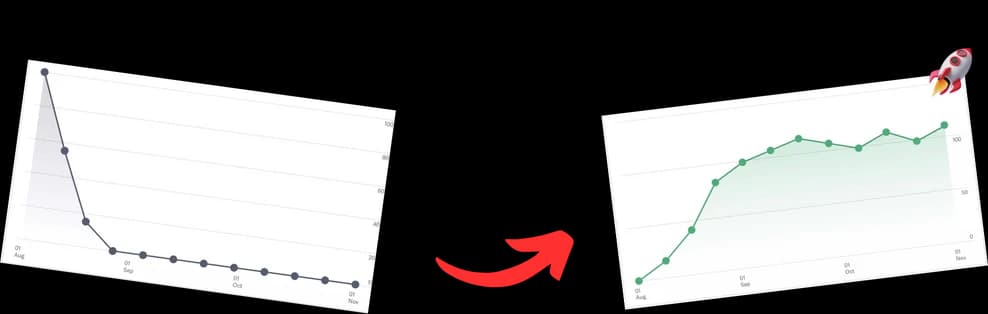
Yes, hashtags absolutely work on YouTube, but don't think of them as a magic wand for instant views. They’re a powerful signal you send to the YouTube algorithm, helping it figure out what your content is about and who to show it to.
How YouTube Hashtags Actually Boost Discovery

Think of hashtags as signposts for the algorithm. Your title and description are the main road, but hashtags are the specific street signs that confirm the context and connect your video to larger trends and topics.
When a viewer watches a video tagged with #homebrewing, YouTube's algorithm is far more likely to serve up your video next if you've used the same tag. This creates a direct path for your content to land in search results and, more importantly, in a viewer's "Up Next" queue.
This makes hashtags an incredible tool for organic growth, especially for newer channels trying to get a foothold and find their audience. You're essentially aligning your videos with topics people are already searching for and watching.
To get a quick overview of what hashtags do and why they matter, take a look at this breakdown:
YouTube Hashtag Impact At a Glance
| Function | Primary Impact on Your Video | Key Takeaway |
|---|---|---|
| Categorization | Helps the algorithm classify your video by topic. | You're telling YouTube exactly what your video is about. |
| Discoverability | Connects your video with others using the same tag. | Increases chances of appearing in "Up Next" suggestions. |
| Searchability | Makes your video appear on hashtag-specific search pages. | Taps into a direct stream of interested viewers. |
| Context | Adds an extra layer of context beyond your title/description. | Reinforces your video's relevance for specific niches. |
Hashtags give YouTube the extra data it needs to confidently recommend your content.
Quality Over Quantity Is Key
It's tempting to spam your video with every hashtag you can think of, but that strategy almost always backfires.
As of 2025, YouTube hashtags are still a big deal for discovery, but the game is all about precision, not volume. While you can technically add up to 60 hashtags, you'll see far better results by using just 3 to 5 highly relevant hashtags.
Bombarding your video with too many can confuse the algorithm or even get you flagged for spam, which means YouTube might just ignore all your tags completely. If you want to stay sharp, it's worth learning more about the latest YouTube hashtag trends.
A well-chosen hashtag is like a specific key for a specific lock. Trying to jam dozens of random keys into the door won't open it any faster—it just makes a mess. The right key, however, gives you immediate access to the right audience.
So, do hashtags work on YouTube? The answer is a clear yes. They are a core piece of modern YouTube SEO. When you use them thoughtfully, you’re giving the algorithm clean, actionable data to get your videos in front of viewers who will actually watch, engage, and stick around.
How the YouTube Algorithm Sees Your Hashtags

Think of the YouTube algorithm as a massive digital librarian. Its whole job is to pull the perfect video off the shelf for every single user, and to do that, it needs some simple, clear labels.
That's where your hashtags come in. They are those labels.
While your title and description give clues, hashtags are like a direct, no-nonsense confirmation. They tell the algorithm, "Yep, this video is definitely about #vintagecamerarepair." This simple act of categorization is the secret to how hashtags get your videos in front of the right people.
From Simple Tags to Powerful Connections
When you add a hashtag like #KetoRecipes, the algorithm doesn't just read a word—it sees a connection. It instantly plugs your video into a huge network of other videos, creators, and viewers all interested in that exact topic.
This is a huge deal for discovery. Suddenly, the algorithm can confidently place your video in two of the most powerful places for finding new viewers:
- Hashtag Pages: Anyone who clicks a
#KetoRecipestag lands on a dedicated page filled with similar videos. Yours is now in the running to be featured there. - "Up Next" Suggestions: The algorithm gets the green light to recommend your video to someone who just finished watching another low-carb diet tutorial.
You're essentially giving the algorithm a little nudge, pointing it directly toward your ideal audience.
The YouTube algorithm is always trying to solve a puzzle: "What should I show this user next?" Your hashtags are the corner pieces of that puzzle. They provide a solid framework that helps the algorithm solve it faster and more accurately—with your video as the answer.
Don't underestimate this. A huge chunk of all watch time on YouTube is driven by these recommendations. Smartly chosen hashtags are your ticket into that powerful discovery engine.
Hashtags as a Crucial Metadata Signal
On a technical level, hashtags are just another form of metadata. That’s a fancy term for data that provides information about your video. They work alongside your title and description to create a complete, easy-to-read profile of your content. To get a better handle on this, you can learn more about the role of metadata in YouTube and how it all works together.
The algorithm is constantly cross-referencing all these pieces to make sure everything lines up.
For example, a video titled "Baking Sourdough for Beginners" that includes the hashtag #sourdough sends a strong, consistent signal. YouTube now knows, without a doubt, that your video is a fantastic result for anyone searching for sourdough content.
This consistency builds trust with the algorithm, making it far more likely to promote your work. It's this simple synergy that answers the question "do hashtags work on YouTube" with a clear yes.
Where to Put Hashtags for Maximum Visibility
Knowing what hashtags to use is only half the battle. Figuring out where to put them is just as important for getting your video discovered.
Think of it like setting up products in a store. The best stuff goes at eye level, not tucked away on some bottom shelf where no one will see it. On YouTube, you have two main "shelves" for your hashtags: the video title and the video description. Each has its own strategic purpose, and knowing the difference will help you make the right call for every video you upload.
Picking the right spot makes sure your hand-picked tags get seen by both the algorithm and your future viewers.
Hashtags in the Video Title
Sticking a hashtag right in your video title is the boldest move you can make. It’s like putting a giant, flashing sign on your video that screams, “Hey, this is part of the #100DaysOfCode challenge!”
This makes the tag super visible and instantly clickable in search results, connecting your video directly to a hot trend or a branded series. But this prime real estate comes with a serious trade-off. Your video title is probably the single most important piece of SEO text you have. Wasting that space on a hashtag means you're giving up room for powerful, descriptive keywords that people actually search for.
Pro-Tip: Use title hashtags sparingly. They work best for specific, series-based content (like #MyFirstVlog) or when you're jumping on a massive, short-lived trend where the hashtag is the main search term.
Hashtags in the Video Description
The most common—and frankly, the best—place for your hashtags is at the very bottom of your video description. This approach keeps your title clean and fully optimized for search, while still giving the YouTube algorithm all the juicy context it needs. It's the best of both worlds, really.
When you add hashtags to your description, YouTube will automatically grab the first three and display them as clickable blue links right above your video's title. This gives them a premium spot without cluttering up your main headline. Any other tags you add (you can use up to 15 in total) will still work their magic for the algorithm behind the scenes, but only those first three get the spotlight.
This is why you have to be strategic. The first three hashtags in your description need to be your most important ones—the main signposts for your content. The rest can be a bit more niche, but those top three do all the heavy lifting for viewers. This is how you make sure hashtags actually work on YouTube, by putting them where they'll have the biggest impact.
Finding Hashtags That Actually Drive Views
Picking the right hashtags can feel like you're just throwing spaghetti at the wall and hoping something sticks. But it doesn't have to be a guessing game. Let's move past random choices and build a repeatable process to find tags that actually get your videos in front of more people.
The real goal here is to get inside your viewers' heads. We need to figure out what they're already searching for and then line up your content with those exact behaviors.
A brilliant place to start is right in your own niche. Take a look at the top-performing videos from your competitors—especially channels that are just a little bigger than yours. See what hashtags they’re using on their biggest hits. This isn't about blind copying; it's about spotting patterns and discovering tags that are already proven to work for your topic.
Tap Into YouTube's Own Data
You don't always need fancy, complicated tools to find winning hashtags. Sometimes, the best ones are hiding in plain sight, right inside YouTube’s search bar. It’s a surprisingly powerful research tool that tells you exactly what real people are looking for.
Just type the # symbol followed by a broad keyword related to your video. As you type, YouTube's autocomplete will pop up with popular and relevant hashtag suggestions. This gives you a direct line into what viewers are actively searching for, helping you choose tags that already have an audience waiting.
Think of YouTube's search suggestions as a direct line to your audience's thoughts. If YouTube is recommending a hashtag, it's because a significant number of people are already using it to find content just like yours.
This simple trick helps validate your ideas so you're not just guessing what might work. It's a quick and easy reality check.
This is all about strategically placing your chosen hashtags where they'll have the most impact.
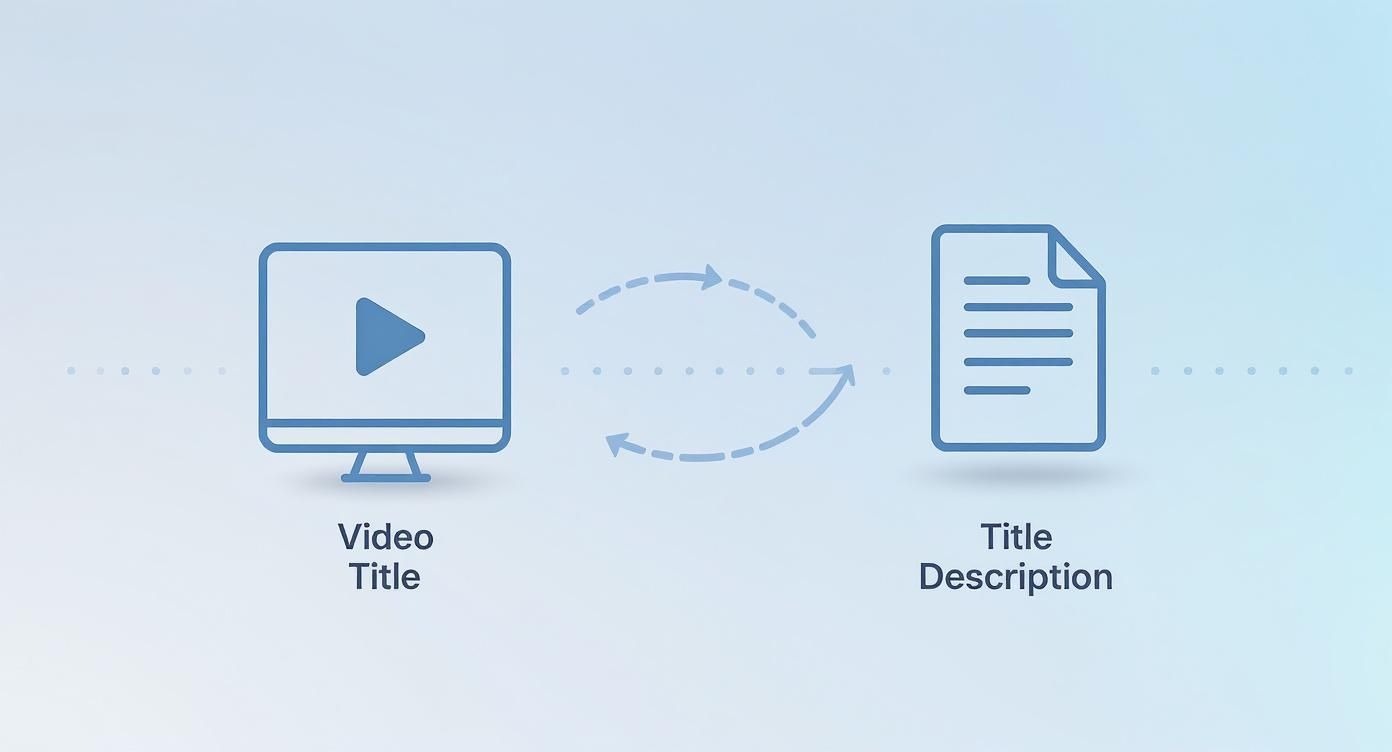
As you can see, the hashtags you place in your video's description are what power the clickable tags that appear right above your title.
Build a Balanced Hashtag Mix
A truly effective hashtag strategy uses a mix of different types to cover all your bases. You want a combination that helps with both broad discovery and nailing down your specific niche. A solid approach includes these three types:
- Broad Hashtags: These are the big, general, high-volume tags like
#fitnessor#gaming. They cast a really wide net but, be warned, they're also super competitive. - Specific Hashtags: Think of these as your niche-down tags that describe your video's content in detail, like
#bodyweightworkoutathomeor#minecraftsurvivalguide. They have less search volume, but they attract a much more relevant, targeted audience. - Branded Hashtags: This is a unique tag just for your channel or a specific series, like
#AskCreatorName. It’s fantastic for grouping your content together and encouraging viewers to binge-watch more of your videos.
If you're looking to speed things up, a dedicated YouTube hashtag generator can be a huge help. These tools can suggest relevant tags based on your topic and save you a ton of research time.
Ultimately, a balanced mix ensures you're not just getting lost in crowded spaces but are also capturing those highly engaged, targeted viewers. And remember, hashtags are just one piece of the puzzle. Visually appealing thumbnails are absolutely essential for getting those clicks in the first place. Check out these AI-Powered YouTube Thumbnail Design Tips to make sure your visuals are working just as hard as your SEO.
How Hashtags Can Boost Viewer Engagement
https://www.youtube.com/embed/icXgGi3yruE
Good hashtagging does way more than just help YouTube’s algorithm figure out what your video is about. It has a real, tangible impact on how viewers interact with your content—and in a very good way.
Put yourself in the viewer's shoes for a second. Imagine someone clicks on the hashtag #BeginnerWoodworking and lands on your video. This isn't just some random person who stumbled upon your content. This is someone actively looking for that exact topic.
They’re already invested. That built-in interest is an engagement goldmine. Viewers who find you this way are far more likely to stick around, drop a thoughtful comment, and smash the like button because you’re giving them precisely what they wanted.
Turning Discovery Into Interaction
For a growing channel, this is a game-changer. When your subscriber count is still low, every single like, comment, and new subscriber feels like a massive win. Hashtags act like a bridge, connecting your videos to passionate communities that might have never found you through a typical search.
The result is a natural, authentic boost to all your key metrics. More comments, longer watch times, and fresh subscribers all send powerful signals to YouTube that your content is hitting the mark, which encourages the algorithm to show it to even more people.
When a viewer arrives via a hashtag, they are arriving with intent. This intent is the foundation of high-quality engagement, transforming a passive view into an active interaction. It proves that hashtags work on YouTube not just for visibility, but for building a connected audience.
The Data Behind Hashtag Engagement
This isn't just a hunch; the numbers back it up. The impact is especially clear for smaller channels trying to get off the ground.
A 2025 analysis revealed that for accounts with fewer than 1,000 followers, using just one relevant hashtag can bump up interactions by about 29%. Even better, channels that used 11 or more hashtags saw engagement leap by nearly 80%. You can discover more insights from this 2025 hashtag research to get the full story.
The takeaway is simple: using hashtags helps new people find you. And because they're already interested, they're primed to engage. This creates a positive feedback loop that helps your channel grow. To really double down on this momentum, check out our guide on how to get more engagement on YouTube.
Common Hashtag Mistakes That Hurt Your Channel
Using hashtags might seem like a no-brainer, but it's surprisingly easy to get them wrong—and when you do, you can do more harm than good. When you load up your videos with irrelevant or excessive tags, you're not just failing to connect with the right audience. You're actively sending mixed signals to the YouTube algorithm, and that can tank your video's performance.
Think of it this way: if you label a video about baking sourdough with #classiccars, you’re setting up viewers for a major letdown. That mismatch creates a terrible user experience, leading to high drop-off rates and a flood of negative signals that tell the algorithm your content is a poor fit for that topic.
Avoid Overloading Your Videos
One of the most common mistakes is hashtag stuffing. It’s the old "more is better" fallacy in action. While YouTube gives you a ceiling of 15 hashtags, blowing past that number will get all of them ignored by the algorithm. Even staying within the limit but packing it with too many tags can dilute your message and confuse the algorithm about what your video is truly about.
A video with 15 vague hashtags is like shouting 15 different topics into a crowded room—no one knows what you’re actually talking about. A video with three highly relevant tags is like having a clear, direct conversation with the exact person you want to reach.
This mistake is easy to fall into, but it's just as easy to fix. Just stick to a short, focused list of super-relevant tags. This gives the algorithm a clean, strong signal to work with, which is exactly what you want if you're trying to figure out if hashtags really move the needle for your content.
Using Misleading or Irrelevant Tags
Another classic blunder is chasing trends with popular but unrelated hashtags. Sure, tagging your gaming video with a trending news hashtag like #elections2024 might get you a quick, fleeting spike in impressions, but it's guaranteed to backfire.
Viewers who click expecting political news will bounce almost instantly. That behavior absolutely crushes your audience retention and screams to YouTube that your video is clickbait. The result? Your video could get suppressed in search results.
To sidestep this, make sure every single hashtag is a direct reflection of your video's content. A great way to check your work is to keep an eye on your analytics. If you see high engagement—lots of likes, comments, and solid watch time—that's a strong sign your tags are hitting the mark. For a deeper dive, there are some great guides out there on tracking YouTube hashtag analytics that can help you dial in your strategy.
Your goal isn't just to get clicks; it's to attract viewers who will actually stick around and enjoy what you've made.
Frequently Asked Questions About YouTube Hashtags
Even with a solid plan in place, some questions always seem to pop up. Let's tackle some of the most common ones creators have so you can use hashtags with confidence.
How Many Hashtags Should I Use on YouTube?
YouTube lets you add up to 15 hashtags, but that doesn't mean you should. Think quality over quantity.
The sweet spot is usually 3-5 highly relevant hashtags. This keeps your video focused and tells the algorithm exactly what it's about. If you go overboard and use more than 15, YouTube ignores all of them. Your effort will be completely wasted, so it's best to stick to a tight, strategic list.
Should I Put Hashtags in the Title or Description?
For most videos, the best place for your hashtags is at the very end of your description.
Why? Because YouTube automatically grabs the first three hashtags from your description and displays them right above your video's title. This gives them prime real estate without making your actual title look cluttered or spammy.
The only time you’d really want a hashtag in your title is for a specific branded series (like #MyFirstVlog) or a massive trending event where the hashtag is the topic. Otherwise, keep them in the description.
Can I Use the Same Hashtags on Every Video?
Please don't. While your unique branded hashtag should definitely be consistent across your channel, copying and pasting the same generic list for every upload is a mistake.
Each video is unique, and your hashtags need to reflect that. Reusing the same list tells the algorithm you're not putting in the effort to describe your content accurately.
Using the same generic tags on different videos is like putting the same "Fiction" sticker on every book in a library, whether it's a sci-fi epic or a historical romance. Specificity is what helps the algorithm—and viewers—find exactly what they're looking for.
Many common hashtag blunders are universal across different platforms, and as detailed in an ultimate guide to hashtags, they can seriously limit your content's reach.
Stop guessing and start growing. TimeSkip automates your YouTube chapter creation in seconds, using AI to find SEO-optimized keywords that boost your video's visibility and retention. Try it for free and see the difference at https://timeskip.io.